
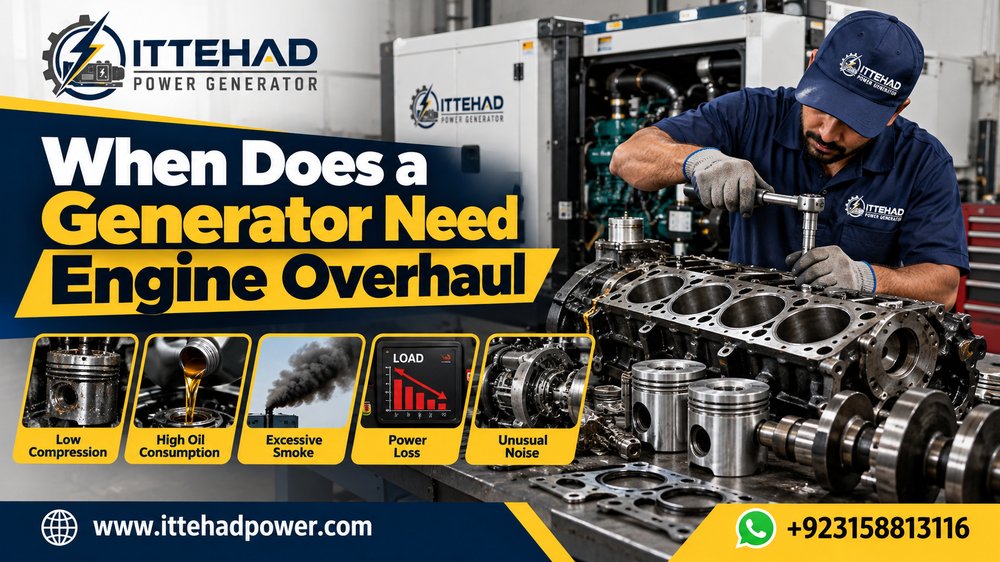
Knowing when does a generator need engine overhaul is important when normal maintenance and individual repairs are no longer restoring dependable engine performance. Persistent low compression, excessive oil consumption, abnormal smoke, power loss, unusual engine noise, difficult starting, increasing operating hours, and repeated internal engine problems can all indicate that deeper mechanical work may be necessary. An overhaul should not be recommended from one symptom alone; proper inspection, testing, service history review, and engine condition assessment are needed to determine whether repair, continued maintenance, or a complete engine overhaul is the most practical decision.
When Does a Generator Need Engine Overhaul?
The question of when does a generator need engine overhaul should be answered by considering overall engine condition rather than simply the age of the generator. Some engines can continue operating reliably for long periods with proper maintenance, while others may require major attention earlier because of operating conditions, maintenance history, overheating, contamination, excessive load, or internal wear.
An overhaul becomes worth considering when several significant symptoms appear together, routine repairs repeatedly fail to provide lasting improvement, or testing confirms substantial internal engine wear.
What Is a Generator Engine Overhaul?
An engine overhaul involves deeper inspection and corrective work on internal engine components that cannot normally be addressed through routine servicing. The exact scope depends on engine condition and the findings made during inspection.
An overhaul may involve evaluating internal components associated with:
- Compression
- Cylinders
- Pistons and related components
- Valves
- Bearings
- Seals and gaskets
- Lubrication condition
- Internal wear
The purpose is to restore engine condition where normal servicing or limited repairs are no longer sufficient.
Why Correct Overhaul Timing Matters
Overhauling an engine too early can create unnecessary expense, while delaying necessary internal repairs can allow wear or damage to become more serious. The best decision is based on evidence rather than assumptions.
Correct timing can help:
- Avoid unnecessary major repair work
- Reduce the risk of complete engine failure
- Improve repair planning
- Control long-term maintenance costs
- Restore dependable engine performance
- Reduce repeated minor repair expenses
- Support safer generator operation
Low Compression as an Overhaul Indicator
Diesel engines depend on sufficient compression for reliable combustion. When internal engine wear reduces compression, the generator may become difficult to start, run unevenly, produce smoke, or lose power.
Possible signs of compression problems include:
- Extended cranking before starting
- Difficult cold starting
- Uneven engine operation
- Reduced power
- Abnormal exhaust smoke
- Repeated starting problems despite normal fuel and battery condition
Compression should be tested properly before an overhaul is recommended because fuel-system, starting-system, or valve-related problems can create similar symptoms.
Why Compression Testing Is Important
Compression testing provides useful evidence about internal cylinder condition. Significant differences between cylinders or consistently low readings may indicate internal wear that requires deeper inspection.
Compression results should be considered together with oil consumption, smoke, engine noise, operating history, and other diagnostic findings. One reading alone should not determine the complete repair decision.
Excessive Engine Oil Consumption
A noticeable increase in oil consumption can be an important sign of internal engine wear. Some oil use may occur during normal operation, but repeated topping up or rapidly falling oil level should be investigated.
Possible causes can include:
- External oil leakage
- Internal oil burning
- Worn internal sealing surfaces
- Valve-related wear
- Other lubrication-system problems
External leaks should be ruled out before assuming that internal engine wear is responsible.
Oil Burning and Exhaust Smoke
When engine oil enters the combustion process, exhaust appearance may change. Persistent abnormal smoke combined with increasing oil consumption can provide an important clue about internal condition.
Smoke diagnosis should also consider fuel delivery, air intake, engine temperature, load, and injector condition because several faults can affect exhaust appearance.
Abnormal Exhaust Smoke
Persistent smoke is one of the more visible signs that engine condition may require attention, but the color, timing, and operating conditions should be considered carefully.
Smoke During Starting
Smoke that appears mainly during starting can be related to combustion quality, fuel delivery, temperature, compression, or engine condition. If difficult starting and low compression are also present, deeper mechanical inspection may be appropriate.
Smoke During Normal Operation
Persistent smoke while the generator is fully operating may indicate combustion or internal engine problems, particularly when accompanied by oil consumption, power loss, or rough running.
Smoke Under Load
If abnormal smoke becomes worse as electrical load increases, the engine may be struggling to produce the required power efficiently. Fuel, air, injector, and internal engine conditions should all be evaluated.
Loss of Generator Engine Power
Gradual power loss can indicate engine wear when normal fuel, air, cooling, and maintenance conditions have already been checked. A worn engine may continue running but struggle to respond properly as electrical demand increases.
Possible symptoms include:
- Slow response when load is applied
- Difficulty maintaining engine speed
- Reduced ability to carry previous loads
- Increased smoke under load
- Greater vibration
- Higher fuel consumption for the same output
Load-related performance should be tested before deciding that an overhaul is necessary.
Unusual Engine Noise
Changes in internal engine noise should never be ignored. Knocking, heavy mechanical sounds, unusual tapping, or new internal noises may indicate wear or damage that requires inspection.
Not every noise means the engine needs an overhaul. Loose external components, belts, mounts, fuel combustion problems, or other systems can also create unusual sounds.
Professional inspection should identify the source before major engine work begins.
Increasing Engine Vibration
Excessive vibration may develop when combustion becomes uneven or mechanical wear increases. Engine mounts, fuel injection, engine speed, and external components should be checked before assuming internal engine damage.
If vibration continues despite correcting external causes and is accompanied by low compression, power loss, smoke, or unusual internal noise, a deeper engine assessment may be appropriate.
Difficult Starting Despite Normal Starting System Condition
A generator that becomes increasingly difficult to start may eventually require internal engine inspection if the battery, starter, fuel supply, filters, injectors, control system, and related starting components are confirmed to be working correctly.
Low compression can make diesel combustion difficult during cranking, particularly when engine wear has progressed significantly.
Persistent hard starting combined with other overhaul indicators should be investigated carefully.
Repeated Engine Repairs
A generator that requires frequent repairs may reach a point where continuing to address individual symptoms is no longer the most practical approach.
An overhaul may deserve consideration when:
- The same mechanical problem repeatedly returns
- Oil consumption continues increasing
- Compression remains poor
- Several internal components show wear
- Power cannot be restored through routine repair
- Repair costs continue increasing without lasting improvement
Service history can help determine whether repeated work is resolving problems or only temporarily managing them.
Operating Hours and Engine Overhaul Decisions
High operating hours can be an important consideration, but hours alone should not determine whether an overhaul is required. Two generators with similar hours may have very different internal conditions depending on maintenance, load, environment, fuel quality, cooling, and operating practices.
Operating-hour records become more useful when combined with:
- Oil consumption history
- Compression condition
- Maintenance records
- Repair frequency
- Engine noise
- Smoke behavior
- Power performance
- Previous overheating incidents
Why Maintenance History Matters
A well-maintained generator may remain in better condition than another unit with fewer operating hours but poor maintenance history. Oil changes, filtration, cooling system care, fuel cleanliness, and timely repairs all influence internal engine wear.
When evaluating an engine for overhaul, review:
- Oil service history
- Filter replacement history
- Cooling system maintenance
- Previous overheating
- Fuel-system repairs
- Previous internal engine work
- Operating-hour records
- Recurring faults
Missing or incomplete records may justify a more detailed condition assessment.
Overheating and Internal Engine Damage
Severe or repeated overheating can accelerate engine wear and may damage internal components. A generator that has experienced significant overheating should be inspected even if it continues to operate afterward.
Possible post-overheating symptoms include:
- Coolant loss
- Oil condition changes
- Reduced compression
- Unusual engine noise
- Power loss
- Abnormal smoke
- Repeated overheating
The cooling-system fault that caused overheating should also be corrected before major engine repairs are completed.
Oil Pressure Problems
Persistent low oil pressure can indicate lubrication problems or internal wear. Because adequate lubrication is essential for engine protection, repeated low pressure warnings should be investigated promptly.
Inspection may include:
- Oil level
- Oil condition
- Oil filter condition
- Oil leakage
- Pressure sensor and wiring
- Actual oil pressure where appropriate
- Internal wear if external causes are eliminated
Continuing to run an engine with genuine low oil pressure can increase the risk of serious damage.
Fuel Consumption Increasing Without Load Changes
If the generator begins consuming more fuel while operating under similar electrical load, the change may indicate reduced engine efficiency. Injector condition, fuel quality, air intake, engine speed, and load should be checked first.
When these systems are operating correctly but fuel use continues increasing alongside compression loss, smoke, or power reduction, internal engine wear may be contributing.
Blow-By and Internal Engine Wear
Excessive combustion gases escaping past internal sealing surfaces can indicate cylinder or piston-related wear. Increased blow-by may occur together with oil consumption, reduced compression, smoke, and loss of performance.
The presence and severity of blow-by should be assessed professionally because some engine breathing is normal and visual judgment alone may not provide an accurate diagnosis.
Engine Overhaul Versus Routine Repair
An overhaul is not the correct solution for every engine problem. Many generator faults can be corrected through routine maintenance or targeted component repair.
Routine repair may be more appropriate when the problem is limited to:
- Filters
- Fuel delivery
- Injectors
- Starting components
- Cooling-system parts
- Sensors
- Electrical controls
- External oil or coolant leaks
An overhaul becomes more relevant when testing shows substantial internal mechanical deterioration.
Why Overhaul Should Not Be Recommended From Smoke Alone
Smoke is often treated as an immediate sign of engine wear, but several simpler problems can cause abnormal exhaust. Restricted air filters, fuel injector faults, poor fuel quality, overload, and operating temperature can all affect smoke.
A reliable overhaul decision should therefore include engine testing and inspection rather than relying on exhaust appearance alone.
Why Power Loss Alone Does Not Confirm Internal Wear
Power loss may result from fuel restriction, dirty air filters, injector problems, unstable engine speed, excessive load, or other issues. These causes should be checked before internal engine repair is recommended.
If basic systems are operating correctly and mechanical testing confirms poor engine condition, overhaul may then become a practical option.
A Practical Engine Overhaul Assessment Process
A structured assessment reduces unnecessary major repair work and helps determine the actual condition of the engine.
- Review operating symptoms: Record smoke, oil consumption, power loss, noise, starting difficulty, and recent changes.
- Review service history: Check operating hours, oil changes, overheating events, previous repairs, and recurring faults.
- Check basic maintenance items: Inspect oil, filters, fuel supply, air intake, cooling, and external leakage.
- Evaluate starting and running behavior: Observe cranking, idle stability, engine response, smoke, and vibration.
- Test compression: Assess whether cylinder condition suggests significant internal wear.
- Check oil consumption and pressure: Determine whether lubrication behavior indicates deeper problems.
- Inspect related systems: Rule out fuel, injector, air, cooling, and control faults that may mimic internal wear.
- Assess performance under load: Determine whether the engine can carry expected electrical demand reliably.
- Evaluate overall engine condition: Compare all findings rather than relying on one symptom.
- Plan corrective action: Decide whether maintenance, limited repair, deeper inspection, or engine overhaul is appropriate.
Benefits of Diagnosing Before Overhaul
A proper condition assessment can prevent unnecessary engine dismantling and help ensure that major repair work addresses the real problem.
- Reduces unnecessary overhaul costs
- Identifies simpler repair options where possible
- Helps determine the true extent of internal wear
- Provides better repair planning
- Reduces trial-and-error replacement
- Supports more informed decisions
- Helps improve post-repair reliability
Customer Needs Before Approving an Engine Overhaul
Before approving major engine work, generator owners should receive a clear explanation of the symptoms, diagnostic findings, likely internal condition, and reasons an overhaul is being recommended.
Customers typically need:
- Clear engine condition assessment
- Compression findings where relevant
- Oil consumption evaluation
- Explanation of smoke or power-loss causes
- Service history review
- Identification of related external faults
- Repair scope explanation
- Post-overhaul testing plan
This information helps distinguish a justified overhaul from an unnecessary major repair.
How to Choose an Engine Overhaul Service
Generator engine overhaul requires accurate diagnosis and careful mechanical work. Selection should therefore be based on technical approach rather than price alone.
Useful selection points include:
- Diagnosis before engine dismantling
- Compression and condition assessment
- Clear explanation of overhaul indicators
- Inspection of related engine systems
- Proper parts identification
- Attention to measurements and component condition
- Safe assembly procedures
- Testing after overhaul
A service provider should be able to explain why major engine work is necessary and what condition was found.
Overhaul Planning and Parts Assessment
An overhaul should be planned according to actual engine condition. Not every internal component automatically requires replacement simply because the engine has been opened.
The assessment may consider:
- Component wear
- Measurements and clearances
- Surface condition
- Damage from overheating
- Lubrication-related wear
- Sealing condition
- Compatibility of replacement parts
Parts decisions should be based on inspection and required specifications.
Reliable Parts for Engine Overhaul
Major engine work depends on correctly matched components. Incorrect replacement parts can affect compression, lubrication, sealing, and engine reliability.
Part identification may involve:
- Generator model
- Engine model
- Engine serial information
- Existing part references
- Required dimensions
- Internal specifications
- Compatibility with related components
Reliable sourcing is an important part of a lasting overhaul.
Operating Conditions and Engine Wear
The environment and operating pattern can influence how quickly a generator engine wears. Heat, dust, extended running periods, repeated overload, fuel contamination, delayed maintenance, and inadequate cooling can all increase mechanical stress.
Generators operating under demanding conditions may require closer monitoring of oil condition, cooling performance, filters, operating temperatures, and engine behavior.
These factors should be considered when deciding whether high operating hours represent normal service life or accelerated wear.
Local Relevance of Engine Overhaul Decisions
Local operating conditions can significantly influence generator engine condition. High temperatures, dusty environments, extended generator usage, fuel storage practices, and irregular maintenance can increase the importance of proper filtration, lubrication, and cooling.
An overhaul assessment should therefore consider how the generator has actually been operated rather than relying only on age or operating-hour figures.
Trust Points in Generator Engine Overhaul
Major engine repair requires transparency because the cost and scope can be significantly greater than routine maintenance. Customers should understand what evidence supports the recommendation.
Important trust points include:
- Basic faults ruled out before overhaul
- Compression or internal condition properly assessed
- Oil consumption investigated
- Smoke and power loss diagnosed rather than assumed
- Service history considered
- Parts replaced according to condition
- Clear explanation of completed work
- Generator tested after reassembly
When an Overhaul May Not Be the Best First Step
An engine overhaul may not be necessary if the main problem can be traced to a fuel filter, injector, air intake restriction, cooling-system component, sensor, battery, starter, or another external system.
The generator should therefore receive a complete diagnosis before major engine dismantling begins.
Targeted repair may provide a more practical solution when compression and internal engine condition remain acceptable.
When Overhaul Becomes More Practical Than Repeated Repairs
There may come a point where repeated smaller repairs no longer provide reliable service. If several internal wear indicators are present and the generator repeatedly loses performance, an overhaul may offer a more comprehensive solution.
This is particularly relevant when:
- Compression remains consistently low
- Oil consumption is excessive
- Abnormal smoke persists after external faults are corrected
- Engine noise indicates internal wear
- Power remains reduced
- Repair frequency continues increasing
- Multiple internal problems are confirmed
The decision should still be supported by inspection and testing.
Post-Overhaul Generator Testing
Engine overhaul work should be followed by careful testing. Successful reassembly alone does not confirm that the generator is ready for dependable service.
Post-overhaul checks may include:
- Starting performance
- Oil pressure
- Engine temperature
- Oil and coolant leakage
- Engine noise
- Vibration
- Exhaust behavior
- Idle stability
- Response under load
- Electrical output stability
Testing helps verify that the engine performs correctly after major repair.
Importance of Maintenance After Engine Overhaul
An overhauled engine still requires proper preventive maintenance. Correct oil, filters, cooling, fuel quality, and service intervals remain essential for protecting the repaired engine.
After overhaul, maintain clear records of:
- Service dates
- Operating hours
- Oil changes
- Filter changes
- Oil consumption
- Coolant condition
- Engine temperature
- Unusual noise or smoke
Good post-overhaul maintenance helps protect the investment in major engine work.
Guidance Before Deciding on Generator Engine Overhaul
Do not base an overhaul decision only on generator age, smoke, high operating hours, or one repair opinion. Gather evidence about internal engine condition and rule out simpler faults first.
Useful questions include:
- Has compression been checked?
- Is oil consumption genuinely excessive?
- Have external oil leaks been ruled out?
- Are fuel and injector systems operating correctly?
- Is the air intake clear?
- Has the generator experienced overheating?
- Can the engine still carry its expected load?
- Are repeated repairs becoming necessary?
The answers can help create a more informed overhaul decision.
Safety When an Engine Shows Serious Wear
A generator with severe mechanical noise, genuine low oil pressure, serious overheating, heavy smoke, substantial oil loss, or major power reduction should not simply be operated continuously until complete failure.
Continued operation under serious mechanical distress can increase damage and may make later repair more extensive.
Where internal failure is suspected, professional inspection should be arranged before extended operation continues.
When Professional Engine Assessment Is Recommended
Professional engine assessment is recommended when several significant symptoms occur together, particularly low compression, increasing oil consumption, persistent abnormal smoke, major power loss, internal noise, difficult starting, or repeated mechanical repairs.
Testing can help determine whether the engine needs limited corrective work, additional diagnosis, or a complete overhaul.
Make the Right Generator Engine Overhaul Decision
Understanding when does a generator need engine overhaul requires looking at the complete condition of the engine rather than relying on one warning sign. Low compression, excessive oil consumption, abnormal smoke, reduced power, unusual noise, high operating hours, repeated repairs, overheating history, and declining reliability can all contribute to the decision.
If your generator is showing several of these symptoms and routine maintenance or targeted repairs are no longer restoring dependable performance, arrange a thorough engine condition assessment. Proper diagnosis can determine whether an overhaul is genuinely necessary, help define the correct repair scope, reduce unnecessary expense, and support more reliable generator operation after corrective work.