
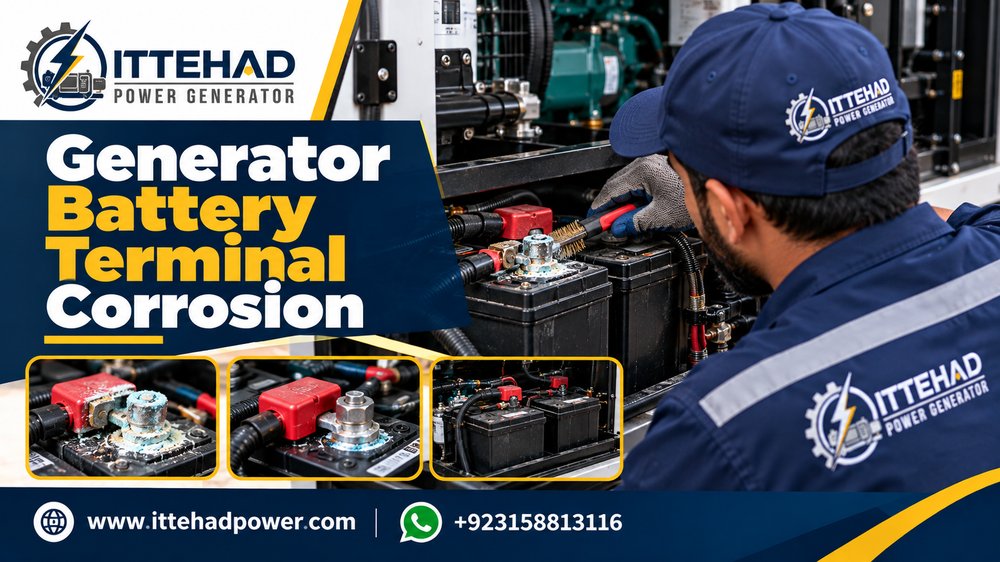
Generator battery terminal corrosion can reduce starting reliability, weaken charging performance, increase electrical resistance, and eventually prevent the generator from cranking when backup power is required. Corrosion around battery posts, cable terminals, or nearby connections should not be treated as a cosmetic issue because poor contact can interfere with current flow between the battery, starter circuit, charging system, and generator controls. Proper inspection, safe cleaning, connection checks, battery testing, and corrosion prevention can help restore dependable generator operation.
Why Generator Battery Terminal Corrosion Needs Attention
The starting battery must deliver high current when the generator is commanded to start. Even a relatively small amount of corrosion between the battery post and cable terminal can create resistance that restricts this current.
The result may be slow cranking, repeated starter relay clicking, unstable control-panel power, difficult starting, or complete failure to crank. Corroded connections can also interfere with battery charging, allowing a serviceable battery to become weak over time.
What Generator Battery Terminal Corrosion Looks Like
Battery corrosion often appears as a white, blue, green, or powder-like deposit around the posts, cable terminals, clamps, or nearby connections. The amount and appearance can vary according to battery condition and the materials used in the connection.
Early corrosion may be easy to overlook, while advanced buildup can spread around the terminal and interfere with electrical contact.
- Powder-like deposits around battery posts
- Discoloration on cable terminals
- Crusty buildup around clamps
- Corrosion spreading along cable ends
- Loose or damaged terminal hardware
- Heat discoloration around poor connections
- Intermittent starting or charging problems
How Corrosion Affects Generator Starting
The generator starter requires a strong electrical path from the battery. Corrosion increases resistance in that path and can reduce the current reaching the starter motor.
A battery may appear charged, but the generator may still crank slowly because the electrical connection between the battery and starter circuit is poor. This is why battery voltage alone does not always confirm that the starting system is healthy.
Slow Cranking
If the engine turns more slowly than normal, terminal corrosion should be included in the inspection along with battery strength, cable condition, ground connections, and starter performance.
Starter Relay Clicking
Repeated clicking may occur when voltage falls during a starting attempt. Corroded terminals can contribute to this voltage drop by restricting current flow.
Intermittent Starting
A connection may sometimes make sufficient contact and fail at other times. Vibration, temperature changes, or movement around the terminal can make corrosion-related faults appear inconsistent.
Why Battery Terminals Become Corroded
Battery terminals can corrode for several reasons, including normal battery chemical activity, age, contamination, moisture, poor connections, damaged battery areas, or charging conditions.
The presence of corrosion does not automatically identify a single cause. Repeated or unusually heavy corrosion should be investigated instead of being cleaned repeatedly without understanding why it returns.
Battery Condition and Corrosion
An aging or deteriorating battery can develop problems that contribute to terminal contamination and unreliable starting. Physical battery condition should therefore be checked when corrosion is discovered.
Look for obvious swelling, damage, leakage, loose posts, or other abnormal conditions. A damaged battery should receive appropriate attention rather than being returned to service only after the terminals are cleaned.
Charging System and Battery Corrosion
The charging system helps restore battery energy after starting and maintain readiness between generator operations. Charging problems can affect battery condition and may contribute to repeated terminal issues.
If corrosion returns frequently, charging performance should be checked along with battery condition and connections. Both insufficient and abnormal charging conditions can affect battery reliability.
Check Charging Performance
Charging voltage should be evaluated under suitable operating conditions. The purpose is to confirm that the battery is receiving appropriate charging rather than remaining undercharged or being exposed to an abnormal condition.
Inspect Charging Connections
Loose or corroded charging wires can reduce charging efficiency. The battery terminals, charging circuit connections, and grounding path should be inspected together.
Loose Battery Terminals and Corrosion
A loose battery terminal can create poor electrical contact and may contribute to heating or unreliable starting. Movement between connection surfaces can also worsen contamination and deterioration over time.
Battery clamps should fit securely on the posts without being damaged or excessively loose. If the terminal cannot be tightened correctly, the cable end or connection hardware may require replacement.
Importance of the Battery Ground Connection
The negative or ground side of the starting circuit is just as important as the positive connection. Corrosion or looseness at the battery ground can create the same starting problems as a poor positive terminal.
The complete ground path should be inspected for secure connections, damaged cables, contamination, and signs of overheating. Cleaning only one battery terminal may not resolve the problem if resistance exists elsewhere in the circuit.
Parasitic Drain and Battery Reliability
Parasitic electrical drain does not directly mean terminal corrosion is present, but both conditions can contribute to a generator battery becoming unreliable. A battery weakened by unwanted electrical consumption may struggle even more when corroded terminals restrict current flow.
If the battery loses charge quickly while the generator is stopped, the electrical system should be checked for excessive standby current in addition to inspecting the terminals.
Safe Battery Terminal Inspection
Battery inspection should be carried out carefully because batteries can deliver high current and may present electrical and chemical hazards. Tools should not be allowed to create a short circuit between battery terminals or nearby metal parts.
- Switch the generator to a safe condition before inspection
- Follow appropriate battery isolation procedures
- Avoid creating a short circuit with tools
- Keep ignition sources away from the battery area
- Use suitable personal protection when handling corrosion
- Do not work on a visibly damaged or leaking battery without proper precautions
- Reconnect terminals correctly and securely after service
Cleaning Corroded Generator Battery Terminals
Cleaning can restore electrical contact when corrosion has accumulated around otherwise serviceable terminals. The work should be carried out using safe procedures and suitable cleaning methods for the battery and connection type.
The terminal surfaces should be cleaned sufficiently to provide proper metal-to-metal contact. Heavy damage, weakened cable ends, cracked clamps, or badly deteriorated terminals may require component replacement rather than cleaning alone.
Generator Battery Terminal Service Process
A systematic process helps ensure that corrosion is corrected properly and that related charging or starting problems are not overlooked.
- Inspect the battery, terminals, cables, and surrounding area.
- Check for visible battery damage or leakage.
- Place the generator in a safe condition for battery service.
- Disconnect the battery using the appropriate procedure.
- Clean corrosion from battery posts and cable terminals.
- Inspect terminal surfaces for damage or excessive wear.
- Check cable ends and ground connections.
- Reconnect and secure terminals correctly.
- Check battery condition and available starting power.
- Test charging-system performance where required.
- Start the generator and observe cranking behavior.
- Reinspect connections if starting remains unreliable.
When Cleaning Alone Is Not Enough
Cleaning the terminals may restore operation temporarily, but it will not correct a damaged battery, deteriorated cable, loose terminal, charging problem, or repeated electrical fault.
If corrosion returns quickly or starting remains weak after cleaning, deeper diagnosis is needed. The battery, cable resistance, ground path, charging system, starter circuit, and electrical drain should be evaluated.
Signs Battery Cables May Need Replacement
Corrosion can sometimes spread beyond the visible terminal and damage the cable connection. A cable may need replacement when deterioration prevents reliable electrical contact.
- Terminal clamp is cracked or badly damaged
- Cable strands are visibly corroded
- Connection becomes hot during cranking
- Cable insulation is damaged
- Terminal cannot be tightened securely
- Excessive voltage drop remains after cleaning
- Corrosion has spread deeply into the cable end
Battery Voltage Drop and Corroded Connections
Electrical resistance at corroded terminals can cause significant voltage loss when the starter draws current. The connection may appear acceptable when the generator is stopped but fail under starting load.
Appropriate voltage-drop testing can help identify resistance in battery terminals, cables, and grounding connections that may not be obvious during visual inspection.
Benefits of Correcting Battery Terminal Corrosion
Proper terminal maintenance can improve generator starting and protect the reliability of the wider starting and charging system.
- Improves electrical contact
- Supports stronger generator cranking
- Reduces voltage loss at battery connections
- Helps the charging system maintain the battery correctly
- Reduces intermittent starting faults
- Helps prevent overheating at poor connections
- Supports more dependable standby readiness
- Makes future battery inspection easier
How to Prevent Generator Battery Terminal Corrosion
Corrosion prevention should focus on keeping terminals clean, secure, dry, and in good condition while also maintaining the battery and charging system properly.
- Inspect terminals during routine generator maintenance
- Keep connections clean and securely tightened
- Correct damaged cable ends promptly
- Check battery condition periodically
- Monitor charging-system performance
- Investigate repeated corrosion instead of repeatedly cleaning it
- Keep the battery area reasonably clean
- Use suitable terminal protection where appropriate
Why Corrosion Prevention Supports Starting Reliability
A generator may remain unused until backup power is required, which means a weak electrical connection can remain unnoticed for a long period. Routine corrosion checks help identify deterioration before an emergency start is needed.
Keeping terminals in good condition also reduces unnecessary stress on the battery and starter by allowing current to flow through a lower-resistance connection.
Battery Corrosion and Generator Maintenance Records
Repeated corrosion should be documented as part of generator maintenance. Recording when terminals were cleaned, when the battery was installed, and whether charging problems were identified can help reveal recurring patterns.
If corrosion returns shortly after every service, the maintenance history can help a technician determine whether battery condition, charging behavior, cable damage, or environmental conditions require further attention.
Customer Needs When Battery Corrosion Causes Starting Problems
Generator owners generally need to know whether cleaning will solve the problem or whether the battery, cables, charging circuit, or another electrical component also requires attention.
A useful service should therefore inspect more than the visible corrosion. Battery condition, connection quality, starting performance, and charging behavior should be reviewed so the customer receives a practical repair rather than a temporary cosmetic improvement.
How to Select a Generator Battery Service
Battery terminal problems involve high-current electrical connections, so the quality of inspection and testing matters. A suitable service provider should understand both battery maintenance and the generator starting and charging systems.
Choose Inspection Before Replacement
A corroded terminal does not automatically mean the battery must be replaced. The battery should be tested and its physical condition assessed before replacement is recommended.
Look for Complete Connection Checks
Both battery terminals, cable ends, grounds, and starting connections should be inspected rather than cleaning only the most visibly corroded point.
Ask for Charging-System Testing
If corrosion or battery weakness repeatedly returns, charging-system performance should be checked to determine whether another electrical condition is contributing to the problem.
Confirm Starting Tests After Service
The generator should be started after terminal service to confirm that cranking is strong and electrical connections remain stable under load.
Site and Operating Conditions That Affect Battery Terminals
Battery condition can be influenced by heat, moisture, contamination, generator vibration, maintenance frequency, and surrounding installation conditions. These factors should be considered when corrosion repeatedly develops.
Inspecting the battery in its normal installation environment can help identify whether the location, mounting, cable routing, or surrounding conditions are contributing to terminal deterioration.
Trust Points in Professional Battery Terminal Service
Reliable battery service should focus on restoring electrical integrity and identifying the reason for recurring problems. Customers should receive clear findings rather than automatic recommendations for battery replacement.
- Battery condition is inspected before replacement decisions
- Corrosion is cleaned using safe procedures
- Positive and ground connections are checked
- Cable damage is identified
- Charging performance is reviewed where necessary
- Parasitic drain is considered when the battery repeatedly loses charge
- Generator cranking is tested after service
- Recommendations are based on actual findings
Common Mistakes When Dealing with Battery Corrosion
Improper battery service can leave the original electrical problem unresolved or create additional faults.
- Cleaning visible corrosion without checking terminal tightness
- Ignoring the battery ground connection
- Replacing the battery without checking charging performance
- Continuing to use badly damaged cable ends
- Allowing tools to bridge battery terminals
- Ignoring repeated corrosion
- Assuming a charged battery must be healthy
- Skipping generator starting tests after maintenance
Guidance When Corrosion Keeps Returning
If terminal corrosion repeatedly returns, avoid treating each occurrence as an isolated cleaning job. Check the battery’s age and physical condition, terminal fit, cable condition, charging behavior, and surrounding operating environment.
Also note whether the generator develops slow cranking, rapid battery discharge, hot terminals, or unstable control-panel operation. These symptoms can help identify whether the corrosion is part of a broader battery or electrical problem.
When Battery Terminal Problems Need Prompt Repair
Prompt attention is recommended when corrosion is severe, a terminal becomes hot during starting, the generator cranks slowly, cable ends appear damaged, the battery repeatedly loses charge, or the generator becomes difficult to start.
Continuing to operate with a high-resistance connection can reduce reliability and place additional stress on the battery, starter circuit, and electrical connections.
Get Help with Generator Battery Terminal Corrosion
If generator battery terminal corrosion is causing slow cranking, repeated battery weakness, charging problems, or unreliable generator starting, a professional inspection can help determine whether the issue is limited to the terminals or involves the battery, cables, charging system, grounding, parasitic drain, or another electrical condition.
Arrange a complete battery and starting-system check when corrosion returns frequently or generator starting becomes unreliable. Proper cleaning, secure connections, electrical testing, corrosion prevention, and corrective work based on the actual cause can help restore dependable generator readiness and reduce repeat battery problems.