
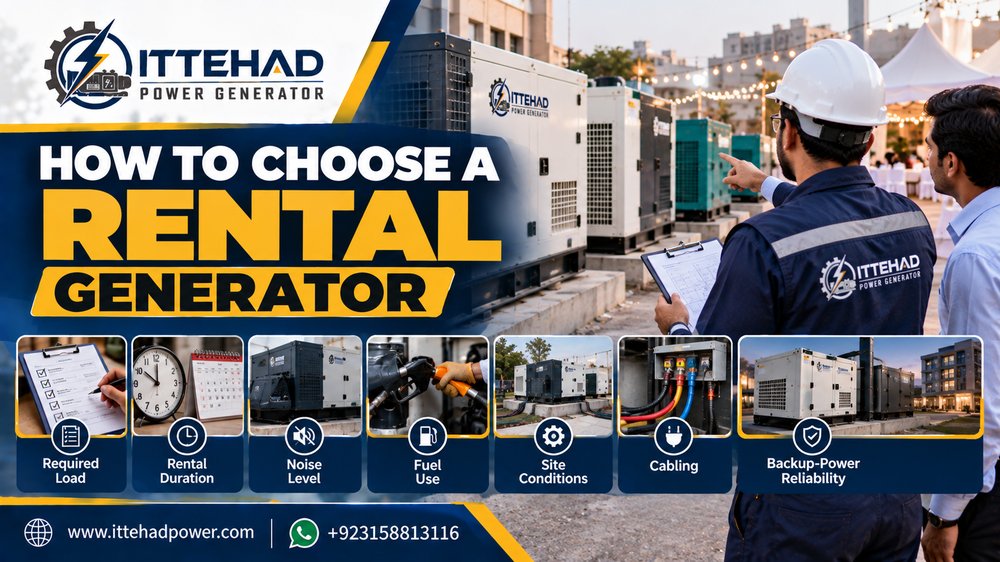
Knowing how to choose a rental generator helps commercial and industrial users arrange dependable temporary or backup power without paying for unnecessary capacity or risking an undersized unit. The right rental generator should match the required electrical load, expected operating duration, site conditions, noise requirements, fuel planning, cable distance, connection arrangement, and level of backup reliability needed. Careful selection before delivery can reduce overload risk, improve fuel use, simplify installation, and provide greater operating confidence throughout the rental period.
Why Knowing How to Choose a Rental Generator Matters
A rental generator should not be selected only by price or the largest available capacity. Generator size, electrical demand, operating environment, rental duration, and connection requirements all influence whether the unit will perform reliably.
An incorrectly selected generator may struggle under load, consume unnecessary fuel, create excessive noise, or require last-minute changes to cables and site arrangements. Proper planning helps match the generator to the actual requirement from the beginning.
Start With the Required Electrical Load
Load calculation is one of the most important steps when selecting a rental generator. The generator must be capable of supplying the equipment that needs power without being continuously overloaded.
Prepare a list of the electrical loads expected to operate during the rental period and identify which items may run at the same time.
Information to Include in a Load Assessment
- Electrical equipment to be powered
- Normal running load
- Peak electrical demand
- Starting requirements of larger equipment
- Single-phase or multi-phase requirements where applicable
- Expected future or temporary load additions
- Essential loads that must remain powered
Understand Starting Load and Running Load
Some electrical equipment requires more power during startup than during normal operation. Selecting a generator only according to running load can therefore result in voltage drop or unstable operation when major equipment starts.
Starting requirements should be considered together with continuous load so the generator has sufficient capacity to handle temporary demand increases.
Avoid Renting a Generator That Is Too Small
An undersized rental generator can struggle to maintain voltage and frequency when electrical demand increases. Repeated overloading may result in breaker trips, excessive engine effort, rising temperature, and unreliable power delivery.
If the expected load is close to generator capacity, the requirement should be reviewed carefully before finalizing the rental unit.
Avoid Unnecessary Oversizing
Choosing a generator much larger than required may increase rental and fuel costs without providing a useful operating benefit. The objective should be suitable capacity with a practical operating margin rather than simply choosing the largest available generator.
Accurate load information allows the rental provider to recommend a more appropriate unit.
Determine the Required Rental Duration
The rental period should cover the complete time during which the generator may be required. This can include delivery, installation, testing, normal operation, and removal preparation.
If the generator is needed continuously, the rental provider should know the expected number of operating hours so fuel planning and servicing requirements can be considered.
Questions to Consider About Rental Duration
- How many hours per day will the generator operate?
- Will it run continuously or only when required?
- How many days is the generator needed?
- Will setup and testing be required before normal use?
- Could the rental period need to be extended?
Consider Generator Noise Level
Noise can be an important selection factor when the generator operates near occupied, working, or sensitive areas. Different generator configurations can produce different sound levels.
Generator placement, enclosure condition, exhaust arrangement, surrounding structures, and operating load can all influence how noticeable the noise becomes.
Choose a Suitable Generator Location
The site should provide enough space for safe generator positioning, ventilation, cable routing, refueling, inspection, and removal.
The generator should not be positioned in a location where cooling airflow is restricted or exhaust gases can accumulate.
Site Conditions to Review
- Available space
- Stable ground or mounting surface
- Delivery access
- Ventilation
- Exhaust discharge
- Distance from electrical connection point
- Cable route
- Access for refueling
- Maintenance clearance
- Protection from unnecessary obstruction
Plan Generator Ventilation
A running generator produces heat and requires sufficient fresh air for engine operation and cooling. Poor ventilation can cause temperature to rise and reduce operating reliability.
The selected site should allow fresh air to reach the generator while hot air can move away without repeatedly circulating around the unit.
Check Exhaust Discharge Requirements
Generator exhaust gases should be directed away from occupied areas, air intakes, doors, windows, and places where gases could accumulate.
Exhaust planning is particularly important if the generator will operate in a restricted or partially enclosed area.
Estimate Fuel Consumption
Fuel use depends on generator size, engine condition, electrical load, and operating duration. A generator running under higher load generally requires more fuel than the same unit carrying a lighter demand.
Before finalizing the rental, estimate expected runtime and confirm how fuel will be supplied during the complete operating period.
Fuel Planning Should Include
- Expected daily running hours
- Approximate operating load
- Fuel tank capacity
- Refueling access
- Who is responsible for fuel supply
- How fuel availability will be monitored
Clarify Whether Fuel Is Included
Rental arrangements can differ, so customers should confirm whether fuel is included, charged separately, or managed by the user.
Clear fuel terms help avoid unexpected costs and ensure that the generator does not run out of fuel during an important operating period.
Plan Electrical Cabling
Generator cables must be suitable for the electrical current, distance, connection type, and operating environment. Incorrect cable sizing can contribute to voltage drop and excessive heating.
The distance between the generator and the electrical connection point should be discussed before the rental equipment is delivered.
Cable Planning Considerations
- Required cable length
- Electrical current
- Voltage requirement
- Connection type
- Cable route
- Protection from traffic or physical damage
- Distance between generator and load
Avoid Excessively Long Cable Runs Where Possible
Long cable distances can increase voltage drop and may require different cable sizing. Positioning the generator closer to the electrical connection point can sometimes simplify installation, provided ventilation, noise, exhaust, and safety requirements remain suitable.
Check Generator Voltage and Phase Requirements
The rental generator should match the electrical system it is intended to supply. Voltage, frequency, phase configuration, and connection arrangements should be confirmed before delivery.
An incorrect electrical configuration can delay installation and prevent equipment from being connected safely.
Consider Load Balance Where Applicable
For multi-phase generator systems, electrical demand should be distributed appropriately. Significant imbalance can place uneven stress on the generator and affect voltage stability.
Load distribution should be reviewed during setup and testing where relevant.
Understand Generator Backup-Power Reliability
If the rental generator will be used for important backup power, reliability should be considered alongside capacity and price. The unit should be inspected, fueled, connected, and tested before it is urgently required.
A generator that is only physically present on site but has not been properly tested may not provide the level of backup confidence expected.
Ask About Pre-Rental Generator Inspection
Before dispatch, the generator should be checked for general operating condition. A suitable pre-rental inspection can reduce the risk of avoidable issues after installation.
Pre-Rental Checks May Include
- Starting performance
- Engine oil condition
- Coolant level
- Fuel-system condition
- Battery condition
- Visible leakage
- Cooling performance
- Electrical output
- Control-panel condition
- General mechanical condition
Testing the Generator After Delivery
Once installed, the generator should be tested before normal use. Starting, voltage, frequency, temperature, noise, vibration, and electrical connections can be checked during this stage.
Testing before the generator is urgently needed provides time to identify capacity, connection, or equipment problems.
Load Testing Where Appropriate
A generator may run normally without electrical demand but behave differently when load is applied. Controlled testing can help verify that the generator can carry the intended load without unstable voltage, excessive temperature, or other operating problems.
The test should remain within suitable generator capacity.
Consider Generator Condition, Not Only Capacity
Two generators with the same stated rating may not provide the same operating confidence if their maintenance condition differs. Service history, starting performance, cooling condition, electrical output, and visible equipment condition should also be considered.
A well-maintained rental generator can reduce the risk of interruption during the rental period.
What Commercial and Industrial Generator Users Need
Commercial and industrial users often require more than temporary power equipment. They need suitable capacity, predictable operating costs, correct cabling, dependable fuel arrangements, safe installation, and support when a problem occurs.
A rental provider should therefore ask about the actual requirement before recommending a generator.
How to Compare Rental Generator Options
When comparing rental options, look beyond the daily or monthly rental rate. The complete arrangement may include different generator capacities, cable lengths, delivery requirements, fuel arrangements, installation support, and operating conditions.
- Compare generator capacity against your calculated load.
- Confirm the electrical configuration.
- Review rental duration and operating hours.
- Check noise requirements.
- Confirm fuel responsibilities.
- Review cable and connection requirements.
- Check delivery and positioning arrangements.
- Ask whether testing is included.
- Confirm what support is available during the rental period.
Do Not Choose a Rental Generator Based on Price Alone
A lower rental price may not provide better value if the generator is poorly matched to the load or if essential cables, testing, delivery, or support are excluded.
The most suitable choice should balance capacity, condition, reliability, operating cost, and practical site requirements.
Review Generator Service Condition
A rental generator should be maintained according to its operating hours and service requirements. Oil, filters, belts, coolant, batteries, and electrical systems should be in suitable condition before extended rental operation.
Customers planning longer rental periods should ask how servicing will be handled if the generator reaches a maintenance interval while on site.
Plan Maintenance for Long Rental Periods
A generator rented for several days or extended operation may accumulate substantial running hours. Servicing requirements should therefore be discussed before the rental begins.
Ignoring maintenance simply because the generator is rented can increase the risk of performance problems during longer use.
Consider the Operating Environment
Heat, dust, ventilation, moisture, and surrounding space can all affect generator operation. Site conditions should be communicated to the rental provider so an appropriate setup can be recommended.
A generator working in a hot or dusty environment may require closer inspection of cooling airflow and filters.
Local Site Relevance When Choosing a Rental Generator
Every installation location has different access, electrical distance, ventilation, noise, and placement conditions. The rental decision should therefore be based on the actual site rather than using the same generator setup for every requirement.
A site-specific assessment can help determine generator position, cable length, fuel access, exhaust direction, and operating clearances before delivery.
Restricted Site Access
Delivery access should be checked before booking a generator. Larger units may require more space for unloading and positioning.
Inform the rental provider about narrow access routes, limited space, height restrictions, or difficult positioning conditions in advance.
High Ambient Temperature
Higher surrounding temperature increases cooling demand. The generator should have suitable airflow and should not be placed where hot discharge air is repeatedly drawn back into the unit.
Cooling condition and ventilation become particularly important during long operating periods.
Dusty Operating Conditions
Dust can restrict air filters and cooling surfaces. Where a rental generator will operate in a dusty environment, inspection frequency may need to increase.
Keeping airflow paths clear helps support stable operating temperature and engine performance.
Benefits of Choosing the Right Rental Generator
Correct generator selection provides practical benefits throughout the rental period.
- Stable power supply: Suitable capacity supports expected electrical demand.
- Reduced overload risk: Peak and starting loads are considered before selection.
- Better fuel planning: Generator size and operating duration are matched more accurately.
- Lower unnecessary costs: Excessive generator capacity can be avoided.
- Improved site suitability: Noise, ventilation, cabling, and access are planned in advance.
- Better operating reliability: Generator condition and testing are considered before normal use.
- Greater confidence: Backup power is prepared according to actual requirements.
Trust Points When Selecting a Rental Generator Provider
A professional generator rental provider should help customers identify a suitable unit instead of simply offering available capacity.
- Load requirements reviewed before recommendation
- Clear generator capacity information
- Electrical configuration confirmed
- Rental duration discussed
- Fuel arrangements explained
- Site and cable requirements considered
- Generator condition checked before delivery
- Installation and testing support where required
- Clear operating guidance
- Practical support during the rental period
Questions to Ask Before Booking a Rental Generator
- What generator capacity is recommended for the required load?
- How was that capacity selected?
- What voltage and phase configuration is provided?
- Are cables included?
- How much cable length is available?
- Is fuel included or separate?
- What is the expected fuel consumption?
- Is delivery and positioning included?
- Will the generator be tested after installation?
- What happens if maintenance is required during the rental?
Common Rental Generator Selection Mistakes
Many rental problems can be avoided by addressing the basic technical requirements before booking.
- Guessing the required generator capacity
- Ignoring starting loads
- Choosing only by lowest price
- Renting excessive capacity without need
- Ignoring cable distance
- Failing to confirm voltage or phase requirements
- Not planning fuel for the full operating period
- Placing the generator in a poorly ventilated area
- Ignoring noise requirements
- Skipping generator testing before normal use
Guidance Before Requesting a Rental Generator Quote
Preparing basic technical and site information can make generator selection faster and more accurate.
- List the equipment that needs power
- Estimate normal and peak load
- Identify major starting loads
- Confirm expected running hours
- Measure approximate cable distance
- Identify the generator placement area
- Review ventilation and exhaust conditions
- Confirm electrical voltage and phase requirements
- Consider noise limitations
- Plan fuel access
Check the Generator When It Arrives
Before normal operation begins, inspect the generator for obvious damage, leakage, loose connections, or missing equipment. Confirm that the delivered unit matches the agreed capacity and electrical configuration.
Any concern should be addressed before the generator is connected to important loads.
Monitor Generator Operation During the Rental
Generator condition should continue to be observed throughout the rental period. Operators should watch for unusual temperature, noise, vibration, leakage, unstable voltage, warning indications, or changes in engine performance.
New electrical loads should not be added without considering whether the generator has sufficient remaining capacity.
Keep Fuel and Operating Records
For longer rentals, recording operating hours and fuel use can help manage refueling and maintenance requirements.
Operating records can also show whether the generator is being used more heavily than originally planned.
Do Not Ignore Warning Indicators
If the generator displays high temperature, low oil pressure, overload, electrical fault, or another warning, the cause should be investigated rather than repeatedly resetting the equipment.
Continuing operation with an unresolved warning can increase the risk of shutdown or equipment damage.
Backup Planning for Important Power Requirements
Where uninterrupted power is especially important, customers should discuss the required level of backup reliability with the rental provider. The correct arrangement depends on electrical demand, operating duration, and the consequences of a generator interruption.
Backup planning should be completed before the rental period begins rather than after a problem occurs.
Final Guidance on How to Choose a Rental Generator
Understanding how to choose a rental generator means looking beyond generator size alone. Required load, starting demand, rental duration, noise level, fuel use, site conditions, ventilation, cable requirements, electrical configuration, equipment condition, and backup reliability should all be considered before booking.
If you need temporary or backup generator power, prepare your load details, expected operating hours, site conditions, cable distance, and electrical requirements before requesting a rental recommendation. A properly selected, inspected, installed, and tested rental generator can provide more dependable power, better cost control, and greater operating confidence throughout the rental period.