
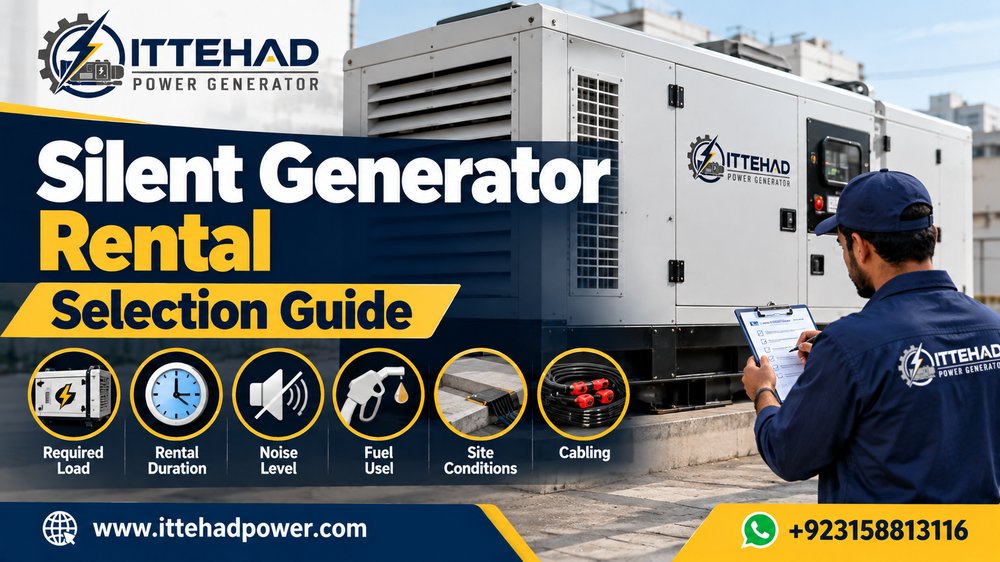
A reliable rental decision starts with matching the generator to the actual power requirement, operating environment, and expected rental period. This silent generator rental selection guide explains how to evaluate required load, noise level, fuel use, site conditions, cabling, operating duration, and backup-power reliability before arranging a rental. Selecting the right silent generator can help maintain stable power, control operating costs, reduce unnecessary noise, and avoid problems caused by an undersized or unsuitable unit.
Why Silent Generator Selection Matters
Renting a generator is not simply a matter of choosing the largest available unit. A generator should be selected according to the equipment it needs to support, the way that equipment starts and operates, the expected running period, and the conditions at the installation site.
An unsuitable generator can lead to unstable operation, unnecessary fuel consumption, excessive operating cost, inconvenient noise, or insufficient backup power. Proper selection helps create a more dependable rental arrangement from the beginning.
Silent Generator Rental Selection Guide for Reliable Backup Power
A practical silent generator rental selection guide should begin with the required electrical load and then consider rental duration, noise expectations, fuel use, installation space, ventilation, cabling, access, and operational support.
Each factor affects generator suitability. Making these checks before delivery helps reduce last-minute changes and supports safer, more reliable operation.
Calculate the Required Generator Load
Correct load assessment is one of the most important steps when selecting a rental generator. The unit must have enough capacity to support the connected equipment without operating continuously beyond a suitable level.
Before choosing a generator, prepare a list of the equipment that will require power and identify:
- Normal operating load
- Equipment that may operate at the same time
- Starting requirements of relevant equipment
- Expected changes in load during operation
- Essential equipment that must remain powered
A realistic load calculation is more useful than selecting capacity based only on guesswork.
Why Starting Load Is Important
Some electrical equipment requires more power during startup than during normal operation. If this temporary demand is not considered, a generator that appears adequate on paper may struggle when equipment starts.
The rental selection should therefore account for both normal running demand and any significant starting requirement.
Avoid Choosing an Undersized Generator
An undersized generator may struggle to maintain stable performance when demand increases. This can lead to repeated overload conditions, unstable operation, or unexpected interruptions.
Signs that generator capacity may be insufficient can include:
- Difficulty handling equipment startup
- Repeated overload indications
- Unstable generator performance
- Frequent protective shutdowns
- Inability to operate required equipment together
Accurate load planning helps reduce these problems before the rental begins.
Avoid Unnecessary Oversizing
Selecting a generator much larger than the required load can also be inefficient. A larger rental unit may increase rental and fuel costs without providing a practical benefit for the actual application.
The goal is to choose suitable capacity with reasonable operating margin rather than automatically selecting the biggest available generator.
Consider Rental Duration
The expected rental period influences generator selection, fuel planning, service requirements, and overall cost. A generator required for a short temporary period may have different operational needs from one expected to run for an extended duration.
Before arranging the rental, clarify:
- Expected start date
- Estimated rental duration
- Daily operating hours
- Whether continuous or occasional operation is expected
- Whether the generator will remain on standby
- Whether the rental period may need to be extended
This information helps plan the generator, fuel requirements, and maintenance support more accurately.
Understand Silent Generator Noise Levels
A silent generator uses an enclosure and related design features to reduce operating noise compared with an open generator. However, silent does not mean completely noiseless.
Actual perceived noise can depend on:
- Generator size
- Enclosure condition
- Operating load
- Distance from occupied areas
- Placement of the generator
- Surrounding walls and structures
- Site ventilation requirements
If noise is an important consideration, discuss the expected operating environment before confirming the rental unit.
Choose a Suitable Generator Location
Site placement can affect safety, noise, ventilation, cable routing, refueling access, and overall generator performance. The installation position should be evaluated before delivery whenever possible.
A suitable location should consider:
- Adequate ventilation
- Stable and suitable ground
- Safe distance from unnecessary obstructions
- Access for delivery and removal
- Space for inspection and servicing
- Practical fuel access
- Safe cable routing
- Reasonable distance from the required load
Poor site planning can create avoidable difficulties even when the correct generator capacity has been selected.
Ventilation Is Essential for Generator Operation
A running generator produces heat and exhaust gases. Even a silent enclosed unit requires adequate airflow to operate correctly.
The generator should not be placed in a confined location without suitable ventilation. Restricted airflow can contribute to overheating and unsafe operating conditions.
Site planning should allow the generator’s cooling and exhaust systems to function without obstruction.
Fuel Use and Rental Planning
Fuel consumption is an important part of generator rental cost. Actual consumption varies according to generator capacity, operating load, engine condition, and running hours.
Fuel planning should consider:
- Expected daily operating hours
- Average electrical load
- Generator capacity
- Fuel tank capacity
- Refueling frequency
- Access for safe refueling
Choosing a generator closer to the actual load requirement can support more practical fuel planning than unnecessary oversizing.
Check the Generator’s Fuel Capacity
The onboard fuel tank should be considered in relation to expected running hours. If the generator is required for extended operation, fuel availability and refueling arrangements should be planned before the rental starts.
Running out of fuel can cause unnecessary downtime and may also require additional starting procedures before the generator returns to normal operation.
Cabling Requirements for a Rental Generator
Generator rental planning should include the cables required to connect the generator safely to the intended load or distribution arrangement. Cable size, length, routing, and connections should be appropriate for the electrical demand.
Important cabling considerations include:
- Required cable length
- Expected electrical load
- Suitable cable capacity
- Connection points
- Protection from physical damage
- Safe routing across the site
- Condition of plugs, terminals, and connectors
Incorrect or damaged cables can create performance and safety problems even when the generator itself is operating correctly.
Keep Cable Runs Practical
Generator placement and cable length should be considered together. Excessively long or poorly planned cable routes can complicate installation and increase the chance of accidental damage.
Where practical, choose a generator location that provides suitable ventilation and access while keeping the electrical connection route manageable.
Generator Voltage and Connection Requirements
The rental generator must be compatible with the electrical requirements of the equipment it will supply. Connection arrangements should be confirmed before installation rather than assumed after delivery.
Important details may include:
- Required voltage
- Electrical load
- Connection type
- Distribution requirements
- Available connection points
- Suitable protective arrangements
Correct electrical matching helps reduce delays and avoids unnecessary changes once the generator reaches the site.
Evaluate Backup-Power Reliability
When a rental generator is being used as backup power, reliability is more important than simply having a unit physically present. The generator should be in suitable operating condition and capable of starting, running, and supporting the planned load when required.
Before accepting a rental generator, useful checks can include:
- General generator condition
- Starting performance
- Control panel condition
- Fuel and fluid levels
- Visible leakage
- Unusual noise or vibration
- Electrical output condition
- Service readiness
Importance of Generator Condition Before Rental
A silent enclosure and suitable capacity do not automatically mean a generator is ready for dependable operation. Mechanical and electrical condition also matter.
The rental unit should be inspected and tested before being placed into service. Basic verification can help identify issues that may otherwise appear after the generator is already required for power.
Benefits of Selecting the Right Silent Rental Generator
Careful generator selection can provide practical operational and cost advantages.
- Supports stable electrical supply
- Reduces the risk of insufficient generator capacity
- Helps control rental and fuel costs
- Provides lower operating noise than an open generator
- Supports better site planning
- Reduces last-minute installation changes
- Improves confidence in backup-power availability
- Makes cabling and fuel planning easier
What Customers Need From a Silent Generator Rental Service
Customers usually need more than a generator capacity recommendation. They need practical guidance on which unit suits their load, how long it can operate, where it should be positioned, what cables are required, and what support is available during the rental period.
A useful rental service should help with:
- Load assessment
- Generator capacity selection
- Noise considerations
- Rental-duration planning
- Fuel requirements
- Site suitability
- Cabling requirements
- Operational guidance
- Support if a generator fault develops
A Practical Silent Generator Rental Selection Process
Following a structured process can make generator selection easier and reduce avoidable problems.
- List the required equipment: Identify everything that needs generator power.
- Calculate the expected load: Consider normal running demand and relevant starting requirements.
- Determine rental duration: Estimate how many days and hours the generator will operate.
- Review noise requirements: Consider where the generator will operate and how important reduced noise is.
- Inspect the site: Confirm space, ventilation, access, ground condition, and cable route.
- Plan fuel requirements: Estimate operating hours and refueling needs.
- Confirm cabling: Check cable length, capacity, connection type, and safe routing.
- Select suitable generator capacity: Choose a unit that can support the planned load with an appropriate operating margin.
- Confirm generator condition: Ensure the rental unit has been checked before operation.
- Test the setup: Verify stable generator performance after installation and connection.
How to Compare Silent Generator Rental Options
Rental price is important, but it should not be the only selection factor. A low rental rate may not provide good value if the generator is unsuitable for the load, consumes unnecessary fuel, or lacks appropriate support.
When comparing options, consider:
- Suitable generator capacity
- Generator condition
- Silent enclosure condition
- Rental duration and terms
- Fuel planning
- Cabling availability
- Delivery and installation requirements
- Technical support
- Repair response during the rental period
Selection Tips for Better Rental Value
The most cost-effective rental arrangement is usually one that matches the actual requirement closely while maintaining suitable capacity and reliability.
Practical selection tips include:
- Do not estimate load only by the number of connected items
- Consider startup demand where relevant
- Avoid excessive generator oversizing
- Confirm the expected daily operating period
- Plan fuel before the generator arrives
- Inspect the intended installation location
- Confirm cables and connections in advance
- Ask how breakdown support will be handled
- Verify generator condition before regular operation
Local Relevance of Silent Generator Rental
Local operating conditions can influence silent generator rental planning. Heat, dust, available installation space, ventilation, fuel access, cable routing, and the distance between the generator and connected load can all affect how the rental should be arranged.
A generator working in a hot or dusty environment may require closer attention to cooling airflow and general operating condition. Site-specific planning helps make the rental setup more practical and reliable.
Trust Points When Choosing a Generator Rental Provider
A reliable rental provider should help customers understand what generator capacity is being recommended and why. Clear communication before delivery can prevent misunderstandings and reduce avoidable costs.
Useful trust points include:
- Load requirement discussed before selection
- Generator condition checked before delivery
- Clear rental terms
- Practical fuel guidance
- Cabling requirements confirmed
- Site conditions considered
- Operating instructions explained
- Technical support available for generator problems
Questions to Clarify Before Confirming a Rental
Providing accurate information to the rental provider helps improve generator selection. Before confirming the arrangement, be ready to explain:
- What equipment will be powered
- How much load is expected
- How many hours the generator will operate
- How long the rental is required
- Where the generator will be positioned
- How far the generator will be from the load
- Whether reduced noise is a major requirement
- What electrical connections are available
- Whether extended operation is expected
Guidance for Safe Silent Generator Rental Operation
Rental generators should be operated according to appropriate safety and operating requirements. The generator needs suitable ventilation, secure positioning, safe electrical connections, and proper access for inspection and refueling.
Do not operate a generator in an unsuitable enclosed area. Avoid damaged cables, unsafe temporary connections, blocked ventilation, or refueling practices that create unnecessary risk.
If the generator develops overheating, unusual vibration, fuel leakage, electrical burning signs, repeated shutdowns, or abnormal noise, stop and arrange inspection rather than continuing operation without understanding the problem.
Planning for Longer Rental Periods
Longer generator rentals require more attention to operating hours, fuel supply, inspection, and maintenance. The generator may require periodic checks or servicing during an extended rental period.
For longer use, discuss:
- Expected total operating hours
- Maintenance responsibility
- Service intervals
- Fuel management
- Routine inspection requirements
- Support arrangements if a fault occurs
Planning these details in advance helps maintain reliability throughout the rental.
Why Backup Planning Matters
If continuous power availability is important, consider how a generator fault would be handled during the rental period. Knowing the repair or replacement process in advance can reduce uncertainty if an unexpected issue occurs.
The rental arrangement should therefore consider not only generator delivery but also ongoing operating support.
Choose a Silent Generator Rental With Confidence
A practical silent generator rental selection guide should help you choose capacity according to actual load, understand noise requirements, plan fuel use, evaluate site conditions, arrange suitable cabling, and confirm the reliability of the rental unit before operation.
If you need temporary or backup generator power, arrange a proper load and site assessment before confirming the rental. Selecting the right silent generator from the beginning can provide dependable power, control unnecessary operating costs, reduce avoidable downtime, and make the complete rental period easier to manage.