
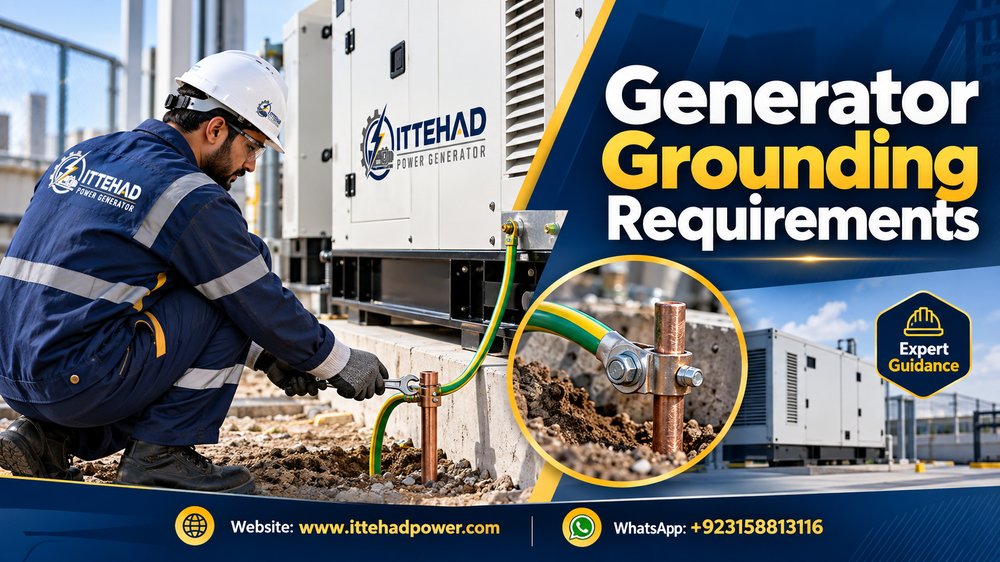
Generator grounding requirements are an important part of safe generator installation because proper earthing helps manage electrical fault current, supports protective devices, and reduces the risk of dangerous voltage appearing on exposed metal parts. Grounding should never be treated as an optional connection or a simple wire added after installation. The correct arrangement depends on the generator configuration, electrical connections, switching method, neutral arrangement, site conditions, and applicable electrical safety requirements.
Why Generator Grounding Requirements Matter
A generator produces electrical power that must be distributed through a properly designed electrical system. If insulation fails, wiring becomes damaged, or a fault develops, grounding provides an important part of the fault protection arrangement.
Without suitable grounding and bonding, exposed conductive parts may become energized during an electrical fault. Proper earthing helps create a controlled path for fault current and supports the operation of protective equipment intended to disconnect an unsafe circuit.
Understanding Generator Grounding and Earthing
Grounding and earthing generally refer to connecting parts of an electrical system to earth or establishing the required reference and protective connections within the installation. The exact arrangement should be determined according to the generator and electrical system design.
Generator grounding is not limited to connecting one cable from the generator frame to an earth electrode. Neutral connections, equipment bonding, protective conductors, switching arrangements, and the relationship between generator power and the existing electrical system may all affect the correct setup.
Generator Frame Grounding
The exposed metal frame of a generator should be considered during the grounding assessment. If an electrical fault causes a live conductor to contact the frame, the protective arrangement should help prevent the metal enclosure from remaining at a dangerous voltage.
Grounding and bonding connections should be secure, correctly sized for the installation, protected from damage, and attached to suitable connection points. Loose, corroded, or poorly installed grounding connections can reduce the effectiveness of the protection system.
Neutral Grounding Considerations
The generator neutral arrangement is one of the most important parts of grounding design. Whether the neutral is bonded to ground at the generator, elsewhere in the electrical system, or switched as part of the transfer arrangement depends on how the generator is connected.
Incorrect neutral-to-ground bonding can create unwanted current paths, interfere with protective devices, or produce unsafe conditions. For this reason, the neutral arrangement should be reviewed as part of the complete electrical system rather than changed without technical assessment.
Neutral-to-Ground Bond
A neutral-to-ground bond establishes a connection between the grounded conductor and protective grounding system at an appropriate point. The correct location of this bond depends on the system configuration.
Existing Electrical System
When a generator supplies an existing installation, its grounding arrangement must be coordinated with the existing earthing and neutral system. Adding additional bonds without understanding the complete circuit can result in improper current flow.
Earthing Electrode Requirements
An earth electrode may form part of the generator grounding arrangement depending on the installation. The effectiveness of an electrode system depends on factors such as soil conditions, electrode type, installation method, conductor connections, and the overall electrical design.
Simply installing a metal rod into the ground does not by itself confirm that the generator has an effective grounding system. The complete earthing path and protective arrangement should be evaluated and tested where required.
Grounding Conductor Connections
Grounding conductors should provide reliable electrical continuity. Connection points should be clean, secure, and protected against conditions that could cause loosening, corrosion, or physical damage.
- Use suitable grounding conductors for the installation
- Secure conductors at approved connection points
- Avoid loose or temporary grounding connections
- Protect grounding cables from mechanical damage
- Check terminals for corrosion or overheating
- Maintain continuity throughout the protective grounding path
- Inspect connections during generator maintenance
Grounding and Fault Protection
A properly designed grounding system works together with protective devices. During certain electrical faults, sufficient fault current must be able to flow so the appropriate protective device can respond and disconnect the affected circuit.
A poor or incomplete grounding path may prevent protection from operating as intended. Grounding should therefore be evaluated together with circuit protection, conductors, neutral arrangements, and the generator’s electrical configuration.
Benefits of Proper Generator Grounding
Correct grounding supports both electrical safety and dependable generator operation. It also provides a more organized foundation for inspection and troubleshooting if an electrical problem occurs.
- Helps reduce electrical shock risk
- Supports fault current protection
- Provides protection for exposed metal parts
- Supports correct operation of protective devices
- Helps maintain an organized electrical installation
- Reduces problems caused by improper grounding connections
- Supports safer generator testing and operation
- Makes future electrical inspection easier
Grounding Requirements During Generator Installation
Grounding should be considered during installation planning rather than after the generator has already been connected. The installer should understand how the generator will supply the load, how switching will take place, and how the existing electrical system is grounded.
This allows grounding conductors, bonding points, protective devices, and neutral connections to be coordinated correctly before the generator is placed into operation.
Generator Grounding Inspection Process
A systematic inspection can help identify incomplete, loose, damaged, or incorrectly arranged grounding connections before they contribute to an electrical problem.
- Review the generator electrical configuration.
- Identify the generator frame grounding connection.
- Check grounding and bonding conductors for visible damage.
- Inspect terminals and connection points for security.
- Review the neutral and ground arrangement.
- Check how the generator connects to the existing electrical system.
- Review applicable switching and protective arrangements.
- Verify the earthing electrode system where applicable.
- Carry out appropriate electrical testing where required.
- Correct identified grounding issues before regular operation.
Common Generator Grounding Problems
Grounding problems are sometimes difficult to see because the generator may continue operating normally until an electrical fault occurs. Regular inspection is therefore important.
- Loose grounding cable connections
- Corroded grounding terminals
- Damaged grounding conductors
- Missing equipment bonding
- Incorrect neutral-to-ground connection
- Multiple unintended neutral-ground bonds
- Poorly installed earth electrodes
- Temporary grounding arrangements
- Grounding conductors exposed to physical damage
- Electrical modifications made without reviewing the grounding system
Why Improvised Grounding Should Be Avoided
Improvised grounding can create a false sense of safety. A cable connected to an arbitrary metal object or an inadequately installed electrode may not provide the required protective path during an electrical fault.
Grounding arrangements should be based on the electrical system design and suitable installation practices. Where the correct arrangement is uncertain, the generator should be assessed by a qualified electrical professional before modifications are made.
Grounding and Generator Transfer Connections
When a generator is connected to an electrical system through switching equipment, the switching arrangement can influence grounding and neutral requirements. The electrical relationship between the normal supply and generator supply should be clearly understood.
The generator should not be connected using an improvised arrangement that creates uncontrolled connections between power sources, neutrals, or grounding conductors. Proper coordination is important for both safety and fault protection.
Grounding Checks Before Generator Startup
Before a newly installed or modified generator is placed into service, grounding and bonding should be included in the electrical readiness checks. Visible connections should be secure and the system arrangement should be verified before energization.
- Check generator frame bonding
- Inspect protective grounding conductors
- Review neutral connections
- Confirm grounding terminals are secure
- Inspect the earth connection where applicable
- Check for damaged or exposed conductors
- Verify that electrical modifications have not disrupted grounding continuity
Customer Needs When Reviewing Generator Grounding
Customers usually need clear guidance about whether the generator is grounded correctly, whether additional earthing work is required, and whether existing connections are suitable for the installation.
A professional assessment should explain the grounding arrangement in practical terms and identify any corrective work required. Customers should not be expected to make technical neutral or bonding changes without understanding their effect on the electrical system.
How to Select a Generator Grounding Service
Grounding work should be handled by someone who understands generator electrical systems and fault protection. Selection should focus on technical assessment and safe installation rather than simply adding another earth wire.
Choose Complete Electrical Assessment
The service provider should review the generator, electrical connections, neutral arrangement, grounding conductors, and existing system before recommending changes.
Look for Proper Testing
Visual inspection alone may not confirm that a grounding arrangement is effective. Appropriate electrical testing may be necessary depending on the installation and condition of the system.
Avoid One-Size-Fits-All Solutions
Generator grounding arrangements can vary according to the electrical system. A professional service should base recommendations on the actual installation rather than applying the same connection method to every generator.
Ask for Clear Technical Guidance
The reason for any recommended grounding or bonding modification should be explained clearly. Customers should understand what is being corrected and how it relates to electrical safety.
Generator Grounding After Electrical Modifications
Grounding should be reviewed whenever significant electrical changes are made around a generator. New switching equipment, revised wiring, generator replacement, or changes to the distribution arrangement may affect the original grounding configuration.
Assuming that an old grounding arrangement remains correct after electrical modifications can create problems. A review helps ensure that protective conductors, neutral connections, and bonding remain coordinated with the updated system.
Local Installation Conditions and Grounding
Generator grounding requirements should always be considered in relation to the actual installation environment. Site layout, electrical distribution, generator placement, soil conditions, existing earthing arrangements, and equipment configuration can influence the appropriate solution.
This is why an on-site assessment can be valuable. It allows the complete grounding path and surrounding electrical system to be reviewed rather than considering the generator as an isolated piece of equipment.
Trust Points in Professional Generator Grounding Work
Reliable grounding work should be based on inspection, electrical understanding, suitable materials, secure connections, and appropriate verification. Customers should receive a solution based on actual site conditions rather than unnecessary or unexplained modifications.
- Existing grounding is inspected before changes are made
- Neutral and bonding arrangements are reviewed carefully
- Grounding conductors are installed securely
- Damaged or corroded connections are identified
- Applicable electrical protection is considered
- Testing is performed where required
- Recommendations are explained clearly
- Safety remains the priority throughout the work
Guidance for Maintaining Generator Grounding
Grounding connections should not be assumed to remain perfect indefinitely. Vibration, corrosion, moisture, physical damage, or later electrical work can affect their condition.
Grounding and bonding points should therefore be included in routine generator and electrical inspections. Loose terminals, damaged conductors, or signs of corrosion should be corrected promptly.
Users should also avoid disconnecting grounding conductors or altering neutral connections during temporary repairs. Any modification to the grounding system should be properly assessed before the generator returns to normal operation.
When a Grounding Inspection Is Recommended
A grounding assessment can be particularly useful when a generator is newly installed, electrical connections have been modified, grounding cables appear damaged, protective devices behave unexpectedly, or the existing earthing arrangement is unclear.
Inspection is also sensible when old or temporary connections are discovered. Identifying and correcting an inadequate grounding arrangement before an electrical fault occurs can improve overall generator safety.
Get Professional Guidance on Generator Grounding Requirements
Understanding generator grounding requirements involves more than installing an earth cable. The complete arrangement may include generator frame bonding, protective conductors, neutral connections, earthing electrodes, fault protection, switching equipment, and coordination with the existing electrical system.
Arrange a professional grounding inspection if you are installing a generator, modifying electrical connections, or are uncertain about the existing earthing setup. A properly assessed and installed grounding system can support safer generator operation, more effective fault protection, and greater confidence in the electrical installation.