
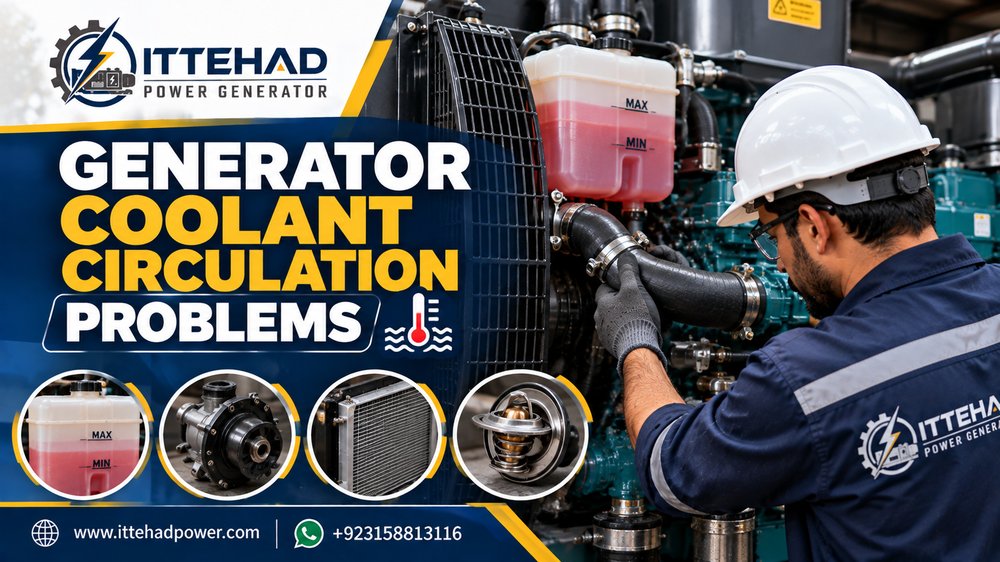
Generator coolant circulation problems can cause rising operating temperature, unstable cooling performance, repeated overheating, and unnecessary stress on engine components. A diesel generator depends on continuous coolant movement through the engine, hoses, water pump, radiator, and related cooling passages to transfer heat effectively. When circulation becomes restricted or stops, the generator may appear normal during initial operation but become progressively hotter as runtime or electrical load increases. Early inspection of coolant flow, pump condition, hoses, radiator performance, and temperature behavior can help commercial and industrial generator users identify cooling faults before they develop into more serious operating problems.
Why Generator Coolant Circulation Problems Need Early Attention
The generator cooling system is designed to remove heat produced during engine operation. Coolant absorbs heat from the engine and carries it toward the radiator, where that heat can be released before the coolant returns to continue the cycle.
If circulation is restricted, coolant may remain excessively hot around important engine areas while other parts of the cooling system receive insufficient flow. This can result in rapidly increasing temperature, uneven cooling, reduced operating confidence, and eventual overheating.
Common Signs of Poor Generator Coolant Circulation
Coolant circulation faults can develop gradually, so recognizing changes in generator behavior is important. Several symptoms may indicate that coolant is no longer moving through the system as effectively as required.
- Generator temperature rising higher than normal
- Repeated overheating during operation
- Temperature increasing quickly under load
- Uneven temperature between cooling-system components
- Weak coolant movement
- Collapsed, restricted, or damaged hoses
- Coolant leakage around hoses, pump, radiator, or connections
- Unusual noise from the water pump area
- Radiator remaining unusually cool while engine temperature rises
- Temperature becoming unstable during longer operating periods
- Frequent coolant-related shutdowns or warnings
These signs should be treated as indicators requiring inspection rather than proof of one specific component failure.
How Generator Coolant Circulation Works
The cooling system relies on controlled coolant movement. As the engine operates, coolant absorbs heat and is circulated through passages within the engine. The coolant then travels through hoses toward the radiator, where airflow helps reduce its temperature before it returns to the engine.
The water pump provides the circulation needed to maintain this process. Hoses must remain open and secure, the radiator must allow adequate coolant flow, and the cooling system must contain the correct coolant quantity for effective operation.
Water Pump Problems and Reduced Coolant Flow
The water pump is a critical component in generator coolant circulation. If the pump becomes worn, damaged, loose, or mechanically ineffective, coolant flow may become weak even when the cooling system contains sufficient coolant.
Possible Water Pump Warning Signs
- Coolant leakage near the pump
- Unusual bearing or mechanical noise
- Excessive movement or looseness
- Generator overheating despite adequate coolant level
- Weak or inconsistent coolant circulation
- Visible deterioration around the pump assembly
A pump should be evaluated as part of the overall cooling system rather than replaced based only on high temperature. Restricted hoses, radiator problems, low coolant, trapped air, or other faults may produce similar symptoms.
Restricted or Damaged Coolant Hoses
Cooling-system hoses carry coolant between the engine, radiator, pump, and related components. A hose that becomes internally restricted, externally damaged, incorrectly routed, or partially collapsed can reduce coolant movement.
Hoses should be inspected for physical condition as well as leakage. A hose can appear intact while becoming soft, swollen, internally damaged, or restricted under operating conditions.
Hose Conditions That Require Attention
- Cracks or visible deterioration
- Bulging or swelling
- Soft or weakened sections
- Collapsed hose walls
- Loose clamps
- Coolant seepage around connections
- Incorrect routing or sharp bends
- Contact with hot or moving components
Radiator Performance and Coolant Circulation
The radiator must allow coolant to pass through efficiently while transferring heat to the surrounding airflow. Internal restriction, contamination, damaged passages, or poor external airflow can reduce cooling performance even when the water pump is operating.
If hot coolant cannot pass effectively through the radiator, the engine may continue to accumulate heat. Radiator condition should therefore be checked whenever generator temperature remains high despite apparently normal coolant levels.
Internal Radiator Restriction
Deposits and contamination can gradually reduce coolant flow through radiator passages. The extent of restriction may not be obvious from an external inspection.
Uneven radiator temperature can sometimes indicate that coolant is not flowing uniformly through the core. Proper inspection can help determine whether cleaning, further testing, repair, or replacement is required.
External Radiator Airflow Problems
Coolant circulation and radiator airflow work together. Even when coolant is circulating correctly, heat cannot be removed efficiently if airflow through the radiator is heavily restricted.
Dust, debris, damaged fins, poor generator-room ventilation, or weak cooling-fan performance can reduce heat transfer. For this reason, coolant circulation diagnosis should also consider radiator airflow and fan operation.
Low Coolant Level and Circulation Problems
Insufficient coolant can reduce the system’s ability to circulate fluid through all required passages. Low coolant may also allow air to enter the cooling circuit, creating uneven flow and unstable temperature control.
If the coolant level repeatedly drops, the cause should be investigated rather than simply adding more coolant. Hoses, clamps, radiator connections, the water pump area, and other accessible cooling-system components should be checked for leakage.
Air Trapped in the Cooling System
Air pockets can interfere with normal coolant circulation. This may occur after coolant replacement, cooling-system repairs, leakage, or incorrect filling procedures.
Trapped air can result in irregular temperature readings, reduced heat transfer, localized hot areas, and inconsistent cooling performance. The cooling system should be filled and vented according to the appropriate generator procedure.
Thermostat-Related Coolant Flow Problems
Where a thermostat is used, it helps regulate coolant movement according to engine temperature. A thermostat that does not open correctly can restrict coolant flow toward the radiator and cause engine temperature to rise.
A thermostat problem should be confirmed through proper diagnosis because several other cooling-system faults can create similar overheating symptoms.
Coolant Quality and Cooling-System Condition
Coolant condition can affect the long-term performance of the cooling system. Incorrect fluid, contamination, deposits, or neglected coolant replacement can contribute to internal deterioration and restricted passages.
Cooling-system servicing should therefore consider both coolant quantity and coolant condition. Simply having fluid visible in the system does not confirm that cooling performance is satisfactory.
Temperature Rise Under Generator Load
A coolant circulation problem may become more noticeable when electrical load increases. Greater engine workload produces additional heat, placing more demand on coolant flow and radiator performance.
If generator temperature remains acceptable without load but rises quickly during normal operating demand, the cooling system should be inspected under realistic conditions. Weak circulation, restricted airflow, or reduced heat-transfer capability may only become evident when the generator is working harder.
Overheating During Extended Generator Operation
Some generators operate normally for a short period and begin overheating only after extended runtime. This may indicate that the cooling system can initially control temperature but cannot maintain adequate heat removal over time.
Monitoring how quickly temperature rises and under what operating conditions can provide useful information during diagnosis.
Step-by-Step Coolant Circulation Inspection
A structured inspection helps identify the cause of poor coolant circulation without unnecessary component replacement.
- Confirm the coolant level when the generator is safely cooled.
- Inspect the coolant for visible contamination or abnormal condition.
- Check hoses for leakage, collapse, swelling, or restriction.
- Inspect clamps and cooling-system connections.
- Check the water pump for leakage, noise, looseness, or visible damage.
- Inspect radiator condition and external airflow.
- Check cooling fan operation and airflow where relevant.
- Consider whether air may be trapped in the cooling system.
- Review thermostat operation where applicable.
- Start the generator and observe temperature behavior.
- Check whether temperature remains stable as operating time increases.
- Assess cooling performance under an appropriate controlled load where required.
Why Accurate Cooling-System Diagnosis Matters
Generator overheating does not automatically mean that the radiator or water pump needs replacement. Cooling faults can involve coolant level, circulation, hoses, airflow, fan operation, thermostat condition, internal restriction, or several issues occurring together.
Accurate diagnosis helps identify which part of the cooling process has been affected so corrective work can address the actual problem.
Benefits of Correcting Coolant Circulation Problems Early
Early attention to cooling-system problems can support more reliable generator operation and reduce the possibility of repeated overheating.
- Improved temperature control: Proper coolant flow helps remove engine heat effectively.
- Reduced overheating risk: Developing circulation faults can be corrected before temperatures become excessive.
- Better operating reliability: Stable cooling supports longer and more demanding generator operation.
- Reduced unnecessary repairs: Proper diagnosis prevents replacement of components that are still serviceable.
- Improved maintenance planning: Worn hoses, pumps, and related components can be addressed before complete failure.
- Greater operating confidence: Cooling performance can be checked before the generator returns to normal service.
What Commercial and Industrial Generator Users Need
Commercial and industrial generator users need cooling systems that remain dependable during the complete operating period, not only during startup. A generator that repeatedly overheats can become unreliable even if it starts normally and initially produces correct electrical output.
Customers need technicians who inspect the entire cooling circuit, explain the cause of restricted flow or temperature rise, and recommend corrective work based on actual findings.
How to Select the Right Cooling-System Service
When choosing generator cooling-system support, look for a service approach that focuses on diagnosis rather than immediate component replacement.
- Describe when the temperature problem occurs.
- Explain whether overheating happens immediately or after extended operation.
- Provide information about recent coolant or cooling-system work.
- Ask for hoses, pump, radiator, and airflow to be inspected.
- Confirm whether coolant condition and level will be checked.
- Ask how the cause of poor circulation will be identified.
- Request temperature testing after corrective work.
Avoid Replacing Parts Without Confirming the Fault
A generator may overheat because of several different conditions that produce similar symptoms. Replacing the water pump when the actual problem is a restricted radiator or collapsed hose will not provide a reliable solution.
The better approach is to test the cooling system systematically, identify the restriction or failed component, complete the required repair, and then verify stable operating temperature.
Cooling-System Inspection After Repair
Corrective work should be followed by operational testing. The generator should be started and monitored to confirm that coolant circulation has improved and operating temperature remains stable.
Any repaired connections should also be checked for leakage after the system reaches normal operating temperature.
Monitoring Generator Temperature After Maintenance
Temperature behavior provides an important indication of cooling-system performance. Operators should know the generator’s normal temperature range and investigate meaningful changes rather than waiting for an overheating shutdown.
A generator that suddenly begins operating hotter under similar load and environmental conditions may be developing a cooling-system problem even before a warning or shutdown occurs.
Local Operating Conditions and Coolant Circulation
Generator cooling performance can be influenced by the conditions at the operating site. High ambient temperature, dust, restricted ventilation, long running periods, and demanding electrical loads can increase the amount of heat the cooling system must remove.
Commercial and industrial generator users should therefore consider actual site conditions when planning cooling-system inspection and maintenance. Equipment operating in hotter, dustier, or less ventilated environments may require closer monitoring of radiator condition, airflow, coolant level, hoses, and temperature behavior.
Preventing Future Generator Coolant Circulation Problems
Routine maintenance can help identify developing cooling-system issues before circulation becomes seriously restricted.
- Check coolant level regularly
- Inspect coolant condition
- Look for leaks around hoses and connections
- Inspect hoses for cracking, swelling, or collapse
- Check water pump condition
- Keep radiator airflow areas clean
- Inspect cooling fan operation
- Monitor operating temperature
- Investigate repeated coolant loss
- Record previous cooling-system repairs
Common Coolant Circulation Maintenance Mistakes
Cooling problems can become more difficult to resolve when early warning signs are overlooked or maintenance is based on assumptions.
- Continuing operation after repeated overheating
- Adding coolant repeatedly without finding the leak
- Replacing the radiator without checking coolant flow
- Replacing the water pump without diagnosis
- Ignoring collapsed or deteriorated hoses
- Failing to remove trapped air after cooling-system work
- Ignoring radiator airflow restriction
- Not testing temperature after repairs
- Using coolant condition alone to judge complete cooling-system health
Trust Points for Professional Cooling-System Troubleshooting
Reliable generator cooling-system service should provide a clear diagnosis and measurable confirmation that the problem has been corrected.
- Complete inspection of coolant circulation components
- Water pump condition assessment
- Hose and connection inspection
- Radiator performance checks
- Cooling fan and airflow assessment
- Temperature monitoring during operation
- Clear explanation of identified faults
- No unnecessary component replacement
- Operational testing after repair
Guidance When a Generator Begins Overheating
If generator temperature rises unusually high, reduce unnecessary operating demand where appropriate and arrange inspection rather than repeatedly continuing operation until an overheating shutdown occurs.
Do not open a hot pressurized cooling system. Coolant and cooling-system components can remain extremely hot after generator operation. Inspection and coolant-level checks should be performed only when conditions are safe.
Keep Cooling-System Maintenance Records
Cooling-system repairs and maintenance should be recorded as part of the generator’s service history. Note coolant replacement, hose changes, pump repairs, radiator work, overheating incidents, and any repeated coolant loss.
These records provide useful information during future troubleshooting and make it easier to identify recurring cooling-system problems.
Protect Generator Reliability With Proper Coolant Circulation
Effective coolant circulation supports stable engine temperature, reliable generator performance, and confidence during extended operation. Problems involving the water pump, hoses, radiator, coolant condition, trapped air, thermostat, or airflow can reduce cooling efficiency and lead to overheating if they are not identified in time.
If your commercial or industrial generator is showing rising temperature, repeated overheating, coolant loss, weak circulation, damaged hoses, or suspected radiator or pump problems, arrange a professional cooling-system inspection. Accurate diagnosis and timely corrective work can restore coolant flow, improve temperature control, and help keep the generator ready for dependable operation.