
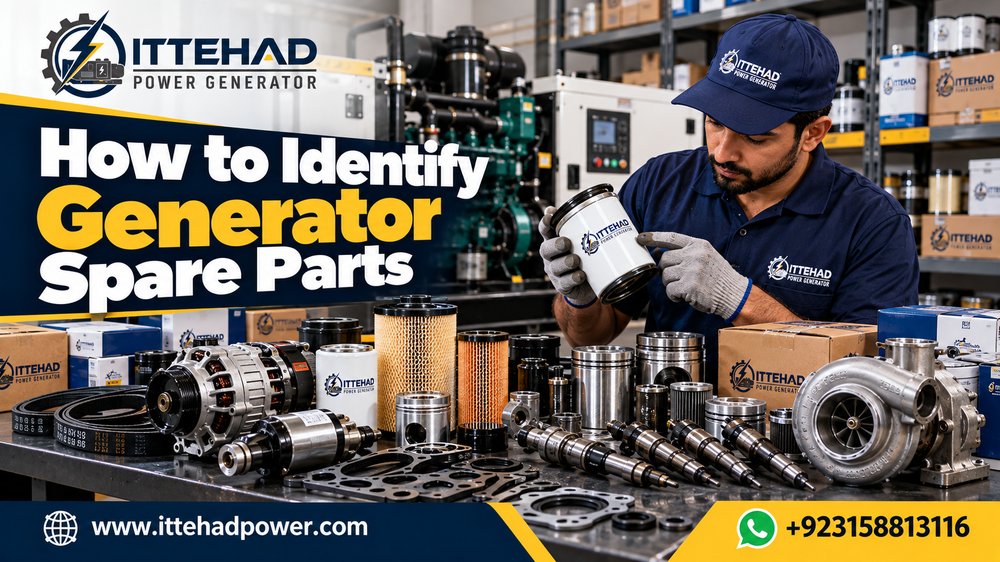
Knowing how to identify generator spare parts correctly is essential before ordering, replacing, or installing any component. Generator parts may look similar while having different dimensions, electrical ratings, thread sizes, pressure requirements, connections, materials, or internal specifications. Accurate part identification helps reduce incorrect purchases, repeated repairs, compatibility problems, unnecessary downtime, and damage to connected components. A careful process should combine generator model details, engine information, part numbers, physical measurements, operating specifications, wear condition, and reliable sourcing before a replacement is selected.
Why Correct Generator Spare Part Identification Matters
A generator contains many mechanical, electrical, fuel, cooling, starting, filtration, and control components. Each part is designed to work within specific operating requirements.
Installing an incorrect replacement can create problems even when the component appears to fit physically. A mismatched filter may provide unsuitable flow, an electrical part may have the wrong rating, or a hose may have the correct diameter but unsuitable material.
Correct identification supports reliable repair and helps ensure that the replacement works properly with the existing generator system.
How to Identify Generator Spare Parts Correctly
Understanding how to identify generator spare parts starts with collecting accurate information before searching for a replacement. The more technical details available, the easier it becomes to distinguish between visually similar components.
Useful identification information includes:
- Generator manufacturer
- Generator model
- Engine manufacturer
- Engine model
- Serial number where available
- Original part number
- Component markings
- Physical dimensions
- Connection type
- Electrical specification where relevant
- Operating application
These details should be checked together rather than relying on only one reference.
Start With the Generator Nameplate
The generator nameplate can provide important information needed for parts identification. Depending on the equipment, it may show the manufacturer, model, serial number, electrical rating, and other technical details.
Record the information clearly before removing parts or contacting a supplier. A photograph of the nameplate can also help preserve the details for future reference.
Check the Engine Model Separately
The generator model alone may not always be enough because the engine can have its own identification information. Many engine-related components are selected according to the engine model rather than the complete generator model.
Engine information can be especially useful when identifying:
- Oil filters
- Fuel filters
- Air filters
- Belts
- Hoses
- Fuel-system parts
- Sensors
- Seals and gaskets
- Starting components
Always confirm which identification reference is relevant to the part being replaced.
Look for the Original Part Number
Part numbers are among the most useful references for identifying generator components. They may be printed, stamped, engraved, molded, or attached on a label.
When reading the number:
- Clean the component carefully if markings are dirty
- Record every letter and number
- Check for spaces, dashes, or suffixes
- Do not assume similar numbers are interchangeable
- Compare the number with generator and engine details
A single digit or suffix can sometimes identify a different version of the same basic component.
Do Not Identify Parts by Appearance Alone
Visual similarity is one of the most common causes of incorrect spare part selection. Two filters, sensors, relays, belts, or connectors may look almost identical while having different specifications.
Appearance can help narrow the search, but it should always be supported by measurements, ratings, part numbers, or model information.
Measure the Existing Component
When a clear part number is unavailable, physical measurements can provide useful identification information.
Depending on the component, useful measurements may include:
- Overall length
- Width
- Diameter
- Thread size
- Mounting-hole spacing
- Connector dimensions
- Belt length and profile
- Hose internal diameter
- Filter dimensions
Measurements should be taken accurately because small differences can affect fitment and operation.
Identify Generator Filters Correctly
Oil, fuel, and air filters are commonly replaced generator parts, but they should not be selected only by size or external appearance.
Filter identification may require checking:
- Existing filter number
- Engine model
- Thread type
- Outer diameter
- Overall height
- Seal dimensions
- Filtration application
- Flow requirements
An incorrect filter can affect fuel delivery, lubrication, airflow, or sealing.
Identify Generator Belts Carefully
Generator belts may differ in length, width, profile, and application. A belt that appears close in size may still be unsuitable.
Check:
- Existing belt markings
- Belt length
- Width
- Profile
- Number of ribs or grooves where applicable
- Pulley arrangement
- Generator or engine reference
Correct belt selection helps maintain proper tension and dependable operation.
Identify Hoses and Fuel Lines
Hoses and fuel lines need the correct diameter, material, pressure suitability, length, and connection type.
Useful identification points include:
- Internal diameter
- External diameter
- Length
- Material
- Connection style
- Operating fluid
- Clamps or fittings used
- Original routing
A hose should not be selected only because it fits over the connection. The material must also suit the fluid and operating conditions.
Identify Electrical Generator Parts by Rating
Electrical components require careful identification because physical fit does not confirm electrical compatibility.
Depending on the part, check:
- Voltage rating
- Current rating
- Number of terminals
- Connector arrangement
- Coil specification
- Part number
- Mounting style
- Control-system application
Electrical components with incorrect ratings can fail, operate incorrectly, or damage connected circuits.
Identify Sensors and Switches Properly
Pressure, temperature, speed, and other sensors may appear similar while producing different signals or operating at different ranges.
Before sourcing a replacement, confirm:
- Sensor function
- Part number
- Thread or mounting size
- Connector type
- Electrical characteristics
- Operating range
- Generator or engine application
Wiring and connectors should also be inspected before assuming that the sensor itself has failed.
Identify Starter and Charging Components
Starter motors, relays, solenoids, and charging-related components should be matched carefully because differences in voltage, mounting, gear arrangement, connections, or capacity can affect operation.
Important identification details may include:
- Voltage
- Part number
- Mounting pattern
- Terminal arrangement
- Physical dimensions
- Generator or engine model
- Related electrical specifications
Testing should also be completed before expensive starting components are replaced.
Identify Fuel System Parts Accurately
Fuel pumps, injectors, filters, shutoff components, fittings, and fuel lines operate within specific fuel-delivery requirements.
Fuel-system part identification may require:
- Engine model
- Original part number
- Fuel-system type
- Connection arrangement
- Flow requirements
- Electrical rating where applicable
- Mounting dimensions
Correct compatibility is particularly important for injectors and fuel-delivery components because incorrect parts can affect combustion and engine performance.
Identify Cooling System Parts
Cooling components help prevent overheating and should match the generator’s operating requirements.
Common cooling-system spare parts may include:
- Hoses
- Clamps
- Temperature sensors
- Fan-related parts
- Thermostat-related components
- Seals and fittings
Check dimensions, connections, operating temperature requirements, and generator or engine references before purchase.
Recognize Wear Signs Before Ordering Parts
Spare part identification should begin with confirming that the component actually needs replacement. A worn-looking part may still be serviceable, while another component may fail internally without obvious visible damage.
Common wear indicators include:
- Cracks
- Fraying
- Corrosion
- Burn marks
- Leakage
- Loose terminals
- Damaged connectors
- Excessive play
- Restricted filters
- Repeated intermittent operation
- Physical deformation
Diagnosis should confirm whether the observed wear is responsible for the generator problem.
Why Fault Diagnosis Should Come Before Parts Ordering
A generator symptom does not always identify the failed component. A starting problem, for example, may result from the battery, cables, starter, fuel supply, control signal, or engine condition.
Ordering a replacement part before confirming the cause can waste money and delay the actual repair.
A diagnosis-first approach should answer:
- What symptom is occurring?
- Which system is involved?
- What testing has been completed?
- Which component has actually failed?
- Did another problem cause the failure?
Check Compatibility Before Buying
Correct identification does not end when a similar part is found. Compatibility should still be confirmed before purchase.
Compare:
- Part number
- Generator model
- Engine model
- Dimensions
- Connections
- Electrical ratings
- Operating pressure where relevant
- Material
- Mounting arrangement
- Intended application
If an important specification differs, the part should not automatically be treated as interchangeable.
Original Reference and Compatible Replacement Parts
Sometimes the exact original part may not be available, and a compatible replacement may be considered. In that situation, compatibility should be confirmed using technical specifications rather than visual similarity alone.
A suitable compatible part should meet the required operating conditions and connection requirements of the original application.
Replacement Planning Before Dismantling
Replacement planning can reduce downtime by identifying all necessary parts before repair begins.
Before dismantling, consider whether the job may also require:
- Seals
- Gaskets
- Clamps
- Washers
- Connectors
- Related filters
- Mounting hardware
Replacing a major component while reusing a damaged seal or fitting can lead to repeat repair work.
A Practical Generator Spare Parts Identification Process
A structured process can make identification faster and more accurate.
- Confirm the fault: Determine which component genuinely needs attention.
- Record generator details: Note manufacturer, model, and serial information.
- Record engine details: Identify the engine manufacturer and model where relevant.
- Find the original part number: Check labels, stamps, engravings, and markings.
- Photograph the component: Capture connections, mounting points, labels, and overall shape.
- Measure the part: Record important dimensions and thread sizes.
- Note technical specifications: Record voltage, pressure, flow, material, or other relevant ratings.
- Compare replacement options: Check every important specification before ordering.
- Inspect the new part: Confirm condition and compatibility before installation.
- Test after replacement: Verify that the original fault has been corrected.
Benefits of Accurate Spare Part Identification
Correct identification improves both repair efficiency and generator reliability.
- Reduces incorrect purchases
- Helps prevent installation problems
- Supports correct component compatibility
- Reduces repeat repair work
- Helps control maintenance costs
- Reduces generator downtime
- Supports safer repair decisions
- Makes future parts sourcing easier
Keep Photographs of Important Generator Parts
Photographs can become useful reference material for future maintenance. Take clear images before removing a component, especially if wiring, hoses, or connectors may later need to be restored to their original positions.
Useful photographs include:
- Part number label
- Front and rear of the component
- Electrical connectors
- Mounting points
- Hose routing
- Original installation position
Photos should support technical identification rather than replace specification checks.
Keep a Generator Spare Parts Record
Once a replacement has been confirmed, record the details for future use. This can make later servicing faster and reduce repeated identification work.
A useful parts record can include:
- Part name
- Part number
- Generator model
- Engine model
- Date replaced
- Supplier reference
- Reason for replacement
- Generator operating hours
Accurate records are particularly helpful for filters, belts, sensors, and frequently serviced components.
Reliable Sourcing of Generator Spare Parts
Even correctly identified parts should be sourced carefully. Poor-quality, damaged, or incorrectly represented components can create new problems after installation.
Reliable sourcing should focus on:
- Correct technical specification
- Verified compatibility
- Clear part reference
- Good physical condition
- Suitable packaging and storage
- Accurate description
- Appropriate application
Price should be considered together with suitability and reliability.
What Customers Need When Identifying Generator Parts
Customers usually want to know exactly which component they need, whether it will fit, and whether replacing it will solve the actual generator problem.
Useful support should provide:
- Part identification assistance
- Generator and engine compatibility checks
- Explanation of relevant specifications
- Wear assessment
- Replacement planning
- Reliable sourcing guidance
- Advice to diagnose the fault before major purchases
How to Select a Generator Spare Parts Supplier
A good supplier should ask for technical information before recommending a component, especially when several similar versions exist.
Useful selection points include:
- Ability to work with part numbers
- Understanding of generator and engine models
- Clear compatibility guidance
- Attention to dimensions and ratings
- Reliable sourcing
- Transparent communication
- No pressure to buy unrelated components
Accurate identification support can save more time and money than simply choosing the lowest-priced part.
Local Relevance of Generator Spare Parts Identification
Generator operating conditions can influence which parts wear most quickly. Heat, dust, extended running, fuel contamination, long standby periods, vibration, and maintenance history can all affect filters, belts, hoses, connections, sensors, and other components.
Local availability of spare parts can make comparison and replacement easier, but technical compatibility should still be confirmed before purchase. A nearby part is useful only when it matches the generator correctly.
Trust Points When Identifying Generator Spare Parts
Reliable parts identification should be transparent and based on evidence rather than guesswork.
Important trust points include:
- Generator and engine details checked
- Original part number used where available
- Dimensions verified
- Electrical or mechanical specifications compared
- Fault diagnosis completed first
- Compatibility confirmed before purchase
- No unnecessary replacement recommended
- New part checked before installation
Common Generator Spare Parts Identification Mistakes
Incorrect identification often happens because one important detail is overlooked.
Common mistakes include:
- Buying only by appearance
- Ignoring the engine model
- Reading the part number incorrectly
- Not checking suffixes
- Using approximate measurements
- Ignoring voltage or current ratings
- Assuming all filters of the same size are identical
- Using unsuitable hose material
- Replacing parts without confirming the fault
- Failing to compare the new part before installation
A simple verification process can prevent many of these problems.
What to Do When the Part Number Is Missing
Older, damaged, or heavily used components may have unreadable labels. Identification is still possible by combining other information.
Use:
- Generator model
- Engine model
- Component function
- Physical measurements
- Mounting details
- Connection type
- Electrical or mechanical specifications
- Photographs of the existing part
A supplier or technician should compare all available information before confirming a replacement.
What to Do When the Old Part Is Not Available
If the original component has already been removed or lost, generator and engine identification becomes even more important. Service records, previous invoices, photographs, manuals, and related component references may help establish the correct requirement.
A replacement should not be selected by filling the available space with the closest-looking part.
Guidance Before Purchasing Generator Spare Parts
Before placing an order, confirm that the suspected component is actually faulty and gather as much technical information as possible.
A practical pre-purchase check includes:
- Confirm the generator fault
- Record generator and engine model
- Check the existing part number
- Measure the component
- Photograph markings and connections
- Confirm technical ratings
- Compare the proposed replacement carefully
- Check whether seals or related parts are also required
This process helps reduce incorrect purchases and repair delays.
Safe Spare Parts Replacement
Generator components may involve electricity, fuel, hot surfaces, moving parts, batteries, and pressurized fluids. Appropriate safety procedures should be followed before removing or installing parts.
Electrical, fuel injection, starting, and control components may require specialized testing or installation procedures. If the correct method is uncertain, professional repair is safer than trial-and-error replacement.
Testing After Installing a Replacement Part
A new part should not be considered successful simply because it fits. The generator should be tested to confirm that the original fault has been corrected and no new issue has been introduced.
Post-replacement checks may include:
- Starting performance
- Engine stability
- Electrical output
- Control panel status
- Fuel, oil, or coolant leakage
- Unusual noise or vibration
- Temperature behavior
- Response under operation
Testing completes the identification and replacement process by confirming that the selected component is functioning correctly.
Make Better Generator Spare Parts Decisions
Understanding how to identify generator spare parts helps reduce compatibility problems, unnecessary purchases, repeat repairs, and avoidable downtime. The most reliable approach combines generator and engine information, original part numbers, measurements, technical specifications, wear assessment, diagnosis, and careful comparison of replacement options.
If you are unsure which generator part is required, avoid purchasing by appearance or guesswork. Arrange proper identification and fault assessment first, confirm the replacement specification, and source a compatible component from a reliable supplier. Correct identification, careful installation, and post-repair testing can help restore dependable generator performance and make future maintenance easier to manage.