
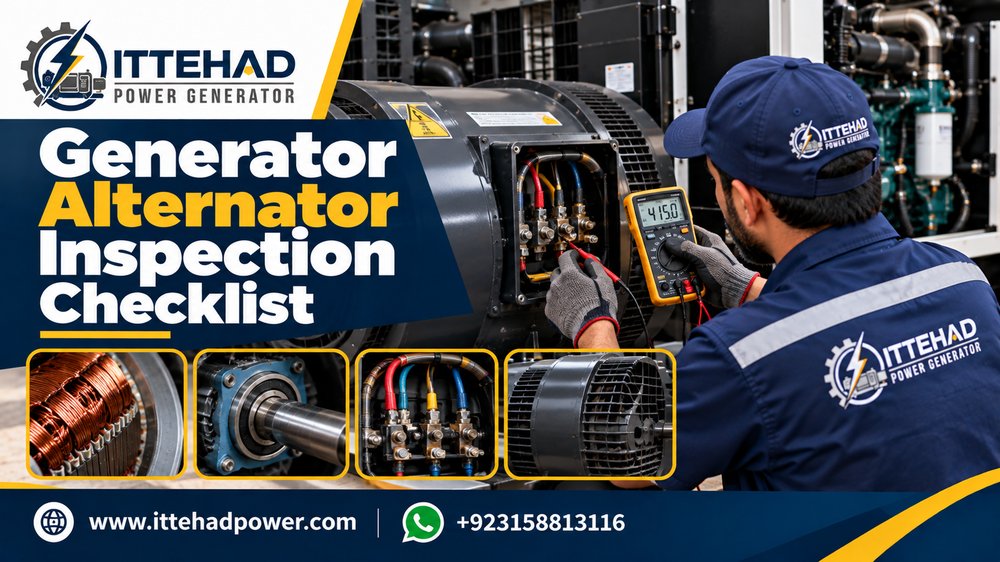
A structured generator alternator inspection checklist helps identify electrical, mechanical, and operating conditions that can affect generator output and long-term reliability. The alternator converts mechanical energy into electrical power, so problems involving output condition, windings, excitation, temperature, bearings, wiring, or internal connections can lead to unstable voltage, overheating, unusual noise, or loss of electrical generation. Regular inspection allows developing issues to be detected early and supports safer, more dependable generator operation.
Why a Generator Alternator Inspection Checklist Is Important
The alternator is one of the most important electrical components of a generator. Even when the engine runs correctly, the generator cannot provide dependable electrical output if the alternator has a fault.
A consistent inspection process helps technicians and generator owners monitor electrical output, mechanical condition, temperature, bearings, visible wiring, and signs of winding or excitation problems. This makes maintenance more organized and reduces the chance of overlooking important warning signs.
Understand the Alternator Before Inspection
The alternator produces electrical power while the generator engine provides mechanical rotation. Its performance depends on several components working together correctly, including windings, excitation systems, electrical connections, bearings, cooling arrangements, and associated control components.
An inspection should therefore consider both electrical and mechanical condition rather than focusing only on voltage output.
Check Generator Electrical Output
Output condition is one of the first areas to review during alternator inspection. Voltage and frequency should remain stable under appropriate operating conditions.
Unstable output, low voltage, high voltage, voltage loss, or unusual variation can indicate problems that require further electrical diagnosis.
- Check whether voltage is stable
- Observe output during normal operation
- Compare readings under different suitable loads
- Look for sudden voltage fluctuation
- Check for complete loss of output
- Review control-panel warnings related to electrical output
Inspect Alternator Windings
Alternator windings play a central role in electrical generation. Damage, overheating, contamination, insulation deterioration, or internal electrical faults can reduce performance or cause complete failure.
Visible inspection can identify some problems, but deeper winding condition may require appropriate electrical testing by qualified personnel.
Look for Signs of Overheating
Discoloration, burnt odor, damaged insulation, or unusual heat can indicate winding stress or electrical problems. These signs should not be ignored.
Check for Contamination
Dust, oil, moisture, or other contamination can affect insulation and cooling. The alternator should be kept reasonably clean according to its operating environment and maintenance requirements.
Review Insulation Condition
Where appropriate, insulation condition should be evaluated using suitable testing procedures. Poor insulation can contribute to electrical leakage or winding failure.
Excitation System Inspection
The excitation system helps control the magnetic field required for electrical generation. Excitation faults can result in low voltage, unstable voltage, or no electrical output.
Inspection should consider relevant wiring, connections, control components, and excitation-related parts where applicable to the generator design.
Low or Missing Excitation
If the alternator produces little or no voltage, the excitation system may require inspection. The cause should be confirmed before components are replaced.
Unstable Excitation
Voltage that rises and falls unexpectedly may be linked to excitation control, wiring, connection faults, or another electrical condition.
Check Alternator Temperature
Excessive alternator temperature can reduce insulation life and may indicate overloading, poor airflow, bearing problems, internal electrical faults, or contamination.
Operating temperature should be observed in relation to generator load and normal working conditions. A noticeable increase from previous behavior may require further investigation.
- Check ventilation paths
- Inspect for blocked airflow
- Look for accumulated dust or contamination
- Observe whether temperature rises excessively under load
- Investigate unusual heating around electrical connections
- Check whether cooling conditions have changed
Alternator Bearing Inspection
Bearings support rotating components and should operate smoothly without excessive noise, vibration, or heat. Bearing deterioration can affect mechanical alignment and eventually lead to alternator damage.
Listen for Unusual Noise
Grinding, rumbling, squealing, or other unusual sounds may indicate bearing wear or another mechanical issue.
Check for Excessive Vibration
Increased vibration can be related to bearings, alignment, looseness, rotor condition, or mounting problems. The source should be identified before continued operation.
Observe Bearing Temperature
Unusual heat around bearing areas can indicate lubrication, wear, or mechanical problems that require inspection.
Inspect Alternator Electrical Connections
Loose or damaged electrical connections can cause heat, voltage drop, unstable output, or electrical failure. Generator vibration can gradually loosen terminals, making regular inspection important.
- Check visible output terminals
- Inspect wiring for damaged insulation
- Look for loose connectors
- Check for discoloration or overheating
- Inspect grounding connections
- Confirm accessible terminals remain secure
Electrical panels should only be opened and tested using appropriate safety procedures.
Check for Heat Damage at Terminals
Electrical resistance at a loose or deteriorated connection can generate significant heat. Darkened terminals, melted insulation, burnt odor, or discolored connections should be investigated immediately.
Replacing damaged terminals alone may not be enough if excessive current, poor contact, or another electrical fault caused the overheating.
Voltage Regulation and Output Stability
Stable voltage is necessary for dependable generator operation. If alternator output becomes too high, too low, or unstable, the voltage-regulation system and related electrical components may require inspection.
Diagnosis should consider the alternator, excitation system, control wiring, electrical connections, load condition, and voltage-regulation components together.
Alternator Output Under Load
An alternator may appear to operate normally without load but develop voltage or temperature problems when electrical demand increases. Suitable load testing can therefore provide useful information about alternator condition.
During appropriate testing, output stability, temperature, noise, vibration, and generator readings should be observed carefully.
Signs of Alternator Overloading
Operating the generator above suitable electrical demand can place excessive stress on alternator windings, connections, cooling, and other components.
- Voltage drops significantly under load
- Alternator temperature rises abnormally
- Electrical connections become excessively hot
- Protective devices operate repeatedly
- Generator output becomes unstable
- Unusual electrical smell appears
Load requirements should be reviewed if these symptoms occur repeatedly.
Ventilation and Cooling Inspection
The alternator requires sufficient airflow to manage heat during operation. Restricted ventilation can increase temperature and shorten component life.
Cooling openings, ventilation paths, and surrounding space should remain reasonably clear. Dirt, debris, or objects restricting airflow should be removed using suitable maintenance procedures.
Inspect for Dust, Moisture, and Contamination
Environmental contamination can affect alternator insulation, electrical connections, cooling, and mechanical components. Dust buildup may reduce airflow, while moisture can create electrical concerns.
The alternator should be inspected according to site conditions and cleaned appropriately when contamination becomes excessive.
Rotor and Mechanical Condition
Rotating components should operate smoothly and without abnormal contact, excessive movement, or unusual noise. Mechanical problems can affect both alternator performance and bearing condition.
If unusual vibration or internal mechanical noise is present, the generator should be inspected before continued operation causes further damage.
Generator Alternator Inspection Process
A structured sequence makes alternator inspection more consistent and helps ensure that important checks are not missed.
- Review generator operating history and reported symptoms.
- Inspect the alternator exterior and surrounding area.
- Check visible wiring and electrical terminals.
- Review voltage and output condition.
- Observe alternator temperature during suitable operation.
- Listen for bearing or mechanical noise.
- Check for unusual vibration.
- Inspect ventilation and cooling paths.
- Look for contamination, moisture, or heat damage.
- Review excitation and voltage-regulation behavior where relevant.
- Inspect winding condition using appropriate methods where required.
- Test generator output under suitable load conditions.
- Record findings and plan corrective work where necessary.
Common Alternator Problems Found During Inspection
Routine inspection can reveal developing issues before they result in complete loss of generator output.
- Loose electrical terminals
- Overheated connections
- Unstable voltage
- Low electrical output
- Loss of excitation
- Winding overheating
- Insulation deterioration
- Bearing noise or wear
- Excessive vibration
- Blocked cooling airflow
- Dust or moisture contamination
- Voltage-regulation problems
Benefits of Routine Generator Alternator Inspection
Regular alternator inspection helps keep electrical generation reliable and makes developing faults easier to identify before they lead to more extensive repair.
- Supports stable generator voltage
- Helps identify winding and excitation problems early
- Reduces the risk of overheating
- Allows bearing wear to be detected sooner
- Improves electrical connection reliability
- Supports preventive maintenance planning
- Reduces unexpected loss of generator output
- Helps protect long-term alternator condition
Customer Needs During Alternator Inspection
Generator owners generally need to know whether output problems are caused by the alternator itself or by another part of the electrical system. Accurate diagnosis is important because unstable voltage or loss of output can result from several different causes.
A useful inspection should clearly explain what was checked, what condition was found, and whether cleaning, connection repair, bearing work, winding attention, excitation repair, or further testing is required.
How to Select an Alternator Inspection Service
Alternator inspection requires both electrical and mechanical understanding. A reliable service should diagnose the complete output system rather than making replacement recommendations from symptoms alone.
Choose Systematic Electrical Testing
The service provider should review output, wiring, excitation, voltage regulation, and electrical connections before recommending major alternator work.
Look for Mechanical Inspection
Bearings, vibration, temperature, and rotating condition should also be considered because not every alternator problem is purely electrical.
Ask for Clear Findings
The customer should understand whether the problem involves output connections, excitation, windings, bearings, overheating, or another condition.
Confirm Post-Repair Testing
After corrective work, alternator output should be checked again under suitable operating conditions to confirm that the original problem has been resolved.
Site-Specific Alternator Inspection Considerations
Alternator condition can be influenced by the actual operating environment. Dust, moisture, heat, load pattern, ventilation, operating hours, and generator installation conditions may all affect inspection requirements.
On-site evaluation can therefore be useful because the alternator can be observed under the same electrical load and environmental conditions in which it normally operates.
Trust Points in Professional Alternator Inspection
A dependable alternator assessment should be based on inspection, testing, and measurable operating behavior. Major repair or replacement should only be recommended when findings support it.
- Electrical output is checked systematically
- Wiring and terminals receive proper inspection
- Excitation and regulation issues are considered
- Temperature and cooling are reviewed
- Bearing condition is evaluated
- Unnecessary replacement is avoided
- Corrective recommendations are explained clearly
- Generator output is retested after repair
Common Alternator Inspection Mistakes to Avoid
Incomplete inspection can lead to incorrect diagnosis and unnecessary repair work.
- Assuming every voltage problem is caused by the windings
- Ignoring loose output terminals
- Overlooking bearing noise or vibration
- Failing to check ventilation and temperature
- Replacing electrical components without testing
- Ignoring contamination around windings and cooling paths
- Testing only without load when the problem occurs under load
- Skipping post-repair output verification
Guidance for Better Alternator Maintenance
Keep the alternator clean, maintain suitable airflow, monitor generator output, and investigate unusual voltage behavior before it becomes severe. Changes in sound, temperature, vibration, or electrical readings should be recorded and compared with normal operating behavior.
Electrical terminals and accessible connections should be checked during routine generator maintenance. Any sign of heat damage, loose wiring, or insulation deterioration should receive timely attention.
When an Alternator Inspection Should Be Prioritized
Prompt inspection is recommended when the generator produces no voltage, unstable voltage, unusually low or high output, excessive alternator heat, burning odor, abnormal vibration, bearing noise, or repeated electrical warnings.
Continuing to operate a generator with confirmed alternator abnormalities may increase the extent of electrical or mechanical damage.
Use a Generator Alternator Inspection Checklist for Reliable Output
A complete generator alternator inspection checklist should cover electrical output, windings, excitation, voltage regulation, temperature, bearings, wiring, connections, ventilation, contamination, and mechanical condition. Reviewing these areas systematically helps identify developing problems before they result in complete loss of generator output.
Arrange a professional alternator inspection when voltage becomes unstable, output falls, unusual heat or noise develops, or routine maintenance identifies a potential problem. Accurate testing, preventive inspection, and corrective work based on actual findings can help maintain safer, more stable, and more reliable generator operation.