
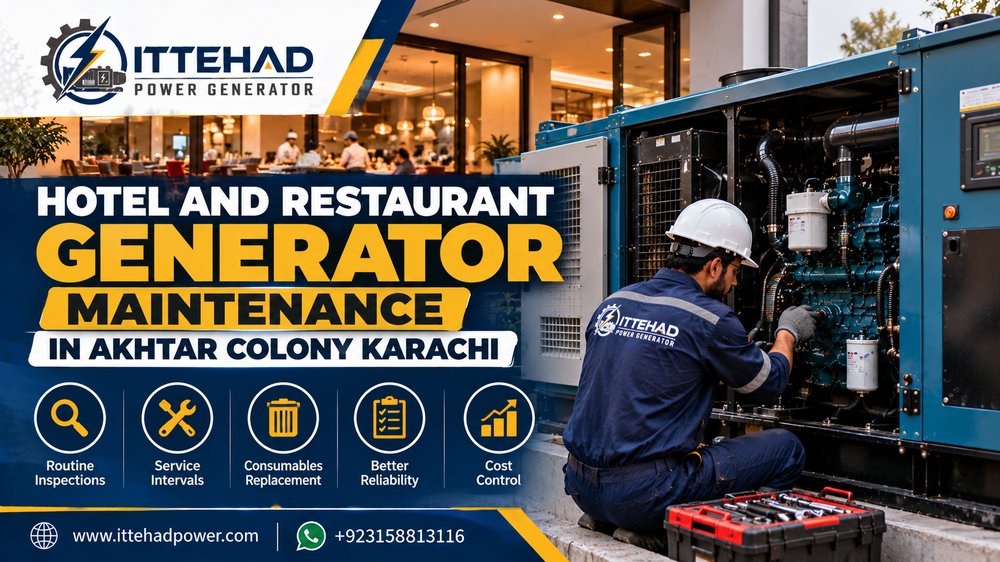
Reliable hotel and restaurant generator maintenance in Akhtar Colony Karachi helps commercial hospitality businesses maintain dependable backup power for lighting, refrigeration, kitchen equipment, ventilation, air conditioning, billing systems, and other essential electrical requirements. Hotels and restaurants often operate for long hours, so generator maintenance should be planned around actual operating hours, service intervals, load conditions, consumable replacement, and equipment history. Regular inspections, documented servicing, and timely corrective work can reduce unexpected breakdowns, control maintenance costs, and provide greater confidence when generator power is required.
Why Generator Maintenance Matters for Hotels and Restaurants
Hotels and restaurants depend on electricity throughout daily operations. A generator that fails to start, overheats, loses output, or shuts down unexpectedly can disrupt important equipment and affect normal business activity.
Preventive maintenance helps identify developing problems before they become complete failures. It also allows servicing to be scheduled at practical times instead of waiting until an urgent generator problem occurs during operating hours.
Hotel and Restaurant Generator Maintenance in Akhtar Colony Karachi
Professional hotel and restaurant generator maintenance in Akhtar Colony Karachi should focus on the generator’s actual operating pattern, load, environment, and maintenance history. A unit used frequently may require shorter service intervals than a generator that operates only occasionally.
The maintenance plan should include routine inspections, consumable checks, operating-hour records, cooling-system assessment, fuel-system inspection, electrical checks, starting-system testing, and clear documentation of any repair requirements.
Routine Generator Inspection for Hospitality Businesses
A structured inspection helps ensure that important generator systems are not overlooked. The equipment should be checked both while stopped and during operation where appropriate.
- Engine oil level and condition
- Coolant level and cooling-system condition
- Fuel supply and visible fuel-system components
- Oil, fuel, and coolant leaks
- Air filter condition
- Fuel and oil filters
- Battery and terminals
- Belts and hoses
- Cooling fan operation
- Electrical connections
- Control-panel warnings
- Voltage and frequency
- Operating temperature
- Unusual noise or vibration
- Generator operating hours
Service Intervals Based on Generator Usage
Generator servicing should consider both calendar time and accumulated operating hours. A hotel or restaurant generator that operates frequently may reach oil, filter, and inspection intervals quickly.
Operating-hour records make it easier to plan service before maintenance becomes overdue. They also provide a useful reference for comparing generator usage between servicing periods.
Why Operating Hours Are Important
Two generators installed at similar times may require very different maintenance schedules if one operates significantly more often. Using operating hours alongside calendar dates provides a clearer picture of actual equipment usage.
Engine Oil and Lubrication Maintenance
Engine oil supports lubrication and helps reduce internal wear. Oil level and condition should be checked regularly, especially when a generator operates for extended periods.
Oil changes and filter replacements should be recorded with the service date and operating-hour reading so future maintenance can be planned accurately.
Lubrication System Checks
- Check oil level
- Inspect oil condition
- Look for visible leakage
- Check oil-pressure indications
- Replace oil at appropriate intervals
- Replace the oil filter when required
- Record completed servicing
Fuel System Maintenance
A dependable fuel supply is essential for reliable starting and stable generator operation. Blocked filters, contaminated fuel, leaking hoses, loose fittings, or air entering the fuel system can cause starting difficulty, power loss, or shutdown.
Routine maintenance should include inspection of fuel filters, hoses, connections, visible fuel condition, and any signs of leakage.
Fuel System Inspection Points
- Fuel level
- Fuel filters
- Fuel hoses
- Connections and fittings
- Visible leakage
- Signs of contamination
- Fuel-system maintenance history
Cooling System Maintenance
Hotels and restaurants may require generators to operate for extended periods, increasing the importance of effective cooling. Coolant level, radiator condition, airflow, hoses, belts, fan performance, and water-pump condition should all be reviewed during maintenance.
Cooling problems can cause rising temperature and unexpected shutdown, particularly when the generator is carrying a substantial electrical load.
Cooling System Checklist
- Check coolant level when safe
- Inspect hoses for cracks, swelling, or leakage
- Check radiator condition
- Inspect cooling fan operation
- Check fan belts
- Look for coolant seepage
- Monitor operating temperature
Air Filter and Air Intake Checks
The engine requires clean, unrestricted air for proper combustion. Dust and contamination can restrict an air filter and reduce engine performance.
Generators operating in dusty environments may require more frequent air-filter inspection. The intake system should also be checked for loose clamps, damaged piping, or other restrictions.
Battery and Starting-System Reliability
A backup generator is only useful if it starts when required. Battery condition, terminal security, cable condition, charging performance, and cranking quality should therefore be checked regularly.
Battery problems can develop gradually, particularly when the generator remains on standby for long periods between uses.
Battery Maintenance Points
- Inspect terminals for corrosion
- Check terminal tightness
- Review battery charge condition
- Inspect cables
- Observe cranking speed
- Check charging performance
- Record battery replacement history
Electrical Output and Generator Performance
Generator maintenance should include electrical operating checks where appropriate. Voltage and frequency should remain stable during normal operation.
Loose terminals, breaker problems, alternator faults, or excessive electrical demand can affect output reliability. Abnormal readings should be investigated instead of ignored.
Control Panel and Warning Indicators
The generator control panel can provide useful information about operating hours, voltage, frequency, temperature, oil pressure, and fault conditions depending on the generator model.
Repeated warning messages should be documented and diagnosed. Resetting a warning without understanding its cause can allow the same problem to return.
Generator Load Requirements in Hotels and Restaurants
Hospitality businesses can have varied electrical loads. Lighting, refrigeration, air conditioning, ventilation, kitchen equipment, pumps, and other systems may operate at the same time.
Generator capacity and condition should therefore be considered together. A well-maintained generator can still struggle if electrical demand exceeds suitable operating limits.
Review Peak Electrical Demand
Maintenance teams should understand whether the generator is regularly operating under high load. Temperature, fuel consumption, voltage stability, and engine performance may change as demand increases.
Refrigeration and Power Reliability
Restaurants and hotels may depend on refrigeration equipment during power interruptions. Reliable generator operation helps maintain electrical supply to essential loads when backup power is needed.
Because refrigeration systems can create significant starting demand, generator performance should be reviewed under realistic operating conditions where appropriate.
Kitchen Equipment and Generator Load
Commercial kitchen equipment can add substantial electrical demand. If multiple appliances are used simultaneously, the total generator load should remain within suitable capacity.
Generator maintenance should therefore include attention to performance under load, not only no-load running.
Air Conditioning and Ventilation Loads
Hotels and restaurants may also rely heavily on air conditioning and ventilation. These systems can create additional starting and running demand during generator operation.
Where the generator experiences voltage drop, unstable frequency, excessive heat, or engine-speed changes when these loads are connected, further inspection may be required.
Benefits of Preventive Generator Maintenance
A structured maintenance program can provide significant advantages for hospitality businesses that rely on backup power.
- Improved starting reliability: Batteries, fuel supply, and starting components receive regular attention.
- Reduced unexpected downtime: Developing faults can be identified during planned inspections.
- Better cooling performance: Cooling components are checked before overheating develops.
- Stable electrical output: Voltage and frequency can be monitored during service.
- Better cost control: Maintenance can be planned instead of relying only on emergency repair.
- Improved service records: Operating hours, repairs, and consumable changes remain documented.
- Greater operating confidence: Generator condition is reviewed before urgent power demand occurs.
Consumables That Should Be Tracked
Consumables should be replaced according to generator requirements and operating history. Tracking these items helps prevent both overdue maintenance and unnecessary early replacement.
- Engine oil
- Oil filters
- Fuel filters
- Air filters
- Coolant where applicable
- Belts where required
- Other routine generator service items
Importance of Generator Maintenance Records
Maintenance records provide a clear history of generator servicing and help technicians understand previous work. This can be particularly useful when several staff members or service technicians are responsible for equipment over time.
Useful Information to Record
- Service date
- Operating hours
- Oil and filter replacement
- Inspection findings
- Battery condition
- Cooling-system observations
- Electrical readings
- Faults identified
- Repairs completed
- Future maintenance recommendations
Cost Control Through Planned Maintenance
Generator maintenance costs are easier to manage when servicing is planned. Small leaks, worn belts, deteriorating hoses, blocked filters, loose terminals, or weak batteries can often be addressed before they lead to larger repair requirements.
Maintenance records can also prevent repeated replacement of components that were recently serviced.
Preventive Maintenance Versus Emergency Repairs
Emergency generator repairs can be disruptive because the failure has already occurred. Preventive maintenance aims to identify wear and developing faults before they affect operation.
While not every breakdown can be prevented, routine servicing gives hotel and restaurant operators greater control over maintenance timing and equipment condition.
Generator Testing During Maintenance
A generator should be operated during servicing where appropriate because some faults are not visible when the unit is stopped. Starting quality, engine sound, vibration, temperature, voltage, frequency, oil pressure, and warning indicators can all be observed.
Operational testing also provides an opportunity to confirm that previously completed repairs remain effective.
Load Testing Where Appropriate
A generator may run normally without load but develop issues when restaurant or hotel equipment is connected. Controlled testing under a suitable electrical load can help identify cooling, fuel, voltage, frequency, or engine-performance problems.
Any testing should remain within the generator’s rated operating limits.
Generator Maintenance for Frequent Operation
Hotels and restaurants that experience frequent generator runtime should base servicing closely on operating hours. Filters, oil, belts, hoses, and other components can accumulate wear more quickly during frequent use.
Inspection frequency may need to increase when the generator operates for long periods or regularly carries substantial load.
Generator Maintenance for Standby Operation
A generator that operates only occasionally still requires routine maintenance. Batteries can weaken, fuel quality can deteriorate, seals can age, filters can collect contamination, and minor leaks can develop while the unit remains idle.
Periodic starting and operational checks can help confirm that the generator remains ready for use.
Local Relevance in Akhtar Colony Karachi
Hotels and restaurants in Akhtar Colony Karachi may operate generators under conditions involving heat, dust, extended business hours, varying electrical loads, and limited opportunities for unexpected downtime. These factors make regular maintenance and operating checks particularly important.
A maintenance plan should consider actual generator usage, environmental conditions, ventilation, load pattern, and previous service history rather than applying the same servicing schedule to every installation.
Heat and Generator Maintenance
High surrounding temperature can increase cooling-system demand. Radiator airflow, coolant level, cooling fan performance, hoses, and generator-room ventilation should receive close attention when the generator operates in warm conditions.
Temperature changes during operation should be documented so unusual increases can be identified early.
Dust and Filter Maintenance
Dust can affect air filters, radiator surfaces, electrical components, and general generator cleanliness. Restriction may become more noticeable during long operating periods or higher loads.
Generators exposed to dusty conditions may require more frequent inspection of air intake and cooling areas.
Ventilation Around the Generator
The generator requires sufficient airflow for combustion and cooling. Poor ventilation can allow heat to build up around the engine and alternator.
The surrounding area should remain reasonably clear, and hot air should be able to leave the installation space effectively.
What Hotel and Restaurant Operators Need From Maintenance Service
Hospitality businesses need generator servicing that can be planned around business requirements. Maintenance should be organized, documented, and focused on reducing disruption.
Operators should receive clear information about generator condition, completed service work, identified faults, required repairs, and the next recommended maintenance point.
How to Select the Right Generator Maintenance Service
Generator maintenance should be evaluated on service quality, inspection depth, communication, and testing rather than price alone.
- Confirm that the service covers the main generator systems.
- Ask whether operating hours will be recorded.
- Check how oil, filters, and other consumables are tracked.
- Confirm that the cooling system is inspected.
- Ask whether battery and starting performance are checked.
- Confirm that voltage and frequency can be reviewed.
- Ask how faults will be diagnosed before parts replacement.
- Request clear maintenance records.
- Confirm that the generator will be tested after servicing.
Choose Maintenance Based on Actual Generator Condition
Generator servicing should not automatically involve replacing every serviceable component. Inspection results, operating hours, maintenance history, and actual condition should guide decisions.
This helps control costs while ensuring that worn or unreliable components receive attention when necessary.
Fault Diagnosis Before Replacement
Starting difficulty, overheating, unstable output, or power loss can have several possible causes. Replacing parts without diagnosis can increase maintenance costs without providing a lasting solution.
A professional technician should test and inspect the relevant systems before recommending major replacement work.
Common Generator Maintenance Problems to Watch For
- Difficult starting
- Slow cranking
- Fuel leakage
- Coolant leakage
- Rising operating temperature
- Low oil pressure
- Unusual vibration
- Abnormal engine noise
- Voltage fluctuations
- Frequency instability
- Repeated breaker trips
- Power loss under load
- Control-panel warnings
Do Not Ignore Small Generator Leaks
Minor oil, fuel, or coolant leakage can become more severe over time. Leaks can also provide useful information about deteriorating hoses, seals, fittings, or connections.
Early inspection can prevent fluid loss from becoming an operating problem during extended generator use.
Check Belts and Hoses Regularly
Belts and hoses experience heat, vibration, and gradual deterioration. Cracking, swelling, looseness, glazing, or leakage should be addressed before complete failure occurs.
These components are particularly important because they may affect cooling and other essential generator functions.
Monitor Generator Temperature
Operating temperature should remain reasonably stable under similar load conditions. A generator that begins running hotter than usual may have reduced coolant flow, poor radiator airflow, fan problems, low coolant, or another cooling-system issue.
Temperature increases should be investigated before repeated overheating develops.
Monitor Voltage and Frequency
Stable voltage and frequency are important for reliable electrical supply. Abnormal output may indicate excessive load, engine-speed problems, AVR issues, alternator faults, or loose electrical connections.
Electrical output should be checked during scheduled maintenance where appropriate.
Trust Points for Professional Generator Maintenance
A dependable generator maintenance service should provide a consistent inspection process and clear documentation.
- Routine inspection of major generator systems
- Operating-hour tracking
- Clear consumable replacement records
- Cooling-system checks
- Fuel-system inspection
- Battery and starting-system assessment
- Voltage and frequency checks
- Fault diagnosis before parts replacement
- Testing after maintenance
- Practical recommendations for future servicing
Common Maintenance Mistakes Hotels and Restaurants Should Avoid
Several common practices can increase generator downtime and maintenance costs.
- Waiting for a breakdown before arranging service
- Ignoring operating hours
- Skipping oil and filter changes
- Ignoring small leaks
- Running the generator with a restricted air filter
- Allowing coolant problems to continue
- Ignoring battery weakness
- Continuing operation with unstable voltage
- Adding electrical loads without reviewing generator capacity
- Keeping incomplete service records
Prepare for Scheduled Generator Maintenance
Before a service visit, hotel and restaurant operators can collect useful information that helps technicians evaluate generator condition more effectively.
- Current operating-hour reading
- Date of last service
- Recent repair history
- Any warning or fault indications
- Changes in starting behavior
- Temperature concerns
- Voltage or power issues
- Details of unusual noise or vibration
- Approximate generator load
Plan Maintenance Around Business Operations
Scheduled generator servicing should be arranged at a practical time whenever possible. Planned maintenance allows inspection, consumable replacement, testing, and necessary repairs to be completed with less disruption than an unexpected breakdown.
Businesses with frequent generator use should avoid delaying service simply because the unit is still operating normally.
Review Generator Performance After Maintenance
Once servicing is complete, the generator should be started and checked for stable operation. Starting quality, temperature, oil pressure, voltage, frequency, noise, vibration, and visible leakage should be reviewed.
This final check helps confirm that maintenance work has been completed correctly and the generator is ready for continued operation.
Maintain a Clear Generator Service History
Each maintenance visit should contribute to a useful long-term record. A clear history helps identify recurring problems and provides a reliable reference for future service decisions.
Hotels and restaurants can use these records to plan maintenance budgets, monitor operating hours, and understand which components have received previous attention.
Guidance for Improving Generator Reliability
Generator reliability improves when maintenance is consistent rather than occasional. Check operating hours regularly, keep service intervals organized, investigate new warning signs promptly, and maintain accurate records of repairs and consumables.
Operators should also avoid unnecessary overloading and ensure that cooling and ventilation conditions remain suitable during longer operating periods.
Control Generator Maintenance Costs
Cost control does not mean reducing necessary maintenance. It means identifying faults early, replacing consumables at suitable intervals, avoiding unnecessary parts replacement, and preventing small problems from becoming larger repairs.
Condition-based inspection and accurate service records can help hospitality businesses make more informed maintenance decisions.
Keep Hospitality Generator Power Reliable in Akhtar Colony Karachi
Consistent hotel and restaurant generator maintenance in Akhtar Colony Karachi can help improve starting reliability, temperature control, fuel-system condition, electrical output, and long-term equipment performance. Routine inspections, appropriate service intervals, consumable tracking, operating-hour records, and safe operational testing all contribute to a more dependable generator maintenance program.
If your hotel or restaurant generator has irregular maintenance records, increasing operating hours, starting problems, overheating, leaks, unstable electrical output, or overdue consumables, arrange a professional generator inspection in Akhtar Colony Karachi. Planned maintenance and timely corrective work can reduce unexpected downtime, support better cost control, and help keep essential hospitality operations powered with greater confidence.