
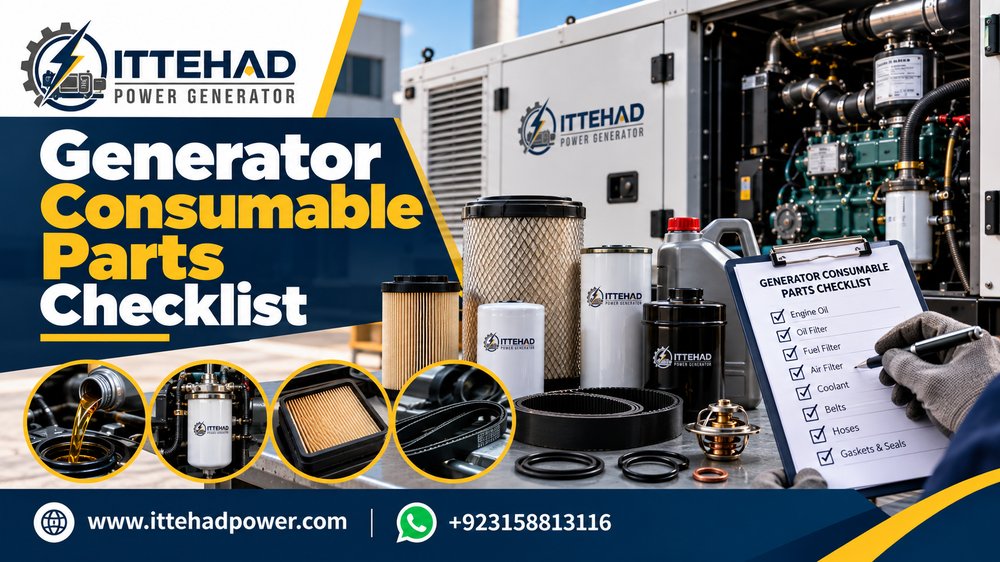
A practical generator consumable parts checklist helps owners and maintenance teams keep track of service items that naturally wear, become contaminated, or require replacement during routine generator maintenance. Consumable parts should be identified correctly, matched for compatibility, inspected for wear, and replaced according to actual condition and service requirements. A structured checklist also supports better replacement planning, reliable sourcing, reduced downtime, and more consistent generator operation.
Why a Generator Consumable Parts Checklist Is Important
Generator maintenance involves more than checking whether the engine starts. Filters, fluids, belts, hoses, batteries, seals, and other service items can deteriorate gradually and affect reliability if they are ignored.
A consumable parts checklist makes routine maintenance easier to organize. It helps identify what should be inspected, what may need replacement, and which items should be available before scheduled service begins.
What Are Generator Consumable Parts?
Generator consumable parts are components or service materials that may require periodic replacement because of operating hours, age, contamination, wear, heat, vibration, or general deterioration.
Replacement intervals can vary according to generator design, operating conditions, usage, and component condition. Consumables should therefore be monitored rather than replaced blindly according to a single fixed schedule.
Common Generator Consumable Parts to Monitor
The exact maintenance items depend on the generator configuration, but a useful checklist may include several common service components.
- Engine oil
- Oil filter
- Fuel filter
- Air filter
- Coolant
- Drive belts
- Cooling system hoses
- Battery
- Battery terminals and related connection items
- Seals and gaskets where replacement is required
- Small service fittings and connectors
Engine Oil and Oil Filter
Engine oil protects moving components and supports reliable engine operation. Over time, oil can become contaminated or lose suitable operating condition, while the oil filter collects material that should not circulate through the engine.
Oil and filter replacement should follow the generator’s maintenance requirements, operating hours, and actual condition. Delaying service can reduce lubrication quality, while replacing oil unnecessarily can increase maintenance cost without adding value.
Signs Oil Service May Be Due
- Scheduled operating-hour interval has been reached
- Oil condition appears significantly deteriorated
- Maintenance history is incomplete
- Generator has operated under demanding conditions
- Oil or filter replacement is due according to the service plan
Fuel Filter Inspection and Replacement
The fuel filter helps prevent unwanted contamination from reaching important fuel-system components. A restricted filter can contribute to difficult starting, unstable operation, reduced performance, or insufficient fuel delivery.
Fuel filter condition should be reviewed during scheduled servicing. If restriction or contamination is suspected, the surrounding fuel system should also be inspected so the cause is not overlooked.
Air Filter Condition
The engine requires a suitable supply of clean air for combustion. An excessively dirty or restricted air filter can affect engine breathing and operating performance.
The filter should be inspected according to service requirements and environmental conditions. Dusty or contaminated operating environments may require more frequent attention than cleaner conditions.
When an Air Filter May Need Attention
- Visible heavy contamination
- Restricted airflow
- Physical damage to the filter element
- Service interval has been reached
- Operating conditions expose the generator to significant dust
Coolant as a Generator Consumable
Coolant supports engine temperature control and should remain at the correct level and in suitable condition. Coolant condition can deteriorate with time, and leakage can reduce the quantity available in the cooling system.
Maintenance should include checking coolant level, visible condition, hoses, and connections. If coolant level repeatedly falls, the cause should be investigated rather than simply topping up the system.
Belts and Their Wear Signs
Belts are exposed to movement, heat, tension, and operating wear. A worn or damaged belt can affect the components it drives and may eventually fail if deterioration is ignored.
Accessible belts should be inspected for visible cracking, fraying, glazing, looseness, damage, or other signs of poor condition.
- Cracks on the belt surface
- Frayed edges
- Visible glazing or unusual wear
- Incorrect tension
- Noise during operation
- Physical damage or deterioration
Cooling System Hoses
Generator hoses can deteriorate because of heat, pressure, age, and vibration. A damaged hose may leak coolant and contribute to overheating or loss of reliable operation.
Hoses should be inspected for cracking, swelling, softness, hardening, leakage, or loose connections. Replacement should be planned before a visibly deteriorated hose fails completely.
Generator Battery as a Maintenance Item
The starting battery has a limited service life and should be monitored as part of the consumable parts checklist. Battery condition affects starting reliability even when other generator systems are operating normally.
Inspection should include terminal condition, corrosion, cable connections, physical battery condition, and starting performance. A battery should be replaced when testing or operating behavior confirms that it can no longer provide dependable starting power.
Seals, Gaskets, and Small Service Parts
Seals and gaskets may require replacement when components are serviced or when leakage develops. These items are small compared with major generator components but can still affect reliability if the wrong part is installed or damaged material is reused.
Replacement should match the relevant component and installation requirements. Small fittings, washers, connectors, and related service items should also be checked where applicable.
Generator Consumable Part Compatibility
Compatibility is important because filters, belts, batteries, hoses, and other service parts can vary between generator configurations. A part that looks similar may not provide the correct fit, capacity, rating, or performance.
Before replacement, available part numbers, dimensions, connection types, ratings, and generator specifications should be reviewed where relevant.
Use Correct Part Identification
The existing component can provide useful information about model, size, rating, and fitment. Identification should be confirmed before ordering or installing a replacement.
Avoid Unverified Substitutions
Alternative parts should not be selected only because they appear similar. Compatibility should be confirmed so the replacement performs correctly within the generator system.
Wear Signs That Should Not Be Ignored
Consumable parts often provide visible or operational warning signs before complete failure. Recognizing these signs can make replacement planning more predictable.
- Filter contamination or restriction
- Cracked or worn belts
- Leaking or deteriorated hoses
- Battery corrosion or weak starting performance
- Fluid leakage around seals or connections
- Repeated maintenance warnings
- Parts reaching scheduled service intervals
- Changes in generator operation linked to a service component
Replacement Planning for Generator Consumables
Replacement planning helps ensure that required parts are available before maintenance begins. This reduces delays caused by discovering during service that a critical filter, belt, hose, or other component is unavailable.
A useful plan considers generator operating hours, previous service records, visible condition, expected future use, and availability of compatible replacement parts.
Step-by-Step Generator Consumable Parts Checklist
A structured process can make consumable inspection and replacement more consistent.
- Review generator operating hours and maintenance history.
- Check engine oil level and service status.
- Inspect the oil filter replacement interval.
- Review fuel filter condition and service history.
- Inspect the air filter for contamination or restriction.
- Check coolant level and visible condition.
- Inspect belts for wear or damage.
- Check hoses for cracks, swelling, or leakage.
- Review battery condition and starting performance.
- Inspect seals, gaskets, and visible connection points.
- Identify parts approaching replacement requirements.
- Confirm part numbers and compatibility.
- Source suitable replacement items.
- Record all replacement work completed.
Why Maintenance Records Matter
Maintenance records help determine when consumables were last replaced and which items are approaching their next service requirement. Without records, service decisions can become dependent on memory or guesswork.
A simple record can include operating hours, inspection date, replaced items, part details, observed condition, and any recommendation for future replacement.
Benefits of Keeping Consumable Parts in Stock
Keeping frequently required compatible service items available can make planned maintenance more efficient. It can also reduce downtime when a consumable is found to be worn during inspection.
- Reduces delays during scheduled servicing
- Makes routine maintenance easier to plan
- Helps avoid emergency sourcing
- Provides better control over part compatibility
- Supports faster replacement of confirmed worn items
- Improves maintenance organization
Stock should still be controlled carefully so parts are not purchased unnecessarily or stored for so long that their condition becomes questionable.
Reliable Sourcing of Generator Consumable Parts
Reliable sourcing means obtaining parts that match the generator’s actual requirements. Price is important, but suitability and compatibility should remain the priority.
Before purchasing a consumable part, confirm available specifications and inspect the replacement where practical. Incorrect parts can create fitting problems, poor performance, or repeated maintenance work.
Verify Before Buying
Use available part identification information instead of relying only on a visual comparison.
Check Physical Condition
Replacement items should be inspected for visible damage, deterioration, incorrect dimensions, or unsuitable connections before installation.
Keep Part Records
Recording successfully used part numbers can make future maintenance sourcing easier and reduce the risk of ordering an incorrect component.
Benefits of a Structured Consumable Parts Checklist
A checklist provides a practical system for maintaining the parts most likely to require routine replacement. It supports reliability while helping control maintenance costs.
- Reduces the chance of missed service items
- Supports planned preventive maintenance
- Improves replacement timing
- Helps control unnecessary parts purchases
- Supports correct part identification
- Reduces maintenance delays
- Improves generator service records
- Supports dependable long-term operation
Customer Needs When Planning Generator Consumables
Generator owners generally need to know which consumables should be monitored, which parts are actually due for replacement, and how to source the correct items without unnecessary expense.
A useful maintenance approach should distinguish between parts that require immediate replacement and components that remain serviceable. Customers should also be informed when a wear condition suggests that additional inspection is needed.
How to Select a Generator Consumable Parts Service
A reliable service should combine inspection, correct part identification, compatibility checking, replacement planning, and proper installation.
Choose Inspection Before Replacement
Consumables should be reviewed based on condition, operating hours, and applicable service intervals rather than replaced without assessment.
Look for Accurate Part Identification
The service provider should verify the required replacement item before ordering or installation.
Ask About Compatibility
Filters, belts, batteries, hoses, and other components should match the generator’s requirements. Compatibility should not be assumed from appearance alone.
Prefer Clear Replacement Recommendations
The reason for replacement should be explained, particularly when a part is being changed earlier than expected because of wear or damage.
Site-Specific Relevance of Generator Consumable Maintenance
Consumable replacement needs can change according to generator usage, operating hours, dust, heat, load pattern, storage conditions, and maintenance history. A checklist should therefore be adapted to the actual generator rather than treated as an identical schedule for every installation.
Generators operating more frequently or in demanding conditions may require closer inspection of filters, fluids, belts, hoses, batteries, and other service items.
Trust Points in Generator Consumable Replacement
Good maintenance should be transparent and based on actual generator requirements. Customers should know which items are being replaced, why they are due, and whether the selected parts are compatible.
- Consumables are inspected before replacement
- Part compatibility is checked
- Replacement intervals consider actual generator usage
- Unnecessary replacement is avoided
- Reliable sourcing is prioritized
- Installed parts are checked after service
- Maintenance records are updated
- Recommendations are explained clearly
Common Mistakes When Managing Generator Consumables
Poor replacement planning can increase maintenance costs or contribute to generator problems.
- Waiting until a consumable fails completely
- Buying replacement parts without checking compatibility
- Using appearance alone to identify a component
- Ignoring operating hours and service history
- Replacing parts unnecessarily without inspection
- Failing to record completed maintenance
- Ignoring recurring contamination or abnormal wear
- Installing a new part without checking related components
Guidance for Better Consumable Parts Management
Keep a simple list of the consumable parts used by the generator together with available part numbers, replacement dates, operating hours, and inspection notes. This makes future servicing easier and helps identify patterns of unusual wear.
When a consumable repeatedly requires replacement sooner than expected, investigate the underlying condition instead of treating frequent replacement as normal. Repeated filter blockage, belt damage, fluid loss, or battery failure may indicate another maintenance issue.
When Consumable Replacement Should Be Prioritized
A replacement should not be delayed when inspection confirms severe wear, restriction, leakage, physical deterioration, loss of function, or a service condition that could affect generator reliability.
At the same time, usable parts should not be discarded automatically when there is no technical reason for replacement. Balanced maintenance helps protect both equipment reliability and service costs.
Use a Generator Consumable Parts Checklist for Better Maintenance Planning
A complete generator consumable parts checklist provides a practical way to monitor filters, fluids, belts, hoses, batteries, seals, and other routine service items. Correct identification, compatibility checks, wear assessment, planned replacement, and reliable sourcing can help make generator maintenance more predictable and efficient.
Arrange a professional generator inspection or scheduled service if you are uncertain which consumables require attention. A well-managed replacement plan can reduce avoidable downtime, improve maintenance records, control unnecessary costs, and support more reliable generator operation.