
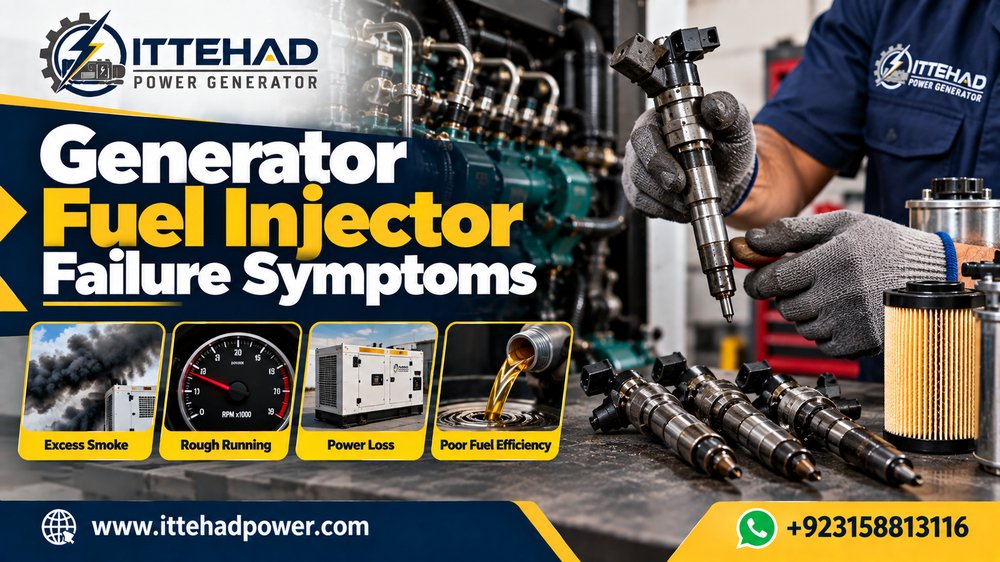
Recognizing generator fuel injector failure symptoms early can help prevent poor combustion, unstable engine operation, excessive smoke, loss of power, increased fuel consumption, and avoidable generator downtime. Fuel injectors play a critical role in delivering the correct quantity of fuel into the engine for efficient combustion, and when injector condition begins to deteriorate, the generator may show noticeable changes in starting, running, exhaust behavior, and overall performance. Careful diagnosis is important because several fuel-system and engine problems can produce similar symptoms.
Why Fuel Injector Condition Matters
A diesel generator depends on accurate fuel delivery for smooth and dependable operation. Each injector must deliver fuel at the correct time and in a suitable spray pattern so combustion can occur consistently.
If an injector becomes restricted, worn, contaminated, leaking, or otherwise unable to deliver fuel correctly, one or more cylinders may not operate efficiently. The result can be rough running, smoke, reduced power, difficult starting, or higher fuel use.
Generator Fuel Injector Failure Symptoms to Watch For
Common generator fuel injector failure symptoms can develop gradually or appear suddenly depending on the condition of the injector and the surrounding fuel system. No single symptom confirms injector failure, but several symptoms appearing together can provide a strong reason for further inspection.
Important warning signs may include:
- Hard or delayed starting
- Rough engine idle
- Uneven engine sound
- Loss of power
- Excessive or unusual exhaust smoke
- Increased fuel consumption
- Engine hesitation
- Misfiring or irregular combustion
- Reduced response under load
- Unexpected shutdown or unstable operation
Hard Starting and Injector Problems
A generator that takes longer than normal to start may have a fuel-delivery problem. If one or more injectors are not supplying fuel correctly during cranking, combustion may be delayed or incomplete.
Starting difficulty can also be caused by battery weakness, fuel restriction, air in the fuel system, low compression, or other conditions, so injector replacement should not be based on starting symptoms alone.
Rough Running and Uneven Engine Operation
Rough running is one of the more noticeable signs of uneven combustion. If one injector supplies too little fuel, too much fuel, or an unsuitable spray pattern, the affected cylinder may not contribute the same power as the others.
This can make the generator:
- Shake more than usual
- Run unevenly
- Produce an irregular engine sound
- Surge or hesitate
- Feel unstable at idle
Further testing is needed because fuel filters, air supply, compression, and engine condition can create similar symptoms.
Abnormal Exhaust Smoke
Changes in exhaust smoke can provide useful clues about combustion quality. An injector that is not delivering fuel correctly may contribute to incomplete combustion or excessive fueling.
Smoke should be considered together with engine temperature, load, fuel quality, air intake condition, and other operating factors. Injector diagnosis should not rely on exhaust appearance alone.
Dark or Heavy Smoke
Heavy smoke may indicate that fuel is not being burned efficiently. This can be associated with injector condition, excessive fueling, poor atomization, restricted airflow, or other combustion problems.
Light or Unusual Smoke
Unusual light-colored exhaust during starting or operation can also indicate incomplete combustion, but several engine and fuel-system conditions may produce similar behavior.
Loss of Generator Power
A generator may lose power when fuel delivery becomes inconsistent across the engine. If one or more cylinders receive insufficient or poorly atomized fuel, the engine may struggle to respond properly as electrical demand increases.
Possible signs include:
- Sluggish response to load
- Difficulty maintaining engine speed
- Reduced operating performance
- Greater vibration under load
- Power loss as electrical demand increases
Fuel filters, fuel pumps, air intake restrictions, and engine condition should also be checked before injector failure is confirmed.
Increased Fuel Consumption
A generator that begins using more fuel for the same operating demand may have a combustion or fuel-delivery problem. Worn or leaking injectors can contribute to inefficient fuel use if fuel is not being delivered and burned correctly.
Fuel consumption can also change because of higher load, poor maintenance, restricted airflow, engine wear, or operating conditions. Comparing current consumption with normal generator behavior can help determine whether further investigation is required.
Injector Leakage and Excess Fuel Delivery
An injector that does not close or control fuel correctly may deliver more fuel than required. Excessive fuel can affect combustion, smoke levels, fuel efficiency, and engine stability.
Internal injector leakage may not always be visible externally, which is why proper testing can be necessary when symptoms suggest an injector-related problem.
Poor Injector Spray Pattern
Injectors are designed to deliver fuel in a controlled spray that supports efficient combustion. Deposits, wear, or contamination can affect this spray pattern.
Poor atomization can contribute to:
- Incomplete combustion
- Rough engine operation
- Smoke
- Reduced power
- Difficult starting
- Increased fuel consumption
Injector testing can help determine whether spray quality is within suitable operating condition.
Fuel Contamination and Injector Condition
Contaminated diesel can affect sensitive fuel-system components. Dirt, water, sediment, or poor fuel cleanliness may restrict or damage injector components over time.
If injector problems are suspected, the complete fuel system should also be considered. Replacing an injector without correcting contaminated fuel can lead to repeated problems.
Useful checks include:
- Fuel quality
- Fuel tank condition
- Water or sediment contamination
- Fuel filter condition
- Fuel line cleanliness
- Recent fuel-system maintenance
Blocked Fuel Filters Can Mimic Injector Failure
A restricted fuel filter can reduce fuel flow and create symptoms similar to injector problems. Hard starting, power loss, hesitation, rough running, and shutdowns may all occur when fuel delivery is restricted.
Filter condition should therefore be checked before expensive injector replacement is considered.
Air in the Fuel System Can Cause Similar Symptoms
Air entering the fuel system through damaged hoses, loose fittings, seals, or other connections can interrupt consistent fuel delivery.
This may cause:
- Extended cranking
- Rough idle
- Engine hesitation
- Unstable running
- Loss of power
- Unexpected shutdown
If air intrusion is present, the source should be corrected before injector condition is assessed further.
Injector Problems Under Load
Some injector problems become more noticeable when electrical load is applied. The generator may run reasonably well with little load but become rough, smoky, or weak when greater engine power is required.
During diagnosis, observe:
- Engine response as load increases
- Changes in exhaust smoke
- Engine speed stability
- Vibration
- Fuel consumption
- Control warnings
Load behavior can provide useful evidence when identifying combustion-related faults.
How Injector Failure Affects Combustion
Correct combustion requires the right amount of fuel to be delivered in the right manner. Injector deterioration can disturb this balance and cause incomplete or uneven combustion.
Poor combustion may result in:
- Uneven cylinder performance
- Engine vibration
- Reduced efficiency
- Unusual exhaust behavior
- Loss of power
- Increased fuel use
Long-term operation with poor combustion may place additional stress on other engine components, so persistent symptoms should be investigated.
A Practical Fuel Injector Diagnosis Process
Systematic diagnosis is more reliable than replacing injectors based only on symptoms.
- Review the symptoms: Note starting difficulty, smoke, rough running, power loss, fuel use, and operating changes.
- Check fuel quality: Look for contamination, water, or sediment.
- Inspect fuel filters: Determine whether restriction is reducing fuel supply.
- Check fuel lines and connections: Look for leakage, restriction, and possible air entry.
- Observe engine operation: Compare idle condition and behavior under load.
- Review exhaust behavior: Note changes in smoke during starting and operation.
- Check related engine conditions: Consider airflow, compression, and other possible causes where appropriate.
- Test suspected injectors: Carry out suitable injector inspection or testing when other basic causes have been eliminated.
- Confirm the fault: Replace or service only components supported by the diagnosis.
- Retest the generator: Verify starting, running, load response, and exhaust condition after corrective work.
Why Proper Diagnosis Is Important
Fuel injectors can be important and costly components, so replacing them without confirming the problem can increase repair expense unnecessarily.
Several conditions can imitate injector failure, including:
- Blocked fuel filters
- Air in fuel lines
- Poor fuel quality
- Restricted air intake
- Low compression
- Fuel pump problems
- Control or sensor faults
Professional diagnosis should separate injector-related problems from these other possible causes.
Benefits of Early Injector Fault Detection
Identifying injector problems before they become severe can provide several practical benefits.
- Supports smoother engine operation
- Helps maintain dependable starting
- Reduces unnecessary fuel use
- Supports more consistent power delivery
- Helps prevent repeated rough running
- Allows repairs to be planned earlier
- Reduces avoidable generator downtime
- Helps protect related fuel-system components
When an Injector May Need Cleaning or Servicing
Not every injector problem automatically requires complete replacement. Depending on injector condition and design, some performance issues may be related to contamination or deposits that can be addressed through appropriate servicing.
The decision should be based on proper testing. Cleaning an injector that is mechanically worn or damaged will not restore reliable operation, while replacing an injector unnecessarily can increase costs.
When Injector Replacement May Be Required
Replacement may be appropriate when testing confirms that an injector is excessively worn, damaged, leaking, unable to maintain suitable fuel delivery, or otherwise unreliable.
Replacement planning should consider:
- Correct injector identification
- Engine compatibility
- Part number where available
- Fuel-system condition
- Condition of related injectors
- Installation requirements
- Testing after replacement
The replacement part should match the generator engine requirements rather than being selected by appearance alone.
Injector Compatibility and Part Selection
Fuel injectors that look similar may have different operating characteristics. Correct identification helps prevent improper fuel delivery and installation problems.
Before sourcing an injector, confirm:
- Generator model
- Engine model
- Existing injector reference
- Part number where available
- Connection and mounting details
- Fuel-system requirements
Reliable sourcing and correct compatibility are important parts of a lasting repair.
What Customers Need From Injector Diagnosis
Customers usually want to know whether the injector is genuinely faulty, whether repair or replacement is required, and whether another fuel-system problem caused the condition.
A useful diagnostic service should provide:
- Clear symptom assessment
- Fuel-system inspection
- Filter and fuel quality checks
- Injector testing where required
- Explanation of confirmed findings
- Suitable repair or replacement recommendations
- Post-repair testing
This approach reduces unnecessary replacement and helps improve confidence in the repair decision.
How to Select a Generator Injector Repair Service
Injector-related symptoms require careful diagnosis because similar problems can originate elsewhere in the fuel or engine system.
Useful selection points include:
- Diagnosis before injector replacement
- Fuel-system inspection
- Ability to identify compatible injector parts
- Clear explanation of test findings
- Inspection of related fuel components
- Safe repair procedures
- Generator testing after corrective work
Local Operating Conditions and Injector Reliability
Generator fuel-system condition can be influenced by the environment and operating pattern. Heat, dust, fuel storage, long standby periods, contamination, and irregular maintenance can affect fuel cleanliness and injector condition.
Generators operating in demanding conditions may benefit from closer attention to fuel quality, filter servicing, and early changes in engine behavior. Maintenance should reflect actual generator use and operating conditions.
Trust Points in Injector Inspection and Repair
A reliable repair process should clearly explain whether injector failure has been confirmed or is only suspected. Customers should not be asked to replace expensive fuel-system components without reasonable diagnostic evidence.
Important trust points include:
- Basic fuel-system checks completed first
- Injector symptoms verified through inspection or testing
- Compatible replacement parts selected when required
- Fuel contamination investigated
- Related components checked
- No unnecessary injector replacement
- Generator operation verified after repair
Preventing Premature Injector Problems
Good fuel-system maintenance can help reduce contamination-related injector problems and make changes in performance easier to identify.
Practical preventive measures include:
- Use clean fuel
- Monitor stored fuel condition
- Replace fuel filters at suitable intervals
- Check for water or sediment
- Inspect fuel lines for leaks
- Correct air entry into the fuel system
- Investigate hard starting early
- Do not ignore repeated rough running
- Keep fuel-system maintenance records
Guidance When Injector Failure Is Suspected
If a generator begins running roughly, smoking excessively, losing power, or consuming noticeably more fuel, record when the symptoms occur and whether they change under load.
Check basic maintenance items such as fuel level, fuel quality, filters, and visible leaks before assuming the injectors have failed.
Repeated operation with severe rough running, heavy smoke, or significant power loss should be avoided until the cause is understood.
Safe Fuel Injector Inspection
Generator fuel systems should be handled with suitable precautions. Fuel leakage, hot engine components, electrical connections, and fuel-delivery components can create hazards during inspection.
Injector testing or removal should be carried out using appropriate procedures. Components should not be loosened or handled carelessly while the engine is operating.
If the cause of the fault is unclear, professional diagnosis is preferable to repeated trial-and-error repair.
When Professional Injector Diagnosis Is Recommended
Professional inspection is recommended when the generator has persistent hard starting, severe rough running, abnormal smoke, noticeable power loss, repeated misfiring, or increased fuel consumption that cannot be explained by basic maintenance conditions.
Proper injector testing can help determine whether the fault is caused by the injector itself or another part of the fuel or engine system.
Restore Reliable Generator Fuel Delivery
Understanding generator fuel injector failure symptoms helps identify when poor combustion, smoke, rough running, power loss, increased fuel use, or difficult starting may require deeper fuel-system inspection. Because these symptoms can also come from blocked filters, contaminated fuel, air entry, poor airflow, or engine condition, accurate diagnosis should always come before injector replacement.
If your generator is showing persistent combustion problems, unusual smoke, unstable running, reduced power, or unexplained increases in fuel consumption, arrange a proper fuel-system and injector inspection. Early diagnosis and targeted corrective action can help restore smooth operation, improve fuel efficiency, reduce unnecessary repairs, and support dependable generator performance.