
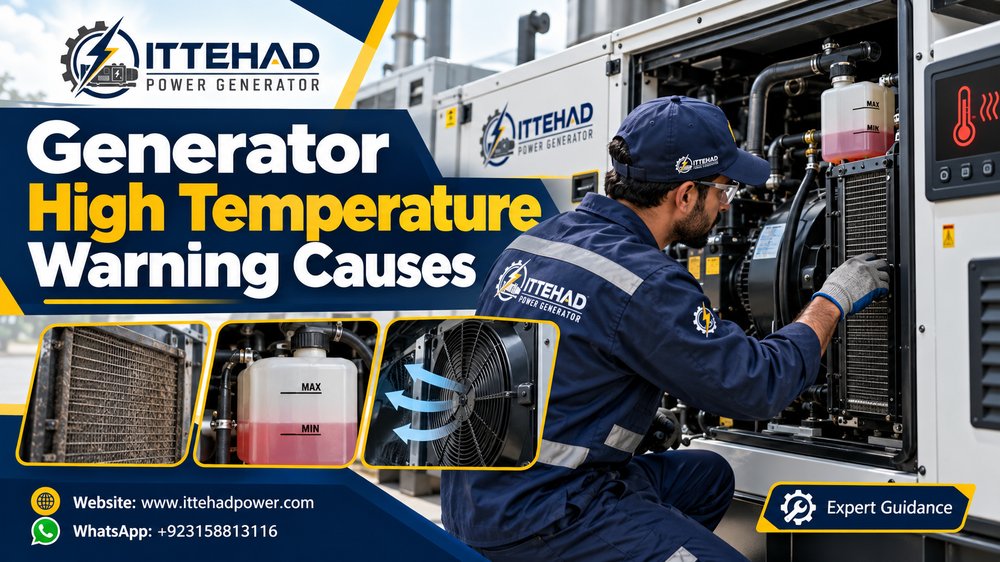
Understanding generator high temperature warning causes is important when a generator begins showing overheating alarms, rising temperature readings, reduced performance, or automatic shutdown. High temperature can result from low coolant, restricted cooling airflow, radiator blockage, cooling fan problems, excessive load, leaks, poor circulation, sensor issues, or unsuitable operating conditions. A structured inspection helps identify the real cause before repeated operation leads to further overheating or equipment damage.
Why Generator High Temperature Warning Causes Need Attention
A generator high temperature warning should not be ignored or repeatedly reset without inspection. The warning indicates that the engine or cooling system is operating outside its expected temperature range or that the monitoring system has detected a condition requiring attention.
Continued operation while overheating can place additional stress on engine components, cooling-system parts, fluids, seals, and related systems. Early diagnosis helps determine whether the problem is caused by an actual cooling fault, excessive operating demand, or an incorrect temperature signal.
Common Signs of Generator Overheating
High temperature problems may appear gradually or suddenly depending on the cause. Recognizing the symptoms early can help prevent a complete shutdown.
- High temperature warning on the control panel
- Generator shuts down after running for a period
- Temperature reading rises continuously
- Coolant level drops repeatedly
- Hot air around the generator increases noticeably
- Radiator or cooling area appears excessively hot
- Coolant leakage becomes visible
- Generator performance becomes unstable under load
- Repeated overheating alarms appear after reset
Low Coolant Level
Low coolant is one of the first conditions to check when a generator shows a high temperature warning. The cooling system requires an adequate quantity of coolant to absorb and transfer heat away from the engine.
If coolant is low, simply adding more fluid may not be enough. The reason for the loss should also be identified, especially when the level drops again after topping up.
Check for Visible Coolant Leakage
Inspect accessible hoses, connections, radiator areas, and surrounding surfaces for signs of leakage. Wet areas, staining, or repeated coolant loss may indicate a connection or cooling-system problem.
Check Coolant Only When Safe
A hot cooling system may be pressurized. Coolant checks should be carried out only when conditions are safe and according to proper service procedures.
Restricted Cooling Airflow
Generators require adequate airflow to remove heat. Restricted ventilation can cause temperature to rise even when the coolant system itself is functioning normally.
Blocked air inlets, restricted outlets, accumulated dust, nearby objects, or poor installation clearances can reduce cooling efficiency.
- Keep ventilation openings clear
- Remove unnecessary obstructions around the generator
- Inspect cooling-air paths for dust or debris
- Confirm hot air can leave the installation area
- Maintain suitable operating clearance
Radiator Blockage and Cooling Efficiency
The radiator plays an important role in transferring heat from the coolant to the surrounding air. Dust, dirt, debris, or contamination can reduce airflow through the radiator and decrease cooling performance.
A radiator that appears externally dirty should be inspected and cleaned using suitable methods. Internal cooling-system conditions may also require further assessment if overheating continues after airflow is restored.
Cooling Fan Problems
The cooling fan helps move air through the radiator and around the cooling system. If fan performance is reduced, engine temperature can rise rapidly, particularly under load.
Inspection should consider fan condition, drive components, visible damage, movement, and whether adequate airflow is being produced during operation.
Damaged Fan Components
Cracked, damaged, loose, or incorrectly operating fan components can reduce cooling effectiveness and should be corrected before continued generator operation.
Drive Belt Condition
If the fan depends on a belt-driven system, belt wear, looseness, or damage can affect fan speed and cooling performance.
Cooling System Hose Problems
Hoses carry coolant through the cooling system and should remain secure and in suitable condition. Cracked, swollen, leaking, damaged, or restricted hoses can interfere with coolant circulation.
Hose connections should also be checked because a loose fitting may allow coolant loss without an obvious major leak.
Coolant Circulation Problems
Even when coolant level is correct, overheating can occur if coolant does not circulate properly. Restricted flow or a problem within the circulation system can prevent heat from being transferred effectively.
If the radiator, hoses, airflow, and coolant level appear normal but temperature continues rising, further cooling-system diagnosis may be required.
Generator Load and High Temperature Warnings
Electrical load directly affects how hard the engine must work. As load increases, the engine produces more heat and places greater demand on the cooling system.
If the generator is consistently operating near or beyond a suitable load level, temperature may rise faster than the cooling system can manage.
Review Connected Load
Compare the current electrical demand with the generator’s intended operating capacity. Recent increases in connected equipment may explain why overheating has started.
Observe Temperature Under Different Loads
If temperature remains normal at light load but rises quickly as demand increases, load condition and cooling-system performance should both be investigated.
Engine Oil Condition and Temperature
Engine oil supports lubrication and helps the engine operate efficiently. Low oil level, unsuitable oil condition, or overdue servicing can contribute to increased friction and higher operating temperature.
Oil level and maintenance history should be reviewed as part of an overheating diagnosis rather than focusing only on coolant.
Thermostat or Temperature-Control Problems
Cooling systems may include temperature-control components that regulate coolant flow according to engine temperature. If such a component does not operate correctly, normal heat transfer can be affected.
Further inspection may be necessary when coolant level, radiator airflow, and fan operation appear satisfactory but overheating continues.
Temperature Sensor and Warning Circuit Issues
Not every high temperature warning confirms actual overheating. A faulty temperature sensor, damaged wiring, poor electrical connection, or control-panel issue can sometimes produce an incorrect warning.
Actual engine temperature should be compared with the reported reading where appropriate before major cooling-system work is recommended.
Sensor Wiring
Loose, damaged, or corroded sensor wiring can produce unstable or incorrect temperature information.
Control Panel Reading
If the displayed temperature changes suddenly or behaves inconsistently, the monitoring circuit may require testing alongside the cooling system.
High Ambient Temperature and Installation Conditions
The environment around a generator can influence cooling performance. High surrounding temperature, restricted installation space, recirculation of hot air, or poor ventilation can make it harder for the cooling system to control engine temperature.
Site conditions should therefore be considered whenever overheating occurs repeatedly, particularly if the generator has no obvious internal cooling fault.
Why Hot Air Recirculation Matters
A generator may discharge hot cooling air correctly but still overheat if that hot air is drawn back into the intake side. This can happen when the installation area does not provide a clear path for hot air to leave.
Ventilation should be arranged so cooler air reaches the generator and heated air can move away effectively.
Generator High Temperature Diagnosis Process
A structured troubleshooting process helps separate simple cooling issues from deeper mechanical or electrical faults.
- Confirm the high temperature warning and operating symptoms.
- Allow the generator to cool safely before inspection.
- Check coolant level and visible coolant condition.
- Inspect for coolant leaks.
- Review radiator cleanliness and airflow.
- Check cooling fan operation.
- Inspect belts, hoses, and visible connections.
- Review engine oil level and service condition.
- Check the electrical load being supplied.
- Observe temperature behavior during suitable operation.
- Inspect temperature sensor wiring where required.
- Confirm whether the warning reflects actual overheating.
- Carry out corrective work based on confirmed findings.
Common Generator High Temperature Warning Causes
A high temperature alarm can result from one fault or several conditions occurring together.
- Low coolant level
- Coolant leakage
- Restricted radiator airflow
- Dirty or blocked radiator
- Cooling fan problem
- Loose or worn fan belt
- Damaged cooling hoses
- Poor coolant circulation
- Excessive electrical load
- Low or deteriorated engine oil
- Unsuitable installation ventilation
- Hot air recirculation
- Temperature sensor or wiring fault
Benefits of Correct Overheating Diagnosis
Accurate diagnosis helps correct the actual cause of the warning instead of repeatedly resetting alarms or replacing cooling-system parts unnecessarily.
- Reduces the risk of repeated overheating
- Supports safer generator operation
- Helps protect cooling-system components
- Reduces unnecessary parts replacement
- Improves operating reliability
- Helps maintain stable performance under load
- Identifies installation or ventilation problems
- Supports better preventive maintenance
What Customers Need When a Generator Overheats
Customers generally need to know whether the generator can continue operating safely, what is causing the temperature rise, and what corrective work is required.
A useful inspection should distinguish between a genuine overheating condition and a warning caused by a sensor or monitoring fault. It should also identify whether the problem involves coolant, airflow, load, radiator condition, fan operation, or another system.
How to Select a Generator Overheating Inspection Service
High temperature problems can involve several generator systems, so troubleshooting should be systematic rather than limited to topping up coolant.
Choose Complete Cooling-System Inspection
The service provider should consider coolant level, leaks, radiator condition, airflow, fan operation, hoses, belts, and circulation.
Look for Load Evaluation
Electrical demand should be reviewed because overheating under excessive or unsuitable load may not be solved by cooling-system repair alone.
Ask for Sensor Verification
If actual overheating is uncertain, temperature sensing and control wiring should be checked before major repair decisions are made.
Confirm Testing After Repair
The generator should be operated under suitable conditions after corrective work to confirm that temperature remains stable and the warning does not return.
Site-Specific Relevance of Generator Overheating
Generator overheating is often influenced by the actual installation environment. Available airflow, surrounding temperature, enclosure condition, operating clearance, electrical load, and ventilation layout can all affect cooling performance.
On-site inspection can therefore be valuable because the generator can be evaluated under the same conditions in which the high temperature warning normally appears.
Trust Points in High Temperature Troubleshooting
Reliable overheating diagnosis should be based on actual operating evidence and systematic inspection. Customers should receive a clear explanation of the cause rather than repeated temporary resets.
- Coolant level and leakage are checked first
- Radiator and airflow receive proper attention
- Fan and belt condition are inspected
- Electrical load is reviewed
- Oil and maintenance condition are considered
- Temperature sensor faults are not overlooked
- Unnecessary component replacement is avoided
- The generator is retested after corrective work
Common Mistakes When a High Temperature Warning Appears
Incorrect response to an overheating warning can increase the risk of further problems.
- Repeatedly resetting the warning without diagnosis
- Opening a hot cooling system carelessly
- Adding coolant without checking for leakage
- Ignoring blocked radiator airflow
- Continuing operation under excessive load
- Assuming every warning means the temperature sensor is faulty
- Replacing cooling parts without confirming failure
- Skipping post-repair temperature testing
Guidance When the Generator Temperature Starts Rising
If temperature begins rising unusually, observe the control-panel reading, electrical load, coolant warning indications, airflow, and any visible leakage. Note whether overheating occurs immediately or only after the generator has operated for a period.
Severe overheating, coolant loss, unusual mechanical noise, heavy smoke, or repeated shutdown should be treated as signs that the generator requires inspection before continued operation.
How to Prevent Generator Overheating
Routine maintenance and suitable installation conditions can help reduce avoidable high temperature problems.
- Maintain correct coolant level
- Investigate coolant loss promptly
- Keep radiator surfaces and airflow paths clean
- Inspect cooling fan and belts regularly
- Check hoses and connections for deterioration
- Maintain suitable engine oil condition
- Avoid unsuitable electrical loading
- Keep generator ventilation areas clear
- Investigate repeated temperature warnings early
Why Preventive Cooling-System Maintenance Matters
Many overheating problems develop gradually. A small coolant leak, increasingly restricted radiator, worn belt, or reduced airflow may not cause an immediate shutdown but can slowly reduce cooling capacity.
Regular inspection makes these conditions easier to identify before generator temperature reaches a critical level.
When High Temperature Warnings Need Prompt Repair
Prompt inspection is recommended when temperature rises rapidly, coolant is repeatedly lost, the generator shuts down on high temperature, the cooling fan is not operating correctly, or overheating occurs under normal load.
Repeated warnings that return after reset should also be investigated because the protective system may be responding to a continuing fault.
Get Help with Generator High Temperature Warning Causes
If you are dealing with repeated generator high temperature warning causes, professional inspection can help determine whether the problem involves low coolant, radiator restriction, cooling airflow, fan operation, load, engine oil, circulation, installation conditions, or temperature sensing.
Arrange a complete overheating inspection when the warning returns, operating temperature continues to rise, or the generator shuts down unexpectedly. Accurate diagnosis, proper cooling-system maintenance, suitable load management, and post-repair testing can help restore safer and more reliable generator operation.