
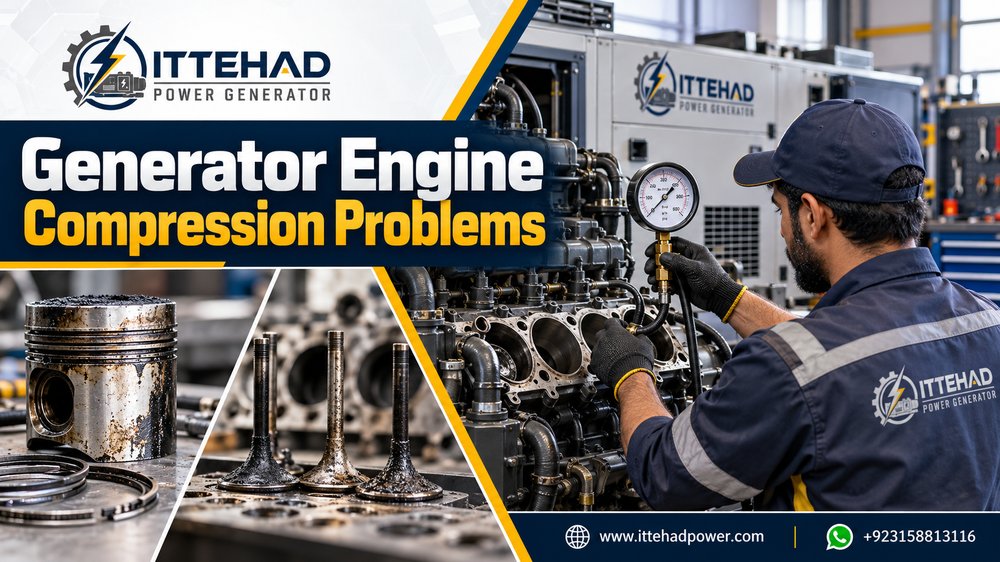
Generator engine compression problems can affect starting performance, engine power, combustion quality, fuel efficiency, and overall generator reliability. A diesel engine depends on adequate compression inside each cylinder to produce proper combustion, so compression loss caused by valve condition, piston rings, cylinder wear, sealing problems, or other internal engine issues can lead to hard starting, smoke, blow-by, rough operation, and reduced power. Because several fuel, air, and starting faults can produce similar symptoms, accurate testing is important before major engine repairs are recommended.
Why Engine Compression Is Important
Compression is created when the engine piston moves upward and compresses the air inside the cylinder. Diesel combustion depends heavily on this compressed air reaching suitable conditions before fuel is introduced.
When compression becomes too low or differs significantly between cylinders, combustion may become weak or inconsistent. The generator may still run, but starting, stability, load response, and overall engine performance can gradually decline.
Generator Engine Compression Problems and Common Warning Signs
Recognizing generator engine compression problems early can help prevent repeated troubleshooting of unrelated components. Compression issues may develop gradually as internal parts wear or may appear after overheating or mechanical damage.
Common symptoms include:
- Long cranking before the engine starts
- Difficult cold starting
- Rough or uneven engine operation
- Loss of engine power
- Abnormal exhaust smoke
- Increased blow-by
- Higher oil consumption
- Reduced response under load
- Uneven cylinder performance
- Repeated starting problems despite a healthy battery and fuel supply
No single symptom confirms compression loss, so proper inspection is required.
Hard Starting and Low Compression
Difficult starting is one of the most noticeable symptoms associated with low compression. A diesel generator requires sufficient cylinder compression during cranking for reliable combustion.
When internal sealing becomes weak, the engine may crank normally but take longer to start. In more serious cases, it may fail to start despite adequate battery power and fuel delivery.
Before blaming compression, technicians should also check:
- Battery condition
- Starter cranking speed
- Fuel supply
- Fuel filter condition
- Air in the fuel system
- Injector condition
- Control system faults
Compression testing becomes more relevant when these basic systems are functioning correctly.
Power Loss Caused by Compression Problems
A generator engine with poor compression may struggle to produce the same power it delivered previously. The condition may become more noticeable as electrical load increases.
Possible signs include:
- Slow response to load changes
- Difficulty maintaining engine speed
- Reduced ability to carry normal load
- Increased smoke when load is applied
- Higher fuel consumption
- Greater vibration under demand
Fuel restriction, injector problems, air intake blockage, and excessive electrical load should also be checked before internal engine wear is confirmed.
What Blow-By Can Indicate
Blow-by occurs when combustion gases pass beyond the normal sealing area inside the cylinder and enter the crankcase. A certain amount may be present during normal engine operation, but excessive blow-by can indicate deteriorating internal sealing.
Possible causes include:
- Worn piston rings
- Cylinder wear
- Damaged internal sealing surfaces
- Other piston and cylinder-related problems
Excessive blow-by may appear together with oil consumption, smoke, reduced compression, and declining power.
Piston Ring Wear and Compression Loss
Piston rings help maintain cylinder sealing while controlling oil around the cylinder walls. As rings wear or become damaged, compressed gases may escape and engine oil may enter areas where it should not.
Possible symptoms of ring-related wear include:
- Low compression
- Increased blow-by
- Oil consumption
- Abnormal exhaust smoke
- Reduced engine power
- Difficult starting
Ring condition normally requires deeper mechanical assessment and should not be diagnosed from smoke alone.
Cylinder Wear and Engine Health
Internal cylinder surfaces can gradually wear after extended operation, inadequate lubrication, contamination, overheating, or demanding operating conditions. Excessive wear can reduce the ability of piston rings to maintain an effective seal.
When cylinder wear becomes significant, the generator may develop multiple symptoms rather than a single isolated fault.
These can include:
- Persistent compression loss
- Higher oil consumption
- Increasing blow-by
- Reduced power
- Hard starting
- Abnormal engine noise
Valve Condition and Compression Problems
Engine valves must close correctly to seal the combustion chamber. If a valve does not seat properly because of wear, damage, deposits, adjustment problems, or another mechanical condition, compression may escape.
Valve-related compression issues can cause:
- Difficult starting
- Uneven cylinder operation
- Reduced power
- Rough running
- Abnormal combustion
Valve inspection may be necessary when compression testing identifies one or more weak cylinders.
Valve Clearance and Engine Performance
Incorrect valve clearance can affect valve timing and sealing. If a valve cannot close completely, cylinder compression may be reduced even when the valve itself is not seriously damaged.
Checking valve adjustment can therefore be an important step before concluding that major internal repairs are required.
Head Gasket and Sealing Problems
A sealing problem between major engine components can also affect compression. Depending on the location and severity of the fault, additional symptoms may appear alongside compression loss.
Possible warning signs can include:
- Uneven compression readings
- Coolant loss
- Overheating
- Abnormal smoke
- Reduced engine performance
- Unusual pressure behavior
The complete engine condition should be inspected before repair decisions are made.
Overheating Can Lead to Compression Problems
Severe or repeated overheating can affect internal engine components and sealing surfaces. A generator that has experienced major overheating should be assessed even if it continues to operate afterward.
After an overheating incident, watch for:
- Difficult starting
- Coolant loss
- Oil contamination
- Reduced power
- Abnormal smoke
- Changes in engine noise
- Uneven compression
The original cooling-system fault should also be corrected to prevent further damage.
Compression Problems and Exhaust Smoke
Abnormal smoke may accompany poor compression because combustion becomes less efficient. However, smoke alone should never be used to diagnose internal engine wear.
Fuel injectors, air filters, fuel quality, engine temperature, load, and other conditions can also influence exhaust appearance.
Compression becomes a stronger suspect when smoke is combined with hard starting, blow-by, oil consumption, and power loss.
Compression Problems and Oil Consumption
Increasing oil consumption can be associated with worn rings, cylinders, valve-related problems, or other internal engine conditions. It should be investigated when the generator requires frequent oil topping up without an obvious external leak.
Useful checks include:
- External oil leakage
- Oil level history
- Oil condition
- Exhaust behavior
- Blow-by
- Compression readings
External leaks should be eliminated as a cause before internal oil consumption is assumed.
Uneven Compression Between Cylinders
Engine performance can become rough when one cylinder has significantly lower compression than the others. The engine may still start and run, but vibration, irregular sound, and poor load response can become noticeable.
Uneven compression can point toward a problem affecting an individual cylinder, such as valve sealing, piston rings, cylinder wear, or another localized mechanical issue.
Why Compression Testing Matters
Compression testing provides direct information about how effectively each cylinder is sealing during the compression cycle. It helps separate internal mechanical problems from external fuel or electrical faults.
Testing can help determine:
- Whether compression is generally low
- Whether one cylinder differs significantly from others
- Whether internal engine inspection is justified
- Whether hard starting may have a mechanical cause
- Whether deeper diagnosis is required before overhaul
Results should be compared with appropriate engine requirements rather than interpreted in isolation.
A Practical Generator Compression Diagnosis Process
A structured approach helps prevent unnecessary internal engine repair.
- Review symptoms: Note starting difficulty, smoke, power loss, oil consumption, blow-by, and unusual engine behavior.
- Check service history: Review operating hours, previous overheating, oil servicing, and earlier repairs.
- Inspect basic systems: Confirm battery, starter, fuel delivery, injectors, air intake, and filters are functioning properly.
- Observe engine operation: Check idle stability, vibration, smoke, and response under load.
- Check oil condition: Look for low level, contamination, leakage, or abnormal consumption.
- Evaluate blow-by: Determine whether crankcase gas behavior appears excessive.
- Perform compression testing: Compare cylinder readings and overall engine condition.
- Investigate weak cylinders: Assess valve condition, rings, cylinders, and related sealing areas where required.
- Confirm the cause: Avoid major engine repair until diagnostic findings support it.
- Plan corrective action: Decide whether adjustment, targeted repair, or deeper internal work is required.
Why Diagnosis Before Engine Repair Is Important
Compression-related symptoms can overlap with several other generator problems. Hard starting may be caused by a weak battery or fuel problem, while power loss may result from restricted filters or faulty injectors.
Major engine repair should therefore be considered only after simpler causes have been checked.
A diagnosis-first approach can help:
- Avoid unnecessary engine dismantling
- Reduce repair costs
- Identify simpler corrective options
- Improve repair accuracy
- Reduce repeat troubleshooting
- Provide better information for overhaul decisions
When Adjustment May Solve the Problem
Not every compression issue requires an engine overhaul. Some conditions may be related to valve adjustment or another correctable mechanical setting.
Inspection should determine whether a suitable adjustment can restore proper sealing before larger internal work is recommended.
When Internal Engine Repair May Be Necessary
Deeper mechanical repair may be required when testing confirms significant wear or damage that cannot be corrected through routine maintenance or adjustment.
Indicators can include:
- Persistently low compression
- Significant differences between cylinders
- Excessive blow-by
- High oil consumption
- Confirmed valve or ring damage
- Serious cylinder wear
- Persistent power loss after external faults are corrected
The repair scope should be based on actual findings.
Compression Problems Versus Fuel Injector Problems
Both injector faults and low compression can cause rough running, smoke, difficult starting, and reduced power. This overlap makes accurate troubleshooting important.
Fuel-system checks should include filters, fuel quality, fuel lines, air entry, and injector condition before major internal engine repairs are recommended.
If fuel delivery is correct but symptoms remain and compression testing shows poor results, internal engine condition becomes more relevant.
Compression Problems Versus Starting System Faults
A slowly cranking engine may fail to build suitable starting conditions even when internal compression is acceptable. Weak batteries, damaged cables, poor grounding, or starter problems should therefore be checked before concluding that the engine itself is worn.
Normal cranking speed combined with persistent hard starting can provide a stronger reason to investigate fuel delivery and compression.
Benefits of Early Compression Problem Detection
Identifying compression deterioration before complete engine failure can provide important practical benefits.
- Allows repair planning before severe failure
- Reduces unnecessary starting-system replacement
- Helps identify internal wear accurately
- Supports better overhaul decisions
- Reduces repeated troubleshooting
- Improves maintenance planning
- Helps restore dependable engine performance
- Reduces avoidable generator downtime
What Customers Need From Compression Diagnosis
Generator owners need clear evidence before approving internal engine work. They should understand what symptoms were observed, what was tested, and which findings indicate a genuine compression problem.
A professional assessment should provide:
- Starting condition review
- Fuel and air system checks
- Compression testing where appropriate
- Assessment of blow-by
- Oil consumption review
- Valve condition assessment where required
- Explanation of findings
- Practical repair recommendations
How to Select a Generator Engine Diagnostic Service
A reliable diagnostic service should investigate the complete problem rather than recommending an overhaul immediately based on smoke, operating hours, or hard starting.
Useful selection points include:
- Basic systems checked before major repair
- Compression testing available where required
- Understanding of valve, ring, and cylinder conditions
- Clear explanation of test results
- Repair options based on confirmed findings
- No unnecessary engine dismantling
- Post-repair testing
Operating Conditions and Compression Wear
Generator engine health can be influenced by how the unit is operated and maintained. Extended running, overheating, poor lubrication, dirty air, fuel contamination, delayed servicing, and demanding load conditions can contribute to accelerated wear.
Maintenance planning should therefore consider actual operating conditions rather than relying only on generator age.
Local Relevance of Generator Engine Health
Local operating conditions such as heat, dust, long running periods, and irregular standby use can affect filters, lubrication, cooling, and internal engine wear. Generators operating in demanding environments may require closer monitoring of oil condition, air filtration, temperature, and engine performance.
These factors should be considered when evaluating compression loss and overall engine health.
Trust Points in Compression Testing and Repair
Internal engine repair can be costly, so recommendations should be based on measurable findings rather than assumptions.
Important trust points include:
- Fuel and starting systems checked first
- Compression measured rather than guessed
- Cylinder differences explained clearly
- Valve condition assessed where relevant
- Oil consumption and blow-by considered
- Repair scope based on actual wear
- No unnecessary overhaul recommendation
- Generator tested after corrective work
Service History Helps Explain Compression Problems
Maintenance records can provide useful clues about why compression has deteriorated. Repeated overheating, delayed oil changes, poor air filtration, previous engine repairs, and increasing oil consumption can all help explain internal wear.
Useful records include:
- Operating hours
- Oil change history
- Filter service history
- Overheating events
- Previous compression results
- Fuel-system repairs
- Oil consumption changes
- Previous internal engine work
Preventing Premature Compression Loss
Not all internal wear can be prevented, but good maintenance can help protect engine condition.
Practical measures include:
- Use suitable engine oil
- Maintain proper oil level
- Replace filters at appropriate intervals
- Keep the air intake clean
- Maintain the cooling system
- Investigate overheating promptly
- Use clean fuel
- Address unusual smoke or oil consumption early
- Keep accurate maintenance records
Guidance When Low Compression Is Suspected
If the generator becomes increasingly difficult to start, loses power, develops excessive blow-by, consumes more oil, or produces persistent abnormal smoke, avoid assuming that one specific internal component has failed.
Begin with a complete inspection and rule out common fuel, air, starting, and maintenance issues. Compression testing should then be used where symptoms continue to indicate internal engine problems.
Safety When Serious Engine Problems Are Present
A generator with severe mechanical noise, heavy smoke, genuine low oil pressure, significant overheating, or major power loss should not be operated continuously without inspection.
Continued operation with serious internal wear may increase damage and make eventual repair more extensive.
Where compression loss or mechanical failure is suspected, professional assessment should be arranged before prolonged operation continues.
When Engine Overhaul May Need Consideration
An engine overhaul may become a practical option when several internal wear indicators are confirmed together and normal repairs can no longer restore dependable performance.
These may include:
- Consistently low compression
- Severe cylinder imbalance
- Excessive oil consumption
- Persistent blow-by
- Confirmed ring or cylinder wear
- Valve damage
- Power loss that remains after external faults are corrected
- Repeated internal engine problems
The overhaul decision should always be based on condition and testing rather than operating hours alone.
Testing After Compression-Related Repair
Any repair intended to correct compression problems should be followed by testing to confirm that engine condition has improved.
Post-repair checks can include:
- Starting performance
- Idle stability
- Compression readings where appropriate
- Engine noise
- Blow-by condition
- Oil consumption
- Exhaust smoke
- Response under load
- Overall generator stability
Testing helps verify that the corrective work has addressed the original problem.
Restore Generator Engine Performance
Understanding generator engine compression problems requires looking at starting performance, power loss, blow-by, valve condition, piston rings, cylinder wear, oil consumption, smoke, and overall engine health together. Low compression can seriously affect diesel generator performance, but similar symptoms can also come from fuel, air, starting, or control problems.
If your generator is becoming difficult to start, losing power, producing abnormal smoke, consuming excessive oil, or showing increased blow-by, arrange a complete engine assessment before approving major repair work. Accurate diagnosis can determine whether adjustment, targeted repair, or deeper internal engine work is required and can help restore dependable generator operation while avoiding unnecessary expense.