
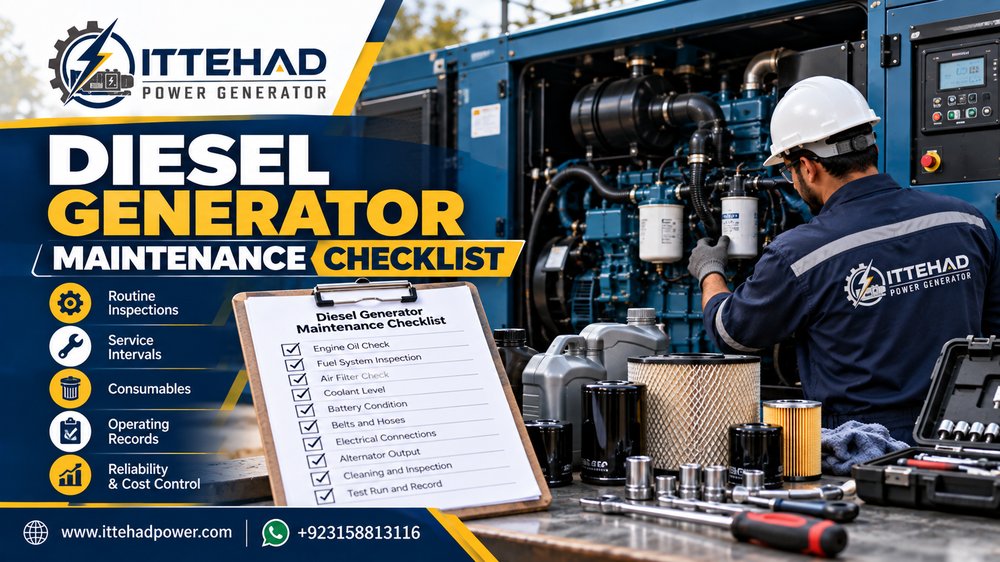
A well-planned diesel generator maintenance checklist helps commercial and industrial generator users keep equipment in reliable operating condition, reduce avoidable breakdowns, control maintenance costs, and maintain accurate service records. Diesel generators depend on several systems working together, including the engine, fuel supply, cooling system, lubrication system, starting system, electrical components, and control equipment. Regular inspections, timely servicing, correct consumable replacement, and clear operating records make it easier to identify developing issues before they affect generator performance.
Why a Diesel Generator Maintenance Checklist Is Important
Diesel generators may operate continuously, periodically, or remain on standby for long periods. In every case, maintenance is important because deterioration can occur through operating hours, heat, vibration, fuel condition, environmental exposure, and normal component wear.
A structured checklist provides a consistent way to inspect the generator and record what has been completed. It also helps ensure that important service items are not overlooked during routine maintenance.
Diesel Generator Maintenance Checklist for Routine Inspection
A practical diesel generator maintenance checklist should cover the main systems that affect starting, cooling, lubrication, fuel delivery, electrical output, and overall reliability.
- Check engine oil level and condition
- Inspect coolant level and cooling system condition
- Check fuel level and visible fuel-system condition
- Inspect oil, fuel, and coolant for leaks
- Check air filter condition
- Inspect fuel and oil filters
- Check belts for wear, tension, and cracking
- Inspect hoses and connections
- Check battery condition and terminals
- Review control panel indications
- Inspect electrical connections where accessible
- Check generator operating hours
- Run the generator and observe starting performance
- Monitor temperature, voltage, and frequency
- Listen for unusual noise or vibration
- Record inspection findings and maintenance work
Daily or Pre-Operation Generator Checks
Generators that operate frequently should receive basic checks before operation. These inspections can identify visible problems before the generator is placed under load.
Fluid Levels
Check engine oil, coolant, and fuel levels before operation where appropriate. Low fluid levels can indicate consumption, leakage, or insufficient preparation for the required operating period.
Visible Leaks
Inspect around the generator for signs of oil, coolant, or fuel leakage. Fresh fluid beneath the generator or wet areas around hoses and connections should be investigated rather than ignored.
General Condition
Look for loose components, damaged wiring, worn hoses, abnormal belt condition, or anything that appears different from the previous inspection.
Engine Oil and Lubrication System Maintenance
Engine oil helps lubricate internal moving components and control wear during operation. Oil condition can deteriorate with time and operating hours, making regular inspection and scheduled replacement important.
Maintenance records should include oil changes, filter replacement, operating hours, and any unusual findings such as contamination or abnormal oil consumption.
Lubrication Checklist
- Check engine oil level
- Inspect oil condition
- Look for oil leakage
- Replace oil according to the required service interval
- Replace the oil filter when required
- Record oil-change date and operating hours
Fuel System Maintenance
Reliable diesel fuel supply is essential for starting and stable engine operation. Fuel-system problems can cause hard starting, rough operation, reduced power, or unexpected shutdown.
Routine maintenance should include inspection of fuel filters, lines, connections, and visible signs of contamination or leakage.
Fuel System Checklist
- Check available fuel level
- Inspect fuel lines and connections
- Check for visible leakage
- Review fuel filter condition
- Replace fuel filters when required
- Watch for signs of fuel contamination
- Record fuel-system maintenance
Cooling System Inspection
The cooling system helps maintain a suitable engine operating temperature. Problems involving coolant level, radiator airflow, hoses, belts, cooling fans, or connections can result in overheating.
Cooling-system inspection should be part of every planned generator maintenance routine.
Cooling System Checklist
- Check coolant level when safe to do so
- Inspect hoses for cracks, swelling, or leakage
- Check radiator condition
- Inspect cooling fan operation
- Check fan belts and drive components
- Look for coolant leakage
- Monitor operating temperature during testing
Air Intake and Air Filter Checks
The diesel engine requires sufficient clean air for efficient combustion. A restricted or heavily contaminated air filter can reduce airflow and affect engine performance.
Air filters should be inspected according to operating conditions. Generators working in dusty environments may require more frequent attention than units operating in cleaner surroundings.
- Inspect air filter condition
- Check intake piping
- Look for damaged clamps or connections
- Check for visible dust buildup
- Replace the filter when required
Battery and Starting System Maintenance
A generator cannot provide power if it cannot start when required. Battery condition is therefore an important part of preventive maintenance, especially for standby generators.
Battery Checklist
- Inspect battery terminals
- Check for corrosion
- Confirm connections are secure
- Review battery charge condition
- Inspect cables for damage
- Observe cranking performance
- Record battery replacement when completed
Belts, Hoses, and Mechanical Components
Belts and hoses experience heat, vibration, and gradual material deterioration. Small cracks, looseness, glazing, swelling, or leakage can indicate that replacement may soon be required.
Inspecting these components during routine maintenance allows replacement to be planned before a sudden failure affects generator operation.
Electrical Connections and Generator Output
Electrical connections should remain secure and free from visible heat damage or deterioration. Loose terminals can create resistance, heating, intermittent faults, or unstable output.
Where appropriate, generator voltage and frequency should be checked during operation to confirm that electrical output remains stable.
Electrical Inspection Points
- Control panel indications
- Output voltage
- Operating frequency
- Main breaker condition
- Accessible cable connections
- Signs of overheating or discoloration
- Loose terminals
- Abnormal electrical warnings
Control Panel and Warning Indications
The control panel provides useful information about generator status, operating hours, warnings, alarms, voltage, frequency, and other operating conditions depending on the generator design.
Any new warning, fault code, or abnormal reading should be recorded and investigated before it becomes a larger problem.
Generator Operating Hours and Service Intervals
Maintenance should be planned using both calendar time and operating hours. A generator that runs frequently may reach service intervals much sooner than one that remains mostly on standby.
Recording operating hours during each inspection makes it easier to determine when oil changes, filter replacements, and other scheduled maintenance tasks are due.
Consumables That Should Be Tracked
Consumables form an important part of diesel generator maintenance. Keeping records of replacement dates and operating hours prevents unnecessary replacement while reducing the chance of overdue servicing.
- Engine oil
- Oil filters
- Fuel filters
- Air filters
- Coolant where applicable
- Belts where required
- Other routine service items specified for the generator
Why Maintenance Records Matter
Maintenance records help create a clear history of generator condition and servicing. They allow technicians and operators to see what work was previously completed and whether the same fault or component has required repeated attention.
Information Worth Recording
- Service date
- Operating hours
- Inspection findings
- Consumables replaced
- Repairs completed
- Parts replaced
- Faults observed
- Recommendations for future attention
- Next planned service point
Benefits of Preventive Diesel Generator Maintenance
Preventive maintenance can help users manage generator reliability more effectively than waiting for complete failure before arranging service.
- Improved starting reliability: Battery, fuel, and starting components receive regular attention.
- Reduced unexpected downtime: Developing faults can be identified during scheduled inspections.
- Better cooling performance: Cooling-system issues can be corrected before overheating occurs.
- Improved operating confidence: Regular testing confirms that the generator remains ready for use.
- Better cost control: Planned maintenance can reduce emergency repair requirements.
- Longer component service life: Lubrication, filtration, and correct operating conditions reduce unnecessary wear.
- Clear maintenance history: Records support future diagnosis and servicing decisions.
Customer Needs in Diesel Generator Maintenance
Commercial and industrial generator users need maintenance that is predictable, documented, and based on actual equipment condition. They also need confidence that important service items are being checked rather than receiving only a basic visual inspection.
A practical maintenance program should consider generator size, operating hours, environment, load pattern, previous service history, and how critical reliable generator operation is to the user.
How to Select a Diesel Generator Maintenance Service
A maintenance provider should use a structured inspection process and provide clear information about findings, required repairs, and recommended service intervals.
- Confirm that routine inspections cover the main generator systems.
- Ask how operating hours are recorded and used for service planning.
- Check whether consumable replacement is documented.
- Ask whether voltage, frequency, and operating temperature are reviewed.
- Confirm that faults are diagnosed before parts are replaced.
- Request clear records of completed maintenance work.
- Ask how future service requirements will be communicated.
Planned Maintenance Versus Reactive Repairs
Reactive maintenance begins after a fault has already affected operation. Planned maintenance focuses on identifying wear, contamination, leakage, loose connections, and other developing conditions before they cause a shutdown.
Although not every failure can be prevented, scheduled maintenance gives generator users more control over when inspection and replacement work is performed.
Generator Testing During Maintenance
A maintenance visit should include an operational check where appropriate. The generator can be started and observed for starting quality, engine sound, vibration, temperature, voltage, frequency, warning indications, and general stability.
Testing is useful because some problems are not visible while the generator is stopped.
Load Considerations During Generator Testing
A generator may appear normal while running without load but behave differently when electrical demand is applied. Where suitable, controlled load testing can help verify operating stability and identify issues that may only appear under working conditions.
Any applied load should remain within the generator’s rated capacity and appropriate testing procedures.
Common Maintenance Mistakes to Avoid
A checklist is only useful when maintenance is completed consistently and accurately. Several common mistakes can reduce generator reliability.
- Skipping maintenance because the generator has not been used recently
- Checking oil but ignoring filters and other consumables
- Not recording operating hours
- Ignoring small leaks
- Continuing operation with unusual noise or vibration
- Ignoring warning indicators
- Replacing parts without identifying the actual fault
- Failing to inspect battery condition
- Not testing the generator after maintenance
- Keeping incomplete service records
Maintenance for Standby Diesel Generators
Standby generators require maintenance even when they operate infrequently. Batteries can weaken, electrical connections can deteriorate, fuel condition can change, seals can age, and small leaks can develop while the generator remains unused.
Periodic inspection and operational testing help confirm that the generator is ready when backup power is required.
Maintenance for Frequently Used Diesel Generators
Generators that operate for longer hours may require more frequent servicing because oil, filters, belts, cooling components, and other parts accumulate wear more quickly.
Operating-hour records become particularly important for these generators because calendar-based servicing alone may not reflect actual usage.
Operating Environment and Maintenance Frequency
Maintenance frequency can also be affected by site conditions. Dust, heat, restricted ventilation, heavy operating periods, and other environmental factors may increase inspection requirements.
The maintenance plan should therefore reflect the actual conditions in which the generator operates rather than relying only on a general schedule.
Local Relevance of a Practical Maintenance Checklist
Generator operating conditions can vary from one site to another. Ambient temperature, dust exposure, ventilation, load pattern, running duration, and service access can all influence maintenance needs.
A useful checklist should be adapted to the actual operating environment while still covering the essential mechanical, electrical, fuel, lubrication, cooling, and starting systems.
Trust Points in Professional Generator Maintenance
Generator users should expect maintenance work to be clear, documented, and based on actual inspection findings.
- Consistent maintenance checklist
- Operating-hour records
- Clear consumable replacement history
- Inspection of major generator systems
- Fault diagnosis before component replacement
- Transparent reporting of findings
- Testing after maintenance
- Clear recommendations for future service
Guidance for Building a Maintenance Schedule
Start with the generator’s operating history and current condition. Record the latest service date, operating hours, filters replaced, oil-change history, battery condition, cooling-system condition, and any previous repairs.
From there, maintain a consistent inspection schedule and update the service record after every maintenance visit. This creates a practical history that becomes more useful over time.
How Maintenance Helps Control Generator Costs
Maintenance costs are easier to manage when servicing is planned rather than arranged only after breakdowns. Routine inspections can identify items that require attention before they create larger repair requirements.
Accurate maintenance records also help users avoid replacing consumables too early or allowing them to remain in service well beyond the appropriate interval.
Keep the Generator Ready for Reliable Operation
A diesel generator should not be considered ready simply because it starts. Reliable operation depends on adequate lubrication, cooling, fuel delivery, battery condition, secure electrical connections, correct output, and proper maintenance records.
Regular inspections and documented servicing provide a better understanding of the generator’s actual condition and help users respond to developing issues more effectively.
Use a Complete Diesel Generator Maintenance Checklist
A structured diesel generator maintenance checklist provides a practical way to manage routine inspections, service intervals, consumables, operating records, reliability, and maintenance costs. Checking the engine, fuel system, cooling system, lubrication, filters, battery, belts, electrical output, control panel, and operating history can help keep commercial and industrial generators in dependable working condition.
If your diesel generator maintenance has become irregular or service records are incomplete, arrange a thorough inspection and establish a consistent maintenance schedule. Proper servicing, clear documentation, timely consumable replacement, and regular operational testing can improve generator performance, reduce avoidable downtime, and provide greater confidence whenever reliable power is required.