
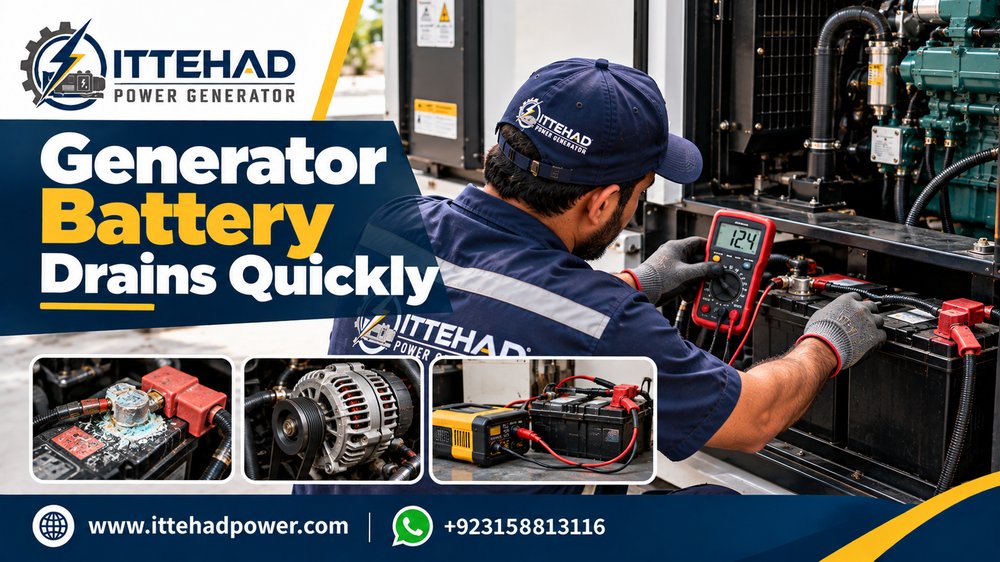
When a generator battery drains quickly, starting reliability can become unpredictable and the generator may fail to crank when backup power is needed. Rapid battery discharge can be linked to battery age or condition, weak charging performance, loose or corroded terminals, parasitic electrical drain, repeated starting attempts, or faults within the starting and control circuits. A systematic inspection helps identify whether the battery itself is failing or another generator component is causing the loss of charge.
Why a Generator Battery Drains Quickly
A generator battery should retain enough charge to operate the starting system when required. If the battery becomes weak soon after charging or repeatedly needs external charging, the cause should be investigated rather than simply replacing or recharging the battery.
The problem may originate from the battery, but it can also be caused by poor charging, damaged connections, electrical loads remaining active while the generator is stopped, or excessive starting demand. Correct diagnosis helps prevent repeated battery failure.
Common Signs of Generator Battery Drain
Battery problems often develop gradually. Recognizing the early signs can help prevent a complete no-start condition.
- Generator cranks slowly
- Battery requires frequent charging
- Generator starts normally after charging but becomes weak again
- Battery voltage drops while the generator is not operating
- Starter relay clicks without strong cranking
- Control panel becomes dim or unstable during starting
- Battery terminals become hot during cranking
- Starting performance becomes inconsistent
- Generator requires repeated jump starting
Check the Battery Condition First
The battery itself should be evaluated before investigating more complicated electrical faults. A battery can lose its ability to hold charge because of age, internal deterioration, repeated deep discharge, or unsuitable operating conditions.
Battery Age and Condition
An older battery may still show voltage immediately after charging but lose capacity quickly when placed under starting load. Physical condition, charging history, and starting performance can help determine whether further battery testing is required.
Battery Capacity
Voltage alone does not always confirm that a battery has enough capacity to crank the generator reliably. A battery may appear charged but drop significantly when the starter demands current.
Repeated Deep Discharge
Allowing the battery to become completely discharged repeatedly can reduce its ability to retain charge. The cause of repeated discharge should therefore be identified instead of relying on continuous recharging.
Generator Charging System Problems
If a generator battery does not receive adequate charging, it may gradually become weak even when the battery itself is still serviceable. The charging system should be checked whenever rapid battery drain is reported.
Diagnosis should confirm whether the battery receives appropriate charging while the generator operates and whether the charging circuit continues to function consistently.
Low Charging Output
Insufficient charging voltage can prevent the battery from recovering the energy used during starting. Over time, the available charge becomes lower until the generator struggles to crank.
Intermittent Charging
Loose wiring, poor connectors, damaged components, or unstable charging circuits can cause charging to work only occasionally. This can make the battery problem appear unpredictable.
Charging Circuit Connections
Battery charging depends on secure electrical connections. Loose or damaged wires can reduce charging performance and should be included in the inspection.
Loose or Corroded Battery Terminals
Poor terminal connections can affect both charging and starting. Corrosion, looseness, contamination, or damaged cable ends can create electrical resistance and reduce current flow.
Battery terminals should be inspected regularly and kept clean and secure. If excessive corrosion repeatedly develops, the underlying cause should also be investigated.
- Check terminal tightness
- Inspect for visible corrosion
- Look for damaged cable ends
- Check for signs of overheating
- Inspect battery ground connections
- Confirm cables remain securely attached
Parasitic Drain While the Generator Is Off
A parasitic electrical drain occurs when a component continues consuming battery power while the generator is stopped. Some electrical consumption may be normal depending on the generator configuration, but excessive drain can discharge the battery much faster than expected.
Control modules, relays, wiring faults, accessories, or another electrical circuit may remain active after shutdown. Proper electrical testing can determine whether excessive current is leaving the battery while the generator is not running.
Control Panel and Standby Electrical Loads
The generator control panel and related monitoring circuits may require a small amount of electrical power while the generator is stopped. Problems can occur if the standby load becomes excessive or if another component remains energized unexpectedly.
A technician can compare battery discharge with the generator’s normal standby requirements and investigate any abnormal electrical consumption.
Faulty Relay or Electrical Component
A relay that remains energized or sticks in the wrong position may continue drawing power after the generator is switched off. Similar problems can occur with other electrical components connected to the battery supply.
Diagnosis should identify the circuit responsible for the current draw before components are replaced. Random disconnection can create additional control problems and make troubleshooting more difficult.
Starter Motor and Excessive Starting Demand
A starter motor or starting circuit problem can place excessive demand on the battery. The generator may still crank, but unusually high current draw can discharge the battery quickly and make subsequent starting attempts weaker.
If the battery drains primarily during starting, the starter circuit, cable condition, terminals, and mechanical cranking behavior should be checked.
Repeated Starting Attempts and Battery Drain
Multiple unsuccessful starting attempts can rapidly reduce battery charge. This often happens when the generator has another fault involving fuel delivery, shutdown circuits, or engine starting conditions.
The battery may then appear to be the main problem even though repeated cranking is actually causing the discharge. If the generator does not start after normal attempts, the original no-start fault should be diagnosed before the starter is used repeatedly.
Battery Ground Connection Problems
A poor ground connection can reduce starting performance and interfere with charging. Corrosion, loose terminals, damaged cables, or poor contact at grounding points can create resistance in the circuit.
The battery ground path should be checked along with the positive connection whenever charging or cranking performance becomes unreliable.
How Corrosion Affects Battery Performance
Corrosion at battery terminals can interfere with electrical current and gradually make starting less reliable. The charging system may also struggle to maintain the battery correctly if terminal contact is poor.
Cleaning corrosion can restore connection quality, but repeated corrosion should not simply be treated as a cosmetic issue. Terminals, cables, battery condition, and the charging system should be reviewed if the problem keeps returning.
Generator Battery Drain Diagnosis Process
A structured diagnostic process helps determine whether the problem is caused by the battery, charging system, electrical connections, parasitic drain, or starting circuit.
- Confirm the reported battery discharge pattern.
- Inspect battery age and physical condition.
- Check terminal tightness and corrosion.
- Measure battery condition before starting.
- Observe voltage behavior during cranking.
- Check charging performance while the generator operates.
- Inspect charging wiring and connections.
- Check grounding and starter-circuit connections.
- Test for abnormal electrical drain while the generator is stopped.
- Identify the circuit or component causing excessive discharge.
- Repair the confirmed fault.
- Recharge and retest the battery and generator starting system.
Why Battery Voltage Should Be Checked Under Different Conditions
Battery behavior can change significantly between rest, cranking, and charging conditions. A useful diagnosis therefore considers more than a single voltage reading.
The battery may appear acceptable while resting but drop excessively during cranking. Alternatively, starting may be normal but charging voltage may remain insufficient after the engine starts. Comparing these conditions helps narrow down the fault.
Common Causes of Fast Generator Battery Discharge
Several electrical and operating conditions can cause the battery to lose charge faster than expected.
- Weak or deteriorated battery
- Insufficient charging voltage
- Charging system failure
- Loose or corroded battery terminals
- Poor ground connection
- Parasitic electrical drain
- Relay remaining energized
- Control circuit consuming excessive power
- Starter drawing excessive current
- Repeated unsuccessful starting attempts
- Damaged battery cables
- Long periods without suitable battery maintenance
Benefits of Correct Battery Drain Diagnosis
Accurate diagnosis helps restore starting reliability while avoiding unnecessary battery replacement. It also helps identify electrical faults that could continue damaging future batteries.
- Improves generator starting reliability
- Reduces repeated battery discharge
- Helps identify charging-system faults
- Prevents unnecessary battery replacement
- Finds abnormal standby electrical drain
- Improves terminal and connection condition
- Supports more dependable generator readiness
- Reduces unexpected no-start situations
Battery Replacement Versus Electrical Repair
A new battery will not provide a lasting solution if the generator has a charging fault or excessive parasitic drain. The replacement battery may simply become discharged again.
Battery replacement should be based on confirmed battery condition. If testing shows that the battery can still hold charge properly, attention should shift toward the charging system, connections, standby loads, or starting circuit.
What Customers Need When a Generator Battery Keeps Dying
Customers usually need to know whether the battery itself is faulty or whether another generator system is draining it. This distinction is important because replacing batteries repeatedly can increase cost without correcting the actual fault.
A useful inspection should explain what was tested, what caused the discharge, and what repair or maintenance is required to restore reliable starting.
How to Select a Generator Battery Troubleshooting Service
Battery drain problems require electrical diagnosis rather than visual inspection alone. A suitable service provider should understand battery condition, charging circuits, starting systems, wiring, and parasitic current testing.
Choose Testing Before Replacement
A technician should evaluate battery condition and charging performance before recommending a new battery whenever practical.
Look for Charging-System Diagnosis
If the generator is not replenishing battery charge correctly, installing another battery will not address the underlying fault.
Ask About Parasitic Drain Testing
When the battery discharges while the generator is switched off, checking standby current can help identify whether an electrical circuit is remaining active.
Confirm Post-Repair Starting Tests
After corrective work, the battery should be charged appropriately and generator starting should be tested to confirm dependable operation.
Local Relevance of On-Site Battery Diagnosis
Battery discharge can be influenced by the generator’s actual wiring, control panel, charging arrangement, starting circuit, and operating pattern. On-site inspection allows these systems to be evaluated together rather than testing only the battery in isolation.
This can be particularly useful when the battery tests normally after charging but becomes weak again after remaining connected to the generator.
Trust Points in Generator Battery Repair
Reliable battery troubleshooting should focus on evidence from testing rather than repeated component replacement. The customer should understand why the battery is losing charge and what corrective action is required.
- Battery condition is tested properly
- Charging performance is checked
- Terminals and cables are inspected
- Ground connections receive attention
- Parasitic drain is considered where relevant
- Starting current demand is evaluated when necessary
- Unnecessary battery replacement is avoided
- Generator starting is tested after repair
Guidance When the Generator Battery Becomes Weak
If the generator begins cranking slowly, avoid repeated long starting attempts. Continuous cranking can discharge the remaining battery capacity and place additional stress on the starter and cables.
Check for obvious terminal looseness or corrosion and note whether the battery becomes weak while the generator is unused or mainly after repeated starting. This information can help narrow down the source of the problem.
If there are damaged cables, overheated terminals, unusual electrical smells, or other visible electrical problems, the starting system should be inspected before continued operation.
How to Reduce Future Generator Battery Drain
Routine inspection can help identify developing battery and charging problems before they result in a complete starting failure.
- Keep battery terminals clean and secure
- Inspect cables for damage or overheating
- Check charging performance periodically
- Investigate slow cranking promptly
- Avoid unnecessary repeated starting attempts
- Monitor battery condition during maintenance
- Investigate unexplained discharge while the generator is stopped
- Correct corrosion before connections deteriorate further
Why Starting Reliability Depends on More Than the Battery
Reliable generator starting depends on the battery, charging system, terminals, cables, starter circuit, control system, and engine starting condition working together. A fault in any one of these areas can make a healthy battery appear weak.
Looking at the complete starting and charging system provides a more accurate diagnosis and reduces the chance of repeat failure.
Get Help When Your Generator Battery Drains Quickly
If your generator battery drains quickly, professional testing can help determine whether the problem is caused by battery deterioration, weak charging, loose or corroded terminals, parasitic electrical drain, excessive starting demand, or another electrical fault.
Arrange a complete battery and charging-system inspection if the generator repeatedly requires charging or becomes difficult to start. Correct diagnosis, connection maintenance, corrosion prevention, and suitable electrical repair can help restore reliable starting and reduce the risk of unexpected battery failure.