
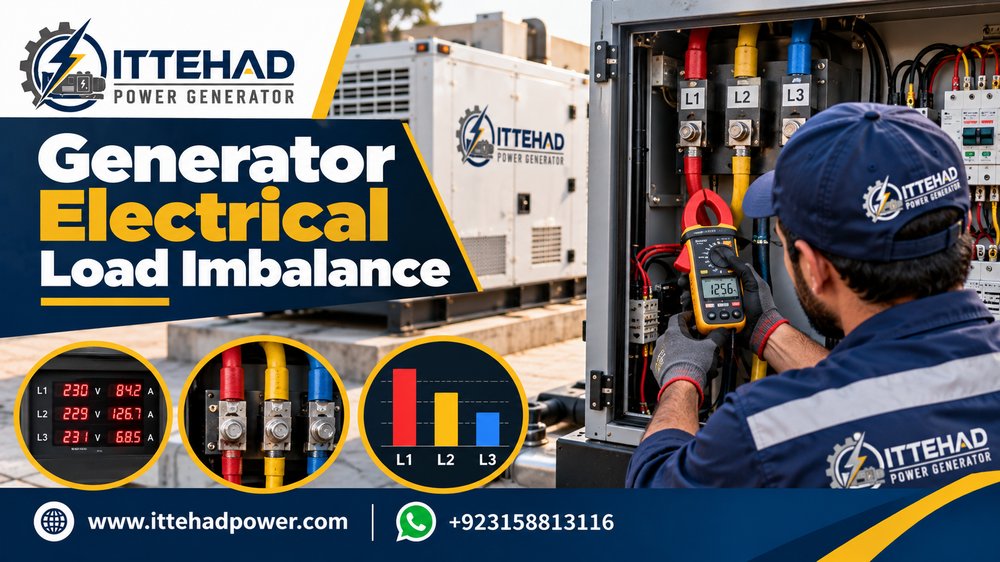
Generator electrical load imbalance occurs when electrical demand is not distributed evenly across the available phases, causing noticeable differences in current, voltage behavior, and overall generator loading. An imbalanced load can affect generator efficiency, increase heating in electrical components, reduce voltage stability, and place unnecessary stress on the alternator and connected circuits. Proper phase-load assessment, distribution checks, current measurement, and corrective balancing help support safer and more reliable generator operation.
Why Generator Electrical Load Imbalance Needs Attention
A generator is designed to supply electrical demand within specific operating limits. In a multi-phase system, the load should be distributed as evenly as practical so no single phase carries significantly more demand than the others.
When one phase is heavily loaded while another carries very little current, the generator may experience uneven electrical stress. This condition should be investigated rather than accepted as normal, especially when current differences are large or voltage stability is affected.
What Causes Electrical Load Imbalance on a Generator?
Load imbalance usually develops because connected electrical equipment is distributed unevenly between phases. It may also result from later additions to the electrical system, changes in operating patterns, incorrect circuit allocation, or faults affecting individual loads.
- Too many loads connected to one phase
- Large single-phase equipment concentrated on one phase
- Uneven circuit distribution
- Additional electrical loads added without balancing
- Different operating times between connected loads
- Disconnected or failed equipment on one phase
- Electrical wiring or connection problems
- Temporary load changes during generator operation
Understanding Phase Loading
Phase loading refers to how much electrical current each phase is supplying. In a balanced arrangement, the current values should remain reasonably close under comparable operating conditions.
Perfect equality may not always be possible because individual loads can switch on and off at different times. The objective is to avoid excessive differences that may affect generator performance or electrical stability.
Current Difference Between Phases
Current measurements provide one of the clearest indications of load imbalance. A heavily loaded phase may show much higher current than the other phases.
Changing Load Conditions
Measurements should be interpreted according to actual operating conditions. A system may appear balanced at one moment and become significantly uneven when additional equipment starts.
How Load Imbalance Affects Generator Voltage
Uneven phase loading can influence voltage stability. A heavily loaded phase may experience different voltage behavior compared with lightly loaded phases, particularly when the imbalance becomes significant.
Voltage differences should be checked together with current measurements because unstable or unequal voltage may also result from wiring, connection, alternator, or regulation problems.
Signs of Generator Electrical Load Imbalance
Some imbalance conditions can be identified through electrical measurements, while others become noticeable through operating symptoms.
- Large current differences between phases
- Unequal voltage readings
- One phase approaching its load limit before the others
- Repeated overload warnings
- Unusual alternator heating
- Electrical connections becoming excessively warm
- Generator output becoming unstable under certain loads
- Protective devices operating on one phase
- Uneven electrical performance during operation
Why Current Measurement Is Important
Guessing load balance from the number of connected circuits is not enough. Different electrical loads can draw very different amounts of current.
Measuring phase current under actual operating conditions provides a clearer picture of how the generator is being loaded. These readings can then be used to decide whether circuits should be redistributed.
Phase Load Distribution
Correct distribution means placing electrical loads across available phases in a way that keeps demand reasonably balanced. This may require reviewing both continuous and intermittent loads.
Large loads should be considered carefully because moving only one significant circuit may make a major difference to the overall phase balance.
Review Continuous Loads
Equipment that operates continuously has a constant effect on phase current and should be included first when evaluating load distribution.
Review Intermittent Loads
Loads that switch on only occasionally can create temporary imbalance. Their starting and operating demand should also be considered.
Generator Capacity and Load Imbalance
A generator can remain below its total rated capacity while one individual phase is still overloaded. Total generator load alone therefore does not confirm that the electrical distribution is acceptable.
Phase-by-phase measurements help determine whether electrical demand is being shared appropriately within the generator’s output arrangement.
Alternator Heating and Uneven Loading
Significant load imbalance can contribute to additional heating within the generator alternator and associated electrical components. Heat should therefore be considered alongside current and voltage measurements.
Unusual temperature rise, especially when total generator demand appears reasonable, can justify a closer look at phase loading and electrical connections.
Neutral Current and Imbalanced Loads
Uneven single-phase loading can increase current in the neutral conductor depending on the electrical system configuration. Neutral connections should therefore be included in a professional assessment where load imbalance is suspected.
Loose, overheated, or damaged neutral connections can create additional voltage and safety problems and should be addressed promptly.
Electrical Connections and Load Imbalance Symptoms
Not every difference in phase voltage or current is caused by load distribution alone. Loose terminals, damaged cables, poor connections, or electrical faults can produce similar symptoms.
Important electrical connections should therefore be inspected before major load changes are made.
- Check phase terminals
- Inspect cable connections
- Review neutral connections
- Look for overheating or discoloration
- Inspect damaged insulation
- Check for loose connectors
- Confirm grounding remains suitable
Generator Electrical Load Imbalance Diagnosis Process
A structured inspection helps determine whether the problem is caused by actual uneven demand or another electrical fault.
- Review the generator’s connected electrical loads.
- Measure current on each phase.
- Compare phase voltage readings.
- Observe readings under normal operating conditions.
- Identify heavily loaded and lightly loaded phases.
- Inspect phase and neutral connections.
- Check for overheated or damaged electrical components.
- Review recently added or changed loads.
- Redistribute suitable circuits where required.
- Measure phase current again after correction.
- Confirm voltage remains stable under load.
How to Correct Generator Load Imbalance
Correction usually involves redistributing suitable electrical circuits so current demand is shared more evenly across the available phases.
Changes should be planned carefully because moving a circuit can affect both normal operation and future load conditions. Electrical work should be carried out by suitably qualified personnel.
Move Suitable Loads Between Phases
Selected circuits can be transferred from an overloaded phase to a lighter phase where the electrical system allows.
Recheck After Redistribution
Current and voltage should be measured again after changes are made. The objective is to confirm actual improvement rather than assuming the new arrangement is balanced.
Why Random Circuit Changes Should Be Avoided
Moving circuits without measuring current can simply shift the imbalance from one phase to another. Some loads may also have operating requirements that must be considered before their connections are changed.
A measured approach provides better results and reduces unnecessary electrical modifications.
Benefits of Balanced Generator Loading
Improving phase balance can support more stable and predictable generator operation.
- Improves distribution of electrical demand
- Reduces excessive loading on individual phases
- Supports more stable voltage
- Helps reduce unnecessary electrical heating
- Improves use of available generator capacity
- Supports alternator reliability
- Reduces avoidable overload conditions
- Makes future load planning easier
What Customers Need When Load Imbalance Is Suspected
Generator owners generally need to know whether the imbalance is significant, which phase is overloaded, and whether the issue can be corrected through load redistribution or requires further electrical repair.
A useful assessment should provide actual current and voltage findings rather than relying only on visual inspection.
How to Select a Generator Load Balancing Service
Load balancing requires electrical measurement and an understanding of generator distribution. Service selection should therefore focus on diagnostic capability and safe electrical work.
Choose Phase-by-Phase Measurement
The technician should measure current on each phase rather than estimating load from connected equipment alone.
Look for Voltage Evaluation
Voltage readings should be compared alongside current because poor voltage stability may indicate an additional electrical issue.
Ask for Connection Inspection
Phase and neutral terminals should be checked where appropriate so poor connections are not mistaken for simple load imbalance.
Confirm Testing After Rebalancing
Current and voltage should be measured again after corrective work to verify that the distribution has improved.
Customer Selection Tips for Load Balancing Support
A reliable service provider should be able to explain how generator load is distributed and why specific circuits may need to be moved. Recommendations should be based on measurements rather than general assumptions.
- Ask whether all phases will be measured
- Confirm current and voltage will be reviewed
- Ask whether neutral connections will be inspected where relevant
- Choose a provider that explains proposed circuit changes
- Confirm post-correction measurements are included
Site-Specific Relevance of Generator Load Distribution
Electrical load balance depends on the actual equipment connected to the generator. Every site can have a different mix of continuous, intermittent, and single-phase loads.
On-site assessment is therefore valuable because the generator can be measured under its normal operating conditions rather than using theoretical load assumptions.
Changes in Electrical Use Can Create New Imbalance
A generator system that was originally well balanced can become uneven over time as new equipment is added, circuits are changed, or operating patterns develop.
Load distribution should be reviewed after significant electrical changes rather than assuming the original balance remains suitable.
Trust Points in Professional Load Imbalance Diagnosis
Reliable load balancing should be based on accurate measurements, safe electrical inspection, and practical redistribution of suitable circuits.
- Phase currents are measured individually
- Voltage stability is checked
- Generator capacity is considered
- Neutral and phase connections are inspected where required
- Load changes are planned rather than guessed
- Electrical safety remains a priority
- Results are verified after correction
- Unnecessary electrical modifications are avoided
Common Mistakes When Dealing with Load Imbalance
Incorrect assumptions can leave an electrical distribution problem unresolved.
- Checking only total generator load
- Ignoring individual phase current
- Moving circuits without measurement
- Overlooking neutral connections
- Ignoring voltage differences
- Assuming all connected equipment draws equal current
- Adding new loads without reviewing phase distribution
- Skipping measurements after corrective work
Guidance for Monitoring Generator Phase Loads
Phase-current readings should be reviewed periodically when electrical loads change frequently or when new circuits are added. Keeping basic records can make it easier to identify gradual changes in distribution.
If one phase repeatedly approaches a high load while others remain lightly loaded, corrective balancing should be considered before the condition develops into repeated overload or voltage problems.
When Load Imbalance Needs Prompt Attention
Prompt inspection is recommended when one phase is significantly more heavily loaded, protective devices operate repeatedly, electrical connections become hot, voltage differs noticeably between phases, or generator performance becomes unstable.
Continued operation with severe imbalance can place unnecessary stress on the generator and electrical distribution system.
Why Preventive Load Reviews Are Useful
Checking electrical distribution before problems appear can help identify overload patterns early. This is particularly useful after new equipment is added or existing circuits are reorganized.
Preventive review allows generator capacity to be used more effectively while supporting stable electrical performance.
Get Help with Generator Electrical Load Imbalance
If generator electrical load imbalance is causing uneven phase current, unstable voltage, overheating, overload warnings, or unreliable electrical performance, professional testing can help identify how demand is distributed across the generator.
Arrange a complete phase-load assessment to measure current, review voltage, inspect relevant electrical connections, and determine whether circuits should be redistributed. Accurate load balancing and post-correction testing can help improve voltage stability, reduce unnecessary electrical stress, and support safer, more reliable generator operation.