
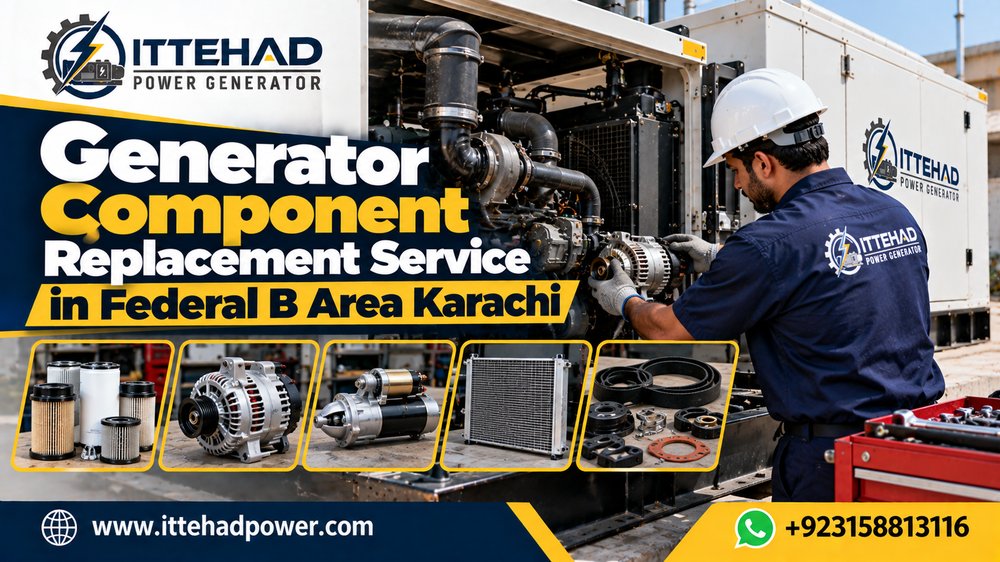
A professional generator component replacement service in Federal B Area Karachi helps restore dependable generator performance when worn, damaged, weak, or failed parts begin affecting starting, cooling, fuel delivery, electrical output, control functions, or overall operating reliability. Effective component replacement should begin with practical checks and fault diagnosis rather than changing parts by guesswork. The correct process involves identifying the failed component, checking possible underlying causes, confirming compatibility, completing safe replacement, and testing the generator afterward to make sure the original problem has been resolved.
Why Generator Component Replacement Should Follow Proper Diagnosis
A generator contains many mechanical, electrical, fuel, cooling, starting, and control components that work together. When one part begins to fail, the resulting symptoms can sometimes appear to come from another system.
For example, starting difficulty may involve the battery, cables, starter motor, fuel supply, control circuit, or engine condition. Replacing the first suspected component without testing can increase costs and leave the actual fault unresolved.
A diagnosis-first approach helps determine whether a component genuinely requires replacement or whether cleaning, adjustment, repair, servicing, or correction of another fault is more appropriate.
Generator Component Replacement Service in Federal B Area Karachi
A reliable generator component replacement service in Federal B Area Karachi should combine fault diagnosis, part identification, compatibility checking, safe removal, correct installation, and post-replacement testing. The objective should not simply be to install a new part, but to understand why the original component failed and whether any related system requires attention.
This approach can reduce repeat breakdowns, unnecessary parts costs, and avoidable generator downtime.
Common Signs a Generator Component May Need Replacement
Generator parts can deteriorate gradually or fail suddenly depending on operating hours, maintenance, heat, vibration, contamination, electrical stress, and component condition.
Warning signs may include:
- Repeated starting problems
- Unexpected generator shutdown
- Unstable engine operation
- Fuel, oil, or coolant leakage
- Overheating
- Unusual noise
- Excessive vibration
- Reduced electrical output
- Repeated control warnings
- Burn marks or overheated connections
- Corrosion
- Cracked belts or hoses
- Intermittent component operation
These symptoms indicate that inspection is required, but they do not always prove that replacement is necessary.
Practical Checks Before Replacing Any Component
Before ordering or installing a replacement part, the generator should be inspected systematically.
Useful preliminary checks include:
- Battery condition
- Fuel level and quality
- Engine oil level
- Coolant level
- Visible leaks
- Loose wiring
- Damaged connectors
- Filter condition
- Control panel warnings
- Breaker position
- Recent maintenance history
Basic checks can sometimes identify simple causes that do not require component replacement.
Why Fault Symptoms Can Be Misleading
Several generator systems can produce similar symptoms when they begin to fail. Rough running, for example, can come from fuel restriction, injector condition, air intake problems, compression issues, or electrical control faults.
Likewise, low electrical output may involve generator load, engine speed, alternator performance, voltage regulation, loose connections, or breaker problems.
Replacing components only from symptoms can therefore lead to unnecessary expense. Testing should narrow the fault before parts are changed.
Battery Replacement
A weak or damaged battery can prevent reliable generator starting. However, battery replacement should follow inspection of the complete starting and charging system.
Battery-related checks may include:
- Battery voltage
- Terminal condition
- Cable tightness
- Corrosion
- Ground connections
- Cranking performance
- Charging condition
If the battery repeatedly becomes discharged, the charging system should also be inspected before simply fitting another battery.
Starter Motor and Starting Components
Starter motors, solenoids, relays, cables, and related components can affect generator starting. A failed starter component may cause slow cranking, clicking, intermittent operation, or no cranking response.
Before replacement, confirm:
- Battery condition is acceptable
- Battery cables are secure
- Grounding is suitable
- Control signal reaches the starter circuit
- Connections are not overheated or damaged
Replacing the starter motor will not solve a poor cable or control problem.
Fuel Filter Replacement
Fuel filters are routine service components and can also contribute to generator problems when heavily restricted. Reduced fuel flow may cause hard starting, hesitation, rough running, power loss, or shutdown.
Replacement should use a filter that matches the generator or engine requirements. Similar-looking filters may have different flow or filtration characteristics.
Fuel System Component Replacement
Fuel pumps, injectors, fuel shutoff components, hoses, fittings, seals, and related parts can deteriorate or fail over time.
Possible signs of a fuel-system component problem include:
- Difficult starting
- Fuel leakage
- Rough running
- Loss of power
- Smoke
- Higher fuel consumption
- Unexpected shutdown
Fuel quality, filters, lines, and air entry should be checked before major fuel-system components are replaced.
Fuel Injector Replacement
Fuel injectors should not be replaced simply because a generator is producing smoke or running roughly. Those symptoms can also result from restricted filters, poor fuel, air intake problems, or low compression.
Injector replacement may be appropriate when testing confirms poor spray quality, leakage, internal wear, or unsuitable fuel delivery.
Correct injector identification and engine compatibility are essential before installation.
Air Filter Replacement
A restricted or damaged air filter can affect combustion and engine performance. Air filters should be replaced according to condition and service requirements.
Signs that an air filter may need attention include:
- Heavy contamination
- Restricted airflow
- Damaged filter material
- Poor sealing
- Reduced engine response
A replacement should fit correctly and provide suitable filtration for the generator application.
Oil Filter Replacement
Oil filters help protect internal engine components by removing contaminants from lubricating oil. Filters should be replaced at suitable service intervals and whenever condition or maintenance requirements indicate replacement.
Correct filter selection should consider:
- Part number
- Thread size
- Seal arrangement
- Physical dimensions
- Engine application
Incorrect filters can create sealing or lubrication problems.
Generator Belt Replacement
Belts can deteriorate because of heat, age, tension problems, misalignment, and operating wear.
Replacement may be needed when belts show:
- Cracking
- Fraying
- Glazing
- Missing sections
- Excessive looseness
- Repeated slipping
A new belt should match the correct length, width, profile, and application. Pulley alignment and tension should also be checked so the replacement does not fail prematurely.
Cooling Hose Replacement
Cooling hoses can harden, crack, swell, or leak over time. A damaged hose can contribute to coolant loss and overheating.
Replacement planning should consider:
- Correct hose diameter
- Length
- Material suitability
- Connection points
- Clamp condition
- Routing
Related clamps and fittings should also be inspected when a hose is replaced.
Cooling System Component Replacement
Cooling-system problems can involve hoses, sensors, fan-related components, thermostat-related parts, fittings, or seals.
Repeated overheating should be diagnosed carefully because replacing one component without correcting the actual cause may not solve the problem.
Checks may include coolant level, airflow, hose condition, leakage, fan operation where applicable, and temperature sensing.
Sensor Replacement
Generators use sensors to monitor conditions such as temperature, pressure, and speed. A faulty sensor can produce incorrect readings, warnings, or shutdowns.
Before replacing a sensor, inspect:
- Sensor connector
- Wiring
- Corrosion
- Control panel readings
- Actual operating condition
A damaged wire can create the same warning as a failed sensor, so diagnosis should confirm the cause.
Relay and Electrical Component Replacement
Relays, switches, connectors, and control components can fail due to heat, age, vibration, electrical stress, or poor connections.
Signs may include:
- Intermittent operation
- No response from a controlled circuit
- Burn marks
- Overheating
- Repeated electrical faults
- Loose or damaged terminals
Electrical ratings and connection arrangements should be matched carefully before replacement.
Breaker Replacement
A breaker should be replaced only after confirming that the problem is within the breaker itself. Repeated tripping may be caused by overload, short circuits, poor connections, or other electrical faults.
Before replacement, inspect:
- Connected load
- Breaker rating
- Terminal condition
- Signs of overheating
- Cable condition
- Electrical faults downstream
Replacing a breaker without correcting an overload condition can result in repeated trips.
Control Panel Component Replacement
Control panels may contain switches, displays, relays, connectors, and control modules that support generator starting, monitoring, protection, and shutdown functions.
Control-related replacement should follow proper diagnosis because intermittent wiring or sensor problems can sometimes appear to be controller failures.
Fault codes and warning history should be recorded before components are changed.
Alternator-Related Component Replacement
If the generator engine runs normally but electrical output is low, unstable, or unavailable, alternator-related components may require inspection.
Diagnosis may involve:
- Output voltage
- Engine speed
- Electrical connections
- Voltage regulation
- Alternator wiring
- Excitation-related components
- Load behavior
Major electrical components should not be replaced without confirming the fault through suitable testing.
Voltage Regulation Component Replacement
Voltage regulation problems can cause low, high, or unstable generator voltage. However, incorrect engine speed, loose sensing connections, and wiring faults can produce similar symptoms.
Before replacing regulation components, the complete output system should be checked.
Seals and Gasket Replacement
Seals and gaskets can deteriorate and cause oil, coolant, fuel, or air leakage. These relatively small components can significantly affect generator reliability.
When replacing a seal or gasket, inspect the mating surfaces and determine whether excessive pressure, misalignment, or another condition contributed to the leak.
Simply fitting another seal without correcting the cause may lead to repeat leakage.
Electrical Cable and Terminal Replacement
Damaged, overheated, corroded, or loose electrical cables and terminals can create voltage drop, starting problems, unstable output, or excessive heat.
Replacement may be appropriate when there is:
- Damaged insulation
- Burnt connections
- Corroded terminals
- Broken conductors
- Excessive heating
- Physical damage
Replacement cables should be properly sized for their intended electrical load.
Why Correct Part Identification Matters
Generator components should be identified using technical information rather than appearance alone. Two parts may look almost identical while having different internal specifications.
Useful identification details include:
- Generator make and model
- Engine model
- Original part number
- Serial information where available
- Physical measurements
- Electrical rating
- Connection type
- Mounting arrangement
Accurate identification reduces incorrect purchases and installation problems.
Compatibility Checks Before Replacement
A replacement component should match the original application as closely as required for proper operation.
Compatibility checks may include:
- Part number
- Dimensions
- Voltage
- Current rating
- Pressure requirements
- Connection style
- Mounting pattern
- Material
- Generator or engine application
A part that physically fits is not automatically suitable.
Why Replacement Quality Matters
The quality and suitability of a replacement component can directly influence repair reliability. A poorly matched or unsuitable part may fail early or cause problems in connected systems.
Reliable sourcing should therefore consider:
- Technical compatibility
- Physical condition
- Correct specification
- Intended application
- Storage condition
- Supplier reliability
Price should not be the only factor when selecting critical generator components.
Check Why the Original Part Failed
Replacing a failed part without identifying the cause of failure can lead to the same problem returning.
Possible underlying causes include:
- Overheating
- Electrical overload
- Poor connections
- Fuel contamination
- Restricted airflow
- Incorrect tension
- Vibration
- Fluid leakage
- Poor maintenance
- Incorrect previous installation
Understanding the cause can improve the life of the new component.
Replace Related Small Parts Where Necessary
Some repair jobs require more than one component. A replacement may also need new seals, clamps, fittings, connectors, washers, or mounting hardware.
Reusing damaged supporting parts can compromise an otherwise correct repair.
Related components should be inspected before installation begins so all necessary items are available.
Safe Generator Component Removal
Component replacement can involve electricity, batteries, fuel, hot surfaces, moving parts, and pressurized fluids. The generator should be placed in a safe condition before parts are removed.
Depending on the component, safe preparation may include:
- Stopping the generator
- Allowing hot components to cool
- Isolating electrical power
- Disconnecting the battery where appropriate
- Preventing accidental starting
- Handling fuel or coolant safely
Improvised replacement methods can create additional damage or safety risks.
A Practical Generator Component Replacement Process
A structured replacement process improves repair accuracy and helps prevent unnecessary work.
- Confirm the reported problem: Identify the symptoms affecting generator operation.
- Inspect the relevant system: Check basic conditions, connections, fluids, filters, and control indications.
- Test the suspected component: Confirm that replacement is justified.
- Identify the correct part: Record generator model, engine details, part number, ratings, and measurements.
- Check related causes: Determine why the component failed.
- Source a compatible replacement: Compare technical specifications carefully.
- Prepare the generator safely: Isolate relevant electrical, fuel, or mechanical systems.
- Remove the failed component: Avoid damaging connected parts.
- Install the replacement correctly: Use suitable fittings, connections, and mounting procedures.
- Inspect the completed work: Check for leaks, loose connections, incorrect routing, or installation problems.
- Start and test the generator: Verify that the original fault has been corrected.
- Observe operation under suitable conditions: Confirm stable performance and no recurring warnings.
Why Post-Replacement Testing Is Essential
A component replacement should not be considered complete just because the new part has been installed. The generator needs to be tested to make sure the repair actually solved the original problem.
Post-replacement checks may include:
- Starting performance
- Engine stability
- Electrical output
- Control panel warnings
- Fuel, oil, or coolant leakage
- Temperature behavior
- Noise and vibration
- Load response
Testing can also reveal whether another related fault remains.
Benefits of Professional Generator Component Replacement
Correct component replacement can provide several practical benefits.
- Restores generator reliability
- Reduces repeated breakdowns
- Improves starting performance
- Supports stable engine operation
- Helps maintain dependable electrical output
- Reduces unnecessary parts changes
- Improves repair planning
- Helps control maintenance costs
- Reduces avoidable downtime
What Customers Need From a Component Replacement Service
Customers need confidence that the component being replaced is genuinely faulty, that the replacement is compatible, and that the underlying cause has been considered.
A professional service should provide:
- Fault diagnosis
- Practical inspection
- Part identification
- Compatibility checking
- Clear explanation of findings
- Safe component replacement
- Inspection of related systems
- Post-replacement testing
- Maintenance guidance
How to Select a Generator Component Replacement Service
A suitable service provider should focus on diagnosis and compatibility instead of recommending immediate replacement for every fault.
Useful selection points include:
- Diagnosis before replacement
- Generator and engine details checked
- Part numbers verified where available
- Related systems inspected
- Safe replacement procedures
- No unnecessary parts changes
- Clear repair explanation
- Testing after installation
Questions to Ask Before Approving Component Replacement
Before approving replacement work, it can be useful to clarify why the component needs changing and how the diagnosis was made.
Useful questions include:
- What test confirmed the component failure?
- Could another fault produce the same symptom?
- Has the related wiring or system been checked?
- Is the replacement compatible with the generator?
- Are additional seals or fittings required?
- What may have caused the original failure?
- How will the generator be tested after replacement?
Local Generator Component Replacement in Federal B Area Karachi
Generator owners in Federal B Area Karachi may need component replacement for starting, fuel, cooling, electrical, control, filtration, or mechanical systems as generators accumulate operating hours and normal wear.
Access to local generator support can make it easier to arrange inspection, identify the required component, complete replacement, and test the generator without unnecessary delays.
Heat, dust, standby periods, fuel condition, vibration, and maintenance history can all influence component life, so local operating conditions should be considered during diagnosis.
Heat and Generator Component Wear
High operating temperatures can affect batteries, hoses, electrical connections, seals, wiring, and other generator components.
When heat-related deterioration is found, the cooling and ventilation conditions should also be inspected rather than replacing damaged parts repeatedly.
Dust and Component Reliability
Dust can affect air filters, cooling surfaces, electrical connections, control components, and general generator cleanliness.
Generators operating in dusty conditions may need more frequent inspection of filtration, airflow, connectors, and cooling areas.
Vibration and Repeated Component Failure
Normal generator operation produces vibration, but excessive vibration can loosen terminals, damage connectors, stress hoses, and shorten the life of some components.
If a newly replaced part fails repeatedly, mounting condition and vibration should be checked as possible contributing causes.
Trust Points in Generator Component Replacement
A reliable replacement service should be transparent about whether the component is definitely faulty or only suspected.
Important trust points include:
- Fault diagnosis completed first
- Basic causes ruled out
- Part compatibility confirmed
- Original failure cause considered
- Only necessary components replaced
- Related connections inspected
- Replacement installed safely
- Generator tested afterward
Avoid Trial-and-Error Parts Replacement
Replacing multiple components one by one without proper diagnosis can become expensive and may still leave the fault unresolved.
A better approach is to:
- Identify the affected system
- Test likely causes
- Confirm the failed component
- Replace only the necessary part
- Verify the repair through testing
This approach supports more efficient maintenance and better repair decisions.
When Repair May Be Better Than Replacement
Not every faulty component must automatically be replaced. Depending on the part and its condition, cleaning, adjustment, connection repair, servicing, or rebuilding may sometimes provide a suitable solution.
The decision should consider:
- Component condition
- Availability of repair
- Reliability after repair
- Replacement cost
- Operating importance
- Compatibility of available alternatives
Replacement becomes more practical when a component is damaged, unreliable, excessively worn, or unsuitable for further service.
When Replacement Should Not Be Delayed
Some damaged parts can create greater problems if they remain in service.
Prompt replacement may be appropriate when there is:
- Serious fuel leakage
- Severely damaged electrical wiring
- Burnt terminals
- Cracked cooling hoses
- Failing belts
- Unsafe battery condition
- Repeated protective faults linked to a confirmed component
Continued operation with seriously damaged components can increase downtime or create additional faults.
Component Replacement and Preventive Maintenance
Replacement work is a useful opportunity to review the surrounding maintenance condition of the generator.
After replacing a failed component, consider checking:
- Oil and filters
- Fuel-system condition
- Cooling system
- Battery and charging
- Belts and hoses
- Electrical terminals
- Control warnings
- Visible leaks
This can help identify developing problems before another component fails.
Keep a Record of Replaced Components
Replacement history can provide valuable information for future maintenance and troubleshooting.
A useful record can include:
- Component name
- Part number
- Date of replacement
- Generator operating hours
- Reason for replacement
- Observed symptoms
- Cause of failure where known
- Result after replacement
Repeated failure of the same component can indicate an unresolved underlying problem.
Common Component Replacement Mistakes
Generator replacement work can become more expensive when basic checks are skipped.
Common mistakes include:
- Replacing parts without testing
- Buying by appearance alone
- Ignoring part numbers
- Using incorrect electrical ratings
- Failing to inspect related wiring
- Reusing damaged seals or clamps
- Ignoring the cause of failure
- Installing parts incorrectly
- Skipping post-replacement testing
A careful process reduces these risks.
Guidance Before Purchasing a Replacement Component
Before ordering a part, confirm the generator model, engine model where relevant, original part number, electrical or mechanical specification, dimensions, mounting arrangement, and connection type.
Photographs of the original component and identification labels can also help with accurate sourcing.
If the fault has not yet been confirmed, diagnosis should come before purchasing expensive components.
Guidance After Component Replacement
After replacement, monitor the generator for any return of the original symptoms. A component that fails again quickly may indicate an unresolved problem elsewhere in the system.
Watch for:
- Repeated fault codes
- New leakage
- Unusual heat
- Loose connections
- Abnormal noise
- Vibration
- Unstable output
- Starting problems
Early follow-up can prevent a minor issue from becoming another breakdown.
Safety During Component Replacement
Generator repair can involve hazardous electrical voltage, fuel, batteries, hot fluids, moving components, and heavy parts. Suitable isolation and handling procedures should be used before work begins.
Complex electrical, fuel injection, alternator, starter, or control components may require specialized testing and installation procedures. If the correct method is uncertain, professional replacement is preferable to trial-and-error work.
When Professional Component Replacement Is Recommended
Professional service is recommended when the faulty component affects starting, fuel delivery, cooling, electrical output, engine protection, or generator control and the cause cannot be confirmed through basic inspection.
Professional diagnosis is also useful when the same component has failed repeatedly, the correct replacement is difficult to identify, or multiple systems appear to be involved.
Restore Generator Reliability in Federal B Area Karachi
A professional generator component replacement service in Federal B Area Karachi should focus on practical checks, accurate fault diagnosis, correct part identification, compatibility, safe installation, and post-replacement testing. Replacing a generator component is most effective when the underlying cause is understood and the new part is matched correctly to the generator or engine.
If your generator is experiencing repeated starting problems, leakage, overheating, unstable electrical output, unusual noise, control warnings, or another component-related fault, arrange a complete inspection before unnecessary parts are changed. Targeted replacement of the confirmed faulty component can help restore dependable generator performance, improve operating reliability, reduce repeat failures, and minimize avoidable downtime.