
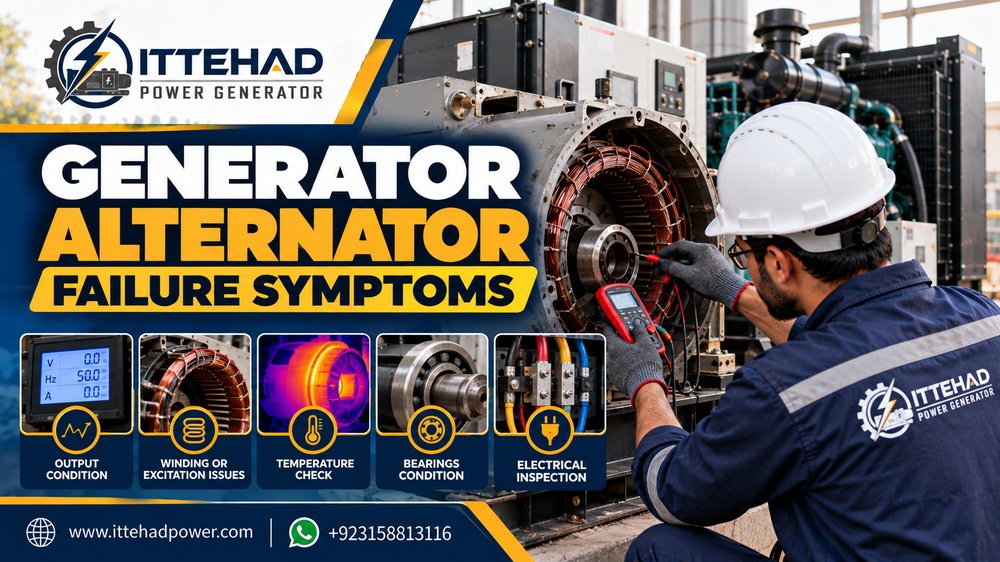
Recognizing generator alternator failure symptoms early can help commercial and industrial generator users prevent unstable electrical output, unexpected shutdowns, overheating, winding damage, bearing problems, and other costly faults. The alternator is responsible for converting mechanical energy into electrical power, so problems involving windings, excitation, bearings, insulation, terminals, or internal components can directly affect voltage quality and generator reliability. Careful inspection of output condition, temperature, sound, vibration, excitation behavior, and electrical connections can help identify developing alternator problems before complete failure occurs.
Why Generator Alternator Condition Matters
The engine may continue running normally even when the alternator is developing an electrical or mechanical fault. This can make alternator problems less obvious than engine problems during early stages.
A generator that starts correctly but produces no voltage, low voltage, unstable output, excessive heat, unusual noise, or phase imbalance may require alternator inspection. Early diagnosis can reduce secondary damage and help determine whether repair, adjustment, or component replacement is required.
Common Generator Alternator Failure Symptoms
The most important generator alternator failure symptoms usually involve changes in electrical output, temperature, sound, vibration, excitation, or insulation condition.
- No electrical output
- Low generator voltage
- Unstable or fluctuating voltage
- Uneven voltage between phases where applicable
- Alternator overheating
- Electrical burning smell
- Unusual bearing noise
- Excessive vibration
- Repeated breaker trips
- Voltage dropping under load
- Excitation problems
- Visible winding discoloration
- Damaged or overheated terminals
No Electrical Output From the Generator
A generator engine may run normally while the alternator produces little or no usable electrical output. This can indicate problems involving excitation, the AVR, rotating rectifiers, windings, internal connections, breaker condition, or output terminals.
The exact cause should be identified through systematic testing rather than assuming that the complete alternator has failed.
Low Generator Voltage
Persistent low voltage can be an early sign of an alternator-related problem, especially when engine speed and frequency remain normal.
Possible causes include weak excitation, winding faults, poor sensing, damaged rectifier components, internal resistance problems, or deteriorating electrical connections.
Unstable Generator Voltage
Voltage that rises and falls repeatedly may indicate inconsistent excitation, poor internal electrical contact, winding deterioration, AVR-related problems, or unstable connections within the alternator circuit.
Frequency should be checked at the same time because engine-speed variation can create similar symptoms.
Voltage Drop Under Load
An alternator may produce normal voltage without load but struggle when electrical demand is applied. Voltage drop under load can indicate weak excitation, winding damage, excessive internal resistance, poor terminals, or a generator being operated beyond suitable capacity.
Controlled load testing can help determine whether the alternator maintains stable output as current increases.
Uneven Voltage Between Phases
Where applicable, significant voltage difference between phases can indicate winding problems, loose internal connections, phase-specific terminal issues, or uneven electrical loading.
Individual phase voltage and current measurements help determine whether the issue originates inside the alternator or in the connected electrical system.
Alternator Overheating
Excessive alternator temperature is an important warning sign. Heat can result from overloading, restricted ventilation, winding faults, poor electrical connections, bearing problems, or excitation issues.
Repeated overheating can accelerate insulation deterioration and increase the risk of winding failure.
Possible Signs of Alternator Overheating
- Hot alternator housing
- Electrical or insulation smell
- Discolored terminals
- Darkened winding areas
- Voltage becoming unstable after extended operation
- Heat around cable connections
- Repeated temperature-related shutdowns
Electrical Burning Smell
A burning or overheated electrical smell should never be ignored. It can indicate damaged insulation, overheated windings, loose terminals, burned connectors, or excessive current.
The generator should be inspected before extended operation continues because electrical overheating can cause progressive alternator damage.
Winding Discoloration
Alternator windings that appear unusually dark, burned, or discolored may have been exposed to excessive temperature.
Discoloration alone does not always confirm winding failure, but it is a strong reason to perform resistance, insulation, and output testing.
Alternator Winding Problems
Stator and rotor windings are critical to electrical generation. Open circuits, shorted turns, insulation breakdown, or heat damage can reduce voltage, create imbalance, increase current, or cause complete output loss.
Possible Winding Failure Indicators
- Persistent low output
- Uneven phase voltage
- Alternator overheating
- Electrical smell
- Abnormal resistance readings
- Low insulation resistance
- Repeated protection trips
- Voltage that deteriorates as the alternator heats up
Insulation Deterioration
Alternator winding insulation can deteriorate because of heat, age, moisture, contamination, dust, vibration, or repeated electrical stress.
When insulation weakens, leakage between conductors or toward the alternator frame can develop. Proper insulation testing is required when this condition is suspected.
Moisture and Alternator Insulation
Moisture can reduce insulation resistance and contribute to corrosion or electrical leakage. Generators that remain unused for long periods or operate in damp conditions may require closer alternator inspection.
Visible moisture, condensation, or repeated insulation problems should be investigated before the generator is placed under significant load.
Excitation System Failure
The alternator requires a functioning excitation system to build and regulate output voltage. Weak or failed excitation can result in no output, low voltage, unstable voltage, or poor response when load changes.
Depending on alternator design, the excitation system may include an AVR, exciter, rotating rectifiers, field windings, brushes, or slip rings.
Residual Magnetism Problems
Some alternators rely on residual magnetism to begin building voltage. If this magnetic field becomes too weak, the generator may produce only a small output or fail to build voltage normally.
This should be confirmed through proper diagnosis because AVR, wiring, and excitation faults can produce similar symptoms.
Rotating Rectifier Failure
Brushless alternators often use rotating rectifiers as part of the excitation circuit. A failed diode or damaged rectifier connection can reduce field current and affect voltage production.
Possible symptoms include low voltage, poor load response, overheating, or unstable electrical output.
Brush and Slip Ring Problems Where Applicable
Some alternators use brushes and slip rings for excitation. Worn brushes, weak spring pressure, contaminated slip rings, or damaged contact surfaces can interrupt field current.
The result may be unstable voltage, intermittent output, sparking, or complete loss of excitation.
AVR-Related Alternator Symptoms
The automatic voltage regulator controls alternator excitation and therefore has a major influence on electrical output. A faulty AVR can make an alternator appear defective even when windings and other components remain serviceable.
AVR and sensing circuits should be tested before major alternator repair decisions are made.
Loose Alternator Electrical Connections
Loose terminals can cause voltage drop, heat, intermittent output, or visible burning around connection points. Generator vibration and repeated heating cycles can gradually affect connection tightness.
Alternator terminals, cable lugs, sensing wires, excitation connections, and breaker terminals should all be inspected when electrical output becomes unreliable.
Overheated Alternator Terminals
A high-resistance electrical connection can generate substantial heat under load. Overheated terminals may become discolored, damaged, or surrounded by melted insulation.
Repair should include identifying why the connection overheated rather than simply tightening it.
Alternator Bearing Failure Symptoms
Alternator bearings support rotating components and help maintain smooth mechanical operation. Bearing wear can create noise, vibration, heat, or rotor alignment problems.
Common Bearing Warning Signs
- Grinding noise
- Rumbling sound
- High-pitched bearing noise
- Increasing vibration
- Excessive bearing-area temperature
- Rough rotation
- Mechanical movement or play
Bearing problems should be addressed before they cause damage to the rotor, stator, coupling, or other connected components.
Unusual Alternator Noise
Alternators normally produce a consistent operating sound. New grinding, scraping, rattling, or rubbing noises can indicate bearing wear, loose components, rotor contact, or mechanical misalignment.
Changes in sound should be inspected promptly rather than waiting for complete mechanical failure.
Excessive Alternator Vibration
Increasing vibration can result from bearing deterioration, rotor imbalance, poor alignment, loose mounting, damaged coupling components, or internal mechanical problems.
Vibration can also loosen electrical connections and accelerate wear in nearby components.
Rotor and Stator Contact
Severe bearing wear or alignment problems can allow rotating and stationary alternator components to contact each other. This may create scraping noise, vibration, heat, and rapid internal damage.
The generator should not continue normal operation if mechanical contact is suspected.
Alternator Cooling Problems
Alternators depend on airflow to remove heat generated during electrical operation. Dust buildup, blocked ventilation openings, fan problems, or poor surrounding airflow can increase internal temperature.
Cooling paths should remain clean and unobstructed, especially where the generator operates for extended periods or carries substantial load.
Dust and Alternator Performance
Dust can restrict cooling airflow and collect around windings, terminals, and internal components. In combination with heat or moisture, contamination can reduce alternator reliability.
Regular inspection and cleaning can help prevent excessive temperature and make developing electrical damage easier to identify.
Generator Overloading and Alternator Damage
Operating a generator beyond suitable capacity can increase alternator current and temperature. Repeated overload may accelerate insulation deterioration, damage connections, and place additional stress on windings.
If alternator problems occur mainly during high demand, actual generator load should be measured and compared with rated capacity.
Unbalanced Electrical Load
Where applicable, significant phase imbalance can create uneven heating within the alternator. One phase may carry excessive current even when total generator load appears acceptable.
Phase current and voltage should be checked when overheating or uneven output is present.
Repeated Breaker Trips
Breaker trips can result from overload, short circuits, winding faults, damaged cables, or other electrical problems. Repeated tripping should not be treated only as a breaker issue.
The alternator and connected electrical system should be inspected to identify whether excessive current or an internal fault is present.
Generator Output That Changes With Temperature
Some alternator faults become more noticeable after the generator has been operating for a period. Heat can change winding resistance, worsen weak connections, affect insulation, and expose component deterioration.
If output is normal when cold but becomes unstable or weak when hot, temperature-related alternator testing may be required.
Output Failure After Extended Operation
A generator that loses or reduces output only after extended running may have overheating windings, weak excitation components, deteriorating connections, or bearing-related temperature problems.
Testing should continue long enough to reproduce the fault safely where appropriate.
Visual Alternator Inspection
A basic visual inspection can reveal useful signs before detailed electrical testing begins.
What to Look For
- Burned or darkened terminals
- Melted insulation
- Loose wires
- Damaged cable lugs
- Dust buildup
- Moisture or corrosion
- Visible winding discoloration
- Loose mounting hardware
- Signs of mechanical rubbing
- Oil or contamination around the alternator
Voltage and Frequency Testing
Voltage and frequency should be checked together when evaluating generator output. Frequency helps determine whether engine speed is contributing to the electrical problem.
If frequency is normal but voltage is abnormal, the alternator, excitation, AVR, sensing, or electrical connections deserve closer attention.
Current Measurement
Measuring current helps determine whether the alternator is being overloaded and whether phase loading is balanced where applicable.
Current readings should be interpreted together with voltage, generator capacity, temperature, and operating conditions.
Winding Resistance Testing
Resistance measurements can help identify open circuits, poor internal connections, or differences between applicable windings.
Because resistance values can be small and temperature-sensitive, testing should be performed using suitable equipment and interpreted by qualified personnel.
Insulation Resistance Testing
Insulation testing helps assess the condition of alternator windings and their isolation from the frame and other circuits.
Low insulation resistance may indicate moisture, contamination, aging, or insulation breakdown. The generator should be properly isolated before this type of testing is performed.
Excitation Testing
Excitation testing can help determine whether the alternator is receiving sufficient field current to produce normal voltage.
This process may involve AVR output, exciter condition, rectifiers, field circuits, or brushes and slip rings depending on alternator design.
Why Diagnosis Should Come Before Alternator Replacement
Loss of electrical output does not automatically mean that the complete alternator needs replacement. AVR faults, loose terminals, breaker problems, sensing faults, excitation issues, cable damage, or engine-speed problems may create similar symptoms.
A structured diagnostic process can help avoid unnecessary major repair costs.
Systematic Alternator Diagnosis
- Confirm generator engine speed and frequency.
- Measure output voltage.
- Review electrical load.
- Inspect output terminals and breaker connections.
- Check AVR and sensing wiring.
- Evaluate excitation components.
- Inspect for overheating and unusual noise.
- Check bearings and vibration.
- Test winding condition where required.
- Perform insulation testing where appropriate.
- Correct identified faults.
- Retest generator output under suitable load.
Load Testing the Alternator
Load testing can reveal alternator problems that are not obvious during no-load operation. Voltage, frequency, current, temperature, and generator response should be monitored as demand increases.
The test should remain within suitable generator capacity and be stopped if abnormal temperature, noise, vibration, or electrical behavior develops.
Benefits of Early Alternator Fault Detection
- Reduced downtime: Developing faults can be addressed before complete output loss.
- Lower repair risk: Early attention can reduce secondary damage.
- Better voltage reliability: Electrical instability can be corrected before it becomes persistent.
- Improved equipment protection: Overheating and winding problems can be identified earlier.
- More accurate repair planning: Testing helps determine whether adjustment, component repair, or major alternator work is required.
- Reduced unnecessary replacement: External faults can be separated from true alternator failure.
- Greater operating confidence: Output can be verified after corrective work.
What Commercial and Industrial Generator Users Need
Commercial and industrial users need stable electrical output and clear information when alternator performance begins to change. They need to know whether the issue is minor, repairable, or an indication of more significant internal alternator damage.
A professional inspection should identify the fault, explain the repair requirement, and verify electrical output after work is completed.
How to Select an Alternator Inspection and Repair Service
Alternator faults should be handled by technicians familiar with generator electrical systems, AVR operation, excitation, windings, bearings, electrical testing, and safe load testing.
- Ask whether voltage and frequency will be measured.
- Confirm that alternator temperature will be checked.
- Ask whether bearings and vibration can be inspected.
- Confirm that AVR and excitation systems will be tested.
- Ask whether winding and insulation testing are available.
- Confirm that terminals and connections will be inspected.
- Ask whether load testing can be performed where appropriate.
- Request clear post-repair output verification.
Do Not Ignore Minor Alternator Noise
A new bearing sound or vibration may appear minor at first, but mechanical wear can progress and eventually damage other alternator components.
Early bearing inspection is usually easier than repairing damage caused by prolonged rotor movement or contact.
Do Not Ignore Alternator Heat
An alternator that repeatedly becomes hotter than expected should be investigated. High temperature can reduce insulation life and increase the likelihood of electrical failure.
Cooling airflow, load, phase balance, winding condition, bearings, and electrical connections should all be considered.
Do Not Ignore Electrical Smell
Electrical smell often indicates excessive heat somewhere in the alternator or its connections. Continuing operation without inspection can allow insulation or terminal damage to worsen.
The generator should be checked before important loads are connected again.
Operating Environment and Alternator Reliability
Alternator condition is influenced by operating environment as well as electrical load. Heat, dust, moisture, vibration, and extended operating hours can all contribute to wear or insulation deterioration.
Commercial and industrial generator users should adjust inspection frequency according to actual site conditions and equipment usage.
High Ambient Temperature
High surrounding temperature reduces the alternator’s ability to release heat. If ventilation is poor or the generator is heavily loaded, winding and bearing temperatures can increase further.
Temperature should be monitored more closely in demanding operating conditions.
Long Operating Hours
Generators that operate for long periods place continuous thermal and mechanical demand on the alternator. Bearings, windings, cooling paths, and electrical terminals may require more frequent inspection.
Operating hours should be included in alternator maintenance records.
Vibration and Alternator Wear
Persistent vibration can affect bearings, terminals, wiring, mounts, and internal connections. If vibration increases over time, the mechanical cause should be identified before it leads to further damage.
Trust Points for Professional Alternator Diagnosis
A reliable alternator inspection should combine electrical measurements, mechanical checks, and clear repair recommendations.
- Output voltage checked accurately
- Generator frequency verified
- Electrical load reviewed
- Alternator temperature assessed
- AVR and excitation checked
- Winding condition evaluated where required
- Insulation condition tested where appropriate
- Bearings and vibration inspected
- Electrical terminals reviewed
- Generator retested after repair
Common Alternator Diagnosis Mistakes
- Replacing the complete alternator without proper testing
- Blaming the AVR for every voltage problem
- Ignoring generator frequency
- Failing to review electrical load
- Overlooking loose terminals
- Ignoring bearing noise
- Continuing operation with alternator overheating
- Skipping winding or insulation checks when required
- Testing only without load
- Returning the generator to service without final verification
Preventive Alternator Maintenance
Regular inspection can help reduce unexpected alternator failures and provide earlier warning of developing problems.
- Monitor voltage and frequency
- Inspect output terminals
- Keep alternator ventilation openings clean
- Monitor alternator temperature
- Listen for bearing noise
- Check vibration
- Inspect AVR and excitation wiring
- Avoid excessive electrical load
- Check phase balance where applicable
- Record repeated electrical symptoms
Keep Alternator Maintenance Records
Alternator inspection and repair information should be included in the generator maintenance history. Record voltage readings, frequency, load, temperature, bearing observations, winding-test results, components replaced, and post-repair performance.
These records can help identify gradual deterioration and make future diagnosis more efficient.
Guidance When Alternator Failure Symptoms Appear
If generator output becomes low, unstable, unbalanced, or completely absent, note whether frequency remains normal and whether the fault appears only under load or after extended running.
Also record unusual noise, vibration, temperature, electrical smell, control-panel warnings, and any recent generator maintenance. This information can help narrow the diagnosis quickly.
Post-Repair Alternator Testing
After alternator repair, the generator should be tested at no load and under suitable electrical demand. Voltage, frequency, current, temperature, vibration, and noise should remain stable.
Electrical connections should also be checked after the alternator has operated long enough to reach normal working temperature.
Maintain Reliable Generator Alternator Performance
Understanding generator alternator failure symptoms helps commercial and industrial generator users respond to low output, unstable voltage, overheating, winding faults, excitation problems, bearing noise, vibration, and damaged electrical connections before complete generator failure occurs. Proper diagnosis should evaluate both electrical and mechanical alternator condition rather than relying on one symptom alone.
If your generator is showing no output, low or unstable voltage, alternator overheating, electrical smell, unusual bearing noise, excessive vibration, phase imbalance, or repeated electrical faults, arrange a professional alternator inspection. Accurate testing, suitable repair work, and post-repair load verification can help restore dependable generator output and improve long-term operating confidence.