
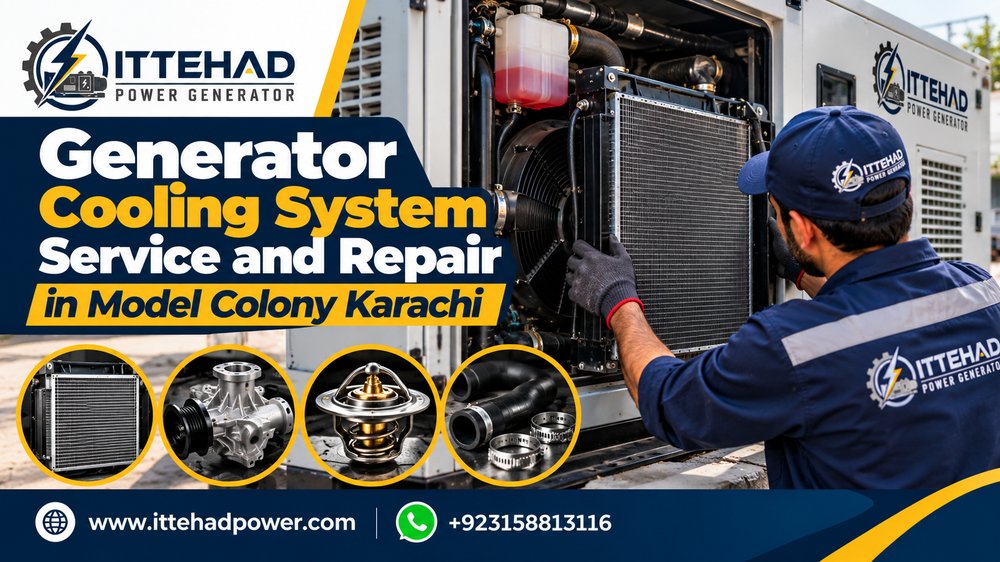
Professional generator cooling system service and repair in Model Colony Karachi helps identify and correct overheating, coolant leakage, poor circulation, radiator restriction, fan problems, hose damage, thermostat faults, water pump issues, and other cooling-system conditions that can affect generator reliability. A proper service should begin with fault diagnosis and inspection, followed by suitable repair planning, safe testing, and confirmation that the generator can maintain stable operating temperature under normal conditions.
Why Generator Cooling System Service and Repair in Model Colony Karachi Matters
The cooling system controls engine temperature while the generator is running. If coolant cannot circulate properly or heat cannot leave the radiator efficiently, the generator may develop high temperature warnings, reduced performance, repeated shutdowns, or further mechanical problems.
Cooling faults should be investigated early rather than managed through repeated coolant top-ups or alarm resets. A structured inspection can help identify whether the problem is caused by leakage, restricted airflow, poor coolant flow, worn components, incorrect temperature sensing, or another issue.
Common Signs of Generator Cooling System Problems
Cooling-system faults can appear gradually or suddenly depending on the component involved. Recognizing the warning signs early can reduce the risk of severe overheating.
- High coolant temperature warning
- Generator shuts down after running for some time
- Coolant level drops repeatedly
- Visible coolant leakage
- Radiator becomes excessively hot
- Cooling fan airflow appears weak
- Temperature rises quickly under load
- Hoses appear swollen, cracked, or leaking
- Unusual noise from the water pump area
- Repeated overheating after temporary cooling
Start with Cooling System Fault Diagnosis
Effective repair begins by confirming what is actually causing the temperature problem. Replacing a thermostat, radiator, or water pump without diagnosis may not solve the fault if the real issue is restricted airflow, low coolant, poor circulation, or damaged wiring.
The technician should review symptoms, operating conditions, previous repairs, and when the overheating occurs before deciding which component requires attention.
Coolant Level and Condition Inspection
Low coolant is one of the first conditions to check. Without enough coolant, heat transfer becomes less effective and engine temperature may rise quickly.
Coolant condition also matters. Old, contaminated, improperly mixed, or unsuitable coolant can reduce cooling performance and may contribute to deposits or internal restriction.
Check for Repeated Coolant Loss
If the coolant level keeps dropping, the source of the loss should be found rather than simply refilling the system.
Inspect Only When Safe
A hot cooling system may be pressurized. Inspection and opening procedures should only be carried out after the generator has cooled sufficiently and safe service conditions are established.
Radiator Inspection and Repair
The radiator transfers heat from the coolant to the surrounding air. A dirty, damaged, restricted, or leaking radiator can reduce cooling efficiency significantly.
External Radiator Blockage
Dust, dirt, and debris can block airflow through the radiator fins. Cleaning may restore performance if the restriction is external and the radiator remains otherwise serviceable.
Internal Radiator Restriction
Internal buildup or poor coolant flow can reduce heat transfer even when the outside of the radiator appears clean. Further inspection may be needed if overheating continues after external cleaning.
Radiator Leakage
Leaks should be identified and assessed to determine whether repair or replacement is more appropriate.
Cooling Fan Service
The cooling fan helps move air through the radiator. If airflow is weak or interrupted, engine temperature may rise especially when the generator is carrying load.
Fan blades, mounting, drive components, and operating condition should be checked for damage, looseness, excessive vibration, or reduced performance.
Fan Belt Inspection
If the cooling fan or water pump is belt driven, belt condition can directly affect cooling performance. A worn, loose, glazed, cracked, or slipping belt may prevent the cooling system from operating efficiently.
- Check for cracks
- Inspect belt tension
- Look for frayed edges
- Check for glazing or slipping
- Inspect pulleys where appropriate
- Replace damaged belts with compatible parts
Water Pump Diagnosis
The water pump circulates coolant through the engine and radiator. Reduced pump performance can cause overheating even when coolant level and radiator airflow appear normal.
Inspection may include visible leakage, unusual noise, mechanical wear, drive condition, and signs of weak coolant circulation.
Signs of Possible Water Pump Problems
- Coolant leakage around the pump
- Unusual bearing or mechanical noise
- Poor circulation
- Repeated overheating
- Excessive movement or visible wear
Thermostat Inspection and Replacement
The thermostat regulates coolant flow according to engine temperature. If it does not open correctly, coolant may not circulate through the radiator as required.
A thermostat should not be replaced based only on a high temperature warning. Other cooling-system conditions should be checked so the actual cause is confirmed.
Cooling Hose Service and Replacement
Hoses carry coolant between the engine, radiator, water pump, and related components. Heat, age, vibration, and pressure can cause hoses to deteriorate over time.
Cracked, swollen, hardened, leaking, or collapsed hoses should be replaced with compatible components of the correct size and routing.
Check Hose Connections
Loose clamps or damaged fittings can cause coolant loss even when the hose itself remains usable.
Coolant Circulation Problems
A generator can overheat even with the correct coolant level if flow is restricted. Circulation problems may involve the pump, thermostat, hoses, radiator, trapped air, or internal blockage.
Testing should focus on how coolant moves through the complete system rather than checking each component in isolation.
Air Trapped in the Cooling System
Air pockets can interfere with coolant flow and temperature control, especially after coolant replacement, hose work, repairs, or leakage.
The system may require correct filling and bleeding procedures to restore proper circulation after repair.
Cooling Airflow and Ventilation
Generator cooling depends on both coolant circulation and airflow. Poor ventilation around the generator can reduce radiator effectiveness and cause repeated overheating.
- Keep cooling-air openings clear
- Remove unnecessary obstructions
- Maintain suitable space around the generator
- Prevent hot air from recirculating into the radiator
- Check that heated air can leave the installation area
Hot Air Recirculation
Hot air leaving the radiator can sometimes return to the cooling-air intake if the generator is installed in a restricted or poorly arranged space. This raises the temperature of incoming air and reduces cooling performance.
Site layout should therefore be included in the cooling-system assessment when overheating returns despite mechanical repairs.
Temperature Sensor and Warning Circuit Testing
Not every high temperature warning confirms actual overheating. A faulty temperature sensor, loose wiring, corroded connection, or control-panel issue can sometimes produce incorrect readings.
If the engine condition does not match the displayed temperature, the sensing circuit should be checked before major mechanical parts are replaced.
Generator Load and Cooling Performance
Higher electrical load makes the engine work harder and produce more heat. A cooling system that appears adequate at light load may become unable to control temperature when demand increases.
Load conditions should therefore be reviewed during diagnosis, especially if overheating only occurs when the generator is heavily loaded.
Cooling System Service Process
A structured service process helps avoid guesswork and supports more reliable repair decisions.
- Review the overheating symptoms and operating history.
- Allow the generator to cool safely.
- Check coolant level and condition.
- Inspect for visible leaks.
- Check radiator cleanliness and physical condition.
- Inspect cooling fan and belt operation.
- Review hoses, clamps, and fittings.
- Check water pump condition.
- Assess thermostat operation where required.
- Review coolant circulation.
- Check ventilation and hot air discharge.
- Test the temperature sensor if readings appear inaccurate.
- Repair or replace only confirmed faulty components.
- Refill and bleed the cooling system correctly where required.
- Run and test the generator after repair.
Repair Planning After Inspection
Once the fault has been identified, repair planning should prioritize the parts and conditions directly responsible for the cooling problem.
A good repair plan should also consider related components. For example, replacing a damaged hose may also require inspection of clamps, fittings, coolant condition, and nearby hoses to prevent another leak shortly afterward.
When Cleaning May Be Enough
Not every cooling problem requires major component replacement. A radiator restricted by dust, blocked ventilation path, loose connection, or low coolant condition may sometimes be corrected through proper servicing.
Cleaning or adjustment should still be followed by testing to confirm that temperature remains stable during operation.
When Cooling Parts Need Replacement
Replacement may be necessary when a component is cracked, leaking, mechanically worn, electrically faulty, unable to circulate coolant correctly, or no longer capable of maintaining reliable cooling performance.
- Severely damaged radiator
- Failed water pump
- Defective thermostat
- Cracked or collapsed hoses
- Worn fan belt
- Damaged cooling fan
- Faulty temperature sensor
- Damaged fittings or connections
Safe Testing After Cooling System Repair
Repair should always be followed by controlled testing. The objective is to confirm that coolant remains contained, circulation has been restored, and engine temperature stays stable.
Testing may begin at light load and continue under suitable operating demand while temperature, coolant level, airflow, leaks, and warning indicators are monitored.
Why Post-Repair Load Testing Matters
A generator can appear normal while idling but overheat once electrical load increases. Post-repair testing under appropriate load provides better confirmation that the cooling system can handle real operating conditions.
If temperature rises again during the test, further diagnosis may be required before the generator is returned to normal service.
Benefits of Professional Cooling System Service
Professional diagnosis and repair can help address the real cause of overheating and reduce unnecessary parts replacement.
- Helps prevent repeated overheating
- Improves coolant circulation
- Supports more stable engine temperature
- Reduces unexpected high temperature shutdowns
- Helps protect cooling-system components
- Improves generator reliability under load
- Reduces unnecessary repair expense
- Supports better preventive maintenance
What Customers Need from Cooling System Repair
Customers generally need to know why the generator is overheating, what component has failed, whether repair or replacement is required, and how reliable the generator will be after service.
A professional service should provide clear findings and avoid replacing parts without evidence that they are responsible for the cooling problem.
How to Select a Generator Cooling System Repair Service
Cooling-system repair requires more than adding coolant or replacing one visible component. Service selection should focus on diagnosis, compatible parts, safe repair procedures, and testing.
Choose Complete Diagnosis
The technician should inspect coolant level, radiator condition, airflow, fan, belt, hoses, water pump, thermostat, and temperature monitoring where appropriate.
Ask for Clear Repair Findings
You should understand which component has failed and why the recommended work is needed.
Confirm Compatible Replacement Parts
Replacement hoses, belts, pumps, thermostats, sensors, and other components should match the generator’s requirements.
Ask for Post-Repair Testing
The generator should be tested after service to confirm that overheating does not return.
Local Relevance in Model Colony Karachi
Generator installations in Model Colony Karachi can have different site layouts, ventilation conditions, operating loads, dust exposure, maintenance histories, and available service access. These factors can influence cooling-system performance and the type of repair required.
On-site inspection allows the generator to be assessed under its normal operating conditions so both mechanical cooling faults and installation-related problems can be identified.
Why On-Site Cooling System Inspection Is Useful
Some overheating problems only appear when the generator is operating in its actual environment. Restricted ventilation, hot air recirculation, load conditions, and installation clearance may not be obvious during workshop testing.
Reviewing the generator at the site can therefore provide a more complete diagnosis.
Trust Points in Professional Cooling System Repair
Reliable service should be based on actual inspection findings and safe testing rather than trial-and-error replacement.
- Cooling faults are diagnosed before repair
- Coolant leakage is traced properly
- Radiator airflow is checked
- Fan, belt, hoses, pump, and thermostat are inspected
- Temperature sensor faults are considered
- Only compatible replacement parts are used
- Unnecessary component replacement is avoided
- Temperature is verified after repair
Common Cooling System Repair Mistakes to Avoid
Temporary fixes can allow overheating to return and may make the eventual repair more expensive.
- Repeatedly adding coolant without finding the leak
- Ignoring a dirty or blocked radiator
- Replacing the thermostat without diagnosis
- Overlooking a slipping fan belt
- Ignoring damaged hoses and clamps
- Failing to check the water pump
- Blocking ventilation to reduce generator noise
- Assuming every high temperature warning is mechanical
- Skipping system bleeding after coolant work
- Testing only at idle after repair
Guidance When a Generator Begins Overheating
If generator temperature begins rising, observe whether the problem occurs immediately, after a certain running period, or only under higher load. Check for visible coolant leakage, unusual fan behavior, warning indicators, and changes in engine sound.
Do not repeatedly restart a generator that is shutting down on high temperature without investigating the cause. Continued overheating can increase the risk of wider engine and cooling-system damage.
Preventive Cooling System Maintenance
Regular inspection can help identify developing cooling faults before they cause a shutdown.
- Maintain correct coolant level
- Inspect for leaks
- Keep radiator surfaces clean
- Check fan and belt condition
- Inspect hoses and clamps
- Monitor temperature during operation
- Keep ventilation paths clear
- Investigate repeated coolant loss promptly
When Generator Cooling Repair Needs Prompt Attention
Immediate inspection is recommended when the generator repeatedly shuts down on high temperature, loses coolant quickly, has visible leakage, develops unusual pump or fan noise, or overheats under normal load.
Prompt repair can help prevent a manageable cooling fault from developing into a more serious generator problem.
Restoring Reliable Generator Cooling Performance
A successful cooling-system repair should restore proper coolant circulation, effective radiator heat transfer, stable operating temperature, and dependable performance under suitable load.
The final stage should include checking for leaks, verifying temperature stability, reviewing control-panel indications, and confirming that the generator can operate without repeated high temperature alarms.
Arrange Generator Cooling System Service and Repair in Model Colony Karachi
If your generator is overheating, losing coolant, showing high temperature warnings, or shutting down unexpectedly, professional generator cooling system service and repair in Model Colony Karachi can help identify whether the problem involves the radiator, coolant flow, fan, belt, hoses, water pump, thermostat, temperature sensor, ventilation, or another cooling-system condition.
Arrange a complete cooling-system inspection and repair before repeated overheating causes further problems. Accurate diagnosis, compatible replacement parts, safe repair procedures, and post-repair testing can help restore dependable cooling performance and more reliable generator operation.