
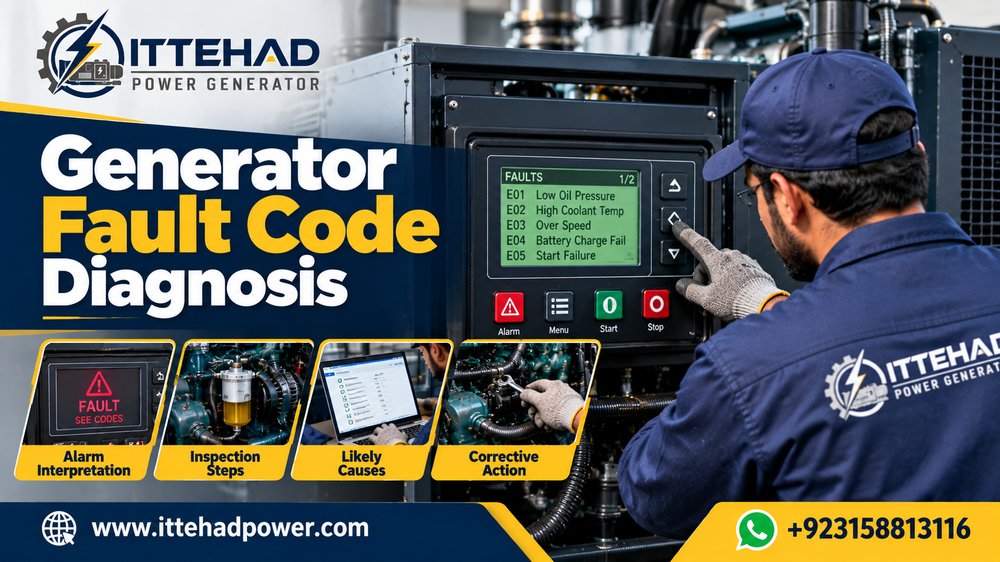
Generator fault code diagnosis is the process of understanding alarms, warning messages, shutdown codes, and operating symptoms so the actual cause of a generator problem can be identified before repair work begins. A fault code provides an important starting point, but it should not be treated as a complete diagnosis on its own. Proper inspection combines alarm interpretation, operating history, visual checks, testing, and verification to determine what caused the warning and what corrective action is genuinely required.
Why Generator Fault Codes Should Never Be Ignored
Modern generators use control systems to monitor important operating conditions. When the system detects an abnormal condition, it may display a warning, alarm, or shutdown code to protect the generator from further damage.
Ignoring a fault code can allow a developing problem to become more serious. A warning related to temperature, oil pressure, starting, charging, engine speed, or another monitored condition may indicate that the generator requires immediate inspection.
Generator Fault Code Diagnosis and Accurate Troubleshooting
Professional generator fault code diagnosis involves more than reading the text shown on the control panel. The code must be considered together with the generator’s operating condition, recent maintenance, starting behavior, engine sound, control history, and any additional symptoms.
The same alarm can sometimes be triggered by different underlying causes. This is why inspection and testing are necessary before parts are replaced or adjustments are made.
What a Generator Fault Code Can Tell You
A fault code can help identify which system requires attention. Depending on the generator and control system, the warning may relate to starting, engine protection, electrical monitoring, fuel delivery, cooling, charging, or control signals.
Fault information can help technicians determine:
- Which system should be inspected first
- Whether the generator has issued a warning or shutdown
- Whether the fault occurred during starting or operation
- Whether the condition is intermittent or repeated
- Which operating measurements require verification
- Whether immediate shutdown protection has been activated
The displayed code should be used as a diagnostic clue rather than treated as proof that a specific component has failed.
Common Types of Generator Fault Indications
Generator control panels may display different alarms depending on the system design. Common fault categories can include:
- Low oil pressure
- High engine temperature
- Starting failure
- Overspeed or underspeed
- Battery or charging problems
- Emergency stop condition
- Fuel-related warnings
- Sensor or signal faults
- Electrical output abnormalities
- Control communication problems
Each alarm should be investigated according to the generator’s actual symptoms and operating condition.
Alarm Interpretation Is the First Step
The exact wording or code shown on the generator controller should be recorded before the alarm is cleared. This information can provide an important reference during troubleshooting.
Useful information to note includes:
- Fault code or alarm message
- Time the fault appeared
- Whether the generator was starting or running
- Whether the engine stopped automatically
- Any unusual noise or vibration
- Fluid levels and visible leakage
- Previous faults or recent maintenance
Clearing the alarm immediately without recording it can make diagnosis more difficult if the same fault does not appear again straight away.
Warning Code Versus Shutdown Code
A warning may allow the generator to continue operating while indicating that a monitored condition needs attention. A shutdown code generally means the control system has stopped the generator because the detected condition could affect safe or reliable operation.
Both types require investigation. A warning should not be ignored simply because the generator continues to run, while a shutdown condition should not be repeatedly reset without understanding why it occurred.
Operating Symptoms Help Confirm the Fault
The generator’s behavior before, during, and after the alarm can provide valuable diagnostic information. A fault code becomes more useful when it is matched with actual operating symptoms.
Important observations may include:
- Slow or unsuccessful starting
- Repeated cranking attempts
- Unstable engine speed
- Unexpected shutdown
- Overheating
- Abnormal exhaust behavior
- Unusual vibration
- Reduced electrical output
- Intermittent control panel operation
- Recurring alarms after reset
These details help narrow the list of possible causes.
Low Oil Pressure Fault Diagnosis
A low oil pressure alarm should be treated seriously because correct lubrication is essential for engine protection. The fault may be related to actual low pressure, low oil level, a sensor problem, wiring issues, or another condition affecting the oil system.
Inspection may include checking:
- Engine oil level
- Oil condition
- Visible leakage
- Oil filter condition
- Oil pressure sensor connections
- Related wiring
- Actual pressure where appropriate testing is available
The generator should not simply be restarted repeatedly when a genuine low oil pressure condition is suspected.
High Temperature Alarm Diagnosis
A high engine temperature fault can be caused by inadequate cooling, low coolant level, leakage, restricted airflow, damaged hoses, or another cooling-system problem.
Useful checks include:
- Coolant level
- Visible coolant leakage
- Hose condition
- Cooling airflow
- Connections and clamps
- Temperature sensor condition
- Signs of overheating around the engine
The cause should be corrected before normal operation resumes.
Generator Starting Failure Codes
A starting-related fault may appear when the engine fails to start within the programmed number of attempts. The problem may involve the battery, starter circuit, fuel supply, control signal, or engine starting condition.
Diagnosis may involve checking:
- Battery charge and condition
- Battery terminals and cables
- Starter motor operation
- Starter relay or solenoid
- Fuel availability
- Fuel filter condition
- Air in the fuel system
- Control panel start command
The correct repair depends on whether the engine fails to crank, cranks slowly, or cranks normally without starting.
Overspeed and Underspeed Faults
Generator control systems monitor engine speed because stable speed is important for correct operation. An overspeed or underspeed alarm may indicate a problem with engine speed control, fuel delivery, sensing, load response, or related control components.
Random adjustments should be avoided. Engine speed faults should be diagnosed carefully because incorrect settings can create additional operating problems.
Battery and Charging Fault Codes
Battery-related warnings can affect generator readiness even when the engine is currently running. A weak battery, charging issue, poor cable connection, or damaged terminal can lead to future starting failure.
Battery and charging checks may include:
- Battery voltage
- Terminal condition
- Cable tightness
- Corrosion
- Charging performance
- Control wiring
- Starting response
A battery warning should be investigated before the generator is required for an unexpected start.
Sensor and Wiring Faults
Not every alarm means the monitored mechanical system has actually failed. A damaged sensor, loose connector, broken wire, corrosion, or poor electrical connection can produce inaccurate readings and trigger a fault.
This is one reason why components should not be replaced solely because a control panel displays a related alarm. Sensor signals and wiring condition may need testing first.
Intermittent Generator Fault Codes
Intermittent alarms can be more difficult to diagnose because the generator may appear normal when inspected. These faults can be associated with loose connections, changing temperature, vibration, unstable supply conditions, or components that fail only under certain operating conditions.
Accurate fault history and customer observations become particularly useful in these cases. Recording when and how the alarm appears can help reproduce the condition during testing.
A Practical Generator Fault Code Diagnosis Process
A systematic approach helps avoid unnecessary repairs and makes troubleshooting more efficient.
- Record the fault code: Note the exact alarm or warning before clearing it.
- Review operating symptoms: Determine what the generator was doing when the fault occurred.
- Carry out a visual inspection: Check fluids, wiring, connectors, leaks, battery condition, and obvious damage.
- Identify the related system: Use the fault information to determine which area requires further checks.
- Test likely causes: Verify relevant sensors, electrical connections, mechanical conditions, or operating measurements.
- Confirm the root cause: Avoid replacing components until reasonable evidence supports the diagnosis.
- Complete corrective action: Repair, adjust, service, or replace the confirmed faulty item where necessary.
- Clear and retest: Reset the fault only after corrective work and verify normal generator operation.
- Monitor for recurrence: Confirm that the alarm does not return during controlled testing.
Why Resetting a Fault Is Not the Same as Repairing It
Some generator alarms disappear after a controller reset, but this does not necessarily mean the cause has been corrected. If the underlying condition remains, the same code may return during the next start or operating cycle.
Repeated resetting can also hide a developing problem. Fault codes should be cleared after the cause has been investigated rather than used as a substitute for diagnosis.
Benefits of Proper Generator Fault Code Diagnosis
Accurate diagnosis can improve repair decisions and reduce unnecessary downtime.
- Helps identify the actual cause of alarms
- Reduces unnecessary parts replacement
- Supports faster troubleshooting
- Helps protect generator reliability
- Reduces repeated fault occurrences
- Improves maintenance planning
- Supports safer corrective action
- Provides clearer information for future service records
What Customers Need From Fault Code Troubleshooting
Customers usually need more than a technical code number. They need a clear explanation of what the alarm means, what caused it, whether continued operation is advisable, and what corrective work is required.
A professional diagnostic service should provide:
- Clear fault interpretation
- Systematic inspection
- Testing of likely causes
- Explanation of confirmed findings
- Practical repair recommendations
- Safe testing after repair
- Guidance to reduce repeat faults
How to Select a Generator Fault Diagnosis Service
A suitable service should not rely only on the wording displayed by the generator controller. The technician should compare the alarm with operating symptoms and verify the condition of the related system.
Useful selection points include:
- Diagnosis before parts replacement
- Ability to interpret control panel alarms
- Inspection of sensors and wiring
- Mechanical and electrical troubleshooting where required
- Clear communication of findings
- Safe testing procedures
- Post-repair verification
Local Relevance of Generator Fault Code Diagnosis
Generator operating conditions can influence the type and frequency of fault codes that appear. Heat, dust, long standby periods, battery condition, maintenance history, fuel condition, and repeated operating cycles can all contribute to alarms or component deterioration.
Diagnosis should therefore consider both the displayed code and the environment in which the generator operates. A fault that appears repeatedly under specific conditions may provide an important clue to the underlying cause.
Trust Points in Generator Alarm Diagnosis
Customers should be able to understand what was found and why a particular repair is recommended. Transparent diagnosis helps prevent unnecessary component replacement and repeated service visits.
Important trust points include:
- Exact fault code recorded before reset
- Symptoms compared with alarm information
- Related systems inspected properly
- Sensors and connections checked where relevant
- Repair recommendations based on confirmed findings
- No unnecessary parts replacement
- Generator retested after corrective work
Keeping Generator Fault Records
Maintaining a simple record of generator alarms can make future diagnosis much easier. Repeated codes may reveal a pattern that is not obvious during a single inspection.
Useful information to record includes:
- Date and time of the fault
- Exact alarm message or code
- Generator operating condition
- Running hours
- Recent maintenance work
- Corrective action completed
- Whether the alarm returned
These records can help distinguish isolated incidents from recurring problems.
Guidance When a Generator Shows a Fault Code
When an alarm appears, read and record the message before clearing it. Observe whether the generator is still running, whether unusual noise or vibration is present, and whether there are signs of overheating, leakage, or electrical damage.
Avoid repeatedly restarting a generator after a serious shutdown alarm. Protective systems are designed to prevent continued operation when certain conditions are detected.
Do not bypass sensors, shutdown controls, or protective circuits to force the generator to run. If the reason for the fault is unclear, professional inspection is the safer approach.
When Professional Diagnosis Is Recommended
Professional troubleshooting is recommended when a generator repeatedly displays the same alarm, shuts down unexpectedly, refuses to start, shows multiple fault codes, or continues to operate abnormally after a fault is cleared.
Specialized testing may be necessary when the issue involves sensors, control wiring, engine protection systems, starting circuits, electrical output, or mechanical operating conditions.
Corrective Action After Fault Diagnosis
Corrective action should match the confirmed cause. Depending on the findings, the solution may involve tightening a connection, repairing wiring, servicing a system, replacing a defective sensor, correcting a fluid or cooling problem, addressing a starting fault, or replacing a genuinely failed component.
The final step should always be testing. A successful repair should result in normal generator operation without the original fault returning during appropriate checks.
Arrange Professional Generator Fault Code Diagnosis
Accurate generator fault code diagnosis helps turn an alarm message into a clear repair decision. By combining fault interpretation, operating symptoms, physical inspection, system testing, and post-repair verification, the real cause of a warning or shutdown can be identified more reliably.
If your generator is displaying recurring alarms, unexpected shutdown codes, starting faults, temperature warnings, battery alerts, speed-related faults, or other control messages, arrange a proper diagnostic inspection. Correct troubleshooting can reduce unnecessary component replacement, support safer operation, and help restore dependable generator performance.