
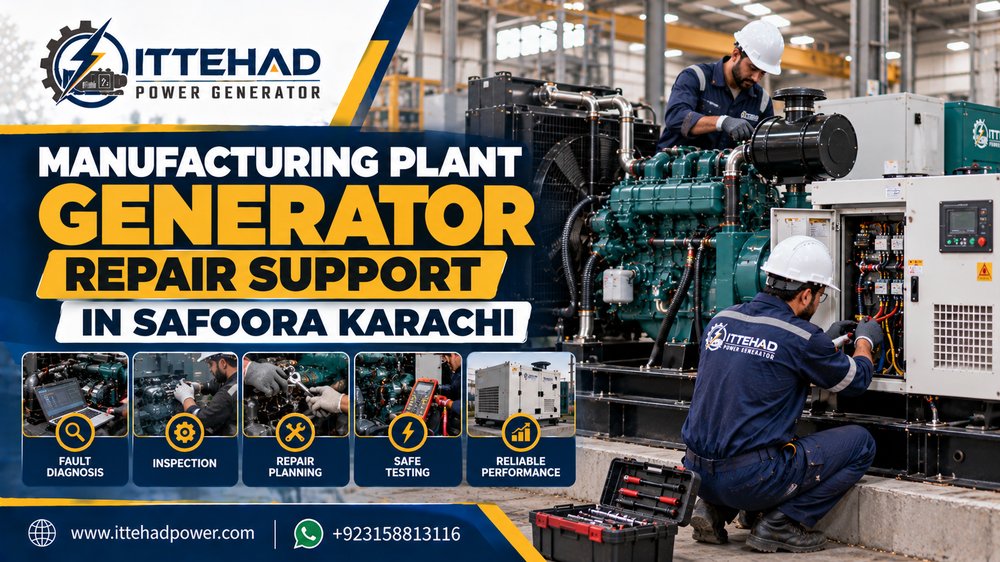
Reliable manufacturing plant generator repair support in Safoora Karachi helps commercial and industrial generator users restore dependable power when equipment develops starting faults, overheating, unstable output, fuel-system problems, cooling issues, electrical faults, unusual noise, or other operating concerns. Manufacturing environments often depend on consistent generator performance, so repair work should begin with accurate fault diagnosis rather than immediate parts replacement. A structured process covering inspection, repair planning, safe testing, corrective work, and post-repair verification can reduce unnecessary downtime and improve confidence in generator operation.
Why Generator Repair Support Matters for Manufacturing Plants
Manufacturing plants may rely on generators to support important electrical loads when normal power is unavailable or unstable. A generator problem can therefore affect equipment operation, production continuity, lighting, controls, and other essential electrical requirements.
Timely repair support helps identify the fault before the condition becomes more serious. It also allows maintenance teams to understand whether the issue involves the engine, fuel system, cooling system, starting system, alternator, electrical connections, control components, or another part of the generator.
Manufacturing Plant Generator Repair Support in Safoora Karachi
Professional manufacturing plant generator repair support in Safoora Karachi should focus on restoring reliable operation through proper diagnosis, practical repair planning, suitable replacement components, and safe testing. The service approach should reflect generator size, operating hours, electrical load, previous maintenance history, and the conditions in which the generator operates.
A complete repair process should not stop when the generator starts again. Performance should be checked under realistic operating conditions to confirm that the original problem has been corrected.
Start With a Structured Generator Inspection
A complete inspection provides the foundation for accurate repair. The technician should review the reported fault and then inspect the generator systems most likely to be involved.
Important Inspection Areas
- Engine operating condition
- Battery and starting system
- Fuel system
- Cooling system
- Lubrication system
- Belts and hoses
- Air intake and filtration
- Alternator output
- Electrical connections
- Breakers and terminals
- Control panel and warning indications
- Visible fuel, oil, or coolant leaks
- Unusual noise or vibration
Accurate Fault Diagnosis Before Repair
Generator faults can produce similar symptoms even when the underlying causes are different. A generator that fails to start may have a battery problem, fuel restriction, starter fault, control issue, or another condition.
Likewise, overheating may be caused by low coolant, weak airflow, a damaged fan, restricted radiator, poor coolant circulation, or excessive operating demand. Diagnosis should therefore be based on inspection and testing rather than assumptions.
Common Manufacturing Plant Generator Problems
- Generator does not start
- Engine cranks but does not run
- Generator starts and stops unexpectedly
- No electrical output
- Low or unstable voltage
- Frequency instability
- Generator overheating
- Fuel leakage
- Coolant leakage
- Low oil pressure
- Battery or charging problems
- Power loss under load
- Repeated breaker trips
- Control-panel alarms
- Unusual noise or excessive vibration
Generator Starting Failure Diagnosis
Starting failure can prevent a generator from supplying power when it is needed most. Diagnosis should begin with the battery, starting circuit, fuel supply, control signals, and engine condition.
Starting System Checks
- Battery voltage and charge condition
- Battery terminals and cables
- Starter motor operation
- Starter relay condition
- Cranking speed
- Fuel availability
- Fuel-filter condition
- Control-panel indications
- Related wiring and connections
Fuel System Repair Support
Fuel-system problems can cause difficult starting, rough operation, loss of power, or unexpected shutdown. Filters, hoses, fittings, pumps, injector connections, and fuel quality may all require inspection.
Visible fuel leakage, contamination, blocked filters, or air entering the fuel system should be addressed before the generator returns to normal operation.
Fuel System Inspection Points
- Fuel filters
- Fuel hoses
- Fittings and clamps
- Fuel pump area
- Injector connections
- Return lines where applicable
- Fuel contamination
- Visible leakage
Cooling System Repair Support
Manufacturing generators may operate for extended periods or under substantial load, making reliable cooling especially important. Problems involving coolant level, radiator airflow, fan condition, hoses, belts, water-pump performance, or coolant circulation can cause overheating.
Cooling-system repairs should be followed by temperature monitoring to confirm that the generator remains stable during operation.
Cooling System Checks
- Coolant level
- Coolant condition
- Radiator condition
- Cooling fan operation
- Belts and tension
- Hoses and clamps
- Water-pump area
- Coolant leakage
- Operating temperature
Lubrication System Inspection
Correct lubrication helps protect internal engine components during operation. Low oil level, poor oil condition, leakage, blocked filters, or abnormal oil pressure can affect generator reliability.
Oil-related faults should be investigated promptly, especially if low-pressure warnings or unexplained oil loss are present.
Alternator and Electrical Output Problems
A generator engine may run normally while electrical output remains low, unstable, or completely absent. In these situations, the alternator, AVR, excitation system, breaker, sensing circuits, and electrical connections may require inspection.
Voltage and frequency measurements can help separate alternator-related faults from downstream connection or load problems.
Electrical Output Checks
- Generator voltage
- Operating frequency
- Main breaker condition
- Alternator terminals
- AVR connections
- Excitation-related wiring
- Electrical cable condition
- Signs of overheating
Electrical Connection Inspection
Loose or damaged electrical connections can cause heat, voltage drop, unstable output, or intermittent faults. Manufacturing generators carrying higher current may make connection problems more noticeable under load.
Terminals, cable lugs, breaker connections, grounding points, and control wiring should be checked using safe electrical procedures.
Control Panel and Fault Indications
Generator control panels can provide valuable diagnostic information. Warning lights, fault codes, voltage readings, frequency values, temperature indications, oil-pressure information, and operating-hour records can all help identify the source of a problem.
Repeated alarms should be diagnosed instead of simply reset.
Generator Repair Planning
Once the fault has been identified, repair work should be planned according to urgency, operating risk, component condition, and parts availability.
Critical issues affecting starting, cooling, lubrication, fuel delivery, or electrical output should generally receive priority because these conditions can prevent the generator from operating reliably.
A Practical Repair Plan Should Define
- The confirmed fault
- The component or system involved
- The recommended corrective action
- Required replacement parts
- Expected testing after repair
- Any additional maintenance needed
- Future monitoring recommendations
Why Correct Parts Selection Matters
Replacement components should match the generator’s model, engine, electrical rating, mounting arrangement, and operating requirements. Similar-looking parts may not be interchangeable.
Accurate part identification can reduce repeat repairs, fitment problems, and unnecessary downtime.
Avoid Unnecessary Generator Parts Replacement
Repair costs can increase quickly when parts are replaced without confirming the fault. A no-voltage condition does not always mean the AVR has failed, and a starting problem does not automatically mean the battery is defective.
Testing and inspection should guide replacement decisions so only components that actually require attention are changed.
Safe Generator Repair Procedures
Generator repairs involve hot surfaces, moving components, electrical energy, batteries, fuel, and pressurized systems. Safe shutdown, isolation, testing, and repair procedures are therefore essential.
Detailed electrical work, live measurements, alternator testing, and repairs near moving components should be performed by qualified personnel using suitable tools and protective equipment.
Testing After Generator Repair
A repair should not be considered complete until the generator has been tested. Initial testing should confirm that the unit starts correctly, runs smoothly, and does not show new warning indications.
Temperature, oil pressure, voltage, frequency, engine sound, vibration, and visible leakage should be observed after corrective work.
Load Testing After Repair
Some generator problems appear only when electrical demand is applied. A generator may run normally without load but experience overheating, voltage drop, fuel starvation, or engine-speed instability under working conditions.
Where appropriate, controlled load testing can help confirm that the repaired generator can support the intended demand reliably.
Temperature Monitoring During Testing
Operating temperature should be monitored carefully after cooling-system, fuel-system, or engine repairs. A generator that continues to heat excessively may require further diagnosis.
Temperature should remain stable under suitable operating conditions and expected load.
Voltage and Frequency Verification
Electrical repairs should be followed by output testing. Voltage and frequency should remain stable during operation and respond appropriately as load is applied.
Unstable readings may indicate an unresolved alternator, AVR, engine-speed, connection, or load-related problem.
Repair Support for Heavy Generator Loads
Manufacturing plant generators may operate under demanding electrical loads. High demand can expose fuel restrictions, cooling weaknesses, loose connections, alternator problems, or engine-performance issues that are less noticeable at light load.
Repair diagnosis should therefore consider when the fault occurs and whether the symptoms become worse as load increases.
Benefits of Professional Generator Repair Support
A structured repair process offers practical benefits for manufacturing plant operators.
- Faster fault isolation: Systematic testing helps identify the actual problem.
- Reduced unnecessary parts costs: Components are replaced according to confirmed condition.
- Improved reliability: Repairs address the root cause rather than only the visible symptom.
- Lower downtime risk: Developing faults can be identified during inspection.
- Better maintenance planning: Future service requirements can be documented.
- Improved operating confidence: Generator performance is verified after repair.
- Better equipment protection: Cooling, lubrication, fuel, and electrical problems can be corrected before further damage occurs.
What Manufacturing Plant Generator Users Need
Manufacturing plant users need responsive repair support, clear diagnosis, accurate parts identification, practical maintenance advice, and reliable testing after corrective work.
They also need to understand whether the problem requires immediate repair, planned maintenance, component replacement, or continued monitoring.
How to Select the Right Generator Repair Support
Generator repair providers should be evaluated on diagnostic ability, service process, communication, and testing rather than price alone.
- Ask whether the complete generator will be inspected.
- Confirm that diagnosis comes before parts replacement.
- Ask whether engine, fuel, cooling, starting, and electrical systems can be checked.
- Confirm how repair recommendations will be explained.
- Ask how replacement parts will be identified.
- Confirm that the generator will be tested after repair.
- Ask whether performance under load can be checked where appropriate.
- Request maintenance guidance after the repair is completed.
Local Relevance in Safoora Karachi
Manufacturing plant generator users in Safoora Karachi may operate equipment under conditions involving heat, dust, long operating hours, high electrical demand, and limited tolerance for unexpected downtime. These conditions make timely diagnosis and maintenance particularly important.
Local repair support can help with quicker inspection, better coordination, parts identification, follow-up testing, and ongoing maintenance planning when generator reliability is important to production operations.
Heat and Generator Repair Requirements
Higher surrounding temperature increases cooling-system demand. Radiator airflow, coolant level, fan operation, hoses, belts, and ventilation should receive close attention when a generator operates in warm conditions.
Repeated overheating should not be treated as normal. The underlying cause should be identified before extended operation continues.
Dust and Generator Performance
Dust can affect air filters, radiator surfaces, alternator ventilation, electrical components, and general generator cleanliness.
Manufacturing generators operating in dusty conditions may require more frequent filter and cooling-system inspection to maintain reliable performance.
Vibration and Component Wear
Generator vibration can loosen electrical terminals, fuel fittings, hose clamps, exhaust connections, and mechanical supports over time.
Repeated vibration-related faults should be investigated to determine whether poor mounting or inadequate support is contributing to the problem.
Preventive Maintenance After Repair
Repairing the immediate fault should be followed by a practical maintenance plan. Preventive inspection helps reduce the likelihood of another unexpected breakdown.
- Track operating hours
- Check fluid levels regularly
- Inspect filters
- Monitor battery condition
- Inspect belts and hoses
- Check cooling performance
- Watch for fuel, oil, or coolant leaks
- Monitor voltage and frequency
- Record warning indications
- Keep repair and maintenance records
Operating-Hour Based Maintenance
Manufacturing generators that operate frequently can reach service intervals quickly. Oil, filters, belts, hoses, and other components may require attention sooner than equipment used only occasionally.
Operating-hour records help maintenance teams schedule service before consumables become overdue.
Repair Support for Standby Generators
Standby generators also require repair and maintenance attention even when their operating hours are low. Batteries can weaken, fuel can deteriorate, seals can age, electrical connections can corrode, and minor leaks can develop during inactivity.
Periodic testing can help confirm that the generator remains ready when backup power is required.
Repair Support for Frequently Used Generators
Generators operating for extended periods may experience faster wear and more demanding cooling, lubrication, and fuel-system conditions.
Maintenance and repair planning should therefore reflect actual runtime, load, environment, and previous fault history.
Importance of Maintenance Records
A clear generator repair history can make future troubleshooting more efficient. Repeated starting issues, overheating, voltage instability, or leakage become easier to identify when previous service information is available.
Useful Generator Repair Records
- Date of fault
- Operating hours
- Reported symptoms
- Inspection findings
- Electrical measurements
- Parts replaced
- Repairs completed
- Post-repair test results
- Future maintenance recommendations
Repeated Generator Faults Need Deeper Diagnosis
If the same fault returns after repair, the underlying cause may not have been fully resolved. Repeated component failure can also indicate a connected system problem.
For example, repeatedly damaged belts may indicate alignment or tension problems, while recurring overheated electrical terminals may point to connection or loading issues.
Common Generator Repair Mistakes to Avoid
- Replacing components without diagnosis
- Ignoring small fuel, oil, or coolant leaks
- Continuing operation with overheating
- Resetting alarms without investigation
- Using incorrect replacement parts
- Ignoring voltage or frequency instability
- Skipping post-repair testing
- Failing to test under load where appropriate
- Ignoring maintenance records
- Returning the generator to service with unresolved warnings
Trust Points for Professional Manufacturing Generator Repair
Reliable generator repair support should provide clear diagnosis, practical recommendations, and confirmation that the repair has restored stable operation.
- Structured fault diagnosis
- Complete generator inspection
- Clear repair planning
- Correct replacement-part identification
- Safe repair procedures
- Fuel and cooling-system assessment
- Electrical output testing
- Post-repair operational checks
- Load testing where appropriate
- Documented maintenance guidance
Guidance Before Requesting Generator Repair
Providing accurate information about the fault can help technicians diagnose the generator more efficiently. Record when the problem first appeared, whether it occurs under load, and whether any recent maintenance or repair work was completed.
Useful Information to Provide
- Generator make and model
- Current operating hours
- Reported fault or warning
- When the problem occurs
- Approximate electrical load
- Recent service history
- Recent parts replacement
- Temperature or voltage concerns
- Visible leaks
- Unusual noise or vibration
Do Not Delay Important Generator Repairs
Small generator faults can become more serious when operation continues without inspection. A minor leak, loose connection, restricted filter, weak cooling component, or unstable electrical condition may eventually affect additional systems.
Early repair can reduce secondary damage and make downtime more manageable.
Post-Repair Monitoring
After repair, plant operators should continue monitoring generator behavior during normal use. Temperature, voltage, frequency, oil pressure, starting performance, leaks, noise, and control-panel indications should remain stable.
If the original symptom returns, further investigation may be required rather than repeated replacement of the same part.
Maintain Reliable Manufacturing Power in Safoora Karachi
Dependable manufacturing plant generator repair support in Safoora Karachi should combine accurate diagnosis, complete inspection, suitable repair planning, correct replacement parts, safe testing, and practical maintenance guidance. This approach helps commercial and industrial generator users reduce unnecessary downtime and restore equipment performance with greater confidence.
If your manufacturing plant generator is experiencing starting failure, overheating, fuel or coolant leakage, unstable voltage, low output, unusual noise, control-panel warnings, or power loss under load, arrange a professional generator inspection in Safoora Karachi. Timely diagnosis, suitable corrective work, post-repair testing, and ongoing preventive maintenance can help restore dependable generator performance and support more reliable plant operations.