
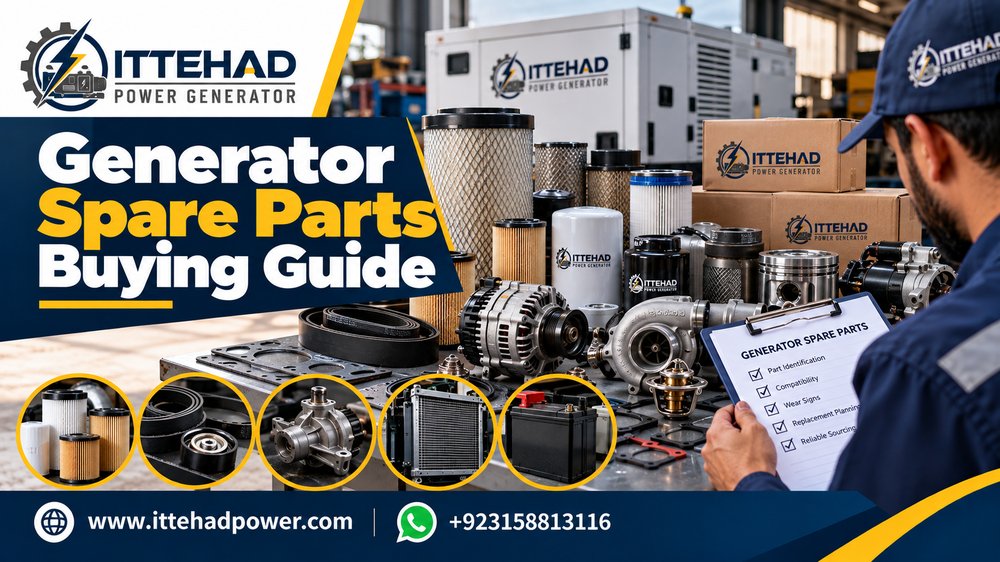
A practical generator spare parts buying guide helps generator owners and maintenance teams choose replacement components based on correct part identification, compatibility, wear condition, service requirements, and reliable sourcing. Buying the wrong spare part can lead to poor fitment, repeated faults, unnecessary expense, or additional generator problems. A careful purchasing process should therefore begin with diagnosis and part verification rather than selecting a component only because it looks similar to the original.
Why a Generator Spare Parts Buying Guide Is Important
Generators contain mechanical, electrical, fuel, cooling, starting, and control components that may eventually require replacement. Many parts can appear similar while having different dimensions, ratings, connectors, operating characteristics, or applications.
Correct purchasing helps ensure that the selected part suits the generator and the repair being carried out. It also reduces delays caused by ordering an incorrect component and having to repeat the sourcing process.
Identify the Fault Before Buying Generator Parts
Spare parts should normally be purchased after the faulty component has been identified. A symptom does not always confirm which part has failed.
For example, starting problems can result from battery condition, wiring, relays, terminals, or starter components. Replacing the most obvious part without diagnosis may leave the original fault unresolved.
Confirm the Actual Problem
Inspection and testing should determine which component is damaged, worn, or no longer operating correctly.
Check Related Components
A failed part may have been affected by another problem. Surrounding wiring, connections, mechanical components, or operating conditions should be inspected where relevant.
Avoid Trial-and-Error Replacement
Changing several parts without identifying the fault can increase repair costs and make troubleshooting more difficult.
Use the Existing Part for Identification
The existing component is often the best starting point for identifying a replacement. Labels, stamped numbers, dimensions, connector arrangements, electrical ratings, and physical design can provide important information.
Before removing a component, record useful details that can help with sourcing. Clear identification reduces the risk of buying a part that appears correct but does not match the generator.
- Record available part numbers
- Check manufacturer markings
- Note electrical ratings where applicable
- Measure important dimensions
- Review connector types
- Check mounting points
- Note hose or cable connection sizes
- Compare the original component carefully
Generator Spare Part Compatibility
Compatibility is more important than appearance. Two parts may look almost identical while having different internal specifications or operating requirements.
A replacement should be suitable for the generator system in which it will operate. Compatibility checks can include electrical rating, mechanical fit, connection configuration, dimensions, operating range, and intended function.
Electrical Compatibility
Electrical components should match required voltage, current, signal, connection, and control requirements. Incorrect ratings can cause unreliable operation or component damage.
Mechanical Compatibility
Mechanical parts should fit correctly without forced installation, improvised mounting, or unnecessary modification.
Connection Compatibility
Connectors, terminals, fittings, and mounting arrangements should match the generator setup or be technically suitable for the application.
Check Part Numbers Carefully
Part numbers can provide an efficient way to identify the correct replacement, but they should still be checked carefully. Similar numbers may represent different versions or specifications.
If the original part number is readable, compare it with the proposed replacement and confirm that any updated or alternative number is suitable for the same application.
Know the Difference Between Replacement and Consumable Parts
Some generator components are routine consumables, while others are replaced only when wear or failure is confirmed. Understanding this difference helps avoid unnecessary purchases.
Filters, fluids, belts, hoses, batteries, seals, and other service items may require periodic replacement. Electrical controls, starters, alternator components, sensors, and larger mechanical parts should generally be replaced only when condition or testing justifies it.
Common Generator Spare Parts Categories
A useful buying plan organizes generator parts according to their function. This helps customers understand which information is needed before ordering.
- Fuel-system parts
- Cooling-system parts
- Starting-system components
- Battery and electrical connections
- Control and monitoring parts
- Alternator and output components
- Filters and routine consumables
- Belts and hoses
- Seals, gaskets, and service fittings
- Electrical relays, switches, and connectors
Buying Fuel-System Spare Parts
Fuel-system parts should be selected carefully because incorrect components can affect starting, engine stability, and fuel delivery.
When sourcing filters, lines, fittings, or other fuel-related parts, confirm connection size, flow requirements, physical dimensions, and compatibility with the generator’s existing fuel system.
Fuel-system problems should also be diagnosed before purchasing parts. A blocked line or air leak may create symptoms that appear to be component failure.
Buying Cooling-System Parts
Cooling-system parts such as hoses, belts, fittings, and related components should match the generator’s operating requirements and physical layout.
A cooling-system replacement should fit securely and support proper coolant flow and heat management. Poor-quality or incorrectly sized parts may contribute to leakage, restricted flow, or overheating.
Check Hose Dimensions
Hoses should match required length, internal diameter, connection size, and routing requirements.
Check Belt Size
A belt should match the correct length, profile, and drive arrangement. Incorrect sizing can cause slipping, poor tension, or premature wear.
Buying Starting-System Parts
Starter relays, solenoids, cables, batteries, and related components should be selected according to the generator’s starting-system requirements.
Starting faults can have similar symptoms, so correct diagnosis is essential. A clicking relay does not always mean the relay itself is defective, and slow cranking does not automatically mean the starter motor needs replacement.
Buying Electrical and Control Parts
Electrical and control components require careful compatibility checking because incorrect voltage, signal, connector, or control characteristics can prevent proper operation.
Before buying a controller, relay, sensor, regulator, switch, or other electrical part, verify available specifications and inspect the existing wiring and connections.
- Check voltage rating
- Review current requirements where relevant
- Compare connector layout
- Check terminal arrangement
- Verify control or signal compatibility
- Confirm physical mounting requirements
Buying Generator Filters
Oil, fuel, and air filters are common generator maintenance items, but they should still be identified correctly. Filters that appear similar may differ in thread size, sealing surface, filtration characteristics, dimensions, or application.
Use available part references, measurements, and generator specifications to confirm the correct filter before installation.
Buying Generator Batteries
A replacement battery should meet the generator’s starting requirements and fit the available battery location correctly.
Battery selection should consider electrical specification, physical size, terminal arrangement, cable reach, and starting requirements. Replacing the battery should not be used as a substitute for diagnosing charging or electrical drain problems.
Recognize Wear Signs Before Ordering Parts
Visible wear can help determine which spare parts should be purchased during planned maintenance.
- Cracked or frayed belts
- Leaking or deteriorated hoses
- Corroded battery terminals
- Restricted filters
- Burnt or discolored electrical connections
- Damaged connectors
- Repeated component malfunction
- Visible mechanical wear
- Leakage around seals or fittings
- Parts failing appropriate testing
Wear signs should be combined with diagnosis because appearance alone does not always confirm internal condition.
Replacement Planning Before a Generator Service
Planning spare parts before scheduled maintenance can reduce generator downtime. Reviewing operating hours, service history, known faults, and visible wear helps identify which components may be needed.
This is particularly useful when the generator must return to service quickly after maintenance.
Review Previous Service Records
Past records can show which parts were replaced previously and which items may be approaching their next maintenance requirement.
Inspect Before Ordering
A pre-service inspection helps avoid purchasing unnecessary parts and identifies additional items that may be required.
Keep Essential Information Ready
Maintain a record of frequently used part numbers and specifications to make future sourcing more efficient.
Reliable Generator Spare Parts Sourcing
Reliable sourcing means obtaining components that match the generator’s technical requirements and arrive in suitable condition. Price should be considered together with compatibility and reliability.
A low-cost part that does not fit correctly or fails quickly can increase the total repair cost through repeated labor, downtime, and additional replacement.
How to Evaluate a Generator Parts Supplier
A dependable supplier should be able to help confirm part details and provide clear information about the component being supplied.
- Provides clear part identification
- Offers specification information where relevant
- Helps confirm compatibility
- Supplies parts in suitable physical condition
- Avoids presenting visibly different parts as direct replacements without explanation
- Provides clear replacement options when exact parts are unavailable
- Supports accurate ordering rather than guesswork
Original, Compatible, and Alternative Parts
Generator owners may encounter original parts, compatible replacements, or alternative components during sourcing. The important consideration is whether the selected component is technically suitable for the generator and repair requirement.
An alternative should not be accepted simply because it fits physically. Electrical characteristics, material quality, dimensions, connection requirements, and intended operating conditions should also be checked.
Why the Cheapest Part Is Not Always the Best Value
Spare part purchasing should focus on total repair value rather than initial price alone. A cheaper part may become expensive if it causes repeated failures, poor fitment, additional labor, or generator downtime.
At the same time, higher price alone does not guarantee suitability. Correct identification and compatibility remain the most important factors.
Inspect Spare Parts Before Installation
Even a correctly identified part should be inspected before installation. Shipping damage, incorrect dimensions, damaged connectors, deterioration, or packaging errors can occur.
- Compare the new and old part
- Check dimensions
- Inspect threads and fittings
- Review electrical terminals
- Look for visible cracks or damage
- Check connector orientation
- Verify part markings
- Confirm mounting points
Do Not Modify an Incorrect Part to Make It Fit
Heavy modification of an incompatible part can create mechanical or electrical problems. If a component requires unusual cutting, drilling, rewiring, forced mounting, or connection changes, compatibility should be reviewed before installation continues.
Any approved alternative should still provide a technically sound and secure fit.
Generator Spare Parts Buying Process
A consistent buying process can reduce ordering errors and make generator repairs more efficient.
- Confirm the generator fault or maintenance requirement.
- Identify the component that requires replacement.
- Record the original part number where available.
- Check dimensions, ratings, connectors, and mounting details.
- Confirm generator compatibility.
- Compare available replacement options.
- Select a reliable source.
- Inspect the supplied component before installation.
- Install the part using suitable procedures.
- Check surrounding wiring, fittings, or connections.
- Test the generator after replacement.
- Record the installed part for future reference.
Why Post-Replacement Testing Matters
Buying and installing a spare part is not the end of the repair process. The generator should be tested to confirm that the component is functioning correctly and that the original problem has been resolved.
Post-replacement testing can also reveal whether another fault contributed to the original component failure.
Common Generator Spare Parts Buying Mistakes
Incorrect purchasing decisions can cause unnecessary delays, repeat repairs, or new generator problems.
- Buying parts before diagnosing the fault
- Choosing only by physical appearance
- Ignoring part numbers or specifications
- Assuming similar connectors mean full compatibility
- Selecting solely on the lowest price
- Ordering without measuring important dimensions
- Using unverified alternatives
- Installing a damaged part without inspection
- Ignoring the cause of the original component failure
- Skipping post-installation testing
Benefits of Proper Generator Spare Parts Selection
Correct spare part selection improves both repair quality and maintenance efficiency.
- Reduces incorrect purchases
- Improves component fit and compatibility
- Supports dependable generator operation
- Reduces repeated repair work
- Helps control maintenance costs
- Reduces unnecessary downtime
- Makes future sourcing easier
- Supports better maintenance records
What Customers Need When Buying Generator Parts
Customers generally need confidence that the component they are purchasing is actually required and suitable for their generator. They also need clear information about part identification, compatibility, replacement reason, and installation requirements.
A reliable supplier or technician should explain why a particular component is recommended instead of simply offering the closest available part.
How to Select a Generator Spare Parts Service
A good generator parts service should support both identification and practical repair planning. The best value often comes from a supplier or service provider that understands generator systems rather than treating parts as generic items.
Choose Accurate Part Identification
The service should confirm available part numbers, dimensions, specifications, and compatibility before supplying a component.
Look for Technical Understanding
A supplier familiar with generator systems can help reduce confusion between similar-looking parts with different applications.
Ask About Compatible Alternatives
If the exact part is unavailable, any recommended alternative should be explained clearly and checked for technical suitability.
Confirm Testing After Installation
Where replacement is part of a repair service, generator operation should be tested after installation to confirm that the component performs correctly.
Site-Specific Relevance of Spare Parts Selection
Generator spare parts requirements can be influenced by operating hours, load, temperature, dust, vibration, maintenance history, and installation conditions. A component that performs well in one operating environment may experience different wear in another.
Inspecting the generator in its actual operating environment can help determine whether the part failure is isolated or connected to a wider condition that also needs correction.
Trust Points in Generator Spare Parts Purchasing
Reliable spare parts purchasing should be transparent and based on actual generator requirements.
- The faulty part is identified before ordering
- Part numbers and specifications are checked
- Compatibility is confirmed
- Unnecessary replacement is avoided
- Alternative parts are technically reviewed
- Supplied components are inspected before installation
- Generator operation is tested after replacement
- Installed part details are recorded for future maintenance
Guidance for Keeping Essential Spare Parts
Keeping selected service items available can reduce maintenance delays, especially for components that are used regularly during scheduled servicing.
Stock should be based on actual generator needs rather than purchasing large quantities of parts that may never be used.
- Keep commonly used filters where appropriate
- Maintain records of compatible belts and hoses
- Record battery specifications
- Keep essential small service items organized
- Store parts in suitable conditions
- Check stored parts before installation
When Spare Parts Should Be Purchased in Advance
Advance purchasing can be useful when a scheduled service is approaching, a component shows clear wear, a frequently used consumable is due, or a critical replacement part may take time to source.
Parts should not be purchased in advance simply because a component might fail someday. Planning should consider actual maintenance history and generator requirements.
When Immediate Replacement Is Necessary
A generator part should receive prompt attention when it is confirmed to be electrically unsafe, mechanically damaged, leaking, severely worn, unable to perform its required function, or causing repeated generator faults.
Continued operation with a known defective component can increase the risk of damage to related systems.
Keep a Generator Spare Parts Record
A simple record of successfully used replacement parts can make future purchasing much easier. Record the part number, description, replacement date, generator operating hours, and any useful specifications.
This information reduces repeated identification work and helps prevent future ordering mistakes.
Use a Generator Spare Parts Buying Guide for Better Purchasing Decisions
A complete generator spare parts buying guide should begin with fault diagnosis and continue through part identification, compatibility checking, wear assessment, replacement planning, reliable sourcing, inspection, installation, and final testing. This approach helps reduce incorrect purchases and improves the chances of a successful generator repair.
Arrange a professional generator inspection or parts assessment if you are uncertain which component is required. Accurate identification, suitable compatibility checks, dependable sourcing, and proper post-replacement testing can help control repair costs, reduce downtime, and maintain more reliable generator operation.