
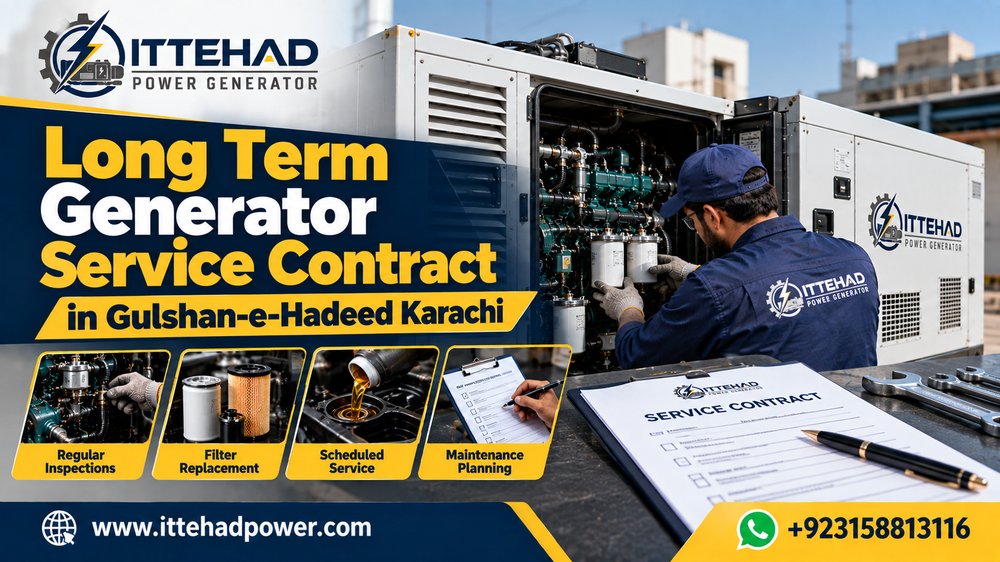
A well-planned long term generator service contract in Gulshan-e-Hadeed Karachi can help keep generator maintenance organized, reduce unexpected breakdowns, improve operating reliability, and provide a clear process for routine inspections and corrective work. Instead of waiting for faults to become urgent, a long-term service arrangement allows practical checks, maintenance planning, safe inspection, fault identification, and timely corrective action to be handled according to the generator’s actual condition and operating requirements.
Why a Long Term Generator Service Contract Matters
A generator may remain reliable only when its mechanical, electrical, fuel, cooling, starting, and control systems receive regular attention. Small issues such as weak batteries, loose connections, restricted filters, leakage, deteriorated belts, or recurring warnings can gradually develop into larger failures if they are not identified early.
A structured service contract creates a regular maintenance routine and makes it easier to monitor changes in generator condition over time.
Long Term Generator Service Contract in Gulshan-e-Hadeed Karachi
A professional long term generator service contract in Gulshan-e-Hadeed Karachi should be based on generator usage, operating hours, service history, equipment condition, and practical maintenance needs. The purpose is to support dependable operation through scheduled inspection, preventive servicing, fault diagnosis, and suitable corrective action when required.
A good contract should clearly define what will be checked, how maintenance will be recorded, and how developing faults will be handled.
What a Generator Service Contract Should Cover
The exact scope may vary according to the generator, but a practical long-term maintenance arrangement can include:
- Routine generator inspection
- Engine oil and fluid checks
- Filter condition review
- Battery and starting system inspection
- Fuel system checks
- Cooling system inspection
- Belts and hose condition checks
- Electrical connection inspection
- Control panel warning review
- Operational testing
- Service records
- Recommendations for corrective work
The service scope should match the actual generator rather than rely on a generic checklist alone.
Routine Practical Checks
Regular inspection is one of the most important parts of a long-term generator service agreement. It allows developing problems to be identified before they cause a complete breakdown.
Practical checks may include:
- Engine oil level and condition
- Coolant level
- Fuel level and visible fuel condition
- Oil, fuel, and air filter condition
- Battery terminals and cables
- Visible wiring and connectors
- Belts and hoses
- Fuel, oil, or coolant leakage
- Unusual noise or vibration
- Control panel indications
- General generator cleanliness
These checks help establish whether the generator remains suitable for continued operation or needs maintenance before the next scheduled visit.
Preventive Maintenance Under a Service Contract
Preventive maintenance focuses on reducing the chance of avoidable faults rather than waiting for a breakdown. Routine servicing can help maintain lubrication, filtration, cooling, fuel delivery, starting reliability, and electrical condition.
Preventive work may include:
- Oil servicing when required
- Filter replacement according to condition and interval
- Battery inspection and connection cleaning
- Fuel system inspection
- Cooling system checks
- Inspection of belts and hoses
- Electrical connection tightening where appropriate
- Operational testing after maintenance
Preventive servicing should be based on generator requirements rather than unnecessary replacement of usable components.
Service Intervals and Generator Usage
Long-term maintenance works best when service intervals reflect actual generator usage. Running hours, standby periods, operating environment, maintenance history, and component condition can all affect how often inspection or servicing is needed.
Operating-Hour Based Service
Generators that operate frequently may require more regular oil, filter, cooling, and general maintenance. Recording operating hours helps ensure that important service points are not missed.
Calendar-Based Inspection
A generator that runs only occasionally still requires regular attention. Batteries can weaken, fuel condition can change, seals can deteriorate, and connections can corrode even when running hours remain low.
Condition-Based Maintenance
If leakage, hard starting, unusual vibration, abnormal noise, overheating, or control warnings appear, maintenance may be required before the normal service interval.
Identifying Likely Causes of Generator Problems
A long-term service contract becomes more valuable when recurring faults are investigated systematically. Repeatedly resetting a warning or replacing the same component without finding the underlying cause can increase costs and reduce reliability.
Likely causes of generator problems may involve:
- Weak battery condition
- Loose or corroded connections
- Fuel restriction
- Contaminated fuel
- Blocked filters
- Cooling system problems
- Damaged belts or hoses
- Sensor or control faults
- Electrical connection problems
- Mechanical wear
Proper inspection helps distinguish symptoms from actual causes.
Safe Generator Inspection
Generator servicing involves fuel, electricity, moving components, batteries, hot surfaces, and engine fluids. Safe inspection procedures should therefore be included in any professional long-term service arrangement.
Before maintenance begins, the generator should be handled according to appropriate isolation and shutdown procedures. Fuel leakage, damaged wiring, overheating, or abnormal mechanical noise should receive careful attention before the generator is returned to normal use.
Operating Reliability and Generator Readiness
The main purpose of a service contract is to keep the generator ready for dependable operation. A unit that appears normal during standby may still have a weak battery, low fluid level, restricted filter, or other developing issue that becomes obvious only when starting is required.
Regular inspection supports generator readiness by checking:
- Starting performance
- Battery condition
- Fluid levels
- Control panel status
- Engine sound
- Vibration
- Leaks
- Operating stability
These observations provide a practical indication of whether further servicing is necessary.
Benefits of a Long Term Generator Service Contract
A structured service agreement can provide several practical advantages for generator owners.
- Creates a planned maintenance schedule
- Helps identify developing faults earlier
- Reduces avoidable breakdown risk
- Improves maintenance records
- Supports more consistent generator reliability
- Helps control unnecessary repair costs
- Makes consumable replacement easier to plan
- Provides clearer maintenance responsibility
- Supports timely corrective action
Customer Needs in a Long Term Service Arrangement
Customers usually need a maintenance arrangement that is clear, practical, and easy to manage. They should understand what is included, how often the generator will be inspected, what maintenance will be carried out, and how additional faults will be handled.
A useful service contract should provide:
- Clear maintenance scope
- Defined inspection routine
- Service records
- Transparent repair recommendations
- Priority identification of urgent faults
- Practical maintenance guidance
- Operational testing after servicing
- Clear communication about future requirements
How a Service Contract Helps Control Costs
Long-term maintenance can support cost control by reducing emergency repairs, preventing avoidable secondary damage, and making parts and consumable requirements easier to plan.
Cost control can be improved through:
- Regular inspection instead of emergency-only repair
- Replacing components based on condition
- Maintaining accurate service history
- Correcting minor leaks or loose connections early
- Investigating recurring faults properly
- Planning consumable replacement
- Avoiding unnecessary part replacement
A service contract should improve maintenance planning rather than simply increase the number of visits.
Generator Service Records and Maintenance History
Accurate records are particularly useful in long-term maintenance because they show how generator condition changes over time.
A service record may include:
- Date of inspection
- Operating hours
- Oil and filter service history
- Battery observations
- Fuel system findings
- Cooling system findings
- Parts replaced
- Faults identified
- Corrective actions completed
- Recommendations for future maintenance
These records help reduce duplicate work and make recurring problems easier to identify.
Corrective Action Under a Maintenance Contract
A service contract should provide a practical process for dealing with faults identified during inspection. Not every problem requires immediate major repair, but important faults should be prioritized according to their effect on reliability and safe operation.
Corrective action may involve:
- Cleaning or adjustment
- Tightening connections
- Replacing worn consumables
- Repairing damaged wiring
- Correcting fuel or coolant leakage
- Replacing confirmed faulty components
- Further testing where the cause is unclear
The recommended work should match the confirmed condition of the generator.
A Practical Long Term Generator Service Process
A structured maintenance process can improve consistency throughout the contract period.
- Initial assessment: Record generator condition, operating hours, service history, and existing faults.
- Define maintenance needs: Establish practical inspection and service intervals.
- Complete routine inspections: Check fluids, filters, battery, fuel system, cooling system, electrical connections, and visible wear.
- Record findings: Document maintenance completed and issues requiring future attention.
- Carry out required servicing: Replace consumables and complete planned maintenance according to condition.
- Diagnose faults: Investigate warning signs and recurring operating problems systematically.
- Complete corrective work: Repair or replace confirmed faulty components when necessary.
- Test generator operation: Check starting, engine behavior, controls, leakage, and overall stability.
- Update service records: Keep a clear history for future maintenance decisions.
How to Choose a Long Term Generator Service Provider
A long-term contract should be based on more than price alone. The quality of inspection, maintenance planning, communication, and repair decisions can have a greater effect on generator reliability.
Useful selection points include:
- Clear contract scope
- Structured maintenance procedures
- Inspection before recommending replacement
- Accurate service records
- Practical fault diagnosis
- Safe working practices
- Transparent repair recommendations
- Operational testing after service
- Clear communication about additional work
A provider should be able to explain what maintenance is required and why.
Questions to Ask Before Agreeing to a Service Contract
Clarifying the maintenance arrangement in advance can prevent misunderstandings during the contract period.
Useful points to confirm include:
- What routine inspections are included
- How service intervals are determined
- Which consumables are included or charged separately
- How additional repair work is approved
- Whether service records are maintained
- How recurring faults are diagnosed
- What testing is completed after maintenance
- How urgent generator problems are handled
Local Relevance in Gulshan-e-Hadeed Karachi
Generator maintenance in Gulshan-e-Hadeed Karachi should consider actual local operating conditions. Heat, dust, fuel storage, long standby periods, extended operating hours, and general environmental exposure can influence maintenance requirements.
Local access to generator service support can make routine inspection and follow-up maintenance easier to arrange. It also allows servicing to be adjusted according to actual generator condition rather than relying only on a fixed generic schedule.
Trust Points in a Long Term Generator Contract
A dependable service relationship should be transparent throughout the contract period. Customers should know what has been inspected, what has been serviced, and what requires future attention.
Important trust points include:
- Clear documentation of each service visit
- No unnecessary component replacement
- Diagnosis before major repair work
- Correctly matched consumables and parts
- Priority given to genuine reliability issues
- Safe maintenance procedures
- Testing after service or repair
- Practical recommendations based on generator condition
Warning Signs That Need Attention Between Scheduled Visits
A long-term contract should not mean waiting for the next planned visit when the generator develops a serious symptom.
Arrange earlier inspection if you notice:
- Slow or difficult starting
- Repeated shutdowns
- Oil, fuel, or coolant leakage
- Overheating
- Unusual vibration
- Abnormal engine noise
- Recurring control warnings
- Unstable operation
- Visible wiring damage
- Sudden changes in generator performance
Early action can prevent a minor issue from becoming a larger repair.
Guidance for Better Long Term Generator Reliability
Routine maintenance is most effective when generator owners also observe basic operating conditions between service visits.
Helpful practices include:
- Record generator running hours
- Observe starting performance
- Watch for leaks
- Check control panel warnings
- Note unusual noise or vibration
- Keep the generator area reasonably clean
- Report changes in performance promptly
- Keep previous maintenance records available
These simple observations provide useful information for future service visits.
When a Long Term Service Contract Is Worth Considering
A long-term agreement can be useful when generator reliability is important, maintenance needs to be organized consistently, or previous servicing has been irregular. It can also help when maintenance records are incomplete or when repeated faults require closer monitoring.
The value of the contract depends on the quality of inspection, maintenance planning, communication, and corrective action rather than the number of scheduled visits alone.
Arrange a Long Term Generator Service Contract in Gulshan-e-Hadeed Karachi
A properly structured long term generator service contract in Gulshan-e-Hadeed Karachi can provide a practical framework for inspections, preventive maintenance, fault diagnosis, service records, safe testing, and suitable corrective action. Regular attention helps improve operating reliability, reduce avoidable downtime, and make generator maintenance easier to plan.
If your generator requires consistent long-term care, has an unclear maintenance history, or is beginning to show repeated operating issues, arrange a professional assessment and service plan. A clear maintenance contract can help keep the generator monitored, serviced, and ready for dependable operation while reducing the risk of avoidable repair problems.