
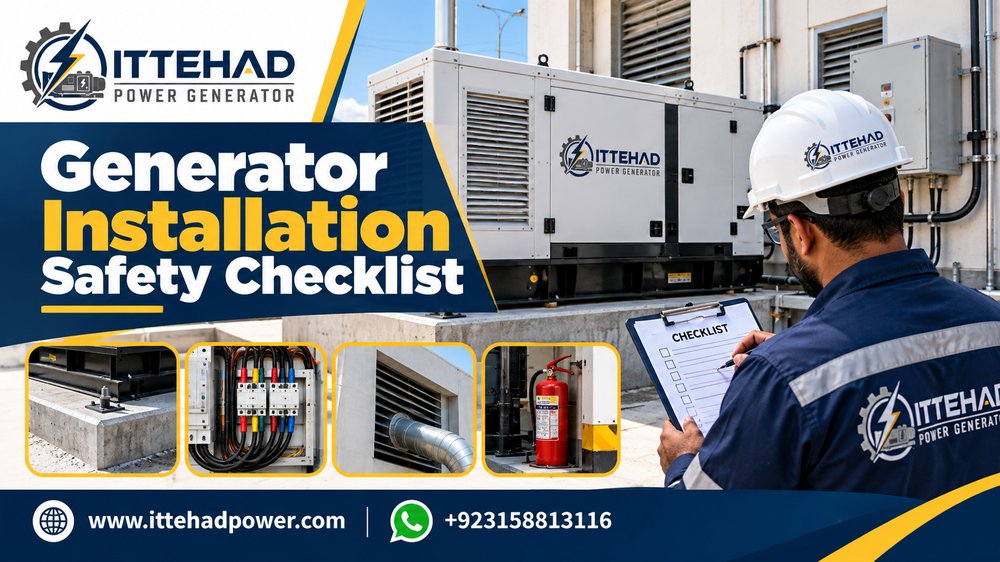
A detailed generator installation safety checklist helps ensure that a generator is positioned, connected, ventilated, protected, and commissioned correctly before regular operation begins. Generator installation involves electrical power, fuel, heat, exhaust, moving components, and load requirements, so every stage should be planned carefully. Checking the site, electrical connections, generator capacity, ventilation, grounding, access, and commissioning conditions can reduce avoidable installation problems and support safer, more reliable generator operation.
Why a Generator Installation Safety Checklist Is Important
A generator should not be installed by simply selecting an available space and connecting it to the electrical system. Installation conditions directly influence operating safety, electrical reliability, cooling, accessibility, and long-term performance.
A structured checklist helps installers and generator owners review important requirements before startup. It can also identify incomplete work while changes are still easier to make.
Start with Proper Generator Site Planning
The installation location should be assessed before the generator is moved into position. Space, ventilation, electrical routing, operating access, surrounding conditions, and future inspection requirements should all be considered.
A suitable location helps create a safer installation and reduces the need for difficult modifications after electrical and mechanical connections have already been completed.
Check Available Space
The generator should have adequate clearance for airflow, inspection, operation, and access to important components. Installing equipment in an excessively restricted area can make routine checks difficult and may affect heat management.
Keep Access Practical
Technicians should be able to reach control panels, service points, electrical connections, and other important areas without unnecessary obstruction. Access should remain available after the installation is complete.
Review the Surrounding Area
The installation area should remain reasonably clear of conditions that could interfere with normal generator operation. Items that restrict airflow, access, or safe movement around the generator should be addressed during site preparation.
Generator Load Requirements and Capacity Planning
Generator safety and reliability begin with understanding the electrical load it is expected to support. Capacity should be selected according to actual power requirements rather than estimation alone.
An undersized generator may struggle under demand, while inappropriate loading can contribute to unstable operation and repeated electrical problems. Load planning should therefore form part of the installation process.
Identify Essential Electrical Loads
Determine which circuits and equipment need generator power. This provides a clearer basis for selecting generator capacity and planning electrical distribution.
Consider Starting Requirements
Some electrical loads can require additional power during startup. These requirements should be considered when evaluating whether the generator can support the intended equipment reliably.
Plan for Real Operating Conditions
The expected load should reflect how the generator will actually be used. Practical operating requirements are more useful than selecting capacity from assumptions that may not represent normal conditions.
Electrical Connection Safety
Generator electrical connections require careful planning and suitable installation practices. Incorrect wiring, loose terminals, unsuitable cables, or poorly arranged switching can create serious reliability and safety concerns.
Electrical work should be completed by appropriately qualified personnel and checked before the generator is energized.
- Use cables suitable for the expected electrical load
- Check cable routing for protection from physical damage
- Secure terminals and connection points properly
- Confirm protective devices are suitable for the installation
- Avoid temporary or improvised power connections
- Inspect wiring for damaged insulation
- Verify electrical connections before startup
Generator Grounding and Earthing Checks
Grounding is an important part of generator electrical safety. The correct grounding and bonding arrangement depends on the electrical configuration, neutral arrangement, switching method, and existing electrical system.
Grounding conductors should be properly connected, secure, and protected from damage. Neutral and grounding connections should not be altered without understanding how the generator is integrated into the electrical system.
Inspect Grounding Conductors
Check that grounding cables are installed securely and that connection points are not loose, damaged, or visibly corroded.
Review Neutral Arrangements
The neutral configuration should be appropriate for the generator installation. Incorrect bonding can result in unwanted current paths or interfere with electrical protection.
Ventilation and Cooling Requirements
A generator produces significant heat during operation. Adequate ventilation is therefore essential for maintaining suitable operating conditions and helping the cooling system perform correctly.
Restricted airflow can contribute to overheating and unreliable operation. Ventilation should be considered during initial site planning rather than after the generator has already been installed.
- Keep air intake areas unobstructed
- Provide sufficient operating clearance
- Ensure hot air can leave the installation area
- Avoid storing materials against ventilation openings
- Check that airflow remains available after installation work is complete
Exhaust Safety Considerations
Generator exhaust must be handled carefully because exhaust gases and high temperatures create important safety considerations. The exhaust arrangement should be planned so gases are directed appropriately and hot components do not create unnecessary exposure.
Exhaust connections should be secure and inspected before operation. Damaged, loose, or incorrectly arranged exhaust components should be corrected before commissioning.
Fuel System Installation Safety
The generator fuel system should be checked for secure connections, visible leaks, suitable routing, and safe operating conditions. Fuel leakage should never be ignored during installation or commissioning.
Fuel lines and connections should be positioned where they are protected from unnecessary physical damage and excessive heat.
- Inspect visible fuel connections before startup
- Check for leakage after fuel is introduced
- Keep fuel lines away from damaging conditions
- Secure loose fittings and connections
- Address unusual fuel odor or visible leakage immediately
Generator Positioning and Stability
The generator should be placed on a suitable, stable surface and positioned according to the installation requirements. Poor positioning can contribute to vibration, movement, restricted access, or difficulties with electrical and mechanical connections.
The installation should remain stable during generator operation. Mounting arrangements and accessible securing points should be checked before commissioning.
Control Panel and Safety System Checks
The generator control panel provides operating information, warnings, shutdown indications, and control functions. These systems should be reviewed before initial startup.
A blank display, active fault warning, damaged control wiring, or non-responsive control should be investigated before commissioning proceeds.
- Confirm the control panel powers correctly
- Check for active warning or fault indications
- Verify relevant start and stop controls
- Inspect visible control wiring
- Review applicable protective shutdown functions
- Do not bypass safety systems simply to complete startup
Battery and Starting System Safety
The battery and starting system should be inspected before startup. Loose terminals, damaged cables, poor connections, or incorrect battery condition can cause starting problems and electrical faults.
Battery connections should be secure and correctly arranged. Care should be taken around battery terminals to avoid accidental short circuits.
Pre-Startup Fluid Checks
Essential fluid levels should be verified before the generator is started. Operating a generator with insufficient oil or coolant can cause serious damage.
- Check engine oil level
- Confirm coolant level
- Inspect for visible oil leakage
- Inspect cooling system connections
- Check fuel availability
- Investigate any fluid leakage before startup
Generator Installation Safety Checklist Before First Startup
A final review should be completed before the generator is started for commissioning. This provides an opportunity to identify incomplete work or unsafe conditions before the system becomes energized and mechanically active.
- Confirm the generator is positioned securely.
- Check adequate ventilation and operating clearance.
- Review electrical load requirements.
- Inspect generator output wiring and connections.
- Confirm grounding and bonding arrangements.
- Check relevant electrical protective devices.
- Inspect fuel connections for leakage.
- Confirm oil and coolant levels.
- Check battery connections and starting readiness.
- Review control panel indications.
- Check exhaust connections and routing.
- Remove loose objects and installation materials from the generator area.
- Confirm access to controls and shutdown functions.
- Correct identified issues before startup.
Commissioning Safety After Installation
Commissioning verifies whether the completed generator installation performs as intended. The generator should be started under controlled conditions and observed carefully for abnormal behavior.
Initial commissioning should check engine operation, controller indications, electrical output, frequency, operating temperature, vibration, leakage, and other relevant conditions before regular use begins.
Observe Initial Startup
Listen for unusual mechanical noise and observe the generator for excessive vibration, visible leakage, warning indications, or unstable operation.
Check Electrical Output
Electrical output should be reviewed to confirm that the generator is operating correctly before connected equipment is relied upon.
Monitor Operating Conditions
Temperature, warning indicators, engine behavior, and control panel readings should remain within suitable operating conditions during commissioning.
Benefits of Following a Generator Installation Safety Checklist
A checklist creates a consistent method for reviewing installation quality and readiness. It helps ensure that important requirements are not missed when several electrical and mechanical tasks are being completed at the same time.
- Helps reduce installation-related faults
- Supports safer electrical operation
- Improves generator ventilation and cooling conditions
- Helps identify fuel or fluid leakage before regular use
- Supports reliable generator startup
- Improves accessibility for future inspection
- Provides a structured commissioning process
- Supports dependable long-term operation
Common Generator Installation Mistakes to Avoid
Many generator problems can begin with poor installation decisions. Correcting these issues before commissioning can reduce unnecessary repairs later.
- Selecting generator capacity without reviewing load
- Using temporary electrical wiring as a permanent solution
- Ignoring grounding requirements
- Installing the generator in a poorly ventilated space
- Leaving insufficient maintenance clearance
- Using loose or unsupported electrical connections
- Ignoring visible fuel or fluid leakage
- Failing to inspect control panel warnings
- Skipping commissioning tests
- Operating the generator before installation work is complete
Customer Needs During Generator Installation
Generator owners need more than completed physical installation. They need confidence that the generator capacity, electrical connections, ventilation, grounding, controls, and safety arrangements have been considered correctly.
A professional installer should explain significant installation decisions and identify any outstanding requirements before the generator enters regular service.
How to Select a Generator Installation Service
Installation quality can influence generator reliability for years, so service selection should focus on technical planning and safe working practices rather than price alone.
Choose Site Assessment Before Installation
The installer should inspect the available location and understand electrical requirements before finalizing generator positioning.
Look for Load Planning
Generator capacity and connection planning should reflect the electrical load the unit is expected to support.
Confirm Electrical Safety Practices
The installer should use appropriate wiring, grounding, protection, and connection methods instead of temporary arrangements.
Ask About Ventilation Planning
Cooling and airflow requirements should form part of the installation plan from the beginning.
Confirm Commissioning Is Included
The completed generator should be tested before normal use. Commissioning helps identify installation problems that may not be obvious during a visual inspection.
Site-Specific Installation Considerations
Generator installation requirements vary according to the actual site. Available space, electrical load, generator size, access, ventilation, existing wiring, grounding arrangements, and operating conditions can all affect the final installation approach.
This is why a checklist should be applied to the real installation rather than treated as a universal layout. A professional site assessment helps translate general safety requirements into practical installation decisions.
Trust Points in Professional Generator Installation
A dependable installation should be transparent, organized, and based on proper inspection. Customers should understand whether important safety and operating requirements have been checked before commissioning.
- Site conditions are assessed before installation
- Load requirements are reviewed
- Electrical connections are completed systematically
- Grounding arrangements receive proper attention
- Ventilation is considered before generator placement is finalized
- Fuel and fluid systems are checked for leakage
- Control and safety functions are reviewed
- Commissioning is completed before regular use
Guidance for Maintaining Installation Safety
Installation safety should continue after commissioning. The generator area should remain accessible, ventilation openings should stay clear, electrical connections should not be modified casually, and grounding conductors should remain secure.
Any later changes to electrical load, wiring, generator positioning, switching equipment, or surrounding structures should be reviewed to ensure they do not compromise the original installation.
Visible leakage, overheating, damaged cables, unusual vibration, control warnings, or unstable electrical operation should be investigated promptly rather than accepted as normal generator behavior.
When an Existing Installation Should Be Rechecked
An older generator installation may benefit from a safety review if electrical modifications have been made, load requirements have changed, wiring has deteriorated, grounding is uncertain, ventilation has become restricted, or repeated faults are occurring.
A structured inspection can identify whether the existing setup still provides suitable operating conditions or requires corrective work.
Use a Generator Installation Safety Checklist Before Regular Operation
A complete generator installation safety checklist should cover site planning, load requirements, electrical connections, grounding, ventilation, exhaust, fuel systems, fluids, controls, safety functions, and commissioning. Reviewing these areas before regular operation can help identify incomplete installation work and reduce avoidable generator problems.
Arrange a professional installation or safety inspection when setting up a generator or reviewing an existing installation. Careful planning, proper electrical work, suitable ventilation, systematic checks, and controlled commissioning provide a stronger foundation for safe and dependable generator operation.