
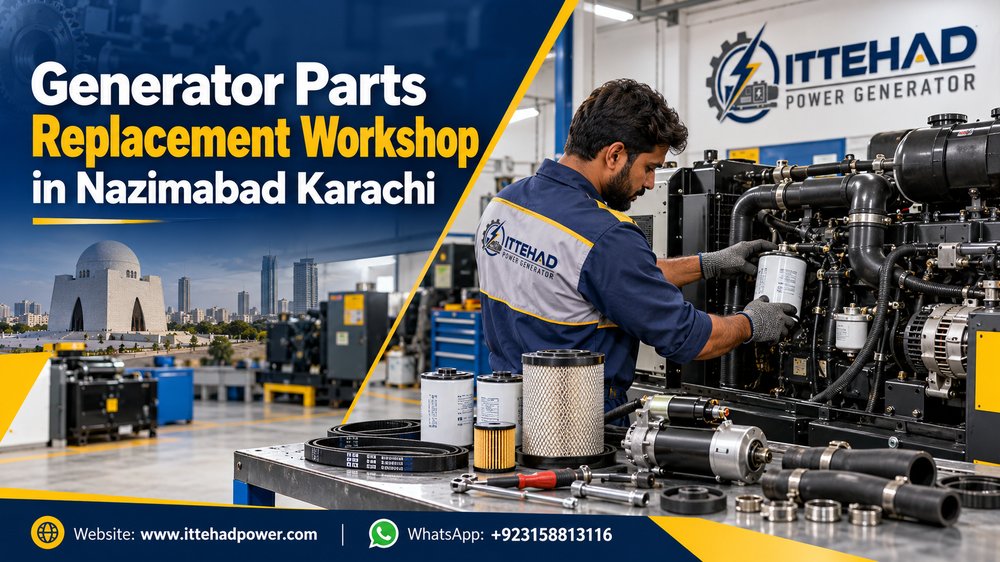
Finding the right generator parts replacement workshop in Nazimabad Karachi is important when worn, damaged, or unreliable components begin affecting generator performance. Correct part identification, compatibility checking, careful replacement planning, and dependable sourcing can help restore stable operation while reducing the risk of repeated faults. A professional workshop approach focuses on replacing only the components that genuinely require attention and confirming that the generator performs correctly after the work is completed.
Why Generator Parts Replacement Requires Careful Diagnosis
A generator contains many mechanical, electrical, fuel, cooling, starting, and control components that work together. When one part begins to fail, the symptoms can sometimes appear similar to problems caused by another component.
Replacing a part without confirming the actual fault can increase repair costs and may leave the original problem unresolved. Proper diagnosis helps determine whether a component needs replacement, adjustment, cleaning, repair, or further testing.
Generator Parts Replacement Workshop in Nazimabad Karachi for Reliable Repairs
A professional generator parts replacement workshop in Nazimabad Karachi should focus on accurate fault identification before recommending replacement. The objective is not simply to install a new component but to make sure the selected part is suitable for the generator and addresses the actual operating problem.
A structured replacement process can include inspection, identification of the affected component, compatibility verification, removal of the defective part, installation, adjustment where required, and operational testing.
Common Signs That Generator Parts May Need Replacement
Generator components usually show warning signs before complete failure. Recognizing these changes early can help prevent unexpected downtime and make repair planning easier.
Common indications include:
- Repeated starting difficulty
- Unusual vibration or noise
- Unstable engine operation
- Reduced generator performance
- Intermittent electrical problems
- Fuel or coolant leakage
- Overheating symptoms
- Visible wear, cracks, corrosion, or damage
- Recurring warning indications
- Components that fail repeatedly after temporary repair
These symptoms do not automatically mean a particular part must be replaced. Inspection and testing are necessary to confirm the cause.
Correct Generator Part Identification
Accurate identification is one of the most important stages of generator parts replacement. Components that appear similar may have different specifications, connections, capacities, dimensions, or operating requirements.
Part identification may require checking:
- Generator make and model
- Engine model details
- Existing part number
- Component dimensions
- Electrical rating
- Connection type
- Operating specification
- Manufacturer reference information
Using these details reduces the risk of installing an incompatible component.
Why Parts Compatibility Matters
A replacement part should match the requirements of the generator system in which it will operate. Installing a component simply because it physically fits may create performance, reliability, or safety problems.
Compatibility checking helps confirm that the replacement part has the correct operating characteristics and can work properly with connected generator components.
Mechanical Compatibility
Mechanical parts need suitable dimensions, mounting points, clearances, and operating characteristics. Incorrect fitting can create vibration, leakage, premature wear, or mechanical stress.
Electrical Compatibility
Electrical generator components must meet the correct voltage, current, connection, and operating requirements. Incorrect specifications may result in unreliable operation or damage to connected systems.
Control System Compatibility
Control-related parts may require appropriate connections and operating specifications. Compatibility should be verified before installation rather than assumed from appearance alone.
Generator Parts Commonly Checked During Workshop Inspection
The exact components requiring attention depend on the generator’s condition and symptoms. A workshop inspection may involve checking parts associated with starting, fuel delivery, cooling, engine operation, electrical output, and controls.
Components that may require inspection or replacement include:
- Fuel filters
- Air filters
- Oil filters
- Belts
- Hoses
- Fuel lines
- Battery-related connections
- Starting components
- Cooling system components
- Sensors and switches
- Engine seals and gaskets
- Control-related components
- Electrical connections and associated parts
Replacement should be based on actual condition, test results, and generator requirements.
Wear Signs That Help Guide Replacement Decisions
Not every old component needs immediate replacement, but visible and measurable wear can help determine when continued use may become unreliable.
Important wear signs include:
- Cracking or hardening of hoses
- Frayed or damaged belts
- Corroded electrical terminals
- Loose or damaged connectors
- Fuel or oil leakage around seals
- Blocked or heavily contaminated filters
- Burn marks or overheating signs
- Unusual movement or excessive play
- Repeated intermittent operation
- Physical damage to housings or fittings
Early replacement of genuinely worn components can help reduce the chance of sudden generator failure.
Benefits of Professional Generator Parts Replacement
Correct parts replacement supports more than immediate repair. It can improve overall generator reliability when the diagnosis, selection, installation, and testing are handled properly.
- Helps restore dependable generator operation
- Reduces repeated faults caused by worn components
- Supports safer generator performance
- Helps prevent unnecessary replacement of good parts
- Improves compatibility between replacement components and the existing system
- Supports planned maintenance and repair decisions
- Can reduce avoidable downtime
What Customers Need From a Generator Parts Workshop
Customers usually need clear information about what has failed, why replacement is necessary, which part is suitable, and whether any connected components also require inspection.
A practical workshop service should provide a clear repair path rather than immediately recommending multiple replacements. Customers benefit from understanding the condition of the existing component and the reason for the proposed work.
Important customer expectations include:
- Accurate fault diagnosis
- Proper part identification
- Compatibility verification
- Clear replacement recommendations
- Reliable sourcing
- Careful installation
- Testing after replacement
Reliable Sourcing of Generator Replacement Parts
Part quality can directly influence repair durability. Reliable sourcing helps reduce problems associated with poorly matched, damaged, or unsuitable components.
Before installing a replacement, the workshop should confirm that the part matches the generator’s requirements and is suitable for its intended operating conditions.
Reliable sourcing should focus on:
- Correct specifications
- Suitable application
- Consistent component quality
- Proper physical condition
- Correct connections and dimensions
- Compatibility with existing generator systems
A Practical Generator Parts Replacement Process
A systematic process helps improve accuracy and reduces unnecessary work. Depending on the fault, generator parts replacement may follow these steps:
- Inspect the generator: Review the reported problem and observe generator condition and operating symptoms.
- Identify the fault: Test relevant systems to determine which component is causing or contributing to the problem.
- Confirm the part: Check model information, specifications, dimensions, connections, and part references.
- Assess connected components: Inspect related parts to determine whether another issue contributed to the failure.
- Select a suitable replacement: Verify compatibility before installation.
- Remove the defective component: Follow appropriate procedures to avoid damage to surrounding systems.
- Install the replacement: Fit and connect the component correctly and make necessary adjustments.
- Test generator operation: Confirm that the original fault has been corrected and the generator operates properly.
Why Connected Components Should Also Be Checked
A failed generator part may sometimes be the result of another underlying problem. For example, excessive heat, loose connections, contamination, vibration, or incorrect operating conditions can shorten component life.
Replacing the failed part without checking the surrounding system may lead to repeated failure. Inspection of related components can help identify conditions that contributed to the original problem.
How to Choose a Generator Parts Replacement Workshop
Choosing a workshop should involve more than asking whether a particular component is available. The quality of diagnosis and installation is equally important.
Consider whether the workshop provides:
- Inspection before recommending replacement
- Correct generator part identification
- Compatibility checking
- Clear explanation of the problem
- Careful handling and installation
- Testing after replacement
- Practical guidance on future maintenance
A workshop that follows a diagnosis-first approach can help avoid unnecessary expense and repeated repair work.
Local Generator Parts Support in Nazimabad Karachi
Access to generator parts replacement support in Nazimabad Karachi can make it easier to arrange inspection, discuss component requirements, and plan necessary repair work without unnecessary delays. Local availability is particularly useful when a generator has developed a fault that requires component identification or replacement before normal operation can continue.
Environmental and operating conditions can also influence generator component life. Dust, heat, extended operation, standby periods, fuel condition, and maintenance practices can contribute to wear. A practical local workshop inspection should therefore consider how the generator is actually being used.
Trust Points for Generator Parts Replacement
Generator owners should be able to understand why a component needs replacement and how the recommended part was selected. Transparent inspection and clear communication help create confidence in the repair process.
Useful trust points include:
- Parts are replaced based on confirmed condition
- Compatibility is checked before installation
- Customers receive a clear explanation of the fault
- Related systems are inspected when necessary
- Replacement work follows safe procedures
- Generator operation is checked after installation
- Unnecessary component changes are avoided
When Repair May Not Be Enough
Some generator components can be cleaned, adjusted, serviced, or repaired, while others may need replacement because of excessive wear or physical damage. The correct decision depends on component condition, reliability, compatibility, and the likelihood of repeated failure.
A heavily worn, cracked, burned, leaking, or repeatedly failing component may be more practical to replace than to continue repairing temporarily. The decision should be made after inspection rather than based only on age.
Planning Generator Parts Replacement Before Failure
Parts replacement does not always need to wait until complete breakdown. Routine inspection can reveal components approaching the end of their useful condition.
Planning replacement in advance can help:
- Reduce unexpected downtime
- Allow time for correct part sourcing
- Avoid rushed component selection
- Coordinate repairs with planned maintenance
- Improve overall generator reliability
This is particularly useful for parts that show visible deterioration or declining performance.
Guidance Before Taking a Generator for Parts Replacement
Before arranging workshop service, note the generator’s recent symptoms and any changes in operation. Information about starting behavior, unusual sounds, warning indications, leaks, overheating, unstable performance, or previous repairs can help with diagnosis.
Where available, generator model details and information from the existing component can also make part identification easier.
Avoid purchasing replacement parts solely by visual similarity. Confirming specifications before purchase can prevent delays and incorrect installation.
Safety During Generator Parts Replacement
Generator repair involves fuel, electricity, moving parts, hot surfaces, batteries, and mechanical components. Appropriate isolation and safe working procedures should be followed before removing or installing parts.
Damaged electrical wiring, fuel leakage, overheated components, or major mechanical faults should be handled carefully. Where specialist testing or disassembly is required, experienced generator technicians should perform the work.
Arrange Generator Parts Inspection and Replacement in Nazimabad Karachi
Reliable generator repair begins with identifying the actual fault and choosing the correct replacement component. A professional generator parts replacement workshop in Nazimabad Karachi can help with part identification, compatibility checks, wear assessment, replacement planning, reliable sourcing, installation, and post-repair testing.
If your generator has worn components, recurring faults, leakage, starting problems, unstable operation, or visible part damage, arrange a proper inspection before the problem leads to more serious downtime. Correct diagnosis and properly matched replacement parts can help restore dependable generator operation and support long-term reliability.