
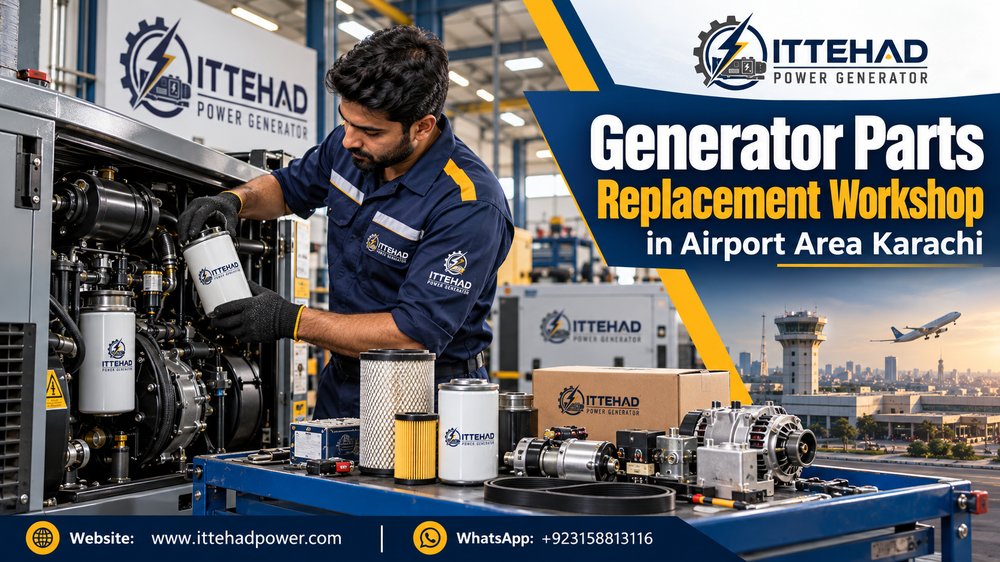
A professional generator parts replacement workshop in Airport Area Karachi helps generator owners identify worn, damaged, or failed components and replace them with suitable parts based on compatibility, condition, and actual repair requirements. Correct part identification is important because installing an unsuitable component can lead to repeated faults, unreliable operation, unnecessary expense, or damage to related generator systems. A structured workshop approach combines inspection, diagnosis, replacement planning, proper fitting, and post-repair testing to support dependable generator performance.
Why Choose a Generator Parts Replacement Workshop in Airport Area Karachi
Generator components are exposed to heat, vibration, electrical load, mechanical movement, and regular operating stress. Over time, individual parts may wear, weaken, become damaged, or stop performing as intended.
A specialized generator workshop can inspect the affected system, identify the actual faulty component, confirm replacement requirements, and install a compatible part. This approach is more reliable than changing multiple components without establishing the cause of the problem.
Importance of Correct Generator Part Identification
Generator parts can differ according to engine configuration, electrical system, controller arrangement, capacity, and equipment design. A component that looks similar may not necessarily provide the correct fit or operating characteristics.
Accurate identification helps ensure that the replacement part matches the generator and performs the required function correctly. Part numbers, physical dimensions, electrical ratings, connection types, and existing component details may all be considered during selection.
Inspect the Existing Component
The removed or installed component can provide useful information about specifications, connections, physical size, and signs of failure. Inspection can also help determine whether the component itself is faulty or whether another problem caused the damage.
Confirm Generator Compatibility
Replacement selection should be based on compatibility with the actual generator system. Installing the wrong component may result in incorrect operation, poor performance, or further repair requirements.
Identify the Cause of Failure
Replacing a damaged part without identifying why it failed can lead to repeat failure. The surrounding system should be checked where appropriate so electrical, mechanical, cooling, fuel, or connection-related problems are not overlooked.
Common Signs That Generator Parts May Need Replacement
Not every unusual generator symptom requires component replacement, but certain signs may indicate that a part has reached the end of its useful condition or developed a confirmed fault.
- Repeated generator starting problems
- Unstable or irregular operation
- Visible component damage or excessive wear
- Burnt, overheated, or discolored electrical parts
- Loose or damaged connectors
- Unusual mechanical noise or vibration
- Leakage from damaged components or connections
- Repeated warning or fault indications
- Parts that fail testing or inspection
- Recurring problems after temporary adjustment
Generator Parts That Require Careful Compatibility Checking
Different generator systems contain mechanical, electrical, control, fuel, cooling, and starting components. Replacement should always be based on the actual fault and the generator’s specifications.
Compatibility is especially important for components that affect electrical ratings, operating signals, mechanical fit, or connection arrangements. A workshop should compare the replacement component with the original requirement before installation.
Electrical Generator Parts Replacement
Electrical faults can involve connectors, wiring components, protective devices, switches, relays, control parts, or other electrical items. These components should be tested where practical before replacement.
Electrical parts must match the required ratings and connection arrangement. Incorrect replacement can create unreliable operation or additional electrical faults.
Check for Heat Damage
Electrical components showing signs of overheating should be inspected along with their surrounding terminals and wiring. Heat damage may result from a loose connection, excessive current, poor contact, or another electrical condition.
Inspect Wiring Before Replacing Components
A failed electrical component may sometimes be a symptom of damaged wiring or poor connections. Wiring inspection helps avoid replacing a working part when the actual fault is elsewhere.
Mechanical Parts Replacement
Mechanical components can wear through repeated movement, vibration, heat, or operating hours. Replacement may become necessary when inspection confirms excessive wear, damage, looseness, or poor operation.
Mechanical replacement work should include checking surrounding components and mounting points. A new part installed into a damaged or incorrectly aligned system may not provide a lasting repair.
Fuel System Parts Replacement
Fuel system problems can affect starting, engine stability, and generator performance. When a fuel-related component is suspected, diagnosis should confirm whether the problem is caused by restriction, leakage, contamination, damaged connections, or actual component failure.
Replacement should only be carried out after the likely cause has been identified. Fuel connections should also be checked carefully after repair to confirm that the system is secure and operating properly.
Cooling System Components and Replacement Planning
Cooling system parts help the generator maintain a suitable operating temperature. Damaged hoses, connections, or other cooling components can contribute to leakage or overheating.
Any replacement should be followed by checking fluid level, visible leakage, connection security, and generator temperature during suitable testing.
Starting System Parts and Battery Connections
A generator that fails to crank or starts inconsistently may require inspection of the battery, cables, terminals, starting circuit, or related components. It is important to identify whether the issue is a failed component or simply a poor electrical connection.
Replacement should be based on testing rather than assumption. Loose or corroded connections can sometimes produce symptoms similar to component failure.
Control and Monitoring Parts
Generator controls and monitoring components provide operating information, alarms, and commands. When a control-related part develops a fault, proper diagnosis should include checking its power supply, wiring, connectors, and communication where relevant.
Replacing a control component without checking external connections can result in unnecessary expense if the actual problem is a fuse, wiring fault, loose terminal, or unstable supply.
Benefits of Professional Generator Parts Replacement
Professional replacement work provides more value than simply installing a new component. Proper diagnosis, compatibility checking, fitting, and testing help ensure that the replacement addresses the original fault.
- Reduces unnecessary component replacement
- Helps ensure correct part compatibility
- Supports dependable generator operation
- Allows surrounding faults to be identified
- Reduces the risk of repeated component failure
- Provides safer electrical and mechanical installation
- Supports more accurate repair planning
- Allows generator operation to be tested after replacement
How a Generator Workshop Evaluates Replacement Needs
A workshop should begin by understanding the reported generator problem and inspecting the affected system. The replacement decision should follow diagnosis rather than come before it.
- Review the generator symptoms and repair history.
- Inspect the suspected component and surrounding system.
- Perform appropriate checks or testing.
- Determine whether adjustment, repair, or replacement is required.
- Identify the correct component specifications.
- Confirm replacement part compatibility.
- Remove the faulty component carefully.
- Install and secure the replacement part.
- Check associated wiring, connections, or fittings.
- Test generator operation after replacement.
Why Replacement Planning Is Important
Not every generator repair requires immediate part replacement. Some problems may be caused by loose connections, incorrect adjustment, contamination, damaged wiring, or another condition that can be corrected without replacing the suspected component.
Replacement planning helps determine what is genuinely required, which parts should be sourced, and whether related work should be completed at the same time. This can reduce repeated dismantling and unnecessary expense.
Reliable Generator Parts Sourcing
Reliable sourcing is an important part of generator repair. Replacement components should be selected according to required specifications and compatibility rather than appearance alone.
A workshop should verify important details before installation and avoid using a component when there is uncertainty about fit, electrical rating, connection configuration, or suitability for the generator.
Match Specifications Carefully
Part numbers, electrical ratings, dimensions, mounting arrangements, and connector types may help confirm whether a component is suitable.
Avoid Unverified Substitutions
Using an alternative component without confirming compatibility may cause poor operation or create additional faults. Any substitution should be technically suitable for the generator and its operating requirements.
Customer Needs During Generator Parts Replacement
Customers usually want to know which part has failed, why replacement is necessary, whether the replacement is compatible, and whether the generator will be tested afterward.
A professional workshop should provide clear guidance instead of recommending multiple parts without explanation. The customer should understand the reason for replacement and any related issues found during inspection.
How to Select a Generator Parts Replacement Workshop
Workshop selection should focus on diagnostic ability, part identification, compatibility checking, installation quality, and testing. Choosing only on the lowest replacement price may result in unsuitable parts or incomplete repair.
Look for Diagnosis Before Replacement
The workshop should confirm that the suspected component is actually faulty before recommending replacement wherever practical.
Check Compatibility Procedures
Ask how the replacement part will be matched to the generator. Correct identification is particularly important for electrical, control, and mechanically fitted components.
Choose Clear Communication
A reliable workshop should explain what has failed, what replacement is recommended, and whether another condition contributed to the problem.
Confirm Post-Replacement Testing
Generator operation should be checked after the new part is installed. Testing helps confirm that the original fault has been corrected and that the replacement is functioning properly.
Common Mistakes During Generator Parts Replacement
Incorrect replacement practices can increase repair cost and make troubleshooting more difficult. A controlled repair process helps reduce these risks.
- Replacing parts without testing the suspected fault
- Selecting components only by physical appearance
- Ignoring electrical or mechanical specifications
- Installing parts without checking surrounding connections
- Using unsuitable temporary replacements
- Failing to investigate why the original part failed
- Changing several components at once without diagnosis
- Skipping operational testing after replacement
When Repair May Be Better Than Immediate Replacement
Some generator problems can be corrected through cleaning, securing connections, adjustment, or repair rather than complete component replacement. The best option depends on the condition of the part and the type of fault.
A professional workshop should recommend replacement when it is technically justified, not simply because a component is easy to change. This approach helps control repair costs while maintaining generator reliability.
When Replacement Should Not Be Delayed
A component that is severely damaged, electrically unsafe, mechanically worn beyond acceptable condition, or repeatedly failing may require prompt replacement. Continuing to operate with a confirmed defective part can affect other generator systems.
Replacement should also be considered when repair cannot provide dependable operation or when the component no longer performs its intended function correctly.
Local Generator Parts Replacement in Airport Area Karachi
Generator owners in Airport Area Karachi may require workshop support for identifying faulty components, sourcing compatible replacements, and restoring equipment operation after part failure. Local access to generator parts replacement services can make inspection, repair planning, and follow-up testing more convenient.
A site-specific or workshop-based assessment helps ensure that replacement decisions are based on the actual generator condition rather than assumptions about the fault.
Trust Points in a Professional Generator Workshop
Reliable generator parts replacement should be based on evidence, compatibility, careful installation, and testing. Customers should receive practical recommendations that focus on restoring dependable generator operation.
- Faults are diagnosed before replacement recommendations
- Part specifications are checked carefully
- Compatibility is confirmed before installation
- Surrounding components and connections are inspected
- Unnecessary replacement is avoided
- Installation is completed carefully
- Generator operation is tested after replacement
- Repair findings are communicated clearly
Guidance After Generator Parts Replacement
After a component is replaced, the generator should be observed for the original symptom and any new warning signs. Connections should remain secure, operating readings should remain stable, and the replaced part should perform normally under suitable conditions.
If the original part failed because of another problem, that underlying cause must also be corrected. Replacing the component alone may only provide temporary improvement if excessive heat, vibration, poor wiring, leakage, or another fault remains present.
How to Reduce Repeat Component Failure
Regular inspection and timely response to generator problems can help reduce avoidable parts damage. Developing issues should be addressed before they place additional stress on related components.
- Investigate unusual noise or vibration early
- Correct loose electrical connections
- Monitor warning and fault indications
- Address fuel, oil, or coolant leakage promptly
- Keep generator components clean where appropriate
- Replace confirmed worn parts before complete failure
- Use compatible components during repairs
- Test the generator after significant replacement work
Why Correct Parts Support Generator Reliability
The reliability of a generator depends on its components working together correctly. An unsuitable replacement can affect performance even if it physically fits into position.
Proper part identification, compatible sourcing, careful installation, and post-repair testing help ensure that the replacement supports the generator rather than introducing another fault.
Arrange Generator Parts Replacement in Airport Area Karachi
If your generator has worn, damaged, failed, or unreliable components, a professional generator parts replacement workshop in Airport Area Karachi can help identify the affected part, confirm compatibility, plan the replacement, and install a suitable component based on the actual repair requirement.
Arrange an inspection before replacing major parts so the fault can be properly diagnosed and the correct component selected. Careful identification, reliable sourcing, professional fitting, and post-repair testing can help restore dependable generator performance while reducing unnecessary replacement costs.