
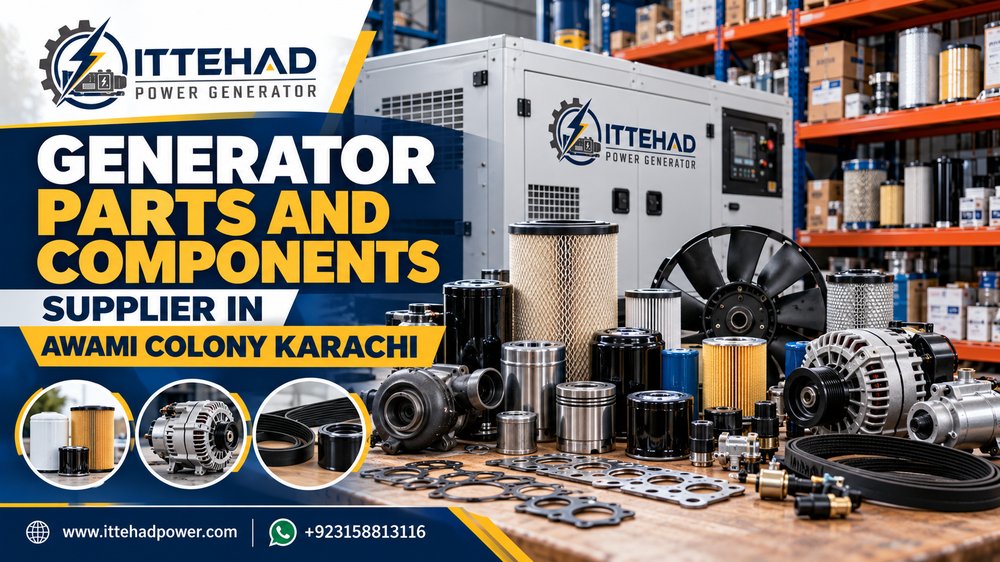
Choosing a reliable generator parts and components supplier in Awami Colony Karachi is important for commercial and industrial generator users who need suitable replacement parts, correct component identification, and dependable sourcing. Generator components should be selected according to equipment specifications rather than appearance alone, because incorrect or incompatible parts can affect performance, reliability, and future maintenance. Proper identification, condition assessment, compatibility checking, and replacement planning help ensure that the required generator part is sourced accurately and installed with greater confidence.
Why Generator Parts and Components Selection Matters
A generator contains many mechanical, electrical, cooling, fuel, starting, and control components that work together during operation. Wear in even a relatively small component can affect starting, power generation, temperature control, fuel delivery, or overall operating stability.
When replacement becomes necessary, selecting the correct component is essential. Using a part that does not match the generator model or operating requirements can create repeated faults, premature wear, installation difficulties, or unnecessary downtime.
Generator Parts and Components Supplier in Awami Colony Karachi for Accurate Sourcing
A professional generator parts and components supplier in Awami Colony Karachi should focus on accurate part identification before recommending a replacement. Generator users may know that a component has failed but may not always have the exact part number, specification, or compatibility information available.
Reviewing generator details, existing component markings, model information, and technical specifications can help narrow down the correct replacement and reduce the risk of ordering an unsuitable item.
Common Generator Parts and Components
Generator systems use a wide range of serviceable and replaceable components. The parts required depend on the generator design, condition, operating hours, and identified fault.
- Oil filters
- Fuel filters
- Air filters
- Belts
- Cooling fan components
- Hoses
- Battery-related components
- Starting system components
- Fuel system components
- Cooling system components
- Electrical connections and components
- Control system components
- Sensors and switches
- Gaskets and seals
- Maintenance consumables
Not every generator uses identical components, so the exact requirement should always be confirmed before purchase or replacement.
Correct Generator Part Identification
Part identification is one of the most important stages of generator component sourcing. Similar-looking components can have different dimensions, ratings, connections, or operating specifications.
Accurate identification may require the generator model, component number, serial reference, physical specifications, photographs, or details from the existing part. Providing complete information can make sourcing faster and more accurate.
Information Useful for Part Identification
- Generator make and model
- Generator serial or identification details where available
- Existing part number
- Component markings or labels
- Clear photographs of the existing part
- Dimensions where relevant
- Electrical rating where applicable
- Description of the component function
- Details of the fault or wear condition
Generator Parts Compatibility
Compatibility should be checked before replacing any generator component. A part may physically fit while still being unsuitable for the generator’s operating requirements.
Electrical rating, dimensions, mounting arrangement, connections, operating temperature, material, capacity, and application can all affect compatibility. For this reason, generator users should avoid selecting replacement parts solely on the basis of visual similarity.
Signs That a Generator Component May Need Replacement
Generator parts naturally experience wear during operation. Early identification of deteriorating components can help users plan replacement instead of waiting for complete failure.
- Visible cracking or deterioration
- Leaks around seals, hoses, or connections
- Unusual noise from mechanical components
- Repeated electrical faults
- Loose or damaged connections
- Reduced generator performance
- Irregular starting behavior
- Abnormal temperature rise
- Damaged belts or moving components
- Recurring component-related faults
- Consumables reaching scheduled replacement intervals
These signs do not always confirm that replacement is required. Inspection should determine whether the component needs adjustment, cleaning, repair, or replacement.
Benefits of Reliable Generator Parts Sourcing
Reliable sourcing helps commercial and industrial generator users maintain better control over replacement work and reduce uncertainty when components are required.
- Correct compatibility: Suitable parts reduce the risk of incorrect fitment or operating mismatch.
- Better maintenance planning: Required components can be identified before scheduled service work begins.
- Reduced unnecessary replacement: Proper assessment helps determine whether a part actually requires replacement.
- Improved operating confidence: Suitable components support dependable generator operation.
- Clearer repair decisions: Accurate identification helps technicians plan corrective work efficiently.
- Better maintenance records: Replacement details can be documented for future servicing.
What Commercial and Industrial Generator Users Need
Commercial and industrial generator users generally need parts sourcing that is accurate, practical, and responsive. Delays caused by incorrect components can extend generator downtime and interrupt planned maintenance work.
Users benefit from suppliers who ask for sufficient generator information before confirming a component. This approach helps reduce assumptions and provides greater confidence that the supplied part matches the intended application.
Planning Generator Parts Replacement
Not every generator component should be replaced only after complete failure. Some parts can be inspected and planned for replacement according to condition, operating hours, service intervals, or visible wear.
Replacement planning allows generator users to identify likely requirements during routine maintenance and arrange suitable components before they become urgently needed.
Parts That Require Regular Attention
Filters, belts, hoses, seals, and other maintenance-related components should be reviewed periodically. Their condition can change gradually due to heat, vibration, operating hours, environmental conditions, and normal wear.
Components Replaced After Diagnosis
Sensors, switches, control components, starting components, cooling parts, and other functional items should generally be replaced after proper diagnosis confirms that the component is defective or no longer operating within the required condition.
How to Select a Generator Parts Supplier
Generator users should evaluate more than availability when selecting a supplier. The ability to identify and source a suitable component is often more valuable than simply providing a part quickly.
- Provide the generator make and model.
- Share the existing component number where available.
- Confirm technical specifications before purchase.
- Ask whether the part matches the intended generator application.
- Compare the replacement component with the existing part.
- Confirm dimensions, connections, and ratings where relevant.
- Keep replacement details for future maintenance records.
Why the Cheapest Generator Part Is Not Always the Right Choice
Price is an important consideration, but it should not be the only factor used when selecting generator components. A low-cost part that does not match the required specifications may result in repeated replacement, poor fitment, or additional maintenance work.
The better approach is to consider compatibility, condition, suitability, expected service requirement, and sourcing reliability together with price.
Inspect Existing Components Before Ordering Replacements
Whenever possible, the existing generator component should be inspected before a replacement is ordered. This can provide important information about the reason for failure and help confirm whether another issue contributed to the damage.
For example, replacing a damaged belt without checking alignment or tension may result in the new belt wearing prematurely. Similarly, replacing an electrical component without checking connections may leave the underlying issue unresolved.
Importance of Technical Details When Sourcing Generator Components
Accurate technical information reduces guesswork. Depending on the component, details such as voltage, current rating, dimensions, thread size, connector type, belt length, filter reference, sensor specification, or mounting arrangement may be important.
Generator users should preserve labels and part numbers whenever possible because these references can simplify future sourcing.
Local Generator Parts Requirements in Awami Colony Karachi
Commercial and industrial generator users in Awami Colony Karachi may require replacement components for planned maintenance, routine servicing, or corrective repair. Local sourcing can be particularly useful when a generator requires timely attention and delays in obtaining the correct part could extend downtime.
A supplier familiar with generator parts requirements can help users identify suitable components based on the information available and support more organized replacement planning.
Advantages of Local Generator Parts Sourcing
Working with a generator parts supplier serving Awami Colony Karachi can make communication and component identification more practical, particularly when users need to share existing part details or confirm availability before maintenance work.
- Easier communication about generator specifications
- Faster sharing of part numbers and photographs
- Practical support for identifying replacement requirements
- Improved planning for scheduled maintenance
- Reduced risk of unnecessary ordering delays
- Better coordination between sourcing and replacement work
Trust Points When Choosing Generator Parts and Components
Reliable generator component sourcing should be based on accurate information and transparent recommendations. Customers should know what component is being supplied and why it is considered suitable for their generator.
- Part identification based on generator details
- Compatibility checking before supply
- Clear component specifications where applicable
- Practical guidance on replacement requirements
- No unnecessary component replacement
- Attention to existing part numbers and markings
- Clear communication regarding available options
- Support for commercial and industrial generator requirements
Avoiding Common Generator Parts Sourcing Mistakes
Incorrect sourcing often occurs when insufficient information is provided or when replacement decisions are made too quickly.
- Ordering a part based only on appearance
- Ignoring generator model information
- Using incomplete or incorrect part numbers
- Failing to confirm electrical ratings
- Ignoring dimensions or mounting differences
- Replacing a component without diagnosing the fault
- Discarding the old component before recording its details
- Choosing solely on price without checking suitability
Guidance Before Purchasing Generator Parts
Before requesting a generator component, collect as much information as possible about the generator and the existing part. Clear photographs, readable labels, model information, and a description of the problem can significantly improve identification accuracy.
If there is uncertainty about whether the component itself has failed, arrange an inspection first. Correct diagnosis can prevent unnecessary purchases and help ensure that the replacement addresses the actual generator problem.
Keep Records of Generator Component Replacements
Every important replacement should be added to the generator maintenance history. Record the date, operating hours where available, component replaced, part reference, reason for replacement, and any related maintenance observations.
This information can help future technicians understand previous repairs and identify whether the same component has required repeated attention.
Reliable Generator Parts and Components in Awami Colony Karachi
Choosing the right generator parts and components supplier in Awami Colony Karachi should involve more than finding a component that looks similar to the original. Proper identification, specification checking, compatibility confirmation, wear assessment, and replacement planning all contribute to more dependable generator maintenance.
If your commercial or industrial generator requires replacement parts, consumables, or components, provide the generator details and existing part information for accurate identification. Arrange dependable generator parts sourcing in Awami Colony Karachi to help obtain suitable components, plan replacements efficiently, and maintain greater confidence in generator operation.