
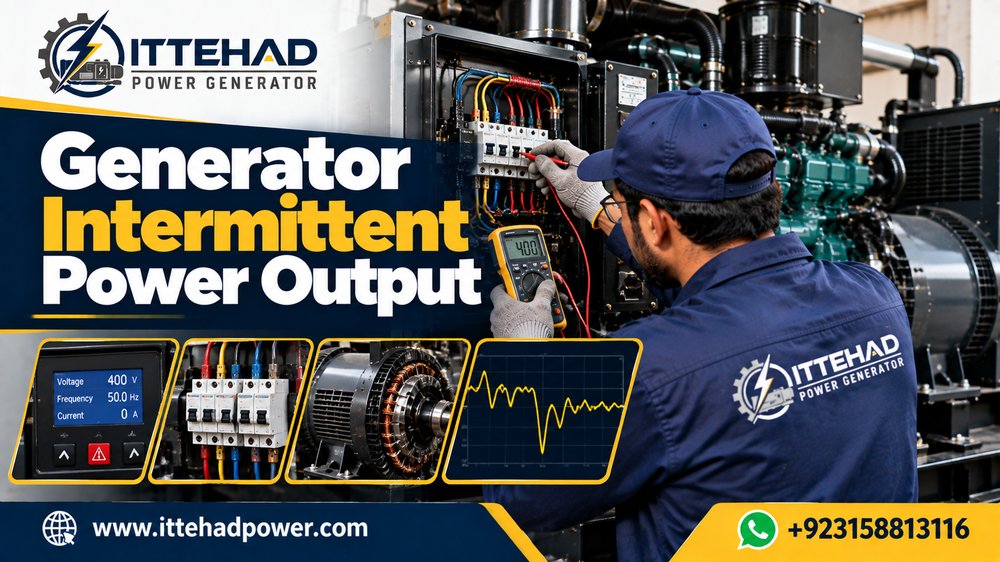
Generator intermittent power output can appear as power cutting in and out, unstable voltage, repeated breaker interruptions, fluctuating electrical performance, or output that disappears even though the engine continues running. Because several electrical and control components work together to produce and deliver generator power, proper diagnosis should consider connections, breakers, alternator behavior, control signals, load changes, wiring condition, and operating symptoms before any component is replaced. A systematic inspection can help restore dependable output while reducing unnecessary repairs and avoidable downtime.
Why Intermittent Generator Output Needs Attention
Electrical output that repeatedly appears and disappears should not be treated as normal generator behavior. Even if power returns after a short interruption, the underlying condition may remain and can become more frequent over time.
Intermittent output can affect reliability because the generator may appear ready during inspection but fail when electrical power is actually required. Early troubleshooting helps identify loose connections, protective devices, control problems, alternator-related issues, or changing loads before the condition becomes a complete loss of output.
Generator Intermittent Power Output and Systematic Diagnosis
Effective generator intermittent power output diagnosis starts by identifying exactly when electrical supply becomes unstable. The generator should be observed during startup, no-load operation, load application, and any period when the output disappears or returns.
The engine, alternator, breaker, wiring, control system, and connected load can all influence the final electrical output. Diagnosis should therefore follow the complete power path instead of focusing on only one component.
Common Symptoms of Intermittent Generator Power
Intermittent output can appear in several different ways. Accurate description of the symptom helps narrow the inspection.
- Generator produces power and then loses it
- Electrical output returns without restarting the engine
- Power fluctuates when load changes
- Breaker repeatedly trips or opens
- Voltage becomes unstable
- Output disappears while the engine continues running
- Power is available only after repeated starting
- Connected equipment operates intermittently
- Control panel shows changing electrical readings
- Output becomes unstable after the generator warms up
These symptoms should be considered together rather than used individually to identify a specific failed part.
Loose or Damaged Electrical Connections
Loose electrical connections are an important consideration when generator output is intermittent. Vibration, heat, corrosion, ageing, or previous repair work can affect terminals and connectors over time.
A poor connection may carry power normally at one moment and then become unstable as temperature, vibration, or load changes.
Inspection may include:
- Output terminals
- Breaker connections
- Control wiring
- Alternator connections
- Grounding connections
- Visible cable joints
- Connectors and terminals
- Signs of overheating or burning
Electrical connections should be inspected safely with the generator properly isolated where required.
Generator Breaker Problems
The generator circuit breaker is part of the electrical output path and protective system. A breaker that is damaged, loose, overheated, incorrectly operating, or responding to a genuine electrical condition can interrupt power.
Breaker-related symptoms may include:
- Power disappearing suddenly
- Breaker moving to a tripped position
- Repeated interruption under load
- Unusual heat around the breaker
- Burn marks or damaged terminals
- Intermittent output when the breaker or connections are disturbed
The reason for breaker operation should be identified before resetting it repeatedly. A breaker may be reacting to another problem rather than being the original fault.
Alternator Behavior and Unstable Output
The alternator is responsible for generating electrical power. If alternator-related components, internal connections, excitation, or associated controls become unstable, output may fluctuate or disappear.
Possible symptoms can include unstable voltage, output loss after warming, intermittent electrical generation, or changes that occur when load is applied.
Alternator diagnosis should consider the complete system rather than assuming the alternator itself requires replacement.
Voltage Regulation and Output Stability
Stable generator output depends on proper voltage regulation. If the regulation system receives incorrect signals or cannot maintain the required output, voltage may rise, fall, or become intermittent.
Relevant checks may include:
- Voltage readings during operation
- Behavior before and after load changes
- Control wiring
- Voltage-sensing connections
- Loose terminals
- Related control components
Voltage adjustments should not be made randomly because an incorrect setting can create additional electrical problems.
Control Signals and Generator Output
Generator control systems monitor operating conditions and may influence whether electrical output remains available. A damaged sensor connection, unstable control signal, wiring fault, or protective command can interrupt output even when the engine continues operating.
Useful control checks can include:
- Fault or warning indications
- Control panel readings
- Output enable signals
- Sensor connections
- Control wiring
- Relay operation
- Intermittent connector problems
Fault history should be reviewed before alarms are repeatedly cleared.
Load Changes and Intermittent Generator Output
Electrical load can provide important diagnostic clues. A generator that produces stable power with little load but loses output when additional equipment is connected may have a different issue from one that loses output randomly at no load.
Observe whether output changes when:
- Large loads start
- Several loads operate together
- Total demand increases
- Load is suddenly removed
- Generator operating temperature rises
- Connected equipment cycles on and off
These observations can help determine whether the problem is associated with load demand, protection, electrical connections, alternator performance, or control response.
Generator Overload and Protective Operation
If connected electrical demand exceeds suitable generator capacity, protective devices may interrupt output. Repeated overload conditions can appear similar to an intermittent generator fault.
Load assessment should consider:
- Total connected load
- Equipment operating at the same time
- Starting demand
- Changes in load during operation
- Generator capacity
- Repeated overload indications
Correcting an overloaded system requires addressing the electrical demand rather than repeatedly resetting protection.
Engine Speed and Electrical Output
Generator electrical performance can be affected when engine speed becomes unstable. If the engine repeatedly slows, accelerates, or struggles under changing load, electrical output may also become unstable.
Engine behavior should therefore be observed during output problems. Rough running, speed fluctuations, hesitation, or unusual response under load may indicate that the electrical symptom is connected to an engine operating problem.
Intermittent Wiring Faults
Wiring problems can be difficult to identify because a damaged connection may work correctly during one test and fail during another. Heat, vibration, movement, damaged insulation, corrosion, and loose terminals can all contribute to intermittent electrical behavior.
Warning signs may include:
- Discolored wiring
- Loose terminals
- Damaged insulation
- Burn marks
- Corroded connectors
- Intermittent control panel readings
- Output changing with vibration
Electrical wiring should be inspected and tested rather than temporarily moved until the generator begins working again.
Why Temperature Can Affect Intermittent Faults
Some electrical problems appear only after the generator has been operating for a period of time. Components and connections can behave differently as temperature rises.
A generator that produces normal output when cold but develops instability later should be observed through a complete operating cycle. Recording when the fault appears can provide useful information for diagnosis.
A Practical Generator Intermittent Output Diagnosis Process
A structured process helps identify the cause without unnecessary parts replacement.
- Confirm the symptom: Determine whether output disappears completely, fluctuates, or becomes unstable only under certain conditions.
- Check control indications: Record warning messages, voltage readings, and other relevant information before resetting anything.
- Inspect visible connections: Look for loose, damaged, corroded, or overheated terminals and wiring.
- Check the breaker: Determine whether it is tripping, opening, overheating, or remaining closed while output disappears.
- Observe engine operation: Check whether engine speed remains stable when electrical output changes.
- Monitor output: Observe voltage behavior during no-load and controlled load conditions.
- Check load changes: Determine whether the problem begins when specific electrical demand is applied.
- Inspect control and sensing circuits: Check relevant signals, connectors, and wiring where required.
- Investigate alternator-related causes: Carry out suitable testing if external connections and controls appear normal.
- Repair and retest: Correct the confirmed fault and verify stable operation through repeated testing.
Why Diagnosis Should Come Before Parts Replacement
Intermittent generator faults can be difficult because the problem may disappear during inspection. Replacing components based on assumptions can increase repair costs without correcting the original condition.
A diagnosis-first approach helps distinguish between a loose terminal, breaker issue, load problem, control fault, wiring defect, alternator-related condition, or another cause of unstable output.
Benefits of Correct Intermittent Output Diagnosis
Accurate troubleshooting can improve both generator reliability and repair efficiency.
- Helps identify the actual cause of power interruptions
- Reduces unnecessary component replacement
- Supports stable generator output
- Helps prevent recurring power loss
- Improves repair planning
- Supports safer electrical operation
- Reduces avoidable downtime
- Provides clearer information for future maintenance
What Customers Need From Generator Output Troubleshooting
When generator power becomes unreliable, customers need more than a temporary restoration of output. They need to know why the problem occurred, whether continued operation is appropriate, and what corrective work can prevent the issue from returning.
A useful troubleshooting service should provide:
- Clear symptom assessment
- Electrical connection inspection
- Breaker checks
- Alternator and output assessment where required
- Control signal inspection
- Load-related diagnosis
- Explanation of confirmed findings
- Safe testing after repair
How to Select a Generator Electrical Troubleshooting Service
Intermittent electrical problems require careful testing because the fault may not remain present continuously. A suitable repair service should investigate the complete output path rather than replacing the first suspected component.
Useful selection points include:
- Diagnosis before component replacement
- Ability to inspect electrical connections and breakers
- Understanding of alternator and control behavior
- Testing under appropriate operating conditions
- Clear explanation of findings
- Safe electrical working practices
- Verification after repair
Operating Conditions and Local Relevance
The environment in which a generator operates can influence intermittent electrical faults. Heat, dust, vibration, moisture, long operating periods, and repeated load changes can affect terminals, wiring, breakers, connectors, and control components.
Generators operating in demanding conditions may require more frequent inspection of electrical connections and ventilation. Maintenance should reflect the generator’s actual environment and operating pattern rather than relying only on a fixed schedule.
Trust Points in Intermittent Generator Repair
A dependable repair process should clearly separate confirmed findings from assumptions. Customers should understand which part of the electrical system was inspected, what caused the interruption, and why corrective work is recommended.
Important trust points include:
- Fault reproduced where practical
- Electrical readings checked rather than guessed
- Connections inspected before major replacement
- Breaker operation investigated properly
- Load conditions considered
- Control signals checked where relevant
- No unnecessary parts replacement
- Output stability verified after repair
Why Temporary Power Restoration Is Not Enough
An intermittent generator may begin producing power again after a restart, breaker reset, connection movement, or control reset. This can make the problem appear solved even though the cause remains.
If output has already failed once without a clear explanation, the generator should be inspected before relying on it for dependable power. Recurring intermittent faults often become more difficult to manage when they are repeatedly reset instead of diagnosed.
Information That Helps With Diagnosis
Recording the circumstances around each interruption can help technicians identify patterns.
Useful information includes:
- Whether the engine stopped or kept running
- Control panel readings when power disappeared
- Breaker position
- Connected load at the time
- How long the generator had been operating
- Whether output returned automatically
- Whether restarting restored power
- Any recent electrical work
- Unusual sounds, smells, or heat
These observations can make intermittent faults easier to reproduce and diagnose.
Guidance When Generator Output Becomes Intermittent
If generator power repeatedly cuts in and out, avoid repeatedly resetting breakers or electrical protection without understanding why they are operating. Watch the generator control panel and record any warnings or unusual readings.
Stop operation and arrange inspection if there are signs of electrical burning, overheated cables, damaged insulation, smoke, severe voltage instability, or repeated protective trips.
Do not bypass breakers, protective controls, or safety devices in an attempt to maintain output.
Preventing Future Generator Output Problems
Some intermittent output problems can be reduced through consistent inspection and maintenance.
Useful preventive measures include:
- Inspect electrical connections periodically
- Keep terminals clean and secure
- Investigate breaker trips promptly
- Monitor generator load
- Record recurring output fluctuations
- Check visible wiring for heat or vibration damage
- Keep control system connections in good condition
- Address unstable engine operation early
- Test generator performance during routine maintenance
When Professional Diagnosis Is Recommended
Professional generator troubleshooting is recommended when electrical output repeatedly disappears, voltage becomes unstable, breakers continue to trip, power is lost while the engine remains running, or the problem occurs only under load or after extended operation.
Intermittent faults can involve dangerous electrical conditions and may require appropriate testing equipment. Proper diagnosis is generally more effective than repeated resetting or trial-and-error replacement.
Corrective Action After the Fault Is Identified
Corrective work should match the confirmed cause. Depending on the diagnosis, the solution may involve repairing a connection, replacing damaged wiring, correcting a breaker issue, addressing a control signal, repairing an alternator-related problem, adjusting the connected load, or replacing a confirmed faulty component.
After repair, the generator should be tested under suitable operating conditions to confirm that output remains stable and the original interruption does not return.
Restore Reliable Generator Power Output
Proper diagnosis of generator intermittent power output requires careful inspection of connections, breakers, alternator behavior, control signals, wiring, engine speed, and changing electrical loads. Because intermittent faults may disappear temporarily, the most effective approach is to record the symptoms, reproduce the condition where practical, test the relevant systems, and confirm the cause before repair.
If your generator is repeatedly losing power, producing unstable voltage, tripping breakers, or stopping electrical output while the engine continues to run, arrange professional troubleshooting before depending on the generator for critical operation. Accurate diagnosis and targeted corrective action can help restore stable output, improve reliability, and reduce avoidable downtime.