
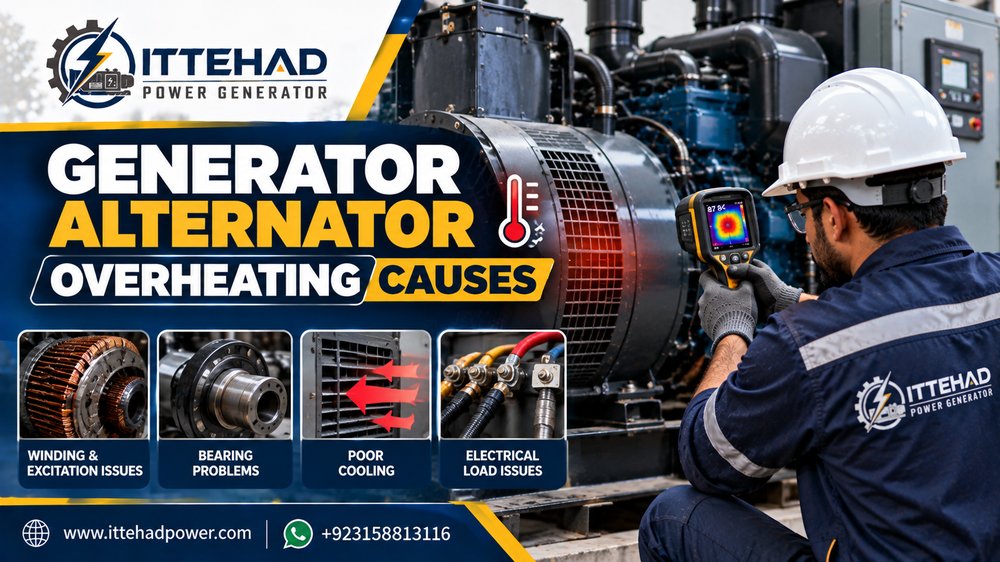
Understanding generator alternator overheating causes is important for commercial and industrial generator users who depend on stable electrical output and reliable equipment performance. Alternator temperature can rise because of excessive electrical load, poor ventilation, winding problems, excitation faults, bearing issues, loose electrical connections, contamination, or other operating conditions. If excessive heat is ignored, insulation, bearings, terminals, windings, and related electrical components may deteriorate faster. Careful inspection of output condition, temperature behavior, airflow, excitation, bearings, and electrical connections can help identify the actual cause before a minor issue becomes a more serious alternator problem.
Why Generator Alternator Overheating Causes Need Attention
The alternator converts mechanical energy from the engine into electrical power. During this process, some heat is normal, but the alternator should remain within a suitable operating temperature range.
When temperature rises beyond normal conditions, the alternator may experience additional electrical and mechanical stress. Repeated overheating can affect insulation, connections, bearings, windings, and voltage stability, making early diagnosis important.
Common Generator Alternator Overheating Causes
Several conditions can contribute to excessive alternator temperature. Some are related to electrical demand, while others involve ventilation, internal components, or mechanical condition.
- Generator operating above suitable electrical load
- Restricted ventilation or cooling airflow
- Dust and contamination around cooling passages
- Loose or overheated electrical connections
- Winding faults
- Excitation-system problems
- AVR-related issues
- Bearing wear or excessive friction
- Incorrect voltage or frequency conditions
- Unbalanced electrical loading
- Long operating periods under demanding conditions
- High surrounding temperature
Excessive Electrical Load
One of the most common causes of alternator overheating is excessive electrical demand. When the generator supplies more current than intended, alternator windings and electrical connections can produce additional heat.
If the generator frequently operates close to or beyond its rated capacity, temperature should be monitored carefully. Continuous overloading can reduce alternator reliability and increase the risk of insulation deterioration.
Signs of Possible Overloading
- Alternator temperature rising under load
- Voltage dropping as demand increases
- Frequency becoming unstable
- Breaker trips
- Generator engine working unusually hard
- Electrical connections becoming excessively hot
- Overload warnings on the control panel
Unbalanced Electrical Load
Where applicable, uneven loading between phases can cause some parts of the alternator to carry more current than others. This imbalance can result in unequal heating and additional stress on windings and connections.
Electrical load should be distributed appropriately according to the generator configuration. If one phase consistently carries significantly more load, the cause should be reviewed before overheating develops.
Restricted Alternator Ventilation
The alternator requires airflow to remove heat generated during operation. Dust buildup, blocked ventilation openings, poor equipment positioning, or restricted air movement can reduce cooling efficiency.
Even when electrical load remains within acceptable limits, inadequate ventilation can allow internal temperature to rise gradually during extended operation.
Ventilation Inspection Points
- Cooling openings
- Air intake areas
- Internal and external dust buildup
- Nearby obstructions
- Generator enclosure ventilation
- Air movement around the alternator
- Cooling fan condition where applicable
Dust and Contamination Around the Alternator
Dust and contamination can restrict airflow and collect on electrical components. In demanding operating environments, buildup may reduce heat dissipation and contribute to higher alternator temperatures.
Cleaning should be performed using suitable methods that do not damage windings, insulation, bearings, or electrical connections.
Alternator Winding Problems
Alternator windings generate electrical output and can overheat if abnormal current, insulation deterioration, partial short circuits, or other winding faults develop.
Winding problems may not always be visible externally. Resistance testing, insulation testing, output measurements, and other electrical checks may be required to determine whether the winding condition is contributing to excessive heat.
Possible Winding-Related Warning Signs
- Persistent alternator overheating
- Burning or overheated insulation smell
- Discolored winding areas
- Unstable electrical output
- Abnormal current readings
- Repeated electrical faults
- Insulation test results outside acceptable condition
Excitation System Problems
The excitation system creates and controls the magnetic field required for electrical generation. If excitation becomes abnormal, alternator operating conditions can change and additional heat may be produced.
Excitation faults can involve the AVR, exciter components, sensing circuits, rotating rectifiers, wiring, or related components depending on the alternator design.
AVR Condition and Alternator Temperature
The automatic voltage regulator controls excitation to maintain generator output voltage. An AVR fault or incorrect sensing condition may cause abnormal field current and contribute to alternator heating.
An overheating alternator should not automatically lead to AVR replacement. Voltage, excitation, sensing circuits, winding condition, and electrical load should all be checked before identifying the regulator as the cause.
Loose Electrical Connections
Loose terminals increase electrical resistance. Resistance generates heat, which can become significant when the alternator is carrying a substantial load.
Loose connections may be found at output terminals, breaker connections, cable lugs, terminal blocks, sensing connections, or other electrical points.
Signs of an Overheated Connection
- Darkened terminals
- Melted or damaged insulation
- Burn marks
- Loose cable lugs
- Discolored connectors
- Localized heat near one terminal
- Electrical smell
These conditions should be corrected promptly because connection heating can damage both the conductor and the connected alternator components.
Bearing Wear and Mechanical Friction
Alternator bearings support rotating components and allow smooth operation. Worn, damaged, poorly lubricated, or misaligned bearings can create excessive friction and heat.
Bearing problems may also produce unusual noise or vibration. Mechanical heat can sometimes be mistaken for electrical overheating, so the location and pattern of temperature rise should be considered carefully.
Bearing Warning Signs
- Grinding or rumbling noise
- Increasing vibration
- Excessive heat near the bearing area
- Rough rotation
- Abnormal movement
- Repeated bearing-related maintenance
Alternator Cooling Fan Problems
Some alternator designs use an internal or external fan to move cooling air. Damaged fan blades, loose components, restricted airflow, or reduced fan performance can increase internal temperature.
Cooling fan condition should be included in the inspection whenever overheating develops without an obvious electrical cause.
High Ambient Temperature
Alternator cooling performance is affected by surrounding air temperature. When ambient temperature is already high, the alternator has less ability to release internally generated heat.
Commercial and industrial generators operating in hot conditions may therefore require closer monitoring of load, ventilation, airflow, and temperature during extended operation.
Long Generator Operating Periods
Alternator temperature normally increases after startup and stabilizes as operating conditions become steady. If temperature continues rising throughout a long operating period, cooling performance or electrical loading should be reviewed.
A problem that does not appear during a short test may become visible after the generator has been operating under load for an extended period.
Voltage and Frequency Problems
Abnormal voltage or frequency can indicate operating conditions that may also affect alternator temperature. Low engine speed, unstable excitation, incorrect AVR operation, excessive load, or other faults can influence electrical output.
Voltage and frequency readings should therefore be reviewed together with alternator temperature rather than treating heat as an isolated symptom.
Low Power Factor and Electrical Demand
Some electrical loads can cause the alternator to carry higher current for the amount of usable power being delivered. Increased current can create additional winding and connection heat.
Where alternator temperature is high despite apparently acceptable power demand, electrical characteristics of the connected load may require further assessment.
Why Alternator Temperature Should Be Monitored Under Load
Alternator temperature measured while the generator is lightly loaded may not reveal a developing problem. Electrical current and internal heating increase as load rises.
Where appropriate, temperature should be observed during realistic operating conditions to determine whether the alternator remains stable throughout the required load range.
Step-by-Step Alternator Overheating Inspection
A structured inspection helps separate electrical, cooling, and mechanical causes.
- Confirm the generator is operating within its rated load.
- Check whether electrical loading is balanced where applicable.
- Review voltage and frequency readings.
- Inspect alternator ventilation openings.
- Check for dust or airflow restriction.
- Inspect output terminals and electrical connections.
- Look for signs of localized overheating.
- Check alternator cooling fan condition where applicable.
- Listen for bearing noise and observe vibration.
- Review AVR and excitation-system operation.
- Test windings where internal electrical faults are suspected.
- Monitor temperature during controlled operation after corrective work.
Benefits of Early Alternator Overheating Diagnosis
Identifying the cause of excessive temperature before serious damage occurs can provide several practical advantages.
- Reduced insulation damage risk: Excessive heat can be corrected before winding insulation deteriorates further.
- Improved electrical reliability: Loose connections and output abnormalities can be addressed early.
- Better bearing protection: Mechanical heat and friction can be detected before bearing failure.
- Reduced downtime: Planned corrective work can prevent sudden alternator failure.
- Better maintenance decisions: Components can be tested before unnecessary replacement.
- Improved operating confidence: Temperature can be verified after repairs under realistic load.
What Commercial and Industrial Generator Users Need
Commercial and industrial generator users need alternators that can supply required electrical loads without excessive heating or unstable output. They also need clear diagnosis when temperature increases unexpectedly.
A professional assessment should explain whether the problem is related to electrical loading, ventilation, windings, excitation, bearings, connections, or another operating condition.
How to Select the Right Alternator Inspection Service
Alternator overheating should be assessed by technicians who can evaluate both electrical and mechanical systems. Simply checking the alternator surface temperature may not identify the actual problem.
- Provide details of when overheating occurs.
- Explain the approximate operating load.
- Report any voltage or frequency changes.
- Mention unusual noise, vibration, or electrical smell.
- Ask for electrical connections to be inspected.
- Confirm that ventilation and airflow will be checked.
- Ask whether bearings, excitation, and windings can be evaluated if required.
- Request temperature testing after corrective work.
Avoid Replacing Alternator Parts Without Diagnosis
Alternator overheating can result from many different conditions. Replacing the AVR will not solve a ventilation restriction, and replacing bearings will not correct an electrical overload.
A proper diagnostic process should identify the actual source of heat before major parts are replaced.
Temperature Differences Can Provide Useful Clues
The location of excessive heat can help guide diagnosis. A single very hot terminal may indicate a poor electrical connection, while heat concentrated around a bearing may indicate mechanical friction.
More general alternator heating may be associated with load, winding condition, excitation, airflow, or ambient temperature. These observations should be supported by electrical and mechanical testing.
Importance of Electrical Current Measurements
Current measurements can help determine how heavily the alternator is working and whether one section is carrying excessive demand.
Where applicable, comparing phase currents can reveal load imbalance. Current should always be interpreted together with generator rating, voltage, frequency, and operating conditions.
Insulation Condition and Excessive Heat
Winding insulation is designed to withstand operating temperature within specified limits. Repeated overheating can accelerate insulation deterioration and eventually contribute to electrical failure.
If there is evidence of severe or repeated alternator overheating, insulation testing may be appropriate as part of a detailed electrical assessment.
Connection Tightness and Maintenance
Electrical terminals should remain secure because vibration and repeated heating cycles can affect connection condition over time.
Connection inspection should form part of scheduled generator maintenance, particularly where the unit regularly carries substantial electrical loads.
Local Operating Conditions and Alternator Temperature
Alternator temperature can be affected by the actual environment in which the generator operates. High ambient heat, dust, restricted ventilation, long operating periods, and demanding loads can reduce cooling effectiveness.
Commercial and industrial generator users should therefore base inspection frequency on actual operating conditions rather than relying only on general maintenance intervals.
Dusty Operating Environments
Dust can accumulate around ventilation openings and internal cooling paths, reducing airflow and trapping heat. Dust may also settle on electrical components and interfere with effective heat dissipation.
Generators operating in dusty conditions may require more frequent alternator inspection and cleaning.
Restricted Generator Room Ventilation
A generator installed in a poorly ventilated area may draw in air that is already excessively warm. Hot exhaust air or engine heat may also remain around the alternator instead of leaving the area effectively.
Improving overall airflow around the generator can be just as important as checking the alternator’s own cooling path.
Trust Points for Alternator Overheating Diagnosis
Reliable troubleshooting should use measured operating conditions and clear inspection findings.
- Generator load reviewed before diagnosis
- Voltage and frequency checked
- Electrical current assessed where required
- Ventilation and cooling airflow inspected
- Output terminals checked for heating
- Bearing noise and vibration evaluated
- Excitation and AVR condition assessed where appropriate
- Winding tests performed when internal faults are suspected
- No unnecessary parts replacement
- Temperature verified after corrective work
Common Alternator Overheating Maintenance Mistakes
Incorrect assumptions can result in repeated overheating and unnecessary repair costs.
- Ignoring high alternator temperature because electrical output is still available
- Operating continuously above suitable generator load
- Ignoring blocked ventilation openings
- Failing to clean dust from cooling areas
- Continuing operation with loose electrical terminals
- Replacing the AVR without testing excitation and load conditions
- Ignoring bearing noise or vibration
- Failing to check current imbalance
- Returning the generator to service without temperature testing
Preventive Maintenance for Generator Alternators
Routine inspection can help identify conditions that contribute to overheating before temperature becomes excessive.
- Keep alternator ventilation openings clear
- Inspect electrical connections regularly
- Monitor generator load
- Check voltage and frequency
- Watch for unusual alternator noise
- Monitor vibration
- Inspect cooling fan condition where applicable
- Keep the generator environment reasonably clean
- Record alternator temperature concerns
- Investigate repeated electrical warnings promptly
Monitor the Generator After Corrective Work
After repairing an alternator overheating problem, the generator should be operated and monitored under appropriate conditions. Temperature, voltage, frequency, current, noise, and vibration should be reviewed to confirm that the original problem has been corrected.
Testing under a controlled load is useful because some overheating conditions may not appear while the generator is running without demand.
Keep Alternator Maintenance Records
Alternator-related faults should be recorded in the generator maintenance history. Include the operating load, symptoms, temperature observations, electrical measurements, components inspected, repairs completed, and final test results.
Good records can help identify recurring overheating and provide technicians with useful information during future inspections.
Guidance When Alternator Temperature Becomes Excessive
If alternator temperature rises unusually high, avoid repeatedly operating the generator under the same demanding conditions without inspection. Review the load and any warning indications, and arrange professional testing before the issue becomes more severe.
Electrical components can remain energized and hot during generator operation. Detailed inspection, terminal work, winding testing, and excitation checks should be performed by qualified personnel using appropriate safety procedures.
Protect Generator Alternator Reliability
Understanding generator alternator overheating causes helps commercial and industrial users identify problems involving excessive load, poor ventilation, winding condition, excitation, bearings, electrical connections, and other operating factors. Early diagnosis can reduce unnecessary heat stress and support more stable generator output.
If your generator alternator is running unusually hot, producing unstable output, showing overheated terminals, developing bearing noise, or becoming hotter as electrical load increases, arrange a professional alternator inspection. Accurate diagnosis, suitable corrective action, and controlled post-repair testing can help restore reliable electrical performance and improve generator operating confidence.