
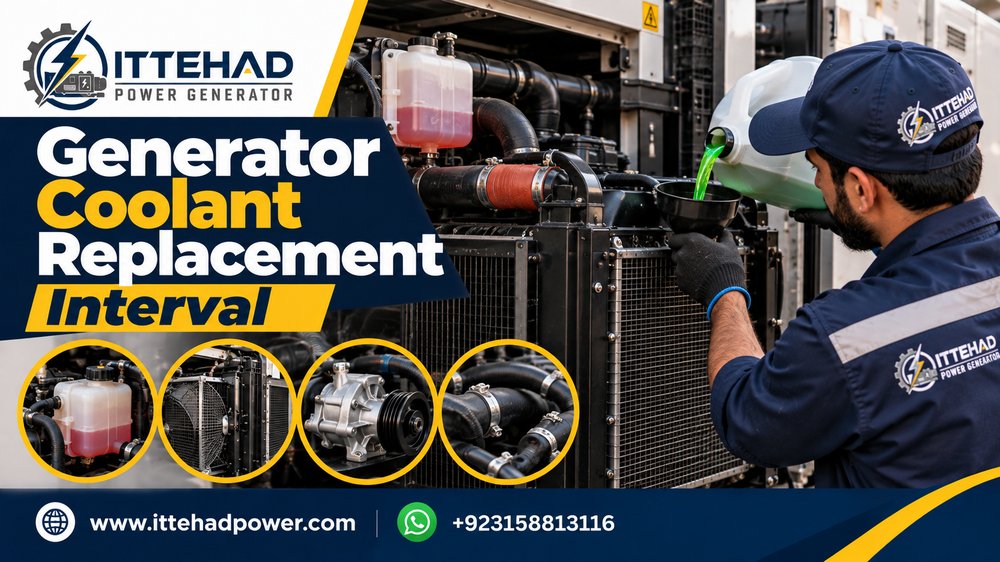
Understanding the correct generator coolant replacement interval helps maintain stable engine temperature, proper coolant flow, effective radiator performance, and reliable protection against overheating. Coolant does more than transfer heat; its condition also affects hoses, water pump performance, internal cooling passages, temperature control, and overall cooling-system reliability. The correct replacement timing depends on generator requirements, coolant type, operating hours, service history, contamination, and actual cooling-system condition rather than one universal schedule for every generator.
Why Generator Coolant Replacement Interval Matters
Coolant gradually loses effectiveness as it ages and operates through repeated heating and cooling cycles. If it remains in service for too long, its ability to transfer heat and protect the cooling system may decline.
Replacing coolant at an appropriate interval helps support stable engine temperature and reduces the risk of contamination, corrosion, restricted coolant flow, and overheating-related problems.
There Is No Single Coolant Interval for Every Generator
Generator designs, coolant specifications, operating conditions, and maintenance requirements can differ significantly. This means a fixed replacement interval should not be applied to every generator without checking the relevant service requirements.
The generator manufacturer’s maintenance guidance, coolant type, operating hours, coolant condition, and previous service history should all be considered when deciding when replacement is due.
Operating Hours and Coolant Replacement
Operating hours are an important factor because coolant experiences continuous heat exposure while the generator is running. A heavily used generator may require coolant attention sooner than a unit with limited operating hours.
Service planning should consider both elapsed time and actual generator use rather than relying on calendar age alone.
Coolant Age and Time-Based Maintenance
Even a generator that operates infrequently can require coolant replacement over time. Coolant remains exposed to system materials, temperature changes, and environmental conditions while the generator is not running.
For this reason, low operating hours do not automatically mean the coolant can remain in service indefinitely.
Coolant Type Affects Replacement Planning
Different coolant formulations can have different service requirements. The replacement interval should therefore be based on the coolant actually used in the generator rather than assuming all products have the same service life.
Mixing unsuitable coolant types can also affect condition and performance, so any coolant change should consider compatibility with the existing system.
Why Coolant Condition Should Be Inspected
Replacement planning should include visual and technical inspection where appropriate. Coolant condition can provide useful evidence about whether the system requires servicing earlier than expected.
- Check for discoloration
- Look for contamination
- Inspect for oil or unusual residue
- Check for particles or deposits
- Observe repeated coolant loss
- Review overheating history
- Check previous replacement records
Coolant Flow and Temperature Control
Coolant must circulate freely through the engine and radiator to control temperature effectively. Old, contaminated, or restricted coolant can reduce heat transfer and make the cooling system less efficient.
If temperature becomes unstable or the generator begins running hotter than normal, coolant condition should be reviewed together with radiator, water pump, thermostat, hoses, and airflow.
Radiator Performance and Coolant Condition
The radiator depends on proper coolant circulation to transfer heat away from the engine. Even a clean radiator cannot work efficiently if coolant flow is restricted or the fluid has deteriorated significantly.
When coolant is replaced, radiator condition should also be inspected so external dirt, internal restriction, or leakage is not overlooked.
Water Pump Condition
The water pump circulates coolant throughout the cooling system. Pump condition should be considered whenever coolant service is performed, especially if the generator has experienced overheating or coolant leakage.
Replacing coolant alone will not correct a weak, leaking, or mechanically damaged water pump.
Thermostat and Temperature Regulation
The thermostat helps control coolant flow according to engine temperature. If it does not operate correctly, the generator may overheat or experience unstable temperature even with fresh coolant.
When temperature problems continue after coolant replacement, thermostat operation should be included in further diagnosis.
Cooling Hoses and Coolant Replacement
Coolant hoses should be inspected during cooling-system service because aging hoses can leak, collapse, swell, or deteriorate internally.
- Look for cracks
- Check for swelling
- Inspect hose ends
- Review clamps and fittings
- Check for coolant staining
- Inspect for soft or hardened areas
Coolant replacement is a useful opportunity to identify hoses that may require attention before they fail.
Repeated Coolant Loss Should Be Investigated
If coolant level drops regularly, replacement intervals are not the main issue. The cause of the coolant loss should be identified first.
Possible causes can include leaking hoses, loose fittings, radiator leakage, pump leakage, damaged components, or another cooling-system problem.
Contaminated Coolant
Coolant that contains dirt, rust-colored deposits, oil contamination, or other unusual material may require replacement regardless of the normal maintenance schedule.
Contamination should also be investigated to determine why it developed so fresh coolant is not added to a system with an unresolved problem.
Why Coolant Should Not Simply Be Topped Up Forever
Adding coolant can restore system level, but it does not renew the entire fluid condition. Repeated topping up without full replacement may leave aged coolant and contamination circulating through the system.
If the coolant has reached its service limit or condition is poor, proper replacement is more appropriate than continued topping up alone.
Generator Coolant Replacement Process
A structured coolant service helps reduce air pockets, contamination, and incorrect filling.
- Allow the generator to cool safely.
- Inspect the cooling system for visible leaks.
- Review coolant condition.
- Drain old coolant using the appropriate procedure.
- Inspect accessible hoses, clamps, and fittings.
- Check radiator condition.
- Review water pump and thermostat condition where required.
- Use a compatible replacement coolant.
- Refill the cooling system correctly.
- Remove trapped air where required.
- Check coolant level again after circulation.
- Start the generator and monitor temperature.
- Inspect for leakage.
- Recheck the level after the system has cooled where appropriate.
Why Correct Coolant Filling Matters
Improper filling can leave air trapped in the cooling system. Air pockets can interfere with coolant circulation and temperature control.
The system should be filled according to the generator’s cooling arrangement, with suitable bleeding or circulation procedures where required.
Air Trapped After Coolant Replacement
If temperature rises unexpectedly after coolant service, trapped air may be one possible cause. Air can prevent coolant from circulating properly through certain areas of the system.
The cooling system should be checked and bled correctly rather than assuming a new mechanical fault has developed.
Coolant Concentration and Compatibility
Replacement coolant should be suitable for the generator and mixed or prepared correctly where required. An unsuitable concentration can affect heat transfer and system protection.
Existing coolant type should also be considered before adding or changing products to avoid compatibility problems.
Signs Coolant May Need Earlier Replacement
Some conditions justify coolant service before the expected maintenance interval.
- Coolant appears contaminated
- Temperature control becomes unstable
- Repeated overheating occurs
- Cooling-system repairs have been completed
- Coolant type or history is unknown
- Deposits are visible
- Coolant has mixed with another fluid
- Major cooling components have been replaced
Cooling System Repairs and Coolant Replacement
Coolant replacement may be necessary after radiator, hose, thermostat, or water pump work because the system has been opened and fluid removed.
Fresh coolant should only be added after the repair has been completed and the system is ready for correct filling and testing.
Overheating and Coolant Condition
A generator that has overheated severely should have its coolant condition reviewed. High temperature can affect fluid quality and may expose other cooling-system weaknesses.
Replacing coolant alone should not be used as a substitute for diagnosing the cause of overheating.
Benefits of Timely Coolant Replacement
Replacing coolant at the correct interval can support overall cooling-system performance and reduce avoidable temperature-related problems.
- Supports efficient heat transfer
- Helps maintain stable engine temperature
- Supports coolant circulation
- Reduces contamination buildup
- Helps protect cooling components
- Supports radiator performance
- Improves preventive maintenance planning
- Reduces the risk of coolant-related overheating
What Customers Need to Know About Coolant Service
Generator owners usually need to know whether coolant replacement is actually due, whether the existing fluid is still suitable, and whether the cooling system has any related problems that should be repaired at the same time.
A professional service should consider coolant condition, service history, operating hours, cooling-system performance, and visible component condition before recommending replacement.
How to Select a Generator Coolant Service
Coolant replacement should involve more than draining and refilling the system. The service should also include inspection and post-service temperature checks.
Choose Coolant Compatibility Checking
The service provider should confirm that the replacement coolant is suitable for the generator.
Ask for Cooling System Inspection
Hoses, radiator, pump, fittings, and visible leakage should be reviewed during the service.
Confirm Proper Filling and Bleeding
The system should be filled correctly so trapped air does not create circulation or temperature problems.
Ask for Post-Service Testing
The generator should be operated after coolant replacement to verify stable temperature and check for leakage.
Selection Tips for Better Coolant Maintenance
A reliable coolant service provider should be able to explain why replacement is due and what condition the cooling system is in.
- Ask what coolant specification is required
- Confirm existing coolant condition will be checked
- Ask whether hoses and radiator will be inspected
- Confirm leaks will be investigated
- Ask whether temperature will be checked after service
- Keep a record of the replacement date and operating hours
Site-Specific Relevance of Coolant Replacement
Generator operating environment can influence coolant service needs. High ambient temperature, heavy load, dusty conditions, long operating hours, restricted ventilation, and repeated overheating can place greater demand on the cooling system.
On-site inspection can help determine whether the coolant is aging normally or whether installation and operating conditions are contributing to faster deterioration.
Why Cooling Airflow Still Matters After Coolant Replacement
Fresh coolant cannot compensate for blocked radiator airflow, poor ventilation, or hot air recirculation. Cooling performance depends on both coolant circulation and the ability to release heat to the surrounding air.
If overheating continues after coolant replacement, airflow and radiator condition should be investigated.
Trust Points in Professional Coolant Replacement
Reliable coolant service should be based on generator requirements and actual cooling-system condition rather than a generic drain-and-fill approach.
- Coolant specification is verified
- Existing coolant condition is inspected
- Leaks are checked before replacement
- Hoses and radiator are reviewed
- Correct filling procedures are used
- Air is removed where required
- Temperature is monitored after service
- Replacement details are recorded
Common Generator Coolant Maintenance Mistakes
Incorrect coolant service can create new cooling problems or allow existing faults to continue.
- Using coolant without checking compatibility
- Mixing unsuitable coolant types
- Replacing coolant without finding a leak
- Ignoring damaged hoses
- Failing to inspect radiator condition
- Leaving air trapped in the system
- Assuming fresh coolant will fix a failed pump
- Skipping temperature testing after service
Guidance for Tracking Coolant Replacement
Keep a maintenance record showing when coolant was replaced, what type was used, generator operating hours, and whether any cooling-system repairs were completed at the same time.
This information makes future replacement planning more accurate and helps avoid relying on memory or uncertain service history.
When Coolant History Is Unknown
If there is no reliable record showing when the coolant was last replaced, the fluid and cooling system should be inspected rather than assuming it is still within an acceptable interval.
Unknown coolant type, visible contamination, repeated overheating, or uncertain maintenance history may justify a more complete service assessment.
Why Preventive Coolant Service Is Better Than Waiting for Overheating
Waiting until the generator overheats can allow coolant deterioration or cooling-system wear to progress further than necessary.
Planned coolant maintenance provides an opportunity to inspect the radiator, hoses, pump, thermostat, fittings, and overall cooling performance before an unexpected shutdown occurs.
When Coolant Replacement Needs Prompt Attention
Prompt service is recommended when coolant is heavily contaminated, the generator repeatedly overheats, cooling-system repairs have introduced contamination, the fluid type is unsuitable, or coolant condition has clearly deteriorated.
Repeated coolant loss should also be investigated immediately because fresh coolant will not solve an active leak.
Maintaining Reliable Cooling After Coolant Replacement
After coolant service, continue monitoring fluid level, generator temperature, radiator airflow, hoses, and visible leakage. Any unexpected change should be investigated early.
Coolant replacement works best as part of complete cooling-system maintenance rather than as an isolated task.
Plan the Correct Generator Coolant Replacement Interval
The right generator coolant replacement interval should be based on generator requirements, coolant type, operating hours, service history, actual fluid condition, and cooling-system performance. A fixed schedule without considering these factors can result in coolant being replaced unnecessarily or left in service too long.
Arrange a professional coolant and cooling-system inspection if the replacement history is unclear, the generator is overheating, coolant condition has deteriorated, or routine service is due. Correct coolant selection, proper replacement procedures, inspection of related components, and post-service temperature testing can help maintain effective cooling and more reliable generator operation.