
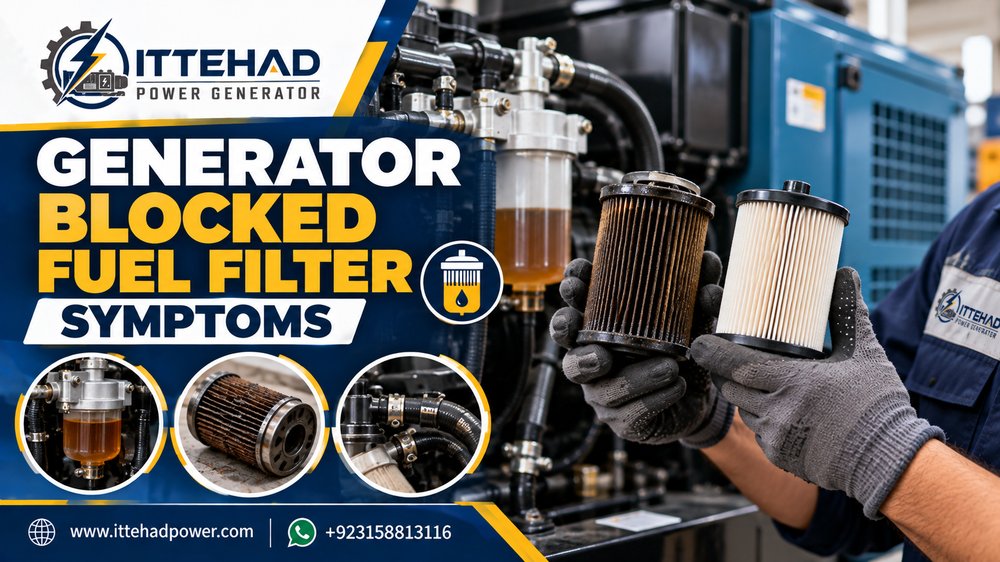
Recognizing generator blocked fuel filter symptoms early can help prevent difficult starting, unstable engine operation, reduced power, unexpected shutdowns, and avoidable fuel-system problems. The fuel filter protects the generator engine by trapping dirt, rust, water-related contamination, and other particles before fuel reaches sensitive components. As the filter becomes restricted, fuel flow can gradually decrease, making it harder for the engine to receive the quantity of diesel required for starting and operation. Timely inspection and correct filter replacement can help restore reliable fuel delivery and improve generator operating confidence.
Why Generator Blocked Fuel Filter Symptoms Matter
A diesel generator depends on a steady and clean fuel supply. When the fuel filter becomes partially or completely blocked, the engine may receive insufficient fuel even though the tank contains an adequate quantity.
The problem can initially appear as minor starting difficulty or reduced performance, but restriction may worsen over time. Identifying the symptoms before fuel flow becomes severely limited can reduce the risk of unexpected generator interruption.
Common Generator Blocked Fuel Filter Symptoms
A restricted fuel filter can produce several operating symptoms depending on the severity of the blockage and the generator’s fuel demand.
- Longer cranking before the generator starts
- Difficulty starting after standing for a period
- Engine starts and then stops
- Loss of power under electrical load
- Unstable or rough engine operation
- Generator speed dropping under demand
- Intermittent hesitation
- Unexpected shutdown during operation
- Reduced fuel delivery to the engine
- Repeated need for fuel-system attention
- Visible contamination in the removed filter
These symptoms can also be caused by other fuel-system faults, so proper diagnosis is important before replacing components.
Starting Difficulty Caused by Fuel Restriction
One of the most noticeable signs of a restricted fuel filter is difficult starting. The engine may crank normally but take longer than usual to begin running because fuel cannot reach the injection system at the required rate.
If starting performance has changed gradually, the fuel filter should be considered as part of the inspection, especially when its replacement history is unknown or overdue.
Generator Starts but Stops Shortly Afterwards
A partially blocked filter may allow enough fuel through for initial starting but fail to maintain adequate flow once the engine continues running. The generator may start successfully, operate briefly, and then lose speed or stop.
This pattern can indicate that fuel demand is exceeding the restricted flow available through the filter. Fuel lines, fuel supply, air entry, and other related components should also be checked before confirming the cause.
Power Loss Under Electrical Load
A generator may appear to operate normally without significant load but struggle when electrical demand increases. As the engine works harder, it requires more fuel. A restricted filter may not allow enough fuel to pass through to meet that increased demand.
The result can be reduced engine speed, unstable operation, poor response, or loss of available generator power. Symptoms that become more noticeable under load are an important diagnostic clue.
Rough or Uneven Generator Operation
Restricted fuel delivery can cause the engine to run unevenly because fuel supply is no longer consistent. Operators may notice changes in engine sound, hesitation, fluctuating speed, or rough running.
These symptoms should not automatically be blamed on the fuel filter because air in the fuel system, contaminated diesel, injector problems, or other fuel-supply faults can produce similar behavior.
Unexpected Generator Shutdown
A heavily blocked fuel filter can restrict fuel flow enough to cause the generator to shut down during operation. In some cases, the generator may restart after standing briefly and then stop again when fuel demand increases.
Repeated shutdowns should be investigated promptly. Continuing to restart the generator without identifying the cause can result in unreliable operation when power is needed.
How Fuel Filters Become Blocked
Fuel filters are designed to collect contaminants before they reach sensitive engine components. Over time, trapped material increases resistance to fuel flow.
Common Causes of Fuel Filter Restriction
- Dirt entering the fuel system
- Rust or particles from fuel storage components
- Contaminated diesel fuel
- Water-related contamination
- Sediment accumulating over time
- Long intervals between filter replacements
- Dirty fuel tanks or fuel lines
- Use of fuel from an unreliable or contaminated source
Replacing the filter may restore fuel flow, but recurring blockage can indicate that contamination elsewhere in the fuel system also needs attention.
Fuel Contamination and Filter Condition
A blocked fuel filter often provides information about fuel quality. If a removed filter contains excessive dirt, rust, water-related material, or unusual deposits, the source of contamination should be investigated.
Installing a new filter without addressing contaminated fuel may result in the replacement becoming restricted again sooner than expected.
Water in the Fuel System
Water contamination can affect fuel quality and contribute to fuel-system problems. Where the generator uses a filter or separator designed to collect water, this component should be checked as part of routine maintenance.
Repeated water accumulation may indicate a broader storage or fuel-handling issue that requires attention rather than simply draining or replacing the filter repeatedly.
Reduced Fuel Flow to the Engine
A blocked filter creates resistance between the fuel supply and the engine. As restriction increases, the fuel system may struggle to maintain the required flow rate.
This can be especially noticeable during starting, acceleration to operating speed, or higher electrical load when fuel demand is greater. Proper fuel-flow diagnosis can help confirm whether the filter is contributing to the problem.
Filter Replacement Indicators
Fuel filters should not always be left in service until obvious generator problems appear. Replacement may be appropriate according to operating hours, maintenance intervals, fuel condition, or inspection findings.
- Scheduled service interval has been reached
- Filter replacement history is unknown
- Starting has become noticeably more difficult
- Fuel restriction is confirmed
- Visible contamination is present
- Generator loses power under load
- Fuel-related shutdowns are occurring
- The filter has been exposed to contaminated fuel
Why Correct Diagnosis Is Important
Starting difficulty and power loss do not always mean the fuel filter is blocked. Similar symptoms can result from low fuel level, air in the fuel system, damaged fuel lines, weak fuel supply, contaminated diesel, injection problems, or other engine-related faults.
A proper inspection helps confirm whether filter restriction is the actual cause before replacement or additional repair work begins.
Step-by-Step Fuel Filter Troubleshooting
- Confirm that sufficient fuel is available in the generator fuel supply.
- Review recent starting and operating symptoms.
- Check the fuel filter replacement history.
- Inspect accessible fuel lines and connections for leaks or damage.
- Look for signs of contamination or water in the fuel system.
- Assess whether symptoms become worse when electrical load increases.
- Inspect or test fuel flow where appropriate.
- Remove and examine the filter when replacement is required.
- Check for contamination that may indicate a wider fuel-system problem.
- Install the correct replacement filter.
- Prime or bleed the fuel system correctly where required.
- Start and test the generator to confirm stable operation.
Correct Fuel Filter Selection
Replacement filters should match the generator engine and fuel-system requirements. Similar-looking filters can differ in filtration specification, dimensions, sealing arrangement, thread size, flow capability, and application.
Using the correct filter helps maintain suitable fuel flow while providing the filtration required by the generator’s fuel system.
Information Useful When Selecting a Replacement Filter
- Generator make and model
- Engine model
- Existing filter part number
- Filter dimensions where relevant
- Connection or mounting type
- Previous maintenance records
Avoid Choosing a Filter by Appearance Alone
Two filters may look nearly identical while having different internal specifications. Installing an unsuitable filter can result in incorrect fitment, leakage, inadequate filtration, or restricted fuel delivery.
The replacement should therefore be selected using reliable part references and generator or engine specifications rather than visual similarity alone.
Benefits of Timely Fuel Filter Replacement
Replacing a restricted filter at the appropriate time can support more stable generator performance and improve fuel-system reliability.
- Improved starting: Adequate fuel flow supports more consistent engine starting.
- Better performance under load: The engine can receive the fuel required as demand increases.
- Reduced unexpected shutdown risk: Severe fuel starvation becomes less likely.
- Cleaner fuel delivery: A serviceable filter continues protecting downstream components.
- Better maintenance planning: Replacement can be completed before the filter becomes severely restricted.
- Greater operating confidence: Stable fuel supply supports dependable generator operation.
What Commercial and Industrial Generator Users Need
Commercial and industrial generator users need reliable starting and stable operation, particularly when the generator must carry an important electrical load. Fuel-system maintenance should therefore focus on both filtration and the condition of the fuel being supplied.
Users benefit from clear maintenance records showing when filters were replaced, what contamination was found, and whether additional fuel-system work was recommended.
Choosing the Right Fuel-System Service
A suitable generator maintenance provider should diagnose fuel restriction rather than automatically replacing multiple fuel-system components.
- Explain the symptoms and when they occur.
- Provide recent maintenance history if available.
- Ask for the fuel filter and fuel supply to be inspected.
- Confirm whether contamination will be checked.
- Ensure the correct replacement filter is identified.
- Ask whether the system will be tested after replacement.
- Request guidance if repeated filter blockage is found.
What to Check After Fuel Filter Replacement
Installing a new filter should be followed by proper fuel-system preparation and operational testing. Air introduced during replacement may need to be removed according to the generator’s fuel-system design.
The generator should then be started and observed for starting quality, stable speed, leaks, smooth operation, and performance under an appropriate load.
Air in the Fuel System After Filter Replacement
If the generator becomes difficult to start immediately after fuel-filter service, air may have entered the fuel system. Correct priming or bleeding may be required depending on the generator design.
Repeated cranking without following the appropriate fuel-system procedure may not resolve the issue and can place unnecessary demand on the starting system.
Repeated Fuel Filter Blockage
A filter that becomes restricted again shortly after replacement may indicate an unresolved contamination source. Fuel tank condition, stored fuel quality, fuel lines, and other upstream components should be examined.
Repeatedly installing new filters without addressing contaminated fuel can increase maintenance costs without providing a lasting solution.
Operating Conditions and Fuel Filter Service Life
Fuel-filter service life can vary according to generator usage, fuel cleanliness, storage conditions, operating hours, and maintenance practices. A generator receiving consistently clean fuel may experience different filter conditions from one exposed to contaminated storage or irregular fuel handling.
Maintenance frequency should therefore consider actual operating conditions as well as general service intervals.
Local Operating Relevance for Generator Fuel Systems
Fuel quality, storage conditions, temperature, dust exposure, and generator usage can vary between operating sites. These factors can influence how quickly contamination enters the fuel system and how often filters require inspection.
Commercial and industrial generator users should base maintenance decisions on actual site conditions, operating history, and filter condition rather than relying only on a fixed replacement schedule.
Preventing Generator Fuel Filter Problems
Good fuel-system maintenance can reduce the likelihood of premature filter restriction and help maintain cleaner fuel delivery.
- Use clean fuel from a dependable source
- Keep fuel storage areas clean
- Inspect stored fuel for contamination where appropriate
- Check fuel filters during scheduled maintenance
- Replace filters at suitable service intervals
- Monitor water separators where fitted
- Investigate repeated fuel contamination
- Maintain clean fuel-filling practices
- Record filter replacement dates and operating hours
Common Fuel Filter Maintenance Mistakes
Fuel-system reliability can be reduced when filter maintenance is delayed or when replacement is performed without investigating the cause of blockage.
- Waiting for complete fuel starvation before replacing the filter
- Ignoring difficult starting
- Continuing operation despite repeated power loss
- Installing an incorrect filter
- Failing to inspect contaminated fuel
- Ignoring water in the fuel system
- Replacing filters repeatedly without checking the fuel tank
- Failing to remove air correctly after filter replacement
- Not testing the generator under operating conditions afterward
Trust Points for Generator Fuel-System Maintenance
Professional fuel-system maintenance should provide clear findings and practical recommendations rather than relying on unnecessary parts replacement.
- Inspection of fuel supply and filter condition
- Correct filter identification
- Assessment of contamination where present
- Fuel-line and connection checks
- Clear explanation of the identified restriction
- Proper filter replacement procedure
- Leak inspection after servicing
- Operational testing after maintenance
- Guidance when repeated blockage is identified
Guidance When a Generator Shows Fuel Restriction Symptoms
If a generator becomes difficult to start, loses power under load, runs unevenly, or shuts down unexpectedly, review the fuel-filter condition as part of the diagnostic process. Avoid assuming that repeated starting attempts will correct a restricted fuel supply.
Record when the symptoms occur and whether they become worse as electrical demand increases. This information can help a technician distinguish between filter restriction and other fuel-system faults.
Keep Fuel Filter Replacement Records
Fuel-filter maintenance should be included in the generator’s service history. Record the replacement date, operating hours, filter reference, observed contamination, and any additional fuel-system work completed.
These records help establish whether filters are reaching normal service intervals or becoming restricted unusually quickly.
Restore Reliable Generator Fuel Flow
Understanding generator blocked fuel filter symptoms can help users identify fuel restriction before it causes severe starting problems, power loss, unstable operation, or unexpected shutdown. Difficult starting, reduced performance under load, contamination, and repeated fuel-related interruptions all justify further inspection of the fuel supply and filter condition.
If your generator is showing signs of restricted fuel flow, arrange a professional fuel-system inspection and confirm the filter condition before the problem becomes more severe. Correct diagnosis, suitable filter replacement, contamination checks, and post-service testing can help restore dependable fuel delivery and improve generator operating confidence.