
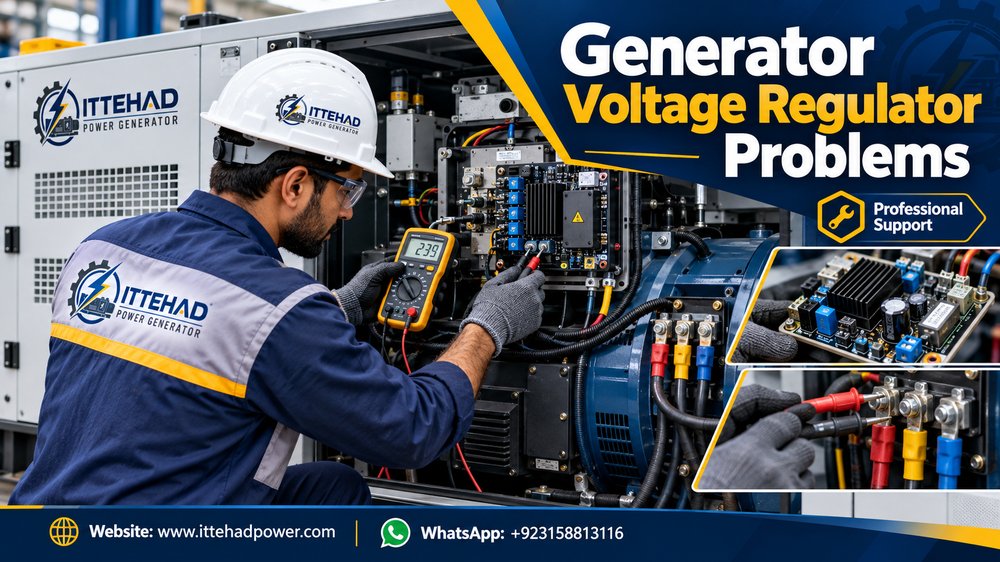
Generator voltage regulator problems can cause unstable voltage, low output, high output, flickering electrical performance, sudden voltage changes, or complete loss of proper voltage control. The automatic voltage regulator, commonly known as the AVR, helps maintain generator output within the required range by controlling excitation according to sensed voltage conditions. When the AVR, sensing circuit, excitation system, wiring, or related connections develop a fault, generator output can become unreliable and should be diagnosed carefully before adjustment or replacement.
Why Generator Voltage Regulator Problems Need Attention
Stable voltage is essential for reliable generator operation. If output voltage rises too high, falls too low, or fluctuates continuously, connected electrical equipment may not receive the consistent supply expected from the generator.
Voltage instability should not automatically be blamed on the AVR. Similar symptoms can also be caused by damaged wiring, poor sensing connections, excitation faults, loose terminals, unstable engine speed, or alternator problems. Accurate diagnosis helps determine where the fault actually begins.
What Does a Generator Voltage Regulator Do?
The voltage regulator monitors generator output and adjusts excitation to help maintain the required voltage level. As load changes, the regulator responds by increasing or reducing excitation so output remains as stable as possible.
If the regulator cannot sense voltage correctly or cannot control excitation properly, generator output may become unstable or move outside the expected range.
Common Signs of Voltage Regulator Problems
AVR and voltage-control faults can appear in several ways depending on the generator configuration and the condition of related electrical components.
- Generator voltage fluctuates repeatedly
- Output voltage remains too low
- Output voltage becomes too high
- Voltage changes significantly when load is applied
- Generator produces no usable voltage
- Voltage is stable without load but unstable under load
- Control-panel voltage readings move unexpectedly
- Electrical output becomes inconsistent
- Voltage returns temporarily after adjustment and then becomes unstable again
Unstable Generator Voltage
Repeated voltage rise and fall is one of the most noticeable symptoms of a voltage-control problem. The cause may involve AVR response, unstable sensing, loose wiring, excitation issues, engine speed variation, or another alternator fault.
The generator should be observed under appropriate operating conditions to determine whether the voltage instability is constant or related to changes in load.
Low Generator Voltage
Low voltage can occur when the excitation system does not provide sufficient magnetic field strength or when the regulator is receiving incorrect sensing information.
Before the AVR is replaced, wiring, terminals, sensing circuits, excitation components, engine speed, and alternator condition should be checked. A regulator cannot maintain correct voltage if another part of the system is not operating properly.
High Generator Voltage
Excessively high output may indicate that excitation is being controlled incorrectly or that the regulator is receiving an inaccurate voltage signal.
High voltage should be investigated promptly because continued operation outside the intended range can affect connected electrical loads and generator components.
AVR Sensing Problems
The voltage regulator depends on accurate sensing information. If the sensing wires or connections are loose, damaged, or incorrectly connected, the AVR may respond to an inaccurate voltage condition.
Loose Sensing Connections
A loose sensing terminal can cause intermittent or unstable voltage control. Generator vibration can make these faults appear and disappear during operation.
Damaged Sensing Wiring
Broken conductors, damaged insulation, or poor connectors can prevent the regulator from receiving a reliable signal.
Incorrect Sensing Input
If the sensing circuit does not represent the actual generator output correctly, the regulator may increase or decrease excitation unnecessarily.
Excitation System Problems
The excitation system provides the magnetic field required for electrical generation. AVR operation and excitation performance are closely connected, so excitation faults may appear to be regulator problems.
If excitation is weak, unstable, or missing, the generator may show low voltage, unstable voltage, or no output. The excitation circuit should therefore be included in voltage-regulator diagnosis.
Generator Wiring and Connection Faults
Loose, overheated, damaged, or corroded electrical connections can affect voltage regulation. Before assuming that the AVR has failed, relevant wiring and terminals should be inspected carefully.
- Check AVR connections
- Inspect sensing wires
- Check excitation wiring
- Look for loose terminals
- Inspect connectors for heat damage
- Check grounding where applicable
- Look for damaged insulation
- Verify accessible connections remain secure
How Engine Speed Affects Generator Voltage
Generator electrical output is influenced by engine speed. If RPM is unstable or outside the required operating range, voltage and frequency can also become unstable.
A voltage problem should therefore be compared with engine speed and frequency readings. Replacing or adjusting the AVR will not correct a problem caused by unstable engine RPM.
Load Changes and Voltage Regulation
The voltage regulator must respond when electrical load changes. A small temporary voltage movement may occur during a sudden load change, but the output should then stabilize.
If voltage drops excessively, rises sharply, or continues fluctuating after the load becomes steady, further inspection of the AVR, excitation system, alternator, connections, and load condition may be required.
AVR Adjustment and Why Random Changes Should Be Avoided
Some voltage regulators include adjustment settings, but these should not be changed simply because output voltage appears incorrect. Random adjustment can create overvoltage, undervoltage, or unstable regulation.
Before adjusting the AVR, technicians should verify engine speed, sensing connections, wiring, excitation behavior, load conditions, and actual voltage readings.
Voltage Regulator Overheating
Excessive heat around the regulator or related electrical connections may indicate poor ventilation, loose terminals, electrical overload, or internal AVR problems.
Discoloration, burnt odor, melted connectors, or damaged components should be investigated before the generator continues operating.
Voltage Regulator and Alternator Relationship
The AVR cannot be diagnosed correctly without considering alternator condition. Winding problems, excitation faults, poor connections, or internal alternator issues can create symptoms similar to voltage-regulator failure.
Proper troubleshooting should therefore evaluate the regulator as part of the complete generator output system.
Generator Voltage Regulator Diagnosis Process
A structured process helps determine whether unstable output is caused by the regulator or another part of the generator electrical system.
- Confirm the voltage problem and operating symptoms.
- Check generator engine speed and frequency.
- Observe voltage with and without suitable electrical load.
- Inspect AVR wiring and terminals.
- Check voltage sensing connections.
- Inspect excitation wiring and related components.
- Look for overheating or damaged connectors.
- Review alternator output condition.
- Check whether the AVR responds correctly to load changes.
- Test the regulator using appropriate electrical procedures.
- Repair or replace only the confirmed faulty component.
- Retest generator voltage after corrective work.
Common Causes of Generator Voltage Regulation Problems
Voltage instability can result from one fault or several conditions affecting the output-control system.
- Failed or deteriorated AVR
- Loose sensing connections
- Damaged sensing wiring
- Excitation circuit problems
- Loose electrical terminals
- Overheated connectors
- Alternator winding issues
- Unstable engine speed
- Incorrect adjustment
- Load-related voltage instability
- Poor electrical connections
- Internal voltage-control faults
Why Replacing the AVR Immediately Can Be a Mistake
AVR replacement may appear to be the quickest solution when voltage is unstable, but a new regulator will not correct damaged sensing wires, unstable engine speed, poor excitation, loose terminals, or alternator faults.
Testing first can prevent unnecessary replacement and reduce the risk of the same problem returning after a new regulator is installed.
Benefits of Professional Voltage Regulator Diagnosis
Professional troubleshooting focuses on identifying the actual cause of unstable output before major electrical components are changed.
- Helps identify the true source of voltage instability
- Reduces unnecessary AVR replacement
- Checks sensing and excitation systems together
- Helps identify loose or overheated connections
- Supports stable generator output
- Improves reliability under load
- Provides safer electrical troubleshooting
- Allows output to be verified after repair
Customer Needs When Generator Voltage Is Unstable
Customers generally need to know whether the voltage regulator has failed or whether another generator component is causing the output problem. They also need clear guidance about whether repair, adjustment, wiring correction, or AVR replacement is appropriate.
A useful service should explain the test findings and connect the recommended corrective work to the actual fault.
How to Select a Generator Voltage Regulator Service
AVR troubleshooting requires electrical testing and an understanding of alternator output, sensing, excitation, and engine speed. Service selection should therefore focus on diagnostic capability rather than parts replacement alone.
Choose Testing Before Replacement
The voltage regulator should be assessed along with its sensing and excitation circuits before replacement is recommended.
Look for Complete Output Diagnosis
A technician should compare voltage, frequency, engine speed, load condition, and alternator behavior rather than evaluating one component in isolation.
Ask for Clear Electrical Findings
The customer should understand whether the problem involves the AVR itself, wiring, sensing, excitation, alternator condition, or generator speed.
Confirm Post-Repair Load Testing
Generator voltage should be checked again under suitable operating conditions after repair to confirm stable output.
Site-Specific Relevance of Voltage Regulation Problems
Generator voltage behavior can be influenced by the actual connected load, installation wiring, electrical connections, operating environment, and engine condition. A problem may only appear after specific equipment is connected or when the generator reaches a particular load level.
On-site diagnosis can therefore help technicians evaluate voltage regulation under the same conditions in which the fault normally occurs.
Trust Points in Professional AVR Troubleshooting
Reliable voltage-regulator repair should be based on measurable electrical findings. Customers should not be advised to replace the AVR simply because the generator has unstable voltage.
- Voltage and frequency are measured first
- Engine speed is considered
- Sensing wiring is inspected
- Excitation condition is reviewed
- Electrical connections are checked for damage
- Alternator condition is considered
- Unnecessary AVR replacement is avoided
- Generator output is retested after repair
Common Mistakes During AVR Troubleshooting
Incorrect troubleshooting can make a voltage-control problem more difficult to diagnose or create additional instability.
- Adjusting the AVR before checking engine speed
- Replacing the regulator without inspecting sensing wires
- Ignoring excitation-system faults
- Overlooking loose or overheated terminals
- Testing only without load when the fault appears under load
- Changing multiple settings at the same time
- Assuming every voltage fluctuation is an AVR failure
- Skipping post-repair voltage testing
Guidance When Generator Voltage Becomes Unstable
If generator voltage begins rising, falling, or fluctuating, note whether the problem occurs immediately after startup, only when load is applied, or continuously during operation. Also compare voltage changes with frequency and engine sound.
Avoid changing AVR adjustments randomly. If voltage becomes significantly abnormal or electrical output is unreliable, professional inspection should be arranged before extended operation.
Preventing Repeat Voltage Regulation Problems
Routine generator inspection can help identify conditions that contribute to AVR and output-control faults before they become severe.
- Keep electrical terminals secure
- Inspect AVR and sensing wiring periodically
- Investigate unstable voltage early
- Maintain stable engine speed
- Keep alternator ventilation clear
- Correct overheated electrical connections promptly
- Monitor voltage behavior under load
- Avoid unnecessary regulator adjustments
When AVR Replacement Is Appropriate
Voltage regulator replacement may be justified when testing confirms that the AVR is no longer controlling excitation correctly and external causes such as wiring, sensing, speed, and alternator faults have been reasonably ruled out.
The replacement regulator should be compatible with the generator’s electrical and excitation requirements. After installation, voltage should be checked and adjusted only using appropriate procedures.
Restoring Stable Generator Output
A successful voltage-regulator repair should result in stable output under suitable operating conditions. Voltage should remain controlled as load changes, without repeated high or low readings, unusual fluctuation, or recurring electrical warnings.
If instability remains after AVR work, further diagnosis of excitation, alternator windings, wiring, engine speed, and load conditions may be necessary.
Get Help with Generator Voltage Regulator Problems
If you are experiencing generator voltage regulator problems, including unstable voltage, high or low output, poor load response, or inconsistent electrical performance, professional diagnosis can help determine whether the fault involves the AVR, sensing circuit, excitation system, wiring, engine speed, or alternator.
Arrange a complete generator voltage-control inspection before making major adjustments or replacing components. Accurate testing, suitable corrective action, and proper post-repair verification can help restore stable electrical output and more reliable generator operation.