
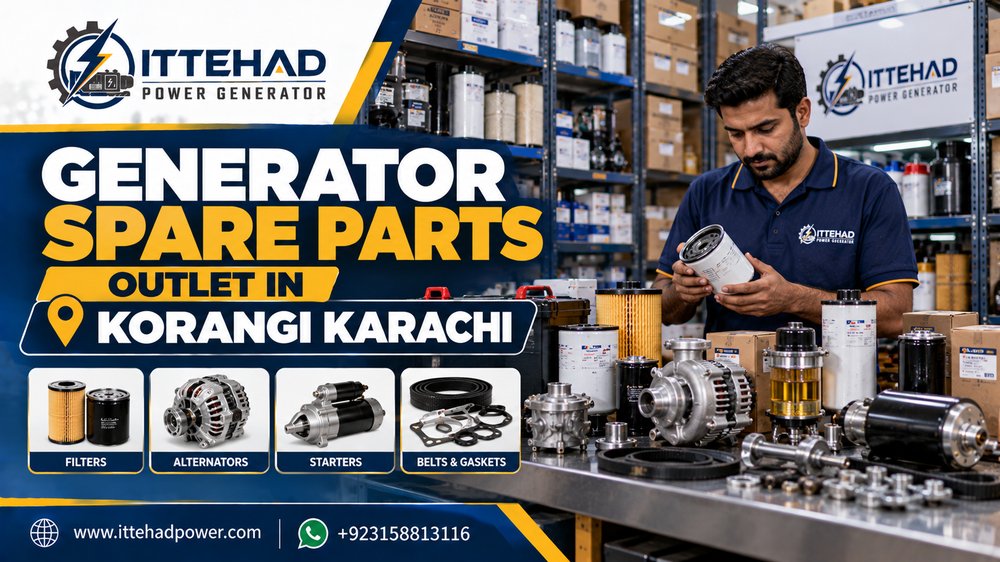
A reliable generator spare parts outlet in Korangi Karachi can help commercial and industrial generator users source suitable replacement components with greater confidence. Correct part identification, compatibility checking, wear assessment, and replacement planning are important because generator components can differ by model, rating, engine configuration, mounting arrangement, and electrical specification. Choosing the right spare part helps reduce installation problems, repeated failures, unnecessary downtime, and avoidable maintenance costs while supporting more dependable generator performance.
Why Generator Spare Parts Selection Matters
A generator relies on mechanical, electrical, fuel, cooling, starting, and control components working together. When one part becomes worn, damaged, or unreliable, the effect can appear as starting difficulty, overheating, unstable output, leakage, unusual noise, or reduced operating performance.
Replacing the affected component with a suitable part is therefore important. A replacement that looks similar but does not match the required specification may create new problems instead of solving the original fault.
Generator Spare Parts Outlet in Korangi Karachi for Reliable Sourcing
A professional generator spare parts outlet in Korangi Karachi should focus on identifying the correct part before confirming supply. Generator users may have an old component, a model number, a part reference, or only a description of the problem, so accurate identification is an important part of the sourcing process.
The better the information available, the easier it is to match the replacement component with the generator’s requirements and reduce the risk of incorrect ordering.
Common Generator Spare Parts
Different generator systems use different service and replacement components. The exact requirement depends on generator design, condition, operating hours, and the fault identified during inspection.
- Oil filters
- Fuel filters
- Air filters
- Belts
- Hoses
- Cooling fan components
- Battery cables and terminals
- Starting-system components
- Fuel-system components
- Cooling-system parts
- Electrical connectors
- Switches and sensors
- Control components
- Gaskets and seals
- Maintenance consumables
Not every generator uses the same version of these components, so compatibility should always be checked before purchase.
Correct Generator Part Identification
Accurate part identification is one of the most important steps in spare-parts sourcing. Two components may have a similar appearance while differing in size, rating, connection type, internal specification, or mounting position.
Before purchasing a replacement, collect as much reliable information as possible from the generator and the existing component.
Useful Identification Details
- Generator make and model
- Engine model where applicable
- Generator serial or identification reference
- Existing part number
- Component markings
- Clear photographs
- Dimensions where relevant
- Electrical rating where applicable
- Connection or mounting type
Why Compatibility Checking Is Essential
Generator spare parts should not be selected only because they fit physically. Electrical rating, dimensions, operating temperature, thread type, connection arrangement, filtration requirement, material, and application can all affect compatibility.
A correct match helps ensure that the replacement performs as intended and does not create unnecessary stress on connected components.
Signs a Generator Part May Need Replacement
Generator components often show signs of deterioration before complete failure. Early inspection can make it easier to plan replacement before the generator becomes unavailable.
- Visible cracking or deterioration
- Fuel, oil, or coolant leakage
- Loose or damaged connections
- Unusual mechanical noise
- Repeated electrical faults
- Reduced generator performance
- Starting difficulty
- Abnormal temperature rise
- Worn belts or hoses
- Damaged seals or gaskets
- Recurring component-related warnings
These signs should be evaluated properly because some components may require adjustment, cleaning, or repair rather than immediate replacement.
Replacement Planning Instead of Emergency Buying
Waiting until a part fails completely can increase generator downtime. Routine maintenance provides an opportunity to identify components that are worn but still operating and arrange replacement before they become urgent.
Replacement planning is particularly useful for filters, belts, hoses, seals, batteries, and other components that can be monitored during scheduled service.
Service Parts Versus Fault-Related Parts
Some generator spare parts are replaced as part of routine servicing, while others should be replaced only after a fault has been confirmed.
Routine Service Parts
- Oil filters
- Fuel filters
- Air filters
- Engine oil
- Coolant where applicable
- Other scheduled maintenance consumables
Fault-Related Components
- Sensors
- Switches
- Starting-system parts
- Fuel-system components
- Cooling-system components
- Electrical components
- Control-system parts
Fault-related components should generally be replaced after diagnosis confirms that the part is actually defective.
Inspect the Existing Part Before Ordering
The removed or existing component can provide useful information about the correct replacement. Part numbers, labels, dimensions, connector type, thread size, and mounting arrangement can all help identify the required item.
Where possible, do not discard an old component until the correct replacement has been verified.
Why Part Numbers Are Useful
Part numbers can significantly reduce guesswork when sourcing generator components. They help distinguish between similar-looking parts and provide a clearer reference for future maintenance.
Generator users should record replacement part numbers in their maintenance history so the same component can be identified more easily next time.
Electrical Generator Parts Require Correct Ratings
Electrical components should match the generator’s required voltage, current, connection, and control specifications. An incorrectly rated component may fit physically while operating incorrectly.
Sensors, switches, relays, control parts, and electrical connectors should therefore be identified carefully before installation.
Fuel-System Spare Parts
Fuel-system components help maintain clean and reliable diesel delivery to the engine. Filters, hoses, seals, fittings, and other related parts should remain suitable for the fuel system and operating conditions.
Leakage, contamination, restriction, or repeated starting problems may indicate that inspection of fuel-system parts is required.
Cooling-System Spare Parts
Cooling-system components support stable engine temperature. Hoses, belts, fan parts, seals, and other cooling components can deteriorate through heat, vibration, and operating hours.
Replacement should be planned when inspection reveals cracking, leakage, poor tension, swelling, damage, or another condition affecting reliable cooling.
Starting-System Spare Parts
A generator that cannot start reliably cannot provide power when required. Battery connections, cables, starter-related components, relays, and associated control parts may need attention when starting performance changes.
Diagnosis should identify whether the problem is actually in the starting system before parts are purchased.
Belts and Hoses
Belts and hoses are common maintenance items because they operate in a hot, vibrating environment. Deterioration may appear gradually through cracking, hardening, swelling, glazing, looseness, or leakage.
Replacing these parts before complete failure can reduce the risk of cooling problems or other interruptions during operation.
Filters and Maintenance Consumables
Filters should be selected according to generator or engine requirements. Similar filter dimensions do not always mean identical filtration performance or compatibility.
Oil, fuel, and air filters should be sourced using reliable reference information and replaced according to service intervals and actual operating conditions.
Benefits of Reliable Generator Spare Parts Sourcing
Correct spare-parts sourcing can improve both repair efficiency and long-term maintenance planning.
- Improved compatibility: Suitable parts reduce fitment and operating problems.
- Reduced downtime: Correct identification prevents delays caused by wrong components.
- Better maintenance planning: Replacement parts can be arranged before scheduled service.
- Reduced unnecessary costs: Diagnosis helps avoid replacing serviceable components.
- Improved operating reliability: Suitable parts support dependable generator performance.
- Better maintenance records: Part references can be stored for future servicing.
What Commercial and Industrial Generator Users Need
Commercial and industrial generator users need spare parts that are properly identified, suitable for the intended application, and available when planned maintenance or repair work is required.
They also need clear guidance when a component cannot be identified easily. A reliable supplier should ask for generator details rather than recommending a part based only on a general description.
How to Select a Generator Spare Parts Outlet
Availability is important, but it should not be the only factor considered when choosing a parts supplier. Identification support, compatibility checking, communication, and sourcing reliability are equally valuable.
- Provide the generator make and model.
- Share the old part number where available.
- Provide photographs of the existing component.
- Confirm dimensions or electrical ratings where relevant.
- Ask whether compatibility has been checked.
- Compare the replacement with the original part before installation.
- Keep the new part reference for future maintenance.
Avoid Choosing Parts Only by Price
The cheapest component may not provide good value if it is incorrect for the generator or requires repeated replacement. Price should be considered together with compatibility, specification, condition, and suitability.
A correctly matched part can reduce unnecessary rework and improve confidence in the completed repair.
Avoid Choosing Parts by Appearance Alone
Visual similarity is not enough to confirm that a spare part is correct. Components may differ internally even when their external shape is almost identical.
Part number, size, rating, connection type, material, and application should be verified wherever relevant.
Why Diagnosis Should Come Before Parts Replacement
A generator fault does not always mean the most obvious component has failed. Starting problems, overheating, power loss, unstable voltage, or leakage can each have several possible causes.
Professional diagnosis can reduce unnecessary spare-parts purchases by confirming which component actually requires attention.
Replacement Parts After Generator Inspection
When inspection identifies a failed or worn component, replacement should be based on the generator’s specification and actual operating requirements.
The replacement should then be installed correctly and the generator tested to confirm that the original problem has been resolved.
Post-Replacement Generator Testing
Installing a new part should not be the final step. The generator should be operated where appropriate and checked for leakage, abnormal noise, temperature, stable engine performance, electrical output, or other relevant conditions.
Testing confirms whether the replacement has corrected the fault and whether connected systems are functioning normally.
Local Relevance in Korangi Karachi
Commercial and industrial generator users in Korangi Karachi may require spare parts for scheduled servicing, routine component replacement, or unexpected repair. Access to suitable generator components can make maintenance planning more practical when equipment needs to return to reliable operation quickly.
Local sourcing also makes it easier to share part references, photographs, measurements, and generator details before confirming a replacement.
Operating Conditions and Spare Parts Wear
Generator component life can vary according to operating hours, heat, dust, vibration, load, ventilation, and maintenance quality. Equipment working under demanding conditions may require closer inspection of filters, belts, hoses, seals, and electrical connections.
Replacement planning should therefore consider actual site and operating conditions rather than relying only on component age.
Heat and Component Deterioration
High temperature can accelerate deterioration of hoses, belts, seals, insulation, and other materials. Components located near hot engine or exhaust areas may require closer monitoring.
Heat-related wear should be investigated together with cooling and ventilation conditions where appropriate.
Dust and Generator Spare Parts
Dust can affect air filters, radiator surfaces, electrical components, and moving parts. Generators operating in dusty conditions may require more frequent inspection and replacement of certain service items.
Filter condition should be assessed according to actual contamination rather than waiting for obvious performance loss.
Vibration and Component Wear
Generator vibration can loosen fittings, damage supports, wear hoses, and affect electrical connections. Spare-parts replacement should therefore also consider whether vibration contributed to the original failure.
Replacing the damaged component without correcting poor support or routing may allow the same problem to return.
Keep Spare Parts Records
Every important generator part replacement should be documented. This makes future maintenance faster and helps identify recurring component failures.
Useful Replacement Records
- Replacement date
- Operating hours
- Part name
- Part number
- Reason for replacement
- Related fault
- Installation notes
- Post-replacement test result
Plan Common Spare Parts in Advance
Frequently required maintenance items can often be identified in advance from service history. Planning essential filters, belts, hoses, and other routine items before maintenance can reduce delays.
However, parts should not be purchased in unnecessary quantities without considering actual usage and storage requirements.
Check Spare Parts Before Installation
Before fitting a new component, compare it with the original. Confirm important dimensions, connections, mounting points, ratings, and sealing surfaces.
This simple step can help identify a mismatch before installation work begins.
Common Generator Spare Parts Sourcing Mistakes
- Ordering a part based only on appearance
- Ignoring generator model information
- Using an incomplete part number
- Failing to check electrical ratings
- Ignoring dimensions or mounting differences
- Replacing parts before diagnosing the fault
- Discarding the original component too early
- Choosing only on the basis of lowest price
- Failing to record the replacement part number
- Installing a component without post-replacement testing
Trust Points When Choosing Generator Spare Parts
A reliable spare-parts outlet should focus on correct identification and suitability rather than simply supplying the first available component.
- Part identification based on generator details
- Compatibility checking before supply
- Attention to part numbers and specifications
- Clear communication about available options
- Practical guidance for replacement planning
- No unnecessary parts recommendations
- Support for routine maintenance and repair requirements
- Clear component information where available
Guidance Before Visiting a Generator Spare Parts Outlet
Collect generator and component information before requesting a spare part. Bringing complete details can significantly improve identification accuracy.
- Generator make and model
- Engine model
- Old part number
- Clear photographs
- Component dimensions
- Connector or mounting details
- Electrical ratings where relevant
- Description of the generator fault
If the exact fault has not been confirmed, arrange diagnosis before purchasing major components.
When to Replace a Generator Component
Replacement is appropriate when inspection confirms that the part is worn, damaged, leaking, electrically defective, mechanically unreliable, or no longer suitable for continued operation.
Components that remain serviceable should not be replaced unnecessarily. Maintenance decisions should be based on condition, service history, operating hours, and actual performance.
Reliable Generator Spare Parts Sourcing in Korangi Karachi
A dependable generator spare parts outlet in Korangi Karachi should help commercial and industrial generator users source suitable components through accurate part identification, compatibility checking, condition assessment, and practical replacement planning. The correct approach reduces uncertainty, unnecessary parts purchases, and delays during generator maintenance.
If your generator requires filters, belts, hoses, seals, electrical parts, cooling components, fuel-system parts, starting components, or other replacement items, provide complete generator and existing part details before purchase. Reliable spare-parts sourcing in Korangi Karachi can help support timely maintenance, accurate repairs, and greater confidence in long-term generator performance.