
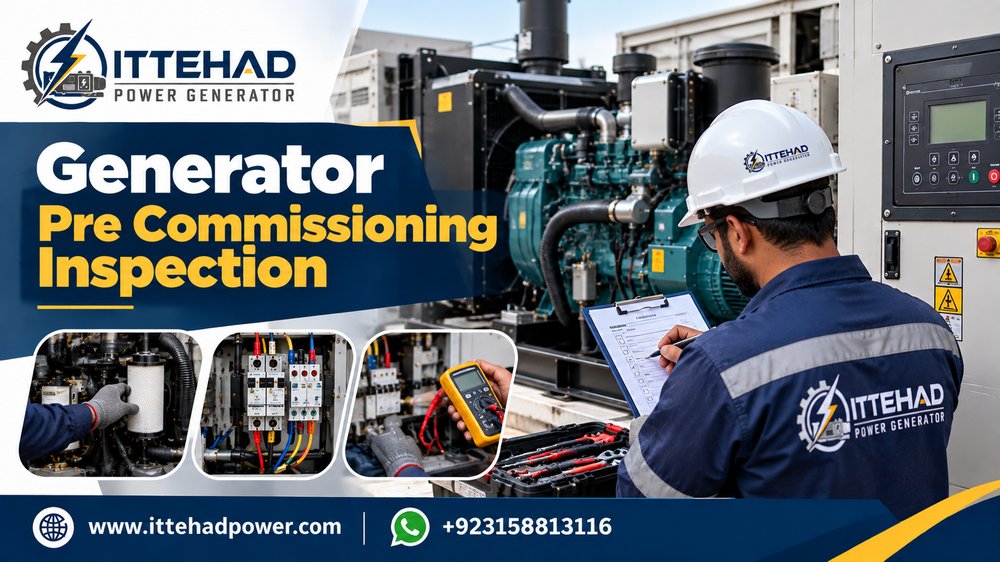
Generator pre commissioning inspection is an important step before a newly installed or prepared generator is placed into regular operation. The inspection confirms that mechanical components, electrical connections, fluid levels, safety systems, controls, and installation conditions are ready for startup. A structured pre commissioning process can identify installation errors or incomplete work before the generator is operated under normal conditions.
Why Generator Pre Commissioning Inspection Is Important
Starting a generator without completing proper checks can expose the equipment to avoidable mechanical, electrical, or operational problems. Pre commissioning inspection provides an opportunity to verify that essential systems are correctly prepared before the first operational test.
The objective is not simply to confirm that the generator can start. The inspection should establish that the equipment is mechanically ready, electrically connected correctly, supplied with required fluids, protected by functional safety systems, and suitable for controlled startup.
What Is Checked Before Generator Commissioning?
A comprehensive inspection covers the main systems that influence generator startup, operation, protection, and reliability. The exact checks can vary according to generator configuration and installation conditions, but the process should remain systematic.
- General generator condition and installation readiness
- Mechanical components and visible connections
- Electrical wiring and terminals
- Engine oil and coolant levels
- Fuel system condition
- Battery and starting system readiness
- Control panel and warning indications
- Safety and shutdown functions
- Ventilation and operating clearance
- Visible leaks, loose parts, or incomplete connections
Mechanical Checks During Pre Commissioning
Mechanical inspection helps confirm that the generator is physically ready for startup. Components should be examined for correct installation, secure connections, visible damage, and conditions that could interfere with safe operation.
Fasteners and Connections
Loose fasteners, brackets, clamps, or mechanical connections can lead to vibration, movement, or damage during operation. Accessible components should be checked for proper security before startup.
Belts and Hoses
Belts and hoses should be visually inspected for correct positioning, obvious damage, loose fittings, or conditions that may affect operation. Any issue should be corrected before commissioning.
Visible Leakage
The generator should be checked for visible oil, coolant, or fuel leakage. Even a minor leak should be investigated before startup because it may indicate an incomplete connection or component problem.
Electrical Inspection Before Generator Startup
Electrical inspection is a major part of generator pre commissioning. Incorrect wiring, loose terminals, poor connections, or incomplete protective arrangements can affect generator performance and create safety concerns.
Electrical checks should be completed by suitably qualified personnel using appropriate safety procedures.
Wiring and Terminal Checks
Visible wiring should be inspected for correct routing, secure connections, suitable termination, and signs of damage. Loose electrical terminals should be identified before the generator is energized.
Generator Output Connections
Output connections should be reviewed to confirm that they are properly installed and suitable for the intended electrical arrangement. Incorrect connection work should be corrected before commissioning proceeds.
Control Wiring
Control wiring should be checked where applicable to ensure that generator commands, monitoring functions, and protective signals can operate as intended.
Fluid Level and Condition Checks
Correct fluid levels are essential before starting a generator. Operating equipment with insufficient oil or coolant can lead to serious mechanical problems.
Engine Oil
The engine oil level should be checked before startup and confirmed to be within the required operating range. Any visible leakage or unusual condition should be investigated.
Coolant
Coolant level and visible cooling system condition should be checked before commissioning. Hoses, connections, and accessible components should also be reviewed for signs of leakage.
Fuel System
The generator should have sufficient fuel for commissioning, and the fuel system should be inspected for visible leaks, loose connections, or conditions that could interfere with starting and stable operation.
Battery and Starting System Inspection
The battery and starting system must be ready before generator commissioning begins. Poor battery condition or loose electrical connections can cause starting problems even when the rest of the generator is correctly prepared.
Battery terminals, cable connections, physical condition, and available starting power should be checked. Any weakness identified at this stage should be addressed before repeated starting attempts are made.
Control Panel Pre Commissioning Checks
The generator control panel provides operating information, commands, alarms, and protective indications. It should be checked before startup so obvious control or display problems can be identified in advance.
- Confirm the control panel powers correctly
- Check display and operating indications
- Review visible warning or fault messages
- Confirm relevant operating controls respond properly
- Check configured operating settings where required
- Investigate unexplained alarms before startup
Safety Systems and Protective Functions
Generator safety systems are designed to protect the equipment and support safer operation when abnormal conditions occur. These functions should not be ignored during pre commissioning inspection.
Applicable warning, alarm, shutdown, and protective functions should be reviewed according to the generator setup. Bypassing a safety function simply to complete startup can create unnecessary risk and should be avoided.
Ventilation and Operating Clearance
Generators produce heat during operation and require suitable airflow. Before commissioning, the installation area should be reviewed to make sure ventilation paths are not blocked and sufficient clearance is available around the equipment.
Restricted ventilation can contribute to excessive operating temperature. Adequate space also improves access for observation during commissioning and future inspection.
Benefits of Generator Pre Commissioning Inspection
A properly completed inspection can reduce uncertainty before first startup and help identify issues while they are easier to correct.
- Helps identify installation errors before operation
- Reduces the risk of starting with incorrect fluid levels
- Supports safer electrical energization
- Confirms mechanical readiness
- Helps identify loose or incomplete connections
- Supports reliable initial startup
- Provides a structured basis for commissioning
- Reduces avoidable delays during operational testing
Customer Needs Before Generator Commissioning
Customers preparing a generator for operation generally need confidence that the equipment is ready before startup. This requires more than a visual glance at the generator.
A professional inspection should clearly identify what has been checked, whether any corrective work is needed, and whether the generator is ready to proceed to commissioning. If a problem is found, it should be addressed before the next stage.
Generator Pre Commissioning Inspection Process
A structured process helps prevent important checks from being overlooked. The inspection can follow a logical sequence from general condition through mechanical, electrical, fluid, control, and safety checks.
- Review the generator installation and overall condition.
- Check mechanical components and visible connections.
- Inspect wiring, terminals, and electrical connections.
- Confirm engine oil and coolant levels.
- Review the fuel system and visible connections.
- Check battery condition and starting connections.
- Inspect the control panel and warning indications.
- Review applicable safety and protective functions.
- Confirm ventilation and operating clearances.
- Correct identified issues before initial startup.
- Proceed to controlled commissioning only when readiness is confirmed.
Common Problems Found Before Commissioning
Pre commissioning inspection can reveal relatively simple issues that may become serious if the generator is started without correction.
- Loose electrical terminals
- Incomplete wiring connections
- Low engine oil or coolant level
- Loose battery terminals
- Visible fuel, oil, or coolant leakage
- Control panel warning indications
- Loose mechanical fittings
- Restricted ventilation
- Unsecured cables or hoses
- Incomplete installation work
Why Problems Should Be Corrected Before Startup
It can be tempting to start the generator first and deal with smaller issues afterward. However, commissioning should only proceed when important mechanical, electrical, and safety conditions have been verified.
Correcting problems before startup helps reduce unnecessary stress on the equipment and prevents a known installation issue from becoming an operating failure.
How to Select a Pre Commissioning Inspection Service
The quality of the inspection depends on the technician’s ability to evaluate both generator condition and installation readiness. Customers should select a service that follows a systematic process rather than performing only a brief visual check.
Look for Comprehensive Inspection
A suitable inspection should cover mechanical, electrical, fluid, control, safety, and operating conditions. Important checks should not be skipped simply because the generator appears new or recently installed.
Choose Clear Technical Communication
The service provider should explain any issue identified during inspection and describe what needs to be corrected before commissioning.
Prioritize Safety
Electrical and mechanical checks should be carried out using appropriate safety practices. Customers should avoid services that rely on unsafe temporary connections or bypass protective systems.
Confirm Readiness Before Commissioning
The purpose of the inspection is to determine whether the generator is ready to proceed. A professional service should not recommend startup until important identified problems have been addressed.
Trust Points in a Professional Inspection
A dependable pre commissioning inspection should be based on technical checks, transparent findings, and practical guidance. Customers should receive a clear understanding of generator readiness before startup.
- Mechanical condition is checked systematically
- Electrical connections receive proper attention
- Fluid levels are confirmed before startup
- Safety systems are not unnecessarily bypassed
- Visible faults are reported clearly
- Corrective work is recommended only where required
- Commissioning begins only after readiness checks
Guidance Before the First Generator Startup
The area around the generator should be clear and accessible before commissioning begins. Tools, packaging materials, loose objects, or anything that could interfere with airflow or moving components should be removed.
Personnel involved in commissioning should understand the startup procedure and know how to stop the generator if an abnormal condition appears. Warning lights, unusual noise, leakage, smoke, vibration, or unstable operation should be investigated rather than ignored.
From Inspection to Generator Commissioning
Pre commissioning inspection prepares the generator for the next stage, but it is not the same as commissioning itself. Inspection verifies readiness, while commissioning involves controlled startup and operational testing.
Completing the inspection thoroughly makes the commissioning process more efficient because major installation and readiness issues have already been addressed before the generator is operated.
Arrange a Generator Pre Commissioning Inspection
If a generator has been newly installed, repositioned, connected, or prepared for operation, a professional generator pre commissioning inspection can help confirm that mechanical components, electrical connections, fluids, controls, safety systems, and operating conditions are ready before startup.
Arrange a complete inspection before commissioning to identify incomplete work or developing issues early. A careful readiness check supports safer startup, more reliable testing, and greater confidence when the generator is placed into regular operation.