
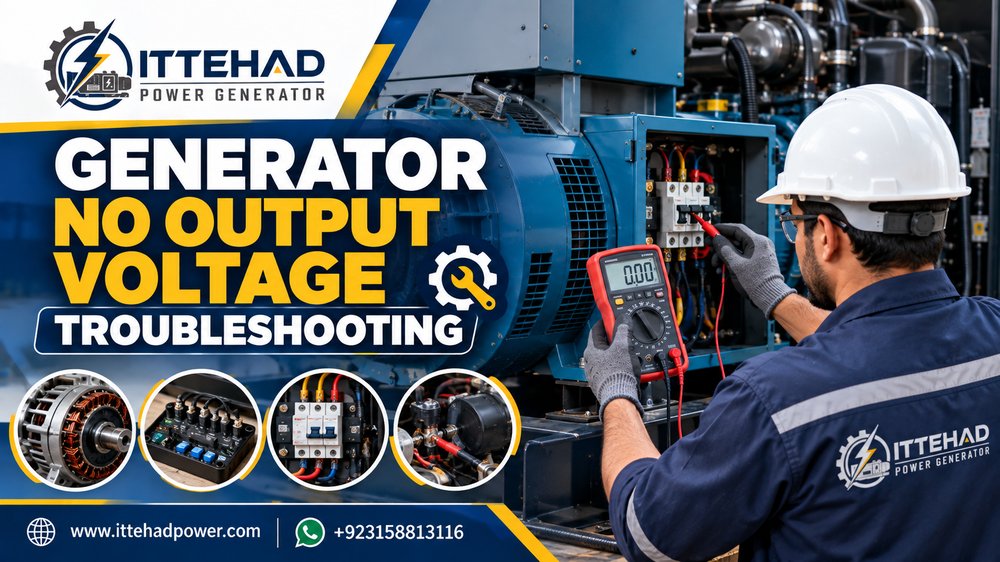
Effective generator no output voltage troubleshooting requires a systematic inspection of the electrical generation system rather than replacing components based on guesswork. A generator may start and run normally while producing little or no usable voltage because of problems involving the alternator, AVR, excitation circuit, breakers, wiring connections, sensing circuits, or related electrical components. Careful fault diagnosis helps commercial and industrial generator users identify the actual cause, reduce unnecessary replacement costs, and restore stable electrical output more efficiently.
Why Generator No Output Voltage Troubleshooting Is Important
A running engine does not automatically mean that a generator is producing electrical power. The engine provides mechanical energy, while the alternator and its control components convert that energy into usable electrical output.
If the generator starts but the output voltage remains at zero or far below the expected level, the electrical generation system requires inspection. Continuing to operate the unit without identifying the fault may not restore power and can make diagnosis more difficult if additional problems develop.
Common Signs of a Generator With No Output Voltage
A no-output condition can appear in different ways depending on the fault. Some generators show completely zero voltage, while others produce only a small residual voltage or unstable readings.
- Generator engine runs but no electrical power is available
- Voltage meter remains at zero
- Only very low voltage is measured
- Output voltage appears briefly and then disappears
- Breaker is closed but connected equipment receives no power
- Voltage is present at one point but missing downstream
- Generator produces unstable or inconsistent voltage
- AVR or excitation-related fault indications are present
Start With Safe Electrical Checks
Generator output troubleshooting involves potentially hazardous electrical energy. Electrical measurements, alternator testing, AVR inspection, and excitation checks should be carried out by qualified personnel using suitable test equipment and safe procedures.
Before internal testing begins, confirm whether the generator is actually operating at the correct speed and whether any obvious breaker, connection, or control issue is preventing voltage from reaching the output terminals.
Check the Generator Output Breaker
One of the first checks should be the main output breaker. If the breaker is open, tripped, damaged, or not making proper internal contact, electrical power may not reach the connected load even when the alternator is generating voltage correctly.
Breaker Inspection Points
- Confirm the breaker position
- Check whether it has tripped
- Inspect for visible heat damage
- Check terminals for looseness
- Look for burned or discolored connections
- Confirm voltage before and after the breaker where safe and appropriate
If voltage exists on the alternator side of the breaker but not on the load side, the breaker or its connections may require further investigation.
Confirm Alternator Output
The alternator is responsible for producing electrical power. If no usable voltage is available, technicians should determine whether the alternator is generating any output at all.
Measurements at the appropriate alternator terminals can help separate an alternator-related fault from a downstream breaker or wiring problem. The exact test procedure depends on the generator design and should follow safe electrical practices.
Inspect the Automatic Voltage Regulator
The automatic voltage regulator, commonly known as the AVR, helps control generator output voltage by regulating excitation. An AVR problem can result in no voltage, low voltage, high voltage, or unstable voltage depending on the nature of the failure.
Possible AVR-Related Warning Signs
- No generator voltage despite normal engine operation
- Very low output voltage
- Voltage that cannot stabilize
- Intermittent voltage production
- Visible damage to the AVR
- Burned components or connectors
- Loose sensing or excitation wiring
An AVR should not automatically be replaced simply because output voltage is missing. Sensing inputs, excitation circuits, wiring, and alternator condition should also be checked before concluding that the regulator itself has failed.
Understand the Role of Generator Excitation
Excitation provides the magnetic field required for the alternator to generate normal output voltage. If the excitation system is not functioning correctly, the alternator may produce only a small residual voltage or no useful output.
Excitation problems may involve the AVR, exciter components, wiring, brushes or slip rings on applicable designs, rotating components, residual magnetism, or related electrical circuits.
Loss of Residual Magnetism
Some generators rely on residual magnetism to begin the voltage-building process. If residual magnetism is lost, the alternator may fail to build normal output voltage even though the engine is running correctly.
This condition should be confirmed through proper diagnosis because low or zero output can also result from several other faults. Corrective excitation procedures should only be performed by personnel familiar with the generator design.
Check AVR Sensing Connections
The AVR requires correct sensing information to regulate voltage. Loose, open, damaged, or incorrectly connected sensing wires can interfere with voltage regulation and may prevent proper excitation.
Connections should be inspected for looseness, corrosion, damaged insulation, overheating, broken conductors, and incorrect termination.
Inspect Generator Wiring and Electrical Connections
Loose or damaged electrical connections are a common cause of generator output problems. Vibration, heat, age, and previous maintenance work can affect terminals and conductors over time.
Important Areas to Inspect
- Alternator output terminals
- AVR connections
- Sensing wires
- Excitation wiring
- Main breaker connections
- Terminal blocks
- Control wiring
- Grounding connections where relevant
Discolored terminals, melted insulation, corrosion, loose fasteners, or burned connectors can indicate electrical resistance or overheating that requires corrective work.
Check Generator Speed and Frequency
Generator output voltage and frequency are related to engine operating speed and alternator design. If the engine is not reaching the correct operating speed, electrical output may be abnormal.
Before focusing only on the alternator or AVR, confirm that the generator is running at the required speed and producing the expected frequency. An engine-speed problem can sometimes appear to be an electrical voltage fault.
Look for Low Residual Voltage
A generator showing a small amount of voltage instead of complete zero output can provide an important diagnostic clue. Low residual voltage may indicate that the alternator is rotating correctly but the excitation system is not building voltage to the normal operating level.
Technicians can use this information together with AVR, excitation, and sensing tests to narrow down the fault.
Inspect Brushes and Slip Rings Where Applicable
Some generator designs use brushes and slip rings as part of the excitation system. Worn brushes, poor brush contact, contaminated slip rings, or damaged connections can reduce or interrupt excitation.
Where these components are present, their physical condition should be checked according to the generator’s design and maintenance requirements.
Check Rotating Rectifier Components
Brushless alternators may use rotating rectifier components within the excitation system. Failure of diodes or related rotating components can prevent normal field current from developing and result in low or absent output voltage.
Testing these components usually requires controlled electrical measurements and should be performed by qualified technicians familiar with alternator fault diagnosis.
Alternator Winding Problems
Open circuits, shorted windings, insulation deterioration, or other internal alternator faults can also cause no-output conditions. These problems may require resistance measurements, insulation testing, or more detailed alternator inspection.
Internal alternator testing should be carried out after simpler external causes such as breakers, loose connections, sensing circuits, and AVR-related issues have been evaluated.
Why Random Parts Replacement Should Be Avoided
No-output voltage faults can involve several interconnected components. Replacing an AVR without testing the excitation circuit or replacing alternator parts without checking the breaker and connections may waste time and money without correcting the problem.
A structured diagnostic sequence allows technicians to eliminate possible causes one by one and identify the actual failure more accurately.
Step-by-Step Generator No Output Voltage Troubleshooting Process
- Confirm that the generator engine starts and reaches normal operating speed.
- Check frequency where appropriate.
- Confirm the main output breaker position.
- Inspect accessible electrical connections.
- Measure whether any voltage is present at the generator output.
- Determine whether voltage is present before and after the breaker.
- Inspect AVR wiring and sensing connections.
- Check excitation-related circuits.
- Assess residual voltage where applicable.
- Inspect brushes, slip rings, or rotating excitation components depending on generator design.
- Test alternator windings and internal components if external checks do not identify the fault.
- Verify stable voltage after corrective work.
Benefits of Systematic Generator Fault Diagnosis
A structured troubleshooting process can improve repair accuracy and reduce unnecessary component replacement.
- Faster fault isolation: Testing helps narrow the problem to the affected circuit or component.
- Reduced unnecessary costs: Parts are replaced based on evidence rather than assumptions.
- Improved repair reliability: The actual cause of the voltage loss is addressed.
- Better maintenance decisions: Inspection findings can be documented for future reference.
- Reduced downtime: Organized diagnosis can avoid repeated unsuccessful repairs.
- Greater operating confidence: Voltage can be verified before the generator returns to service.
What Commercial and Industrial Generator Users Need
Commercial and industrial generator users need accurate diagnosis because generator downtime can affect normal operations. A generator that runs without producing power requires more than a basic engine inspection.
The service technician should evaluate both the mechanical operating condition and the electrical generation system. Customers should receive a clear explanation of the identified fault, the component involved, and the corrective work required.
Choosing the Right Troubleshooting Service
Generator voltage problems should be handled by technicians who understand alternators, AVRs, excitation systems, breakers, and electrical fault diagnosis. The ability to test components accurately is more important than replacing parts quickly.
Look for a Structured Diagnostic Approach
A reliable technician should follow electrical measurements and inspection results rather than assuming the most common component has failed.
Ask for the Fault to Be Explained
Customers should understand whether the problem is related to the AVR, alternator, excitation circuit, breaker, connection, or another component before major replacement work begins.
Confirm Testing After Repair
The generator should be tested after corrective work to confirm that output voltage has returned and remains stable.
Testing Generator Voltage After Repairs
Restoring voltage is only part of the repair process. The generator should be checked to ensure that the output is stable and appropriate for its operating configuration.
Voltage should be observed during operation, and where suitable, the generator should be tested under a controlled load. Any abnormal fluctuation should be investigated before the unit is returned to normal service.
Why Load Testing Can Be Useful
A generator may appear to produce correct voltage without load but develop instability when electrical demand is applied. Controlled load testing can help verify that the alternator, AVR, excitation system, and electrical connections continue to perform properly under operating conditions.
The load should remain within the generator’s rated capacity and be applied according to appropriate testing procedures.
Operational Relevance for Commercial and Industrial Generator Users
Commercial and industrial generators may remain on standby for extended periods and then be expected to supply power immediately when required. Electrical connections, excitation components, control circuits, and alternator parts can therefore require attention even when the generator has not accumulated heavy operating hours.
Regular inspection and periodic operational testing can help identify voltage-generation problems before the generator is urgently needed.
Trust Points for Generator Voltage Troubleshooting
Reliable troubleshooting should provide evidence of the fault and clear confirmation that the generator is producing stable electrical output after repair.
- Voltage measurements taken at appropriate points
- Breaker and connection inspection
- AVR condition and sensing checks
- Excitation system testing where required
- Alternator assessment based on measured results
- No unnecessary replacement of components
- Clear explanation of the identified fault
- Output verification after corrective work
Common Mistakes During No-Voltage Diagnosis
Several troubleshooting mistakes can lead to wasted time or incorrect repairs.
- Replacing the AVR without testing related circuits
- Ignoring a tripped or defective output breaker
- Failing to check loose electrical connections
- Assuming the engine is operating at correct speed without verification
- Overlooking excitation problems
- Ignoring low residual voltage as a diagnostic clue
- Replacing alternator components without proper testing
- Returning the generator to service without verifying stable output
Guidance When a Generator Runs but Produces No Power
If the generator engine starts normally but there is no electrical output, avoid repeatedly switching loads or replacing electrical components without diagnosis. Confirm the basic operating condition and arrange professional electrical testing.
Provide the technician with any useful information about when the fault first appeared, whether the generator previously produced normal voltage, whether recent maintenance was performed, and whether any electrical fault occurred before output was lost.
Preventing Future Generator Voltage Problems
Not every electrical failure can be prevented, but routine inspection can help identify developing issues before complete voltage loss occurs.
- Inspect generator electrical connections periodically
- Check for heat discoloration or damaged terminals
- Test generator output during scheduled maintenance
- Monitor voltage and frequency during operation
- Investigate unstable voltage promptly
- Keep AVR and excitation connections secure
- Record previous electrical repairs
- Perform operational testing after extended standby periods
Maintain Clear Generator Electrical Repair Records
Whenever a no-voltage fault is repaired, the findings should be added to the generator maintenance history. Record the fault symptoms, electrical measurements, components tested, parts replaced, and final operating results.
This information can help technicians diagnose future electrical problems more efficiently and identify whether the same fault is recurring.
Professional Generator No Output Voltage Troubleshooting
Proper generator no output voltage troubleshooting should examine the complete electrical generation path, including alternator output, AVR condition, excitation, sensing circuits, breakers, connections, generator speed, and internal alternator components where necessary. A structured approach makes it easier to identify the actual failure and avoid unnecessary component replacement.
If your commercial or industrial generator starts and runs but produces no usable voltage, arrange a professional electrical inspection before replacing major parts. Accurate diagnosis, suitable corrective work, and final output testing can help restore stable generator power and improve confidence in future operation.