
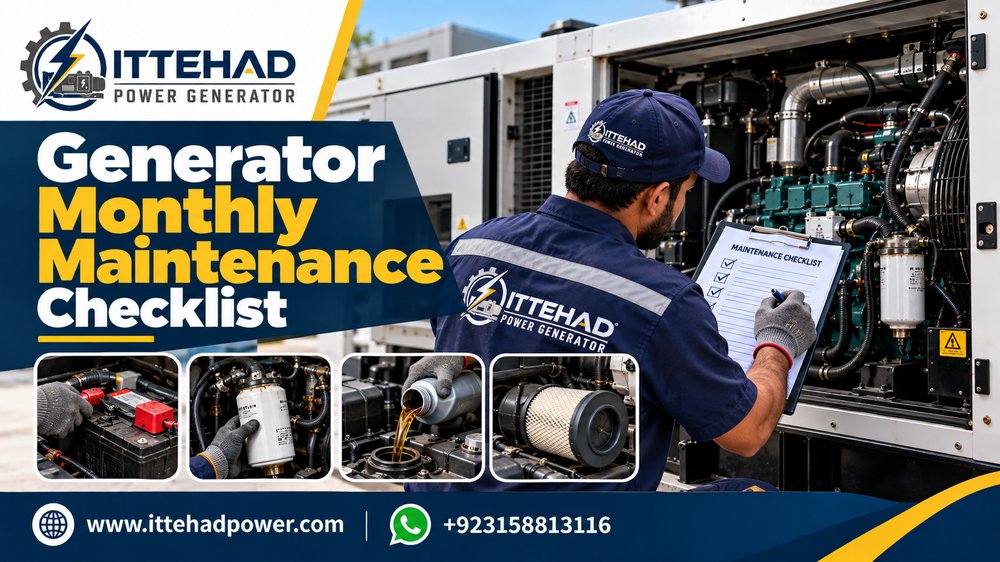
A structured generator monthly maintenance checklist helps keep routine inspections, service intervals, consumables, operating records, and reliability checks organized throughout the year. Monthly attention can reveal fluid leaks, weak battery connections, unusual operating behavior, dirty components, control-panel warnings, and other developing issues before they become more disruptive. A practical maintenance routine also helps generator owners plan service requirements, control avoidable repair costs, and keep equipment in a more dependable operating condition.
Why a Generator Monthly Maintenance Checklist Is Important
Generators can remain unused for periods and still develop problems. Batteries can weaken, connections can loosen, fluids can leak, filters can become restricted, and environmental conditions can affect components even when operating hours are limited.
A monthly checklist creates a consistent inspection routine rather than relying on memory or waiting until the generator fails. It also helps identify changes in condition from one month to the next.
Benefits of Monthly Generator Maintenance
Regular monthly checks provide a practical way to monitor generator condition between major service intervals. The purpose is not to replace scheduled servicing but to identify developing issues early and maintain useful operating records.
- Supports dependable generator starting
- Helps detect leaks and loose connections early
- Provides regular battery and fluid checks
- Improves awareness of generator operating condition
- Helps prevent routine maintenance from being forgotten
- Supports better service planning
- Creates useful maintenance and operating records
- Helps control avoidable repair costs
Monthly Visual Generator Inspection
Begin each monthly inspection with a general visual review of the generator and surrounding area. Many developing problems can be identified without dismantling components.
- Look for oil, fuel, or coolant leakage
- Check for loose or damaged wiring
- Inspect visible hoses and connections
- Look for corrosion around terminals
- Check for loose components or fasteners
- Inspect for unusual dirt or contamination
- Make sure ventilation areas remain clear
- Confirm the generator area remains accessible
Check Engine Oil Condition and Level
Engine oil should be checked according to the generator’s operating requirements. Low oil level can affect engine protection and reliability, while visible leakage may indicate a condition requiring attention.
Monthly inspection should also consider whether the oil is approaching its required service interval based on operating hours or the applicable maintenance schedule.
Inspect the Cooling System
The cooling system helps control engine temperature during operation. Monthly checks should include coolant level, visible hose condition, connections, and signs of leakage.
Coolant Level
Check coolant only using appropriate safe procedures and when conditions allow. A low coolant level should be investigated rather than repeatedly topped up without determining why the level is dropping.
Hoses and Connections
Inspect accessible hoses for cracking, looseness, swelling, leakage, or other visible deterioration. Connections should remain secure.
Ventilation and Airflow
Keep cooling airflow paths clear. Obstructions around the generator can affect operating temperature and should be removed.
Monthly Fuel System Checks
The fuel system should be reviewed for sufficient fuel availability, visible leaks, damaged lines, loose fittings, and other conditions that could affect generator starting or operation.
- Confirm adequate fuel level
- Inspect visible fuel lines
- Check connections for leakage
- Look for damaged or loose fittings
- Observe filter condition where accessible
- Note signs of contaminated or poor fuel condition where visible
If fuel-related starting or operating problems appear, further inspection may be required rather than waiting for the next monthly check.
Battery and Starting System Inspection
A generator that is mechanically healthy may still fail to start if the battery or starting connections are weak. Battery condition should therefore receive attention every month.
Battery Terminals
Check terminals and cable connections for looseness, corrosion, overheating, or visible damage. Poor connections can reduce available starting power.
Battery Condition
Look for obvious physical deterioration and note whether generator cranking has become slower or less consistent. Weak starting performance may indicate that additional battery testing is required.
Starting Response
Where appropriate, observe how quickly and smoothly the generator starts. Changes in cranking behavior should be recorded and investigated.
Control Panel and Warning Checks
The generator control panel provides useful information about operating condition, alarms, and faults. Monthly maintenance should include checking the display and reviewing any active or stored warning indications where applicable.
- Confirm the display operates correctly
- Check for active alarms
- Review unusual fault indications
- Observe voltage and frequency readings during suitable operation
- Check relevant start and stop controls
- Investigate recurring warnings rather than repeatedly resetting them
Electrical Connection Inspection
Visible electrical connections should be checked for looseness, heat damage, corrosion, damaged insulation, or other signs of deterioration. Generator vibration and environmental conditions can affect connections over time.
Electrical panels and live circuits should only be opened or tested by suitably qualified personnel using appropriate safety procedures.
Grounding and Earthing Condition
Grounding and bonding connections form part of generator electrical safety. Accessible grounding conductors and connection points should remain secure and free from obvious damage.
If grounding conductors appear loose, corroded, disconnected, or physically damaged, the condition should be assessed before normal operation continues.
Air Intake and Filter Condition
The engine requires suitable airflow for efficient operation. Monthly inspection should include checking the air intake area for blockage and reviewing the accessible filter condition where appropriate.
A heavily restricted air filter can affect engine performance. Filter service should follow the applicable condition and service interval rather than being replaced unnecessarily every month.
Belts, Hoses, and Visible Mechanical Components
Accessible belts and mechanical components should be inspected for visible wear, looseness, cracking, damage, or abnormal condition.
- Inspect belts for visible wear
- Check hoses for cracking or leakage
- Look for loose clamps
- Check accessible mounting points
- Observe signs of excessive vibration
- Investigate unusual mechanical noise
Generator Exercise and Operating Check
A controlled operating check can provide valuable information about generator readiness. Where appropriate, the generator can be started and observed for smooth operation, stable readings, warning indications, leakage, smoke, noise, and vibration.
Any test should follow the generator’s operating instructions and site safety requirements. Abnormal symptoms should be investigated rather than accepted as part of routine operation.
What to Observe During the Monthly Running Check
The monthly running check should focus on changes from normal generator behavior. Even small changes can provide early warning of a developing problem.
- Starting speed and starting time
- Engine sound
- Excessive vibration
- Visible smoke
- Fluid leakage
- Control-panel warnings
- Voltage and frequency stability
- Operating temperature indications
- Unexpected shutdown behavior
Generator Service Intervals and Monthly Checks
Monthly inspection does not mean that every consumable must be replaced every month. Engine oil, filters, and other service items normally follow operating-hour, time-based, or condition-based service intervals appropriate to the generator.
The monthly checklist should therefore include reviewing accumulated operating hours and determining whether a scheduled service interval is approaching.
Consumables to Monitor
Keeping track of consumables helps avoid situations where required service parts are forgotten until generator reliability is affected.
- Engine oil
- Oil filter
- Fuel filter
- Air filter
- Coolant
- Other applicable routine service items
Replacement should follow actual generator requirements rather than an automatic monthly replacement schedule.
Importance of Generator Operating Records
A maintenance record provides useful history for identifying repeated faults, planning servicing, and understanding how the generator is being used.
Without records, it can be difficult to know when a filter was last changed, whether battery performance is gradually declining, or how frequently the same warning has appeared.
Record Operating Hours
Operating hours help determine when time-sensitive service work may be due. Record the reading during each monthly inspection.
Record Maintenance Performed
Note any cleaning, adjustment, replacement, or corrective work completed during the month.
Record Abnormal Findings
Document warning alarms, leakage, starting difficulty, unusual noise, unstable readings, or other observations so they can be compared with later inspections.
Generator Monthly Maintenance Checklist Process
A consistent sequence makes monthly maintenance easier to complete and reduces the chance of important checks being missed.
- Inspect the generator and surrounding area visually.
- Check engine oil level and visible condition.
- Review coolant level and cooling-system condition.
- Inspect fuel level, lines, and visible connections.
- Check battery terminals and starting condition.
- Review control-panel warnings and readings.
- Inspect accessible electrical connections.
- Check grounding connections for visible damage.
- Inspect air intake and filter condition.
- Review belts, hoses, and visible mechanical components.
- Operate the generator under suitable conditions where required.
- Observe noise, vibration, smoke, leakage, and operating readings.
- Record operating hours and inspection findings.
- Plan any required servicing or corrective work.
Common Problems Found During Monthly Maintenance
Regular inspection often identifies relatively small issues that can become more disruptive if they remain unattended.
- Low fluid levels
- Loose battery terminals
- Weak starting performance
- Minor fuel, oil, or coolant leaks
- Dirty or restricted filters
- Loose electrical connections
- Control-panel warnings
- Damaged hoses or wiring
- Unusual vibration
- Changes in generator sound or operating behavior
How Monthly Maintenance Helps Control Costs
Preventive maintenance can support cost control by identifying problems while they are still manageable. A loose terminal, minor leak, or restricted filter may be less costly to correct than the damage that can result if the condition is ignored.
Maintenance records also make servicing easier to plan, helping customers avoid unnecessary replacements while ensuring required work is not delayed.
Customer Needs for Monthly Generator Care
Generator owners generally need a maintenance routine that is practical, easy to track, and focused on reliability. The checklist should distinguish between items that can be visually monitored and work that requires technical service.
Customers should also receive clear guidance when an inspection identifies a problem. Not every finding requires immediate part replacement, but significant warning signs should not be ignored.
How to Select a Generator Maintenance Service
Professional generator maintenance should include systematic inspection, clear reporting, and practical recommendations rather than unnecessary replacement of serviceable parts.
Choose Structured Inspection
A reliable service provider should follow a consistent maintenance process covering important mechanical, electrical, fuel, cooling, battery, and control-system areas.
Look for Service-Interval Planning
Maintenance recommendations should consider operating hours, time intervals, component condition, and actual generator usage.
Ask for Clear Findings
Any identified fault or replacement recommendation should be explained so the customer understands what requires attention and why.
Keep Maintenance Records
A service provider that maintains clear inspection and service records can make future maintenance decisions more informed.
Local Relevance of Routine Generator Maintenance
Generator maintenance needs can vary according to operating environment, usage frequency, dust exposure, temperature, installation conditions, and load pattern. A monthly checklist should therefore be applied to the actual condition of the generator rather than followed mechanically without considering site conditions.
On-site inspection can help identify environmental or installation factors that may influence service requirements and operating reliability.
Trust Points in Professional Monthly Generator Maintenance
Good maintenance is based on consistent inspection and evidence from the generator’s actual condition. Customers should receive practical recommendations focused on reliability and cost control.
- Important systems are checked systematically
- Operating hours are recorded
- Consumables are replaced according to actual requirements
- Developing faults are communicated early
- Unnecessary parts replacement is avoided
- Safety is maintained during inspection
- Maintenance history is used to support future decisions
- Corrective work is recommended when justified
Guidance for a Better Monthly Maintenance Routine
Choose a consistent date each month for inspection so routine checks are less likely to be missed. Keep the checklist and operating record with the generator maintenance information so previous findings are easy to compare.
If a problem is found, record it immediately and decide whether it requires monitoring, scheduled service, or prompt repair. Repeated alarms, significant leakage, damaged wiring, overheating, severe vibration, or unreliable starting should receive technical attention rather than being left until the following month.
When Monthly Checks Are Not Enough
Monthly inspections support preventive maintenance, but they do not replace required servicing or technical repairs. If the generator has reached a scheduled service interval or develops a significant fault, appropriate maintenance should be carried out without waiting for another monthly inspection.
Generators with high operating hours or demanding usage may also require checks more frequently than once per month.
Use a Generator Monthly Maintenance Checklist for Better Reliability
A well-organized generator monthly maintenance checklist provides a practical way to monitor fluids, battery condition, fuel systems, filters, electrical connections, controls, mechanical components, operating hours, and overall generator behavior. Consistent checks can help identify developing problems early and support more reliable maintenance planning.
Arrange a professional generator inspection or scheduled service when monthly checks reveal unusual conditions or when a service interval becomes due. Regular monitoring, accurate records, timely maintenance, and suitable corrective action can help improve generator reliability while keeping long-term maintenance costs under better control.