
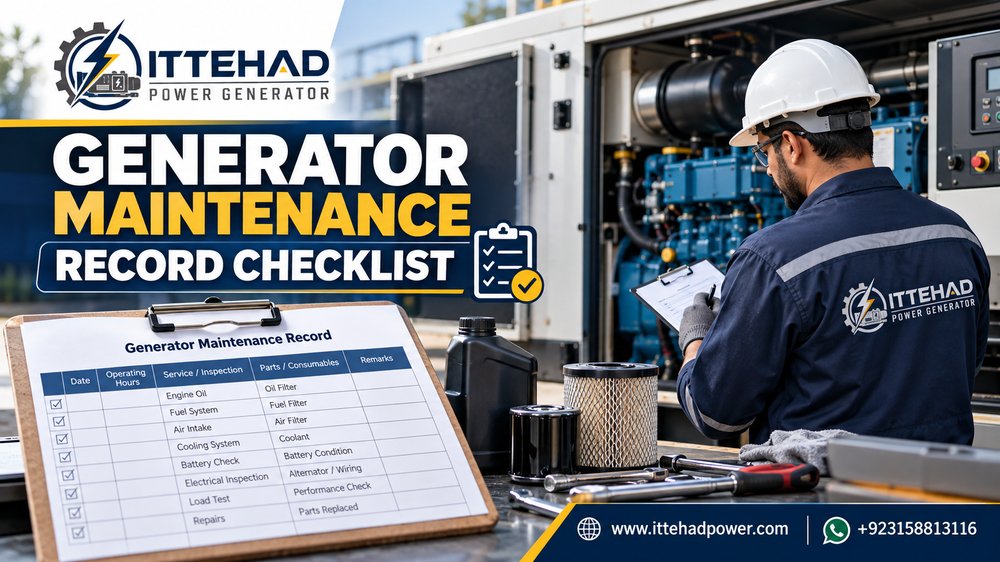
A well-organized generator maintenance record checklist helps commercial and industrial generator users keep an accurate history of servicing, inspections, operating hours, consumable replacements, repairs, and equipment condition. Instead of relying on memory or scattered service notes, a structured maintenance record provides a clear reference for what has been completed, what was found during previous inspections, and what may require attention during the next service. Consistent documentation supports dependable generator operation and makes long-term maintenance easier to manage.
Why a Generator Maintenance Record Checklist Is Important
A generator may operate for long periods with limited visible signs of developing maintenance issues. Accurate records make it easier to understand how frequently the generator has been used, when important service work was completed, and whether recurring issues are beginning to appear.
For commercial and industrial generator users, maintenance documentation can also improve communication between operators, technicians, supervisors, and service teams. Anyone reviewing the generator can quickly see its recent maintenance history instead of starting every inspection without previous information.
What to Include in a Generator Maintenance Record Checklist
The exact maintenance requirements depend on the generator and its operating conditions, but a useful maintenance record should provide enough information to build a reliable service history.
Service Date
Record the exact date whenever routine servicing, inspection, testing, or repair work is performed. Consistent service dates make it easier to identify maintenance intervals and determine when the next inspection may be required.
Generator Operating Hours
Record the operating-hour reading during each maintenance visit. Operating hours provide an important reference because many generator maintenance activities are performed according to runtime rather than calendar dates alone.
Maintenance Work Performed
Clearly describe the work completed during the service visit. Avoid vague entries such as “generator checked.” A useful record should explain which components were inspected, serviced, cleaned, adjusted, tested, or replaced.
Consumables and Replacement Items
Document consumables and service items that were changed during maintenance. Accurate replacement records can help prevent unnecessary replacement while also reducing the chance of important maintenance items being overlooked.
- Engine oil
- Oil filters
- Fuel filters
- Air filters
- Coolant where applicable
- Other scheduled service consumables
Inspection Findings
Maintenance records should include observations made during inspection. Small abnormalities can become valuable reference points during future servicing, particularly when the same condition appears repeatedly.
Repairs and Corrective Work
Any repair performed on the generator should be recorded together with the reason for the repair. This creates a maintenance history that can help identify repeated component problems and support better maintenance planning.
Generator Maintenance Record Checklist for Routine Service
A practical generator maintenance record checklist should be simple enough to complete after every scheduled service while still capturing the information needed for future reference.
- Enter the generator identification or unit reference.
- Record the maintenance date.
- Record the current operating-hour reading.
- Note the reason for inspection or service.
- List the maintenance work completed.
- Record consumables and parts replaced.
- Document inspection findings.
- Record any repairs or adjustments performed.
- Note items requiring future attention.
- Record the next recommended maintenance point.
- Add the technician or service reference where required.
Benefits of Maintaining Complete Generator Service Records
Maintenance documentation provides more than a historical record. When information is consistently recorded, it becomes a practical tool for managing generator reliability and future service requirements.
- Clear maintenance history: Previous servicing can be reviewed quickly without relying on memory.
- Better maintenance scheduling: Service dates and operating hours help determine when routine maintenance may be due.
- Improved fault tracking: Repeated observations or repairs can be identified more easily.
- Consumable tracking: Records show when filters, oil, coolant, and other service items were last replaced.
- Better communication: Operators and maintenance personnel can work from the same documented information.
- Reduced missed maintenance: A structured checklist makes it less likely that important service information will be forgotten.
- Long-term equipment visibility: Maintenance history provides a clearer picture of how the generator has been maintained throughout its operating life.
What Commercial and Industrial Generator Users Need From Maintenance Records
Commercial and industrial generator users often require maintenance information that can be reviewed quickly and understood by different people responsible for the equipment. Records should therefore be clear, consistent, and practical rather than unnecessarily complicated.
A useful record should show what condition the generator was in when inspected, what work was completed, what components were replaced, and whether additional maintenance was recommended. This becomes particularly important when several technicians or operators are involved in generator management.
Tracking Generator Operating Hours Correctly
Operating hours should be recorded consistently because runtime is an important part of generator maintenance planning. Two generators installed at similar times can have very different maintenance requirements if one operates considerably more frequently than the other.
Recording operating hours at every inspection creates a useful timeline. The maintenance team can compare runtime between service visits and understand how heavily the generator has been used.
Recording Consumables and Maintenance Parts
Simply noting that routine maintenance was completed may not provide enough information for future servicing. The record should identify which consumables were actually replaced.
For example, if a filter was inspected but not replaced, the record should state this clearly. If replacement was completed, the date and operating-hour reading should also be available. Detailed records reduce uncertainty during the next service visit.
Documenting Inspections Before Problems Develop
A maintenance record should not be limited to completed repairs. Inspection findings are equally important because they can provide early evidence of changes in generator condition.
Technicians should record unusual observations that may require monitoring. If the same issue appears during several inspections, previous records provide useful context for deciding whether additional investigation is needed.
Keeping a Generator Repair History
Every significant repair should become part of the generator’s permanent maintenance history. The entry should describe the reported issue, inspection findings, corrective work completed, and any components replaced.
A detailed repair history can help distinguish between an isolated problem and a recurring condition. This information can support more informed maintenance decisions and prevent repeated troubleshooting from beginning without reference to previous work.
How to Organize Generator Maintenance Records
Generator maintenance records can be maintained in printed form or digitally, provided the format remains consistent and accessible. The most important requirement is that each service entry contains the same core information and can be reviewed when future maintenance is planned.
Use One Record Format
A standardized checklist makes records easier to compare. Changing the format frequently can result in important information being omitted.
Update Records Immediately
Maintenance information should ideally be entered when the work is completed. Delayed recording increases the possibility of missing or inaccurate details.
Keep Records in Date Order
Chronological records provide a clear timeline of inspections, services, replacements, and repairs.
Use Clear Descriptions
Entries should be specific enough that another technician or operator can understand exactly what work was performed.
Tips for Selecting a Practical Maintenance Checklist
The best checklist is not necessarily the longest one. It should be detailed enough to create a useful maintenance history while remaining practical for routine use.
- Include fields for service date and operating hours.
- Separate inspections from actual replacement work.
- Provide space for repair notes and observations.
- Include a section for future maintenance recommendations.
- Keep terminology clear and consistent.
- Use the same checklist format for every maintenance visit.
- Ensure records can be accessed by the people responsible for generator maintenance.
Common Generator Maintenance Record Mistakes
Incomplete documentation can reduce the value of a maintenance program even when the physical servicing itself has been performed correctly. A record should contain enough detail to remain useful months or years later.
- Recording service dates without operating hours
- Writing only “serviced” without describing the work
- Failing to record replaced consumables
- Leaving inspection findings undocumented
- Not recording completed repairs
- Ignoring recommended follow-up work
- Using different record formats for each service
- Losing previous maintenance records
Local Relevance of Accurate Generator Maintenance Records
Generator operating conditions can vary between individual commercial and industrial sites. Runtime, operating environment, service frequency, and equipment usage can all influence maintenance requirements. Maintaining accurate records gives the service team a site-specific history instead of relying only on general maintenance assumptions.
When local technicians or maintenance personnel inspect the generator, previous service records can provide immediate information about operating hours, earlier observations, replaced consumables, and completed repairs. This supports a more organized approach to ongoing generator care.
Trust Points When Managing Generator Maintenance
Reliable generator maintenance should be supported by clear documentation and consistent servicing. When choosing maintenance support, look for a structured approach rather than maintenance that leaves no useful record of the work completed.
- Clear documentation of completed maintenance
- Accurate recording of operating hours
- Detailed inspection observations
- Transparent parts and consumable replacement records
- Written repair history
- Clear recommendations for future attention
- Consistent maintenance procedures
How Maintenance Records Support Better Decisions
A maintenance record becomes more useful as the generator accumulates operating hours and service history. Instead of evaluating each service event independently, technicians can compare current findings with previous inspections and repairs.
This historical information can help maintenance personnel determine whether a condition is new, recurring, or gradually developing. It can also make future maintenance planning more organized because previous service intervals and replacement dates are readily available.
Guidance for Maintaining an Accurate Generator Service History
Start the maintenance record as early as possible and continue updating it throughout the generator’s operating life. Existing generators without complete historical records can still benefit from a new structured record beginning with the next comprehensive inspection.
Record facts rather than assumptions. Include dates, operating hours, inspection observations, completed work, replaced items, and recommendations. When records are accurate and consistent, they become a valuable part of generator maintenance rather than simply administrative paperwork.
Maintain a Clear Record of Every Generator Service
A complete generator maintenance history supports organized servicing, better inspection follow-up, and improved visibility into the condition of commercial and industrial generator equipment. Using a structured checklist makes it easier to track service dates, operating hours, consumables, inspections, repairs, and future maintenance requirements.
If your generator records are incomplete or maintenance history has become difficult to track, arrange a professional generator inspection and establish a consistent maintenance record from the next service onward. A properly maintained service history can help your team plan maintenance more confidently and keep important generator information available whenever it is needed.