
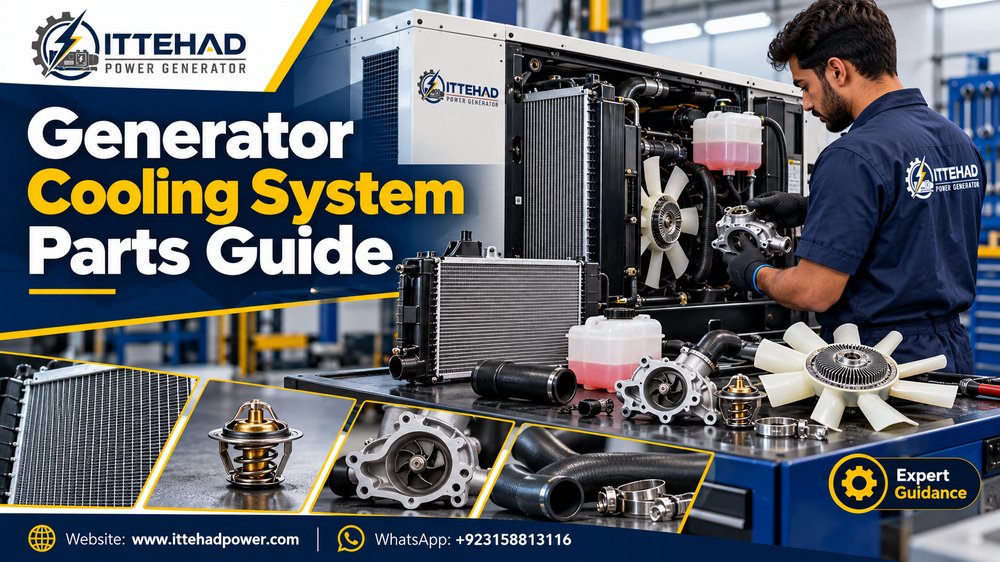
A practical generator cooling system parts guide helps generator owners and maintenance teams understand the components responsible for controlling engine temperature, circulating coolant, moving cooling air, and preventing overheating. Correct part identification, compatibility checking, wear assessment, replacement planning, and reliable sourcing are important because an unsuitable radiator, hose, belt, pump, thermostat, fan, or related cooling component can reduce cooling efficiency and lead to repeated temperature problems.
Why a Generator Cooling System Parts Guide Is Important
The cooling system removes heat produced during generator operation and helps keep the engine within a suitable temperature range. Its components work together, so a problem in one area can affect the performance of the entire system.
Knowing the purpose and condition of each cooling component makes maintenance decisions easier. It also helps avoid replacing the wrong part when the actual problem is restricted airflow, poor coolant circulation, leakage, wear, or an incorrect connection.
Main Generator Cooling System Parts
The exact cooling arrangement can vary between generators, but several components commonly work together to control heat.
- Radiator
- Cooling fan
- Water pump
- Thermostat
- Coolant hoses
- Fan or drive belts
- Coolant reservoir or expansion components
- Radiator cap or pressure-control components
- Temperature sensor
- Coolant connections and fittings
- Cooling passages and related circulation components
Generator Radiator
The radiator transfers heat from the coolant to the surrounding air. Hot coolant enters the radiator, heat is released through the cooling surfaces, and the cooled fluid returns to continue circulating through the engine.
A radiator can lose efficiency because of external dirt, damaged cooling surfaces, restricted airflow, internal blockage, leakage, or deterioration.
Radiator Wear Signs
- Visible coolant leakage
- Repeated high temperature warnings
- Damaged or blocked cooling fins
- Heavy dust or debris buildup
- Uneven cooling performance
- Corrosion or visible deterioration
Cooling Fan
The cooling fan moves air through the radiator so heat can be removed effectively. Fan condition is particularly important when the generator is operating under load and producing more heat.
Damaged blades, loose mounting, poor fan speed, or reduced airflow can cause coolant temperature to rise even when the radiator and coolant level appear normal.
Cooling Fan Inspection Points
- Check blades for cracks or physical damage
- Inspect mounting and fasteners
- Observe fan movement during suitable operation
- Check for unusual vibration
- Confirm adequate airflow through the radiator
Generator Water Pump
The water pump circulates coolant between the engine and radiator. If circulation becomes weak or stops, engine temperature can rise quickly because heat is no longer being transferred effectively.
Water pump problems may involve leakage, mechanical wear, bearing issues, damaged drive components, or reduced pumping performance.
Water Pump Wear Signs
- Coolant leakage around the pump area
- Repeated overheating
- Unusual mechanical noise
- Poor coolant circulation
- Excessive movement or wear
Generator Thermostat
The thermostat regulates coolant flow according to engine temperature. It helps the generator reach and maintain suitable operating temperature by controlling when coolant circulates through the radiator.
A thermostat that does not open correctly can restrict coolant flow and contribute to overheating. A thermostat that behaves incorrectly in another way can also affect temperature stability.
Coolant Hoses
Cooling hoses carry coolant between the engine, radiator, pump, and related components. Because they are exposed to heat, pressure, vibration, and age, hoses can gradually deteriorate.
Signs a Cooling Hose May Need Replacement
- Visible cracking
- Swelling or soft areas
- Hard or brittle condition
- Coolant leakage
- Damaged connection ends
- Internal or external collapse
- Repeated loss of coolant around fittings
Replacement hoses should match the required diameter, length, routing, connection size, and operating conditions.
Fan and Drive Belts
Belts may drive the cooling fan, water pump, or related components depending on generator design. A worn or loose belt can reduce cooling-system performance even when the driven component itself remains serviceable.
Belts should be inspected for cracking, glazing, fraying, looseness, damaged edges, and unusual wear.
Why Correct Belt Size Matters
A replacement belt should match the required length, width, profile, and drive arrangement. An incorrect belt may slip, run with unsuitable tension, or wear prematurely.
Coolant Reservoir and Expansion Components
The coolant reservoir or expansion arrangement helps accommodate changes in coolant volume as the system heats and cools. Its condition should be included in routine inspection.
Cracks, leaks, damaged connections, or incorrect coolant level can affect the cooling system and may contribute to repeated coolant loss.
Radiator Cap and Pressure Control
The cooling system may use a pressure-control component such as a radiator cap to help maintain the intended system pressure. A damaged or unsuitable cap can affect coolant retention and cooling performance.
Replacement should match the required specification rather than being selected only by physical size.
Temperature Sensor and Monitoring Parts
The temperature sensor provides information to the generator control or monitoring system. If the sensor or its wiring becomes faulty, the generator may display incorrect temperature readings or trigger warning alarms that do not match actual engine condition.
Sensor-related problems should be diagnosed before replacing major cooling components when the displayed temperature appears questionable.
Coolant Connections, Fittings, and Clamps
Small fittings and clamps are important because they keep hoses and cooling-system connections secure. Loose, corroded, damaged, or incorrectly sized fittings can cause coolant leakage and gradually reduce system level.
These items should be inspected whenever hoses or other cooling parts are replaced.
Cooling System Part Identification
Correct part identification is essential before ordering replacement cooling components. Similar-looking radiators, hoses, thermostats, pumps, belts, sensors, and fittings may have different specifications.
- Record available part numbers
- Check dimensions
- Compare mounting points
- Review hose connection sizes
- Check electrical connector details for sensors
- Confirm belt profile and length
- Compare operating specifications where relevant
Generator Cooling Part Compatibility
A replacement part should be technically compatible with the generator and cooling system. Physical fit alone does not confirm suitability.
Compatibility can involve coolant flow requirements, pressure rating, temperature range, electrical specification, mounting dimensions, connection type, and operating conditions.
Mechanical Compatibility
Radiators, pumps, belts, hoses, fans, and fittings should install securely without forced modification or unsuitable mounting changes.
Electrical Compatibility
Temperature sensors and electrically controlled cooling components should match the required voltage, signal, connection, and control arrangement.
Wear Signs That Should Not Be Ignored
Cooling-system parts often show warning signs before complete failure. Early identification makes replacement planning easier and can reduce the risk of overheating.
- Repeated coolant loss
- Visible leakage
- Cracked or swollen hoses
- Worn or slipping belts
- Cooling fan damage
- Unusual pump noise
- Radiator contamination or deterioration
- Recurring high temperature warnings
- Loose or corroded fittings
- Unstable temperature readings
Replacement Planning for Cooling System Parts
Replacement planning should begin with inspection rather than waiting until the generator overheats. Reviewing component condition during maintenance can help identify parts that are approaching the end of dependable service.
When one cooling component fails, related items should also be inspected. For example, replacing a hose without checking clamps and nearby connections may leave another leak point unresolved.
Generator Cooling System Inspection Process
A structured inspection helps identify which component requires attention and reduces unnecessary parts replacement.
- Allow the generator to cool safely before inspection.
- Check coolant level and visible coolant condition.
- Inspect the radiator for leakage, dirt, and damage.
- Check cooling fan condition and airflow.
- Inspect belts for wear and correct tension.
- Review hoses for cracks, swelling, or leakage.
- Check water pump condition and visible leakage.
- Review thermostat operation where required.
- Inspect fittings, clamps, and connection points.
- Check temperature sensor and wiring if readings appear incorrect.
- Identify the confirmed faulty or worn components.
- Verify replacement-part compatibility before installation.
- Test cooling performance after repair.
Reliable Sourcing of Generator Cooling Parts
Reliable sourcing means obtaining components that match the generator’s actual cooling-system requirements. The cheapest available part may not provide good value if it has incorrect dimensions, poor fitment, unsuitable specifications, or short service life.
Before purchasing, compare the proposed part with the original component and available generator information.
Verify Before Ordering
Confirm part numbers, dimensions, connection sizes, electrical ratings, or other relevant details before placing an order.
Inspect Parts Before Installation
New components should be checked for visible damage, incorrect dimensions, damaged connectors, or manufacturing defects before installation begins.
Record Compatible Parts
Keeping records of successfully used part numbers can make future maintenance and sourcing faster and more accurate.
Benefits of Correct Cooling System Parts Selection
Correct parts support effective heat management and reduce the likelihood of repeat repair work.
- Supports stable generator temperature
- Improves coolant circulation
- Reduces coolant leakage risks
- Supports effective radiator airflow
- Helps prevent repeated overheating
- Reduces unnecessary component replacement
- Improves maintenance planning
- Supports more dependable generator operation
What Customers Need When Replacing Cooling Parts
Generator owners usually need to know which component has failed, whether replacement is necessary, which part is compatible, and whether another cooling-system issue contributed to the failure.
A professional inspection should explain the condition clearly so the customer can distinguish between routine wear, actual component failure, and problems caused by poor airflow, low coolant, restricted circulation, or another fault.
How to Select a Generator Cooling System Parts Service
A reliable service should combine diagnosis, correct part identification, sourcing, installation, and post-repair testing rather than simply replacing the most obvious component.
Choose Diagnosis Before Replacement
The technician should confirm whether the radiator, pump, thermostat, hose, belt, fan, sensor, or another component is actually responsible for the cooling problem.
Look for Compatibility Checking
Replacement parts should be matched to the generator before installation.
Ask for Related Component Inspection
The surrounding cooling system should be reviewed so a new part is not installed into a system with another unresolved fault.
Confirm Temperature Testing After Repair
The generator should be operated under suitable conditions after replacement to confirm that coolant temperature remains stable and leakage does not return.
Site-Specific Cooling System Considerations
Cooling-system performance is influenced by the generator’s actual operating environment. Dust, heat, ventilation, electrical load, installation clearance, operating hours, and maintenance condition can affect how quickly cooling parts wear.
On-site inspection can help determine whether a component failure is isolated or related to restricted airflow, excessive load, contamination, or installation conditions.
Trust Points in Generator Cooling Parts Replacement
Professional cooling-system work should be based on inspection, correct identification, compatible parts, careful installation, and proper testing.
- The cooling fault is diagnosed before parts are ordered
- Part numbers and dimensions are checked
- Compatibility is confirmed
- Related hoses, clamps, belts, and connections are inspected
- Unnecessary replacement is avoided
- Cooling-system leaks are checked after installation
- Generator temperature is monitored after repair
- Replacement details are recorded for future maintenance
Common Cooling System Parts Buying Mistakes
Incorrect purchasing or installation can leave the overheating problem unresolved.
- Buying parts before diagnosing the cooling fault
- Selecting a radiator only by physical appearance
- Using the wrong hose diameter
- Installing an incorrect belt size
- Replacing a water pump without checking related circulation problems
- Ignoring damaged clamps and fittings
- Assuming every temperature warning requires a thermostat
- Skipping post-installation cooling tests
Guidance for Better Cooling System Maintenance
Inspect cooling components during routine generator maintenance rather than waiting for a high temperature shutdown. Watch for coolant loss, worn belts, hose deterioration, unusual fan behavior, radiator contamination, and unstable temperature readings.
When a part repeatedly fails sooner than expected, investigate the underlying cause. Repeated hose damage, belt wear, coolant leakage, or pump problems may indicate another condition that also requires correction.
When Cooling System Parts Need Prompt Replacement
Prompt replacement may be necessary when a component is visibly damaged, leaking heavily, unable to circulate coolant, no longer driving the cooling fan correctly, or causing repeated high temperature shutdowns.
Continued operation with a confirmed cooling-system fault can increase overheating risk and may lead to more extensive generator problems.
Use a Generator Cooling System Parts Guide for Better Maintenance Decisions
A complete generator cooling system parts guide should help identify radiators, water pumps, thermostats, fans, belts, hoses, sensors, fittings, and other cooling components while also considering compatibility, wear signs, replacement timing, and reliable sourcing.
Arrange a professional cooling-system inspection if your generator shows coolant leakage, unstable temperature, repeated overheating, poor airflow, or suspected component wear. Accurate diagnosis, correct part selection, proper installation, and post-repair temperature testing can help restore dependable cooling performance and support safer generator operation.