
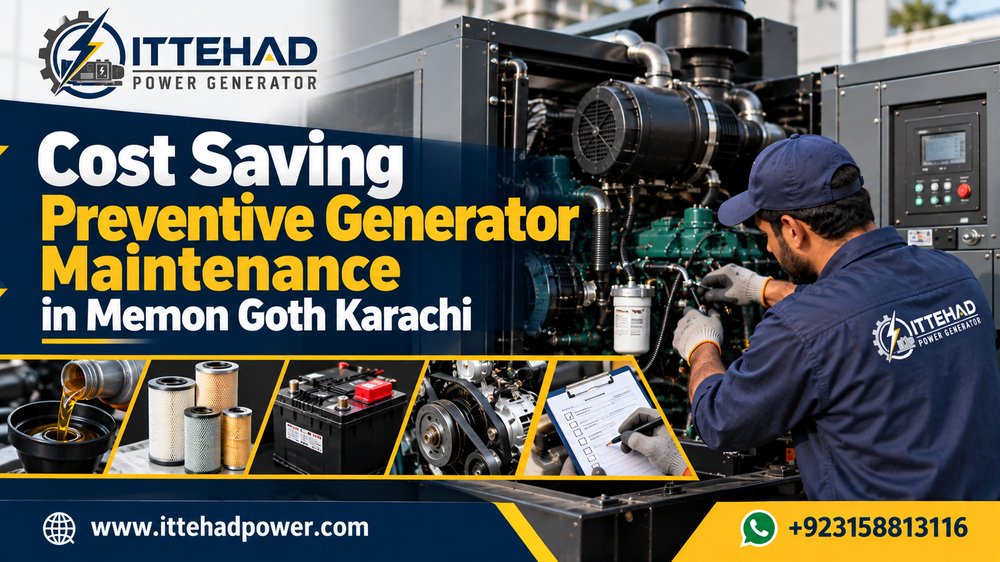
Effective cost saving preventive generator maintenance in Memon Goth Karachi focuses on preventing avoidable breakdowns, controlling service expenses, and keeping the generator ready for dependable operation. Instead of waiting for a fault to develop into an expensive repair, preventive maintenance uses routine inspections, suitable service intervals, timely replacement of consumables, operating records, and condition-based decisions to protect reliability while keeping maintenance costs under control.
Why Preventive Generator Maintenance Matters
A generator may appear to be operating normally while filters, fluids, belts, hoses, batteries, connections, and other components are gradually deteriorating. Without regular inspection, these small issues can develop into starting problems, overheating, unstable operation, leakage, reduced performance, or unexpected shutdown.
Preventive maintenance is designed to identify these conditions early. This allows servicing to be planned before an urgent repair becomes necessary and helps reduce unnecessary downtime.
Cost Saving Preventive Generator Maintenance in Memon Goth Karachi
Professional cost saving preventive generator maintenance in Memon Goth Karachi should balance reliability with practical cost control. Saving money does not mean delaying essential maintenance or using unsuitable components. It means carrying out the right work at the right time and avoiding unnecessary replacement of parts that are still in acceptable condition.
A well-planned maintenance approach can help reduce repeat faults, improve service planning, extend the useful condition of generator components, and provide better visibility of future maintenance requirements.
How Preventive Maintenance Helps Control Generator Costs
Emergency repairs can be more disruptive than planned maintenance because the problem has already reached a stage where generator operation is affected. Preventive servicing helps identify deterioration before it causes a larger failure.
Cost control can be supported through:
- Early identification of worn components
- Timely filter and fluid servicing
- Planned replacement of necessary consumables
- Reduced risk of secondary component damage
- Fewer repeated troubleshooting visits
- Better maintenance scheduling
- Accurate service records
- Avoiding unnecessary parts replacement
Routine Generator Inspections
Routine inspection is one of the most important parts of preventive generator maintenance. Visual and operational checks can reveal changes before they become serious.
Regular inspection may include checking:
- Engine oil level and condition
- Coolant level and visible cooling system condition
- Fuel system condition
- Air filter condition
- Fuel and oil filters
- Battery terminals and connections
- Belts and hoses
- Electrical connections
- Visible leakage
- Unusual vibration or noise
- Control panel warnings
- General generator cleanliness
The purpose is to identify developing problems early enough for maintenance to remain planned rather than reactive.
Setting Practical Generator Service Intervals
Generator maintenance intervals should reflect actual operating conditions rather than relying on one fixed schedule for every machine. Running hours, standby periods, environmental conditions, previous service history, and component condition can all influence when maintenance is required.
A generator that operates frequently may require different attention from a unit that remains on standby for long periods. Both can develop problems, but the causes may be different.
Operating Hours
Running hours provide an important reference for servicing. Oil, filters, belts, and other consumable or wear-related components should be monitored according to generator requirements and actual usage.
Calendar-Based Maintenance
Some generator components can deteriorate even when operating hours are low. Batteries can weaken, fuel can become contaminated, seals can age, and connections can corrode. Periodic calendar-based checks are therefore also important.
Condition-Based Decisions
Visual condition, test results, and operating behavior should also influence maintenance decisions. A component showing clear deterioration may need attention before a scheduled interval is reached.
Generator Consumables and Cost Control
Consumables are a normal part of generator maintenance. Managing them properly can help protect engine condition and reduce the risk of avoidable failures.
Common maintenance consumables may include:
- Engine oil
- Oil filters
- Fuel filters
- Air filters
- Coolant-related service items
- Belts where replacement is required
- Hoses where deterioration is identified
Replacing consumables too late can increase the risk of damage, while changing suitable components unnecessarily can increase maintenance costs. Inspection and proper service planning help maintain the right balance.
Why Engine Oil Condition Is Important
Engine oil helps lubricate moving components and supports reliable engine operation. Oil that becomes excessively degraded or contaminated may provide less effective protection.
Preventive maintenance should include checking oil level, condition, signs of contamination, and service history. Oil changes should be planned according to generator requirements and operating conditions rather than being delayed until engine performance is affected.
Fuel System Maintenance
Fuel-related issues can lead to starting difficulty, unstable engine operation, reduced performance, and unnecessary troubleshooting costs. Preventive maintenance should therefore include attention to fuel quality, filters, lines, connections, and visible signs of leakage.
Useful fuel-system checks include:
- Fuel filter condition
- Fuel line condition
- Loose or damaged connections
- Water or contamination in fuel
- Signs of leakage
- Changes in engine response
Maintaining a clean and dependable fuel supply can help prevent faults that may otherwise appear suddenly during operation.
Air Filter and Intake Maintenance
A diesel generator requires sufficient clean air for proper combustion. Dust and contamination can gradually restrict the air filter and reduce airflow.
Regular air filter inspection is particularly important where the generator operates in dusty conditions. Replacement should be based on condition and service requirements rather than waiting for severe restriction to affect engine performance.
Cooling System Preventive Maintenance
Cooling system problems can lead to overheating and forced shutdown. Preventive inspection helps identify low coolant levels, damaged hoses, loose connections, visible leakage, or other conditions that could reduce cooling effectiveness.
Cooling system checks may include:
- Coolant level
- Hose condition
- Visible leakage
- Connections and clamps
- Cooling airflow
- General signs of overheating
Correcting a small cooling system issue early can be significantly more practical than dealing with overheating-related damage later.
Battery and Starting System Maintenance
A generator that cannot start when required cannot provide dependable backup power. Battery condition should therefore be included in preventive maintenance even when the generator appears to start normally.
Inspection can include:
- Battery charge condition
- Terminal cleanliness
- Cable condition
- Connection tightness
- Visible corrosion
- Starting performance
Early signs such as slow cranking or intermittent starting should be investigated rather than ignored.
Belts, Hoses, and Wear Components
Belts and hoses can deteriorate because of age, heat, vibration, and operating conditions. Preventive inspection allows these components to be replaced based on actual condition before failure affects generator operation.
Warning signs may include:
- Cracks
- Fraying
- Hardening
- Soft or swollen hose sections
- Loose fitment
- Visible leakage
- Unusual belt noise
Timely replacement of genuinely worn components can help avoid larger repairs and unplanned downtime.
Electrical and Control System Checks
Loose electrical connections, damaged wiring, corrosion, or recurring control warnings can affect starting and operation. Preventive generator maintenance should therefore include basic inspection of visible electrical and control components.
Important checks may include:
- Loose connections
- Damaged wiring
- Corroded terminals
- Control panel warnings
- Starter circuit condition
- Unusual electrical heating signs
Electrical faults should be diagnosed carefully and repaired according to the actual condition rather than through trial-and-error replacement.
Importance of Generator Operating Records
Good maintenance records make cost-saving decisions easier because they provide a clear history of operating hours, services, replaced components, recurring faults, and previous observations.
A useful generator record can include:
- Date of inspection
- Generator running hours
- Oil and filter service history
- Battery checks
- Fuel-system observations
- Cooling-system observations
- Parts replaced
- Faults identified
- Repairs completed
- Recommended future work
This information helps avoid duplicate work and makes it easier to identify repeated issues.
Benefits of Planned Preventive Generator Maintenance
A structured maintenance program provides both operational and financial benefits when it is based on actual generator requirements.
- Reduces unexpected breakdown risk
- Helps control repair expenses
- Supports dependable generator starting
- Improves overall operating reliability
- Helps identify wear before complete failure
- Supports better parts planning
- Reduces avoidable component replacement
- Makes maintenance budgeting easier
- Provides a clearer service history
Customer Needs in Preventive Generator Maintenance
Customers usually want generator maintenance that is reliable, practical, and financially sensible. They need to know what work is necessary now, what can be monitored, and what may require attention in the future.
A useful preventive service should focus on:
- Clear inspection findings
- Practical maintenance recommendations
- Transparent consumable requirements
- Reasonable service scheduling
- Identification of developing faults
- Accurate maintenance records
- Priority-based repair planning
This approach allows maintenance costs to be managed without compromising generator reliability.
A Practical Preventive Generator Maintenance Process
A systematic process can help ensure that essential checks are completed consistently while unnecessary work is avoided.
- Review service history: Check previous maintenance dates, operating hours, repairs, and component replacements.
- Inspect the generator: Look for leakage, damage, contamination, loose components, and unusual wear.
- Check fluids and filters: Assess oil, coolant, fuel filtration, and air filtration according to condition and service requirements.
- Inspect battery and starting system: Check battery condition, terminals, cables, and starting behavior.
- Review cooling components: Inspect hoses, coolant condition, airflow, and visible connections.
- Check belts and wear parts: Identify cracking, looseness, deterioration, or other signs of approaching failure.
- Inspect electrical and control components: Look for warnings, damaged wiring, corrosion, or loose connections.
- Run the generator: Observe starting, engine sound, vibration, control indications, and operating stability.
- Record findings: Document completed work and items that should be monitored or planned for future service.
How to Avoid Overspending on Generator Maintenance
Cost-saving maintenance should focus on accurate diagnosis and sensible planning rather than simply reducing the amount of servicing performed.
Practical ways to control expenses include:
- Replace parts based on condition and service need
- Do not ignore small leaks or loose connections
- Keep accurate maintenance records
- Combine planned service tasks where practical
- Investigate recurring faults instead of repeatedly applying temporary fixes
- Use correctly matched consumables and replacement components
- Monitor operating hours and service intervals
- Address deterioration before it causes secondary damage
Preventive Maintenance Versus Emergency Repair
Preventive maintenance allows work to be scheduled and prioritized. Emergency repair begins after generator operation has already been affected, often creating more pressure to restore service quickly.
Planned maintenance cannot eliminate every possible fault, but it can reduce avoidable failures and provide earlier warning of developing problems. This can make generator ownership more predictable and easier to manage.
How to Select a Preventive Generator Maintenance Service
A suitable maintenance service should focus on generator condition, maintenance history, and actual operating requirements. The objective should be to support reliability while avoiding unnecessary expense.
Useful selection points include:
- Structured inspection procedures
- Clear maintenance recommendations
- Attention to service intervals
- Condition-based parts replacement
- Accurate service records
- Transparent explanation of required work
- Testing after maintenance
- Practical cost-control guidance
Local Relevance of Preventive Generator Maintenance in Memon Goth Karachi
Generator maintenance planning in Memon Goth Karachi should take actual operating conditions into account. Heat, dust, standby periods, fuel storage, generator usage, and general maintenance history can all affect the rate at which components and consumables require attention.
A generator operating in dusty surroundings may need more frequent air-filter inspection, while a unit used infrequently may need closer attention to battery condition and stored fuel. Local servicing should therefore be based on the generator’s real environment and operating pattern.
Trust Points for Cost-Conscious Generator Maintenance
Customers should be able to understand what maintenance was completed, which components need attention, and why replacement is recommended. Clear communication helps prevent unnecessary work and supports better maintenance decisions.
Important trust points include:
- Inspection before recommending replacement
- Clear separation between urgent and future maintenance
- Accurate record keeping
- No unnecessary consumable changes
- Correctly matched replacement parts when required
- Safe servicing procedures
- Post-maintenance operational checks
Guidance for Better Generator Maintenance Planning
Do not wait for a generator to fail before checking its condition. Keep a simple record of operating hours, previous services, battery checks, filter changes, unusual noises, warning indications, and repaired faults.
If the generator begins to start slowly, run unevenly, overheat, leak fluid, produce unusual sounds, or display recurring warnings, arrange inspection before continuing normal operation for an extended period.
Preventive maintenance is most effective when small changes are recorded and investigated early.
When Preventive Maintenance Should Be Scheduled
Maintenance should be considered when the generator reaches its relevant service interval, operating hours increase, consumables approach replacement condition, or inspection reveals developing wear.
Additional attention may also be appropriate when:
- The generator has been unused for an extended period
- Starting performance has changed
- Previous maintenance history is unclear
- Fuel or fluid leakage is visible
- Filters appear heavily contaminated
- Battery condition has declined
- New vibration or noise develops
- Control warnings appear repeatedly
Arrange Cost Saving Preventive Generator Maintenance in Memon Goth Karachi
Well-planned cost saving preventive generator maintenance in Memon Goth Karachi can help protect generator reliability while keeping servicing and repair expenses under better control. Routine inspections, suitable service intervals, timely consumable replacement, accurate operating records, and condition-based maintenance decisions can reduce avoidable failures and make future servicing easier to plan.
If your generator is due for maintenance, has an unclear service history, or is beginning to show early signs of wear, arrange a structured preventive inspection. Addressing developing problems before breakdown can help reduce downtime, avoid unnecessary repair costs, and support dependable generator operation.