
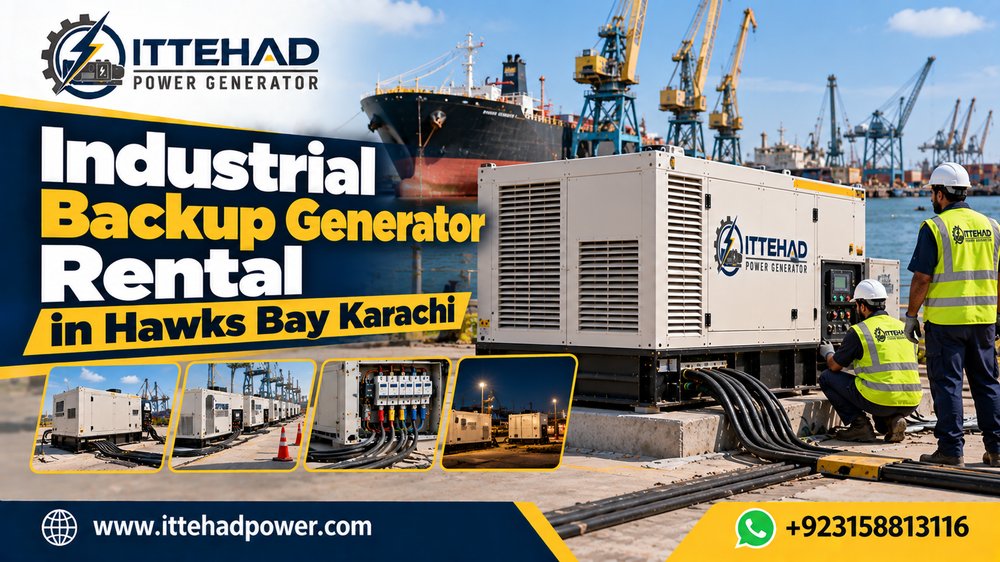
Choosing a reliable industrial backup generator rental in Hawks Bay Karachi requires careful planning around actual electrical demand, starting load, expected rental duration, fuel use, noise level, site access, ventilation, cabling, and backup-power reliability. Industrial users often need temporary power that can operate safely under demanding conditions, so generator capacity should be selected from real load requirements rather than rough estimates. A properly planned rental setup can improve power continuity, reduce overload risk, control unnecessary fuel consumption, and help minimize avoidable downtime.
Why Industrial Generator Rental Planning Is Important
Industrial backup power requirements can change depending on how much equipment is operating at one time. Some loads run continuously, while others start intermittently and may require additional power for a short period.
Good rental planning helps determine:
- Required generator capacity
- Normal running load
- Starting demand
- Rental duration
- Daily operating hours
- Fuel requirements
- Suitable generator location
- Cabling requirements
- Noise considerations
- Maintenance and technical support needs
Industrial Backup Generator Rental in Hawks Bay Karachi
A professional industrial backup generator rental in Hawks Bay Karachi should be based on a complete understanding of the intended electrical load and actual site conditions. The selected generator should have enough capacity to support essential equipment without excessive oversizing, unstable voltage, repeated breaker trips, or unnecessary fuel expense.
Site access, cable distance, ground condition, heat, dust, ventilation, fuel access, and expected operating hours should all be reviewed before the rental generator is delivered.
Start With a Practical Load Assessment
Load assessment is the foundation of correct rental selection. The generator should be sized according to the equipment that genuinely requires backup power.
Useful load information includes:
- Essential electrical equipment
- Running wattage or power demand
- Equipment operating simultaneously
- Starting requirements
- Peak demand periods
- Loads that can remain disconnected
- Potential changes during the rental period
This helps avoid both undersizing and unnecessary rental of excessive capacity.
Understand Running Load
Running load is the demand placed on the generator after connected equipment is already operating. It should be calculated realistically rather than by adding every possible electrical device regardless of whether it operates at the same time.
The selected generator should be able to carry expected continuous demand without operating continuously under unsuitable load conditions.
Consider Starting Load
Some industrial equipment requires substantially more power during startup than during normal operation. Ignoring this temporary demand can lead to incorrect generator selection.
Insufficient starting capacity may cause:
- Voltage drop
- Engine speed reduction
- Breaker trips
- Overload alarms
- Failure of equipment to start correctly
- Unstable electrical output
Starting demand should therefore be included in the rental calculation whenever relevant.
Avoid Renting an Undersized Generator
An undersized generator may appear suitable when only part of the electrical load is active but struggle as demand increases.
Common warning signs include:
- Repeated overload warnings
- Voltage instability
- Engine struggling under load
- Frequent breaker trips
- Protective shutdown
- Difficulty starting larger connected loads
Proper load assessment before delivery can help prevent these problems.
Avoid Unnecessary Oversizing
Renting a much larger generator does not automatically improve reliability. Excessive capacity may increase rental charges and fuel consumption without providing a useful benefit.
The better approach is to select a generator that comfortably supports actual running and starting demand with a suitable operating margin.
Review the Load Pattern
Industrial demand may rise and fall throughout the day. Understanding these changes can help select a generator more accurately.
Consider:
- Peak operating periods
- Low-demand periods
- Equipment startup sequence
- Temporary high-load events
- Loads that can be managed separately
A clear load profile can improve both reliability and fuel planning.
Rental Duration Affects the Complete Setup
The expected rental period influences fuel planning, maintenance, operating checks, and service responsibilities.
Before finalizing the rental, confirm:
- Expected start date
- Estimated rental duration
- Daily operating hours
- Continuous or intermittent operation
- Likelihood of an extension
A short temporary requirement and a longer operating period may need different maintenance and fuel arrangements.
Short-Term Industrial Backup Rental
For short-term use, rapid delivery and correct initial setup may be the main priorities. However, electrical compatibility, ventilation, cable sizing, and fuel access should still be checked carefully.
Short rental duration should not lead to unsafe temporary wiring or poorly planned generator placement.
Longer Industrial Generator Rental
Longer rental periods require closer attention to generator condition and routine maintenance.
Important points include:
- Operating-hour tracking
- Oil and filter condition
- Coolant level
- Battery condition
- Fuel quality
- Technical support availability
Maintenance responsibilities should be clarified before extended operation begins.
Standby Use Versus Regular Running
A rental generator kept mostly on standby may operate only during power interruptions, while another may be required to run for several hours at a time.
The expected operating pattern affects:
- Fuel consumption
- Maintenance frequency
- Cooling requirements
- Refueling planning
- Generator monitoring
Fuel Consumption Planning
Fuel cost is an important part of industrial generator rental. Consumption depends on generator capacity, connected load, engine condition, and operating hours.
Fuel planning should consider:
- Daily run time
- Average load
- Fuel tank capacity
- Expected consumption
- Refueling frequency
- Site access for fuel delivery
A correctly sized generator can help avoid unnecessary fuel use caused by excessive oversizing.
Plan Refueling Access in Advance
The generator should be positioned where refueling can be completed safely without disturbing cables, ventilation, exhaust, or normal site movement.
Consider:
- Fuel delivery route
- Generator tank location
- Safe access around the unit
- Expected refueling intervals
- Leak inspection
Good fuel access becomes especially important during extended power interruptions.
Fuel Quality and Reliability
Contaminated fuel can cause blocked filters, rough running, power loss, difficult starting, or shutdown.
Fuel quality should be monitored, especially where fuel is stored on site.
Possible contamination includes:
- Water
- Dirt
- Rust
- Sediment
Noise Level and Generator Rental
Industrial generator noise depends on enclosure design, operating load, surrounding structures, and distance from occupied areas.
Noise planning should consider:
- Generator enclosure condition
- Distance from active areas
- Operating hours
- Nearby walls
- Vibration control
- Local site sensitivity
Noise reduction should never compromise ventilation or cooling.
Choose the Generator Location Carefully
A suitable rental generator location should provide enough room for safe operation, cooling, electrical connection, refueling, inspection, and eventual collection.
Check:
- Ground stability
- Level surface
- Ventilation
- Exhaust direction
- Cable route
- Fuel access
- Maintenance access
- Delivery access
The easiest available space may not be the most practical operating location.
Stable Ground and Generator Positioning
A rental generator should stand on a stable and reasonably level surface. Poor ground conditions can lead to movement, vibration, drainage problems, or strain on electrical and fuel connections.
Before delivery, inspect:
- Ground strength
- Level condition
- Drainage
- Available clearance
- Access around the unit
Ventilation Requirements
Generators produce substantial heat and require sufficient airflow. A unit placed in a restricted area may overheat even if the electrical load is within capacity.
Good ventilation should provide:
- Fresh air supply
- Clear cooling air intake
- Unrestricted hot air discharge
- Suitable clearance around the generator
- No major airflow obstruction
Cooling performance should be observed during operation under realistic load.
Exhaust Direction
Generator exhaust should be directed away from occupied areas, air openings, and places where gases or heat may accumulate.
The exhaust side should remain clear and should not discharge toward materials that could be affected by high temperature.
Electrical Cable Requirements
Industrial rental generators often require substantial cabling between the generator and the connection point.
Cable selection should consider:
- Generator capacity
- Connected load
- Voltage
- Expected current
- Cable length
- Installation method
- Physical protection
Undersized or poorly connected cables can create voltage drop, heating, and unreliable power delivery.
Cable Length Can Affect Performance
Long cable runs can increase voltage drop and may require different cable sizing compared with shorter distances.
Generator placement and electrical cable distance should therefore be planned together.
Safe Cable Routing
Industrial sites can expose rental cables to vehicles, equipment, heat, and physical damage.
Cables should be routed to:
- Avoid unnecessary traffic areas
- Reduce trip hazards
- Stay clear of exhaust heat
- Avoid sharp edges
- Protect connectors
- Remain accessible for inspection
Temporary rental use still requires safe and organized cabling.
Confirm Electrical Compatibility
The generator output must match the voltage and connection requirements of the intended electrical system.
Before connection, confirm:
- Required voltage
- Generator output configuration
- Load requirements
- Connection arrangement
- Protection needs
Electrical compatibility should be checked before the generator is energized.
Grounding and Electrical Protection
Grounding and protection should be considered as part of the rental setup. The exact arrangement depends on the site electrical system.
Relevant checks may include:
- Grounding arrangement
- Generator breaker
- Cable condition
- Terminal tightness
- Protective devices
Protective systems should not be bypassed simply to obtain more generator output.
Plan the Power Changeover
If the generator will provide backup during normal electricity interruptions, the method of changing between supplies should be planned properly.
The changeover arrangement should be compatible with the generator, site distribution, and protection system.
Delivery Access in Hawks Bay Karachi
Industrial backup generator rental in Hawks Bay Karachi should include practical planning for delivery access. The generator must be able to reach the selected operating position safely.
Before dispatch, review:
- Entrance width
- Vehicle route
- Turning space
- Ground condition
- Final generator position
- Potential access restrictions
Advance access checks can reduce delivery delays.
Plan for Generator Collection
The generator should also remain accessible when the rental period ends.
Avoid blocking the rental unit with stored materials, temporary structures, or other equipment that could make removal difficult.
Inspect Generator Condition Before Operation
The rental generator should receive a basic condition check before electrical load is connected.
Useful checks include:
- Engine oil level
- Coolant level
- Fuel level
- Battery condition
- Belts and hoses
- Visible leakage
- Control panel status
- Breaker condition
- Electrical connection points
Any significant issue should be corrected before regular operation begins.
Test the Generator Before It Is Needed
A rental generator intended for backup power should be started and tested after installation instead of waiting for the next outage.
Testing should confirm:
- Reliable starting
- Stable engine operation
- Correct output voltage
- Breaker operation
- Control panel condition
- Electrical connection quality
Load Testing After Installation
A generator may run normally without load and still develop problems when real electrical demand is applied.
During controlled load testing, observe:
- Voltage stability
- Engine speed
- Generator temperature
- Control warnings
- Breaker condition
- Exhaust behavior
- Response as load increases
The generator should carry the intended load without repeated instability or shutdown.
Introduce Major Loads Carefully
Where practical, large loads should be introduced in a controlled sequence during initial testing. This can help identify whether one particular load creates excessive starting demand or electrical instability.
Load sequencing can also reduce sudden stress on the generator.
Monitor Load Changes During Operation
Industrial loads can change quickly. Generator behavior should be monitored when large equipment starts or stops.
Warning signs include:
- Severe voltage drop
- Engine speed reduction
- Excessive smoke
- Overload alarms
- Breaker trips
- Unstable output
Maintenance During the Rental Period
A rented generator still requires maintenance when operating for extended hours.
Longer rentals may require attention to:
- Engine oil
- Oil filter
- Fuel filter
- Air filter
- Coolant
- Battery
- Belts and hoses
- Electrical terminals
Responsibility for maintenance should be understood before extended rental use.
Daily Generator Checks
Simple routine checks can help identify developing problems before they interrupt backup power.
Check:
- Fuel level
- Oil level
- Coolant level
- Control warnings
- Visible leakage
- Noise
- Vibration
- Operating temperature
Abnormal changes should be reported promptly.
Industrial Backup Reliability
Reliable backup power depends on more than generator size alone.
The complete system includes:
- Correct capacity
- Generator condition
- Fuel availability
- Safe electrical connections
- Suitable cables
- Ventilation
- Maintenance
- Technical support
Weakness in any one of these areas can reduce overall backup reliability.
Planned Industrial Backup Rental
When the need for temporary power is known in advance, there is more time to calculate load, prepare the site, plan cabling, organize fuel, and test the generator before it becomes critical.
Advance preparation can improve reliability and reduce installation changes.
Emergency Industrial Generator Rental
Unexpected power problems may require faster deployment, but basic technical information should still be collected before capacity is selected.
At minimum, confirm:
- Required load
- Voltage
- Site access
- Cable distance
- Generator location
- Fuel requirement
Urgency should not lead to unsafe electrical or generator selection decisions.
Benefits of Industrial Backup Generator Rental
A properly planned rental arrangement can provide several practical benefits.
- Temporary access to reliable backup power
- Generator capacity matched to current requirements
- Flexible rental duration
- Reduced need for immediate permanent equipment purchase
- Ability to support planned or unexpected power needs
- Better control of operating costs
- Reduced operational interruption
- Lower avoidable downtime
What Industrial Customers Need From a Rental Service
Industrial customers usually need technical guidance as well as access to equipment.
A professional rental service should help with:
- Load assessment
- Generator capacity selection
- Rental duration planning
- Site suitability
- Cable requirements
- Fuel planning
- Generator condition checks
- Operating guidance
- Maintenance planning
- Technical support
How to Choose an Industrial Generator Rental Provider
A suitable rental provider should ask about the actual application before recommending capacity.
Useful selection points include:
- Load requirement reviewed
- Starting demand considered
- Voltage requirement confirmed
- Generator condition inspected
- Cabling discussed
- Fuel needs explained
- Rental duration understood
- Maintenance arrangements clarified
- Technical support available
- Testing completed after setup
Questions to Ask Before Renting
Clear information before the rental begins can prevent operating problems later.
- What generator capacity suits the required load?
- Has startup demand been considered?
- What voltage will the generator supply?
- What cables are required?
- What fuel consumption should be expected?
- How often will refueling be required?
- Who handles maintenance?
- What happens if the generator develops a fault?
- Can the rental period be extended?
- Will load testing be completed?
Trust Points in Industrial Generator Rental
A dependable rental arrangement should be transparent about generator capacity, condition, fuel requirements, operating responsibilities, and technical support.
Important trust points include:
- Capacity matched to actual load
- No unnecessary oversizing
- Electrical compatibility checked
- Generator condition inspected
- Fuel requirements explained
- Maintenance responsibilities clarified
- Safe cabling used
- Generator tested before regular use
Common Generator Rental Mistakes
Several avoidable mistakes can make temporary power less reliable or more expensive.
Common mistakes include:
- Renting by generator size alone
- Ignoring starting demand
- Choosing excessive capacity without need
- Underestimating fuel consumption
- Using undersized cables
- Ignoring cable length
- Selecting a poorly ventilated location
- Failing to prepare delivery access
- Skipping load testing
- Not clarifying maintenance responsibility
Local Rental Considerations in Hawks Bay Karachi
Industrial backup generator rental in Hawks Bay Karachi should reflect actual site conditions rather than using a standard rental setup. Available space, access, ground stability, heat, dust, cable distance, fuel availability, expected running hours, and ventilation can all influence generator selection and placement.
A site-specific assessment can help ensure that the generator can be delivered, positioned, connected, operated, refueled, maintained, and collected practically throughout the rental period.
Heat and Generator Rental Performance
High operating temperatures can increase cooling demand and make ventilation especially important.
Monitor for:
- High-temperature warnings
- Restricted airflow
- Low coolant
- Hot air recirculation
- Unusual heat under load
Persistent temperature problems should be investigated before extended operation continues.
Dust and Generator Reliability
Dust can affect air filters, cooling surfaces, control components, and electrical connections.
During longer rentals, closer inspection may be needed for:
- Air filters
- Ventilation openings
- Cooling surfaces
- Electrical connectors
Keeping airflow paths clean helps support dependable operation.
Outdoor Rental Conditions
If the generator is positioned outdoors, the site should provide stable placement, drainage, clear ventilation, protected electrical connections, and safe fuel access.
Any temporary weather protection should not restrict cooling or exhaust flow.
Guidance Before Generator Delivery
Prepare the site before delivery by confirming generator capacity, voltage, operating location, cable route, fuel access, ventilation, and vehicle access.
Make sure the selected area also allows maintenance and generator collection later.
Guidance When the Generator Arrives
Before connection, confirm that the delivered generator matches the agreed capacity and electrical requirements.
Inspect:
- General generator condition
- Oil and coolant levels
- Fuel level
- Battery condition
- Control panel
- Visible leakage
- Breaker condition
- Electrical connection points
Any significant fault should be corrected before normal operation begins.
Guidance During the Rental Period
Monitor the generator regularly rather than waiting for a breakdown.
Pay attention to:
- Fuel level
- Oil and coolant
- Operating temperature
- Control alarms
- Electrical output
- Noise and vibration
- Leakage
- Changing load conditions
Early reporting of abnormal behavior can reduce downtime.
Guidance Before Extending the Rental
If the generator is needed longer than originally planned, review operating hours, service requirements, fuel arrangements, and generator condition before extending the rental period.
Longer operation may require maintenance that was not necessary during the initial short-term arrangement.
Safety During Industrial Generator Rental
Rental generators involve electricity, fuel, hot surfaces, batteries, exhaust gases, and moving components.
Avoid:
- Damaged electrical cables
- Bypassed breakers
- Blocked ventilation
- Fuel leakage
- Unsafe refueling
- Operating with serious warning alarms
- Unprotected electrical connections
Temporary rental power should still follow safe operating practices.
When Technical Support Is Needed
Technical support should be arranged when the generator develops repeated starting problems, unstable voltage, overheating, unusual smoke, fuel leakage, excessive vibration, recurring breaker trips, or controller warnings.
Continuing operation with an unresolved serious fault can lead to longer downtime and additional repair requirements.
Plan Reliable Industrial Backup Power in Hawks Bay Karachi
A dependable industrial backup generator rental in Hawks Bay Karachi should match generator capacity to real electrical demand while considering startup load, rental duration, fuel use, noise, site conditions, cabling, ventilation, maintenance, and technical support. The most reliable rental arrangement is one planned around the actual operating requirement rather than simply selecting the largest available generator.
If temporary industrial backup power is required in Hawks Bay Karachi, arrange a complete load and site assessment before finalizing the rental. Correct capacity, practical generator placement, safe cabling, realistic fuel planning, proper testing, and responsive support can help maintain reliable power, control unnecessary operating costs, and reduce avoidable downtime.